Ray Bradbury Reading Order: Where to Start
Bradbury is filed under science fiction and wrote very little of it — he was a short-story writer whose best books are collections, and whose recurring subject is an Illinois childhood rather than the future. The trap is the endless anthologies with interchangeable titles; this path sticks to the named collections and the handful of real novels. It starts with the two most famous books, moves to the great collections, then to the Green Town sequence that is the heart of the work.
The Two Famous Ones
BeginnerRead the book everyone is assigned and the book that made his reputation, and notice they are not the same kind of writing at all.
▸ Study plan for this stage
Pace: 3 weeks. Fahrenheit 451 is 190 pages and can be read in two sittings, which is roughly how it was written — take a week and read it fast, because the prose is running at a pitch that rewards momentum. The Martian Chronicles is 262 pages of linked stories and should be taken one or two stories an eve
- ⚠️ Start with the buying warning, because it applies to this entire path: Bradbury is one of the most heavily anthologised writers in English, and the same stories appear across dozens of collections with interchangeable titles. It is very easy to buy the same twenty stories three times. This path l
- Fahrenheit 451 is a fireman whose job is burning books, who begins reading them. It is his only true novel of ideas, it is short, and it is furious
- It is placed first because most readers arrive wanting it, and because it is the LEAST representative thing he wrote — knowing that early saves you from expecting the rest of the catalogue to be dystopian science fiction
- Its target is not primarily state censorship. Bradbury's fireman explains that the public stopped wanting books first and the burning came afterwards, which is a claim about mass entertainment and attention rather than about government
- The novel grew out of a shorter work and shows it: the prose is compressed to the point of breathlessness, and the images do the arguing where a more conventional novelist would use plot
- The Martian Chronicles is linked stories about the human settlement of Mars, and it is really about the American frontier — arrival, disease killing the people already there, boom towns, abandonment, and the ache of everyone who left home
- Its Mars is deliberately impossible: canals, thin breathable air, sand ships. Bradbury had no interest in plausibility and said so, which is why calling him a science fiction writer misleads more than it helps
- The fix-up structure — separate stories stitched into a book with connecting passages — explains something about his whole career: his novels tend to feel like collections because the story was always his real unit
- In Fahrenheit 451, what does Beatty say caused the burning? Reconstruct his account and decide whether the novel endorses it.
- Montag's turn happens quickly and on thin motivation. Is that a weakness or is Bradbury deliberately uninterested in psychology?
- The book ends with people who have memorised books. What is Bradbury claiming survives, and at what cost?
- In The Martian Chronicles, what happens to the Martians, and which American history is being retold? Name the specific parallels.
- Several Chronicles stories are about people who cannot stop recreating the towns they left. What is Bradbury's diagnosis of the settlers?
- Set the two books side by side. Which one is science fiction in any meaningful sense, and what is the other one actually doing?
- Before buying anything, list what Bradbury you already own and check the contents pages. Doing this once at the start of the path will save you money three times over.
- Read Fahrenheit 451 in as few sittings as you can manage. It was written at speed and reads best that way.
- For the Chronicles, note the date heading on each story. The chronology is the book's spine and the gaps between dates are where the losses happen.
- Pick the single Chronicles story that moved you most and ask whether anything in it needed Mars. The answer is usually no, and that is the point about Bradbury.
Next up: Both famous books are really collections of stories in disguise, which is the argument for going next to the collections where the best writing actually is.
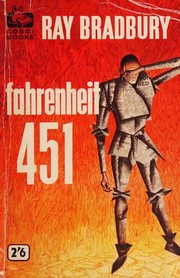
The fireman who burns books and stops. His only true novel of ideas, short and furious. Start here because most readers arrive wanting it, and because it is the least representative thing he wrote — which is worth knowing early.
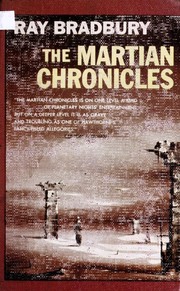
Linked stories about the settlement of Mars that are really about the American frontier and small-town loss. Read second: this is the actual Bradbury, and the fix-up structure explains why the novels feel like collections.
The Great Collections
BeginnerGo where the best writing is — the named story collections, not the generic anthologies.
▸ Study plan for this stage
Pace: 7 weeks. The Illustrated Man (251 pages), The October Country (306) and The Golden Apples of the Sun (241) at one or two stories an evening — roughly two to three weeks each. ⚠️ These three overlap with almost every Bradbury anthology in print, and The October Country in particular reprints most of
- This is where the best writing is. Bradbury was a short-story writer who also produced novels, and treating the collections as the main event rather than as supporting material is the single most useful correction a new reader can make
- The Illustrated Man is eighteen stories inside a frame — a tattooed man whose skin moves and whose images each tell a story — and it is the strongest single collection he assembled
- It contains The Veldt, in which a virtual-reality nursery turns on the parents who bought it, and There Will Come Soft Rains, an empty automated house going through its day after the people are gone. Neither has a human character doing anything, and both are as good as short fiction gets
- The October Country is the horror Bradbury, collecting the early Dark Carnival material: jars with things in them, skeletons resented by their owners, small towns after dark, and children who are not children
- That collection is the source of the dread that Something Wicked This Way Comes later turns into a plot, which is why this path puts it before Green Town rather than after
- The Golden Apples of the Sun is the gentlest of the three and the range-filler, containing A Sound of Thunder — the time-travel safari where stepping on a butterfly changes an election — and The Fog Horn, about a lighthouse and something in the sea that answers it
- Across all three, notice the method: Bradbury works from a single striking image and builds outward, and the stories tend to end at the moment the image completes rather than at a resolution
- His sentences are also relentlessly figurative — metaphor stacked on metaphor — which some readers find intoxicating and others find airless. Deciding which you are is worth doing early, because he never changes
- In There Will Come Soft Rains there are no living characters. How does Bradbury generate grief with nothing but a house and a routine?
- The Veldt was written decades before immersive screens existed. What exactly is it about — technology, parenting, or the children?
- In The October Country, what is Bradbury's recurring source of horror? It is rarely a monster; name what it actually is.
- Compare a story from The October Country with one from The Golden Apples of the Sun. What changes in the prose when he wants beauty rather than dread?
- A Sound of Thunder's butterfly has entered the language. Is the story better or worse than its famous idea?
- Pick five stories across the three collections and identify the originating image in each. How much of the story is that image and how much is everything else?
- Keep a running index of the stories you have read across all three books, with the collection each came from. It is the only reliable defence against buying the same story again later in the path.
- Read There Will Come Soft Rains aloud. It is four pages and it is the clearest demonstration in the catalogue of what his prose can do.
- After each collection, pick the weakest story and say why. Bradbury is uneven and reading him well means being able to tell his best from his habits.
- Read the frame sections of The Illustrated Man consecutively at the end. They are a story in their own right and are usually skimmed.
Next up: The collections show the dread and the nostalgia separately; Green Town is where Bradbury puts both in one town and admits the subject was always his own childhood.

Eighteen stories framed by a tattooed man whose skin moves, including The Veldt and There Will Come Soft Rains. The best single collection and the one to read after the Chronicles.
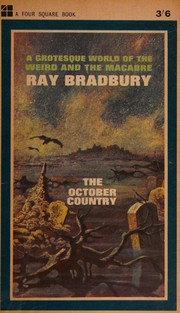
His horror side, collecting the early Dark Carnival material — skeletons, jars, small towns after dark. Read third; it is the source of the dread that Something Wicked This Way Comes turns into a plot.

The gentlest of the major collections, containing A Sound of Thunder and The Fog Horn. Take it after the other two, as the range-filler.
Green Town
IntermediateRead the three books set in the fictionalised Waukegan of his boyhood, in the order he wrote them.
▸ Study plan for this stage
Pace: 6 weeks. Dandelion Wine is 232 pages, Something Wicked This Way Comes 278, Farewell Summer 223 — two weeks each. Read Dandelion Wine slowly, a chapter or two an evening; it is a summer and it is meant to accumulate. Read Something Wicked directly afterwards with no gap, while the summer is still in
- Green Town is Bradbury's fictionalised version of Waukegan, Illinois, where he grew up, and these three books are the heart of the work. His recurring subject was an American Midwestern childhood, not the future
- Dandelion Wine is one summer in the life of twelve-year-old Douglas Spaulding, whose organising discovery is that he is alive — and, following directly from it, that he will therefore die
- There is no science fiction in it at all. It is the book Bradbury cared most about, and readers who came for Mars are often startled to find this is what he was doing the whole time
- It is structured as loosely linked episodes rather than as a plot, and includes some of his most famous set pieces: the Happiness Machine, the tennis shoes, the old woman who was never a girl. Read them as stories
- Something Wicked This Way Comes is the same town in October: a carnival arrives and offers everyone the thing they most want, at a price. Two thirteen-year-old boys and one boy's middle-aged father stand against it
- It is the dark half of Dandelion Wine and the pairing is exact — one book is summer and being young, the other is autumn and being afraid of age. The carousel that changes your age is the mechanism connecting them
- The father is the best adult character Bradbury wrote. His weapon against the carnival is not courage but a specific argument about what wanting things does to people, and the last third of the novel belongs to him
- Farewell Summer is the sequel to Dandelion Wine published roughly fifty years later — the boys of the town at war with its old men — and it is slight. It is worth reading only third, once the first two have earned the affection it depends on
- What does Douglas realise at the start of Dandelion Wine, and what does he realise at the end? The book is the distance between the two.
- The Happiness Machine fails. Why, and what is Bradbury's claim about happiness in the argument that follows?
- In Something Wicked, what does the carnival actually sell? Name what each character wants and what the wanting costs.
- How does Charles Halloway defeat it? Reconstruct his argument, because the defence is intellectual rather than physical and readers often remember it wrongly.
- The carousel makes you older or younger. Why is that the right fantasy for a book paired with Dandelion Wine?
- Farewell Summer sets boys against old men. What does the fifty-year gap between it and Dandelion Wine do to the book — does the age Bradbury had reached change whose side it is on?
- Read Dandelion Wine over a real summer if the timing allows, a chapter at a time. It is a seasonal book and reading it in February costs you something.
- List the deaths in Dandelion Wine. There are more than most readers remember, and the count is the argument of the book.
- Immediately after finishing Something Wicked, reread the Happiness Machine chapter in Dandelion Wine. The carnival is the same machine with a price attached.
- Note what each character in Something Wicked wants. The carnival is a device for making desire legible and the list is the novel's moral scheme.
- Write one paragraph on why Bradbury spent a career writing about one Illinois town. Then check it against what he says in the final stage of this path.
Next up: With Green Town behind you, the late oddities are worth picking up — including a register nobody expects from this writer.
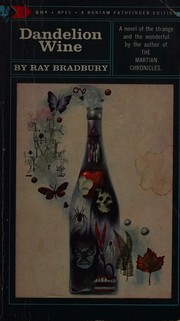
One summer, twelve-year-old Douglas Spaulding, and the discovery that he is alive and will therefore die. No science fiction at all, and the book Bradbury cared most about. Read it first of the three.
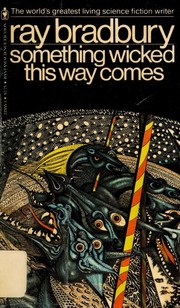
A carnival arrives in the same town in October and offers everyone the thing they want most. The dark half of Dandelion Wine and best read directly after it, when the summer is still in your head.

The sequel to Dandelion Wine, published fifty years later — the boys at war with the old men of the town. Slight, and only worth reading third, once the first two have earned it.
The Deeper Cuts
BeginnerPick up the late oddities — a children's book adults keep, and the detective novels nobody expects.
▸ Study plan for this stage
Pace: 3 weeks and optional. The Halloween Tree is 160 pages and reads in a couple of evenings — do it in October if you can. Death Is a Lonely Business is 277 pages and takes a fortnight; it is a mystery novel and moves faster than the Green Town books. Read The Halloween Tree first as the lighter of the
- These are the late books that almost no casual reader reaches, and they are here because both do something the famous work does not
- The Halloween Tree sends eight boys chasing a friend's soul backward through the history of Halloween — ancient Egypt, Celtic Britain, Mexican Day of the Dead, Notre Dame — with a guide who is not entirely trustworthy
- It was written for children and is better than most of Bradbury's late adult fiction. The prose is disciplined by the audience in a way his unrestrained work is not
- It is also, unusually for him, structured as a genuine argument: each stop in history is a different culture's answer to death, and the book is assembling a case rather than accumulating images
- Death Is a Lonely Business is a hardboiled mystery set in 1949 Venice Beach, narrated by a young pulp writer who is transparently Bradbury himself, in a decaying seaside town with a pier being demolished
- The genre is entirely unexpected from him, and the interesting thing is what survives the change: the mystery plot is loose and barely holds, while the atmosphere and the lonely minor characters are excellent
- It is also the closest he came to autobiography — the narrator's poverty, his typewriter, his unsold stories and his exact anxieties are drawn from Bradbury's own late 1940s
- Read last of the fiction, it is a genuine surprise from a writer you now know very well, which is the best reason for it being here at all
- In The Halloween Tree, what does each historical stop contribute to the book's account of death? List them and see whether they build.
- What is the bargain the boys make at the end, and is it a children's-book ending or a harder one?
- In Death Is a Lonely Business, does the mystery plot work? Be honest, and then ask whether it matters.
- The narrator is Bradbury at the start of his career. What does the book say about writing for the pulps and being broke?
- Venice Beach is decaying throughout, with the pier coming down. What is that setting doing in a book by a writer this attached to lost places?
- Both books are late work. What has changed since the 1950s collections, and what has not changed at all?
- Read The Halloween Tree in late October. It is a seasonal book in the same way Dandelion Wine is a summer one and the timing is most of the atmosphere.
- After the historical tour in The Halloween Tree, write down each culture's answer to death in one line. That list is the book stripped to its argument.
- In Death Is a Lonely Business, mark the descriptive passages and the plot passages separately. The imbalance tells you exactly which Bradbury turned up for this book.
- Compare the narrator of Death Is a Lonely Business with Douglas Spaulding. Twenty years older and in a different genre, he wants remarkably similar things.
Next up: The last book is Bradbury explaining where all of this came from, which is only useful once you have read enough of it to check him.
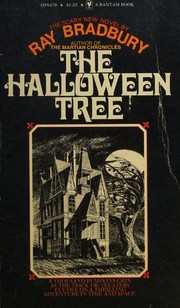
Eight boys chase a friend's soul through the history of Halloween. Written for children and better than most of his adult late work.

A hardboiled mystery set in 1949 Venice Beach, narrated by a young writer who is transparently Bradbury. Read it last of the fiction — an entirely unexpected register from a writer you now know well.
Bradbury on Writing
BeginnerFinish with his own account of how the stories were made.
▸ Study plan for this stage
Pace: 2 weeks for 176 pages of essays, one or two a sitting. This is NON-FICTION and the only book in the path that is not a story. It is short enough to finish in a weekend and better spread over a fortnight so you can go back to the fiction it discusses. It is genuinely useless before the rest of the pa
- Zen in the Art of Writing collects essays on how Bradbury worked, and it is placed last because it is a commentary on everything above — read first, it is advice; read here, it is evidence
- His central method is speed: write the story in one sitting, before the intellect can interfere, and revise later. He argues that a story written slowly is a story reasoned into existence rather than felt
- The most concrete technique in the book is the list of nouns — he wrote down words from his own childhood, THE LAKE, THE NIGHT, THE RAVINE, and wrote whatever each one produced. Several stories in this path came directly out of that list
- He tells the story of writing Fahrenheit 451 at speed on a rented typewriter in a university basement, paying by the half hour, which explains a good deal about the novel's breathlessness
- He also explains where Dandelion Wine came from, and the account confirms what the Green Town stage implies: he spent a career mining one Illinois childhood and knew it perfectly well
- The advice is not universally applicable and he does not pretend otherwise. It is one writer's method, suited to a writer whose unit was the short story and whose strength was the sudden image
- It is also relentlessly enthusiastic, which some readers find inspiring and others find hard to take at length. Two essays at a time is the right dose
- The reason to finish here is that you can now check him. You have read the stories he says came from the noun list and the novel he says he typed in nine days, and you are in a position to judge the account rather than take it
- What does Bradbury mean by writing fast, and what does he think slow writing does to a story? Test the claim against the collections you have read.
- Try the noun list yourself. What does it produce, and does it produce anything you could not have got to deliberately?
- His account of writing Fahrenheit 451 in a basement is famous. What does it explain about the novel, and what does it not?
- Where does his advice apply only to short stories? Be specific — he is not writing about how to build a novel.
- Having read the whole path, is his account of his own work accurate? Name one place where the fiction contradicts the essays.
- What was Bradbury actually a writer of? Answer in one sentence, without using the phrase science fiction, and check it against every stage of this path.
- Make your own noun list of twenty items from your childhood, exactly as he describes. Twenty minutes, and it is the only exercise in this path that produces something of your own.
- Pick one essay and one story it discusses, and read them the same evening. The claim and the evidence side by side is the point of reading this book last.
- Note every place where his advice contradicts itself. He is not a systematic thinker and the contradictions are more instructive than the rules.
- Finally, write the list of Bradbury you would recommend to a new reader, in order. If it starts with Fahrenheit 451, say honestly whether that is your judgement or just where you happened to begin.
Next up: That is Bradbury properly read — the collections first, the novels second, and the Illinois childhood underneath all of it — and it is enough to walk past a shelf of interchangeable anthologies knowing exactly which stories are already yours.
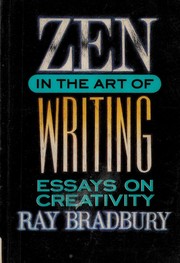
Essays on writing fast, writing from lists of nouns, and where Dandelion Wine and Fahrenheit 451 came from. The right closing book: it is a commentary on everything above, and useless before you have read it.
Discussion
Keep reading
Paths that share books, cover the same subject, or open a related topic.