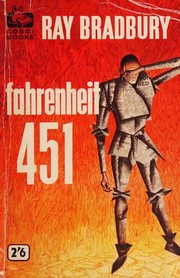
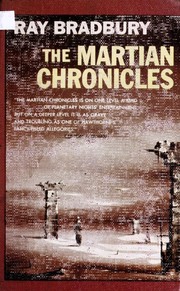
Start with Fahrenheit 451, then The Martian Chronicles. The first is 190 pages, it can be read in two sittings, and it is what most readers arrive wanting. But read it knowing it is the least representative thing he wrote — his only true novel of ideas, and nothing like the rest of the catalogue. Knowing that early saves you from expecting a career of dystopian science fiction and being confused by what you actually find.
Before you buy anything, a warning that applies to this whole path. Bradbury is one of the most heavily anthologised writers in English, and the same stories appear across dozens of collections under interchangeable titles. It is very easy to buy the same twenty stories three times. This route lists only the collections he assembled himself; check the contents page against what you already own before ordering. Doing that once at the start will save you money three times over.
Fahrenheit 451 is a fireman whose job is burning books and who begins reading them, and its target is not primarily state censorship — the fireman explains that the public stopped wanting books first and the burning came afterwards, which is a claim about mass entertainment rather than about government. The Martian Chronicles is linked stories about the settlement of Mars that are really about the American frontier: arrival, disease killing the people already there, boom towns, abandonment. Its Mars is deliberately impossible, with canals and thin breathable air, because Bradbury had no interest in plausibility and said so.
The collections, which is where the best writing is
Bradbury was a short-story writer who also produced novels, and treating the collections as the main event is the single most useful correction a new reader can make. Read The Illustrated Man, then The October Country, then The golden apples of the sun and other stories, one or two stories an evening.
The Illustrated Man is the strongest single collection he assembled, eighteen stories inside a frame. Two of them — a virtual-reality nursery that turns on the parents who bought it, and an empty automated house going through its day after the people are gone — contain almost no human action and are as good as short fiction gets. The October Country is the horror Bradbury: jars with things in them, small towns after dark, children who are not children. It reprints most of an earlier collection called Dark Carnival, so if you own that you own much of this. The golden apples of the sun and other stories is the gentlest of the three and contains the time-travel safari where stepping on a butterfly changes an election.
His sentences are relentlessly figurative, metaphor stacked on metaphor, which some readers find intoxicating and others find airless. Decide which you are early, because he never changes.
Green Town, which is the actual subject
Dandelion Wine is one summer in the life of a twelve-year-old in Bradbury's fictionalised Waukegan, Illinois, whose organising discovery is that he is alive and therefore will die. There is no science fiction in it at all. It is the book he cared most about, and readers who came for Mars are often startled to find this is what he was doing the whole time. Read it a chapter or two an evening, over a real summer if the timing allows.
Read Something Wicked This Way Comes directly afterwards with no gap and read it fast, because it has a plot and it runs. Same town in October, a carnival offering everyone the thing they most want at a price, and the best adult character Bradbury wrote — a father whose weapon is not courage but a specific argument about what wanting does to people. The pairing is exact: one book is summer and being young, the other is autumn and being afraid of age.
Farewell Summer is the sequel to Dandelion Wine published roughly fifty years later, and it is slight. Read it third or not at all; it depends on affection the first two have to earn.
The deeper cuts, and where to stop
Stopping after Green Town is entirely reasonable. If you continue, The Halloween Tree sends eight boys chasing a friend's soul backward through the history of Halloween, was written for children, and is better than most of his late adult fiction — the audience disciplines the prose. Read it in October. Death is a lonely business is a hardboiled mystery set in 1949 Venice Beach narrated by a young pulp writer who is transparently Bradbury himself; the mystery plot is loose and barely holds, while the atmosphere and the minor characters are excellent.
End with Zen in the art of writing, which is non-fiction and the only book here that is not a story. It is genuinely useless before the rest and genuinely excellent after it: read first it is advice, read last it is evidence. He describes writing Fahrenheit 451 at speed on a rented basement typewriter paid for by the half hour, which explains a good deal about that novel's breathlessness, and he explains where Dandelion Wine came from, confirming that he spent a career mining one Illinois childhood and knew it perfectly well. Two essays at a time is the right dose. More routes on Discover.
Follow the full ordered path here: Ray Bradbury Reading Order: Where to Start.