Ralph Ellison Reading Order: Where to Start
Ralph Ellison published exactly one novel in his lifetime and then spent forty years failing to finish a second, which makes his reading order unusually simple and unusually strange. This path starts with Invisible Man, moves into the essays where his real intellectual project lives, then takes on the short fiction and the enormous unfinished second novel that appeared after his death. A biography closes it, because the shape of this career only makes sense as a life.
Start with Invisible Man
IntermediateRead the one book everyone means when they say Ellison, and see how it moves from naturalism through surrealism to the underground
▸ Study plan for this stage
Pace: 3–4 weeks. The novel is 480 pages and changes mode roughly every hundred — ~25 pages a night works, but take each major set piece (the battle royal, the paint factory, the eviction speech, the riot) in a single sitting rather than splitting it across two evenings.
- The prologue and epilogue frame: the narrator is already underground and writing, so everything between them is retrospect. Read the prologue again the moment you finish the last page
- The novel's movement from naturalism in the South and at the college, through increasingly surreal episodes, to the outright hallucination of the riot
- Invisibility as a social fact rather than a mood of loneliness — being seen only as a type, and never as the particular man in front of you
- The battle royal as an overture that states every theme in the book inside twenty pages
- Jazz as structure: the Armstrong record in the prologue, the insistence on improvisation, and episodes that riff rather than progress
- Bledsoe, Norton, Brother Jack and Ras as competing scripts handed to the narrator, each demanding he play a part someone else wrote
- The grandfather's deathbed advice, restated at intervals across the novel, as a riddle the book declines to solve
- What does the narrator's grandfather actually advise, and does the novel ever decide whether he was right?
- What happens at the paint factory, and how does the episode work as allegory without collapsing into one?
- Name three people who try to define the narrator, and say what each of them wants him for.
- Where does the prose stop behaving realistically, and what triggers the shift?
- Why is the narrator underground, and what does the epilogue claim he intends to do about it?
- Reread the prologue immediately after finishing. It was written by the man the novel produces, and it is a different text once you know him.
- Keep a list of the roles the narrator is offered — student, worker, orator, hustler — and what each one costs him.
- Listen to the Armstrong recording named in the prologue while rereading those pages. Ellison meant the reference literally.
- Mark the sentence where you first realised the book was not going to stay realistic, and compare it with the point where the narrator realises something similar.
Next up: The novel raises questions about identity, folklore and American culture that Ellison spent the next forty years answering in essays — which is where the argument actually lives.
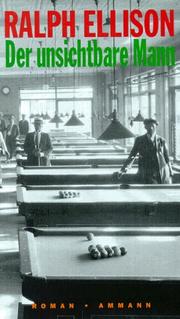
The 1952 novel that won the National Book Award and remains one of the essential American books. Everything else Ellison wrote is either preparation for it or an argument about it, so there is no other sensible starting point.
The essays
IntermediateFollow Ellison's argument that American culture is irreducibly mixed, and see the jazz and folklore thinking that underwrites the novel
▸ Study plan for this stage
Pace: 4–6 weeks, and this is a stage to graze rather than march. Shadow and Act divides into short pieces across its 317 pages — two or three essays a sitting for two weeks. Going to the Territory (338 pages) is quieter and can go slower. The Collected Essays is an 880-page reference volume containing bot
- Ellison's central claim: American culture is irreducibly mixed, and it is not finally possible to say which parts of it are white and which are Black. Everything else follows from this
- The quarrel with protest fiction — his argument against reading Black writing as sociology, and specifically against the terms that Richard Wright's example had set
- Jazz as a model for the individual inside a tradition: the soloist who has to know the form thoroughly in order to depart from it
- Folklore as the deep source — his definition of the blues as a chronicle of catastrophe held lyrically, and the trickster figures standing behind the novel's shape-shifters
- His readings of Twain, Faulkner and Hemingway, and the insistence on claiming the American canon rather than standing outside it, which cost him allies
- Going to the Territory's later tone: written across two decades of not finishing the second novel, and correspondingly more elegiac and more careful
- The uncollected pieces in the Collected Essays show a working reviewer and critic, which the two curated volumes smooth away
- What is Ellison's objection to protest fiction, and how does Invisible Man enact that objection rather than merely stating it?
- How does he define the blues, and where does the definition apply to his own narrator?
- Reconstruct his argument about what Black American culture has given to American culture as a whole.
- On what grounds does he claim Twain and Faulkner, and what does he concede about them?
- Where do the later essays answer questions that the 1964 collection only opened?
- Read his essay on the argument with Wright and then reread the college chapters of Invisible Man. The essay reads as the novel's defence brief.
- Take his definition of the blues and apply it in writing to one episode of the novel.
- Find an essay on the same subject in each of the two collections and note what has changed in the tone across twenty years.
- Use the Collected Essays purely as an index: locate two pieces absent from the earlier volumes and read only those. At 880 pages it will otherwise consume the entire stage.
Next up: With Ellison's own criteria in hand, you can judge the posthumous work by the standard he set rather than by the myth of the unfinished masterpiece.
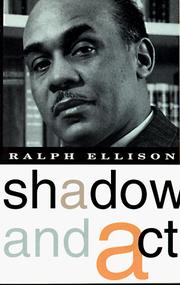
The 1964 collection, and the book that turns Ellison from a novelist into a critic worth arguing with — on jazz, on Faulkner, on the limits of protest fiction. Read it directly after the novel while its arguments are still fresh.
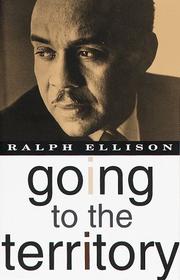
The later companion volume, written across two decades of not finishing the second novel and quieter in tone. Second because several pieces here answer questions Shadow and Act only raises.
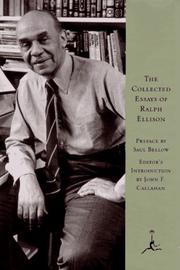
Gathers both earlier volumes plus uncollected work, so it functions as the permanent reference copy. Placed last in this stage as a completist option rather than a fresh read.
The short fiction and the unfinished second novel
IntermediateRead the work published after Ellison's death, and understand why the second novel could not be finished rather than treating it as a simple failure
▸ Study plan for this stage
Pace: 6–9 weeks, and the last book here is genuinely optional. Flying Home and Other Stories is 173 pages — a week. Juneteenth's 368 pages read as a novel, so ~25 a night for two weeks. Three Days Before the Shooting… is 1,101 pages of competing drafts and nobody should read it straight through: treat it
- The early stories are an apprenticeship conducted in public — several predate the novel and show him working through Hemingway and through Wright
- 'Flying Home' itself, with its Black airman and the folk tale of the man with wings, as the earliest clean fusion of realism and folklore in his work
- Juneteenth is an editor's book: one readable narrative carved out of decades of manuscript. The Hickman and Sunraider material is Ellison's; the shape of the book is not
- The preacher and the senator at the centre of it, and why a novel about a race-baiting politician who was raised Black could not be closed across the decades it spanned
- Three Days Before the Shooting… restores the mess — rival drafts, different eras of composition, no resolution. It is evidence, not a novel
- Why the second novel never closed: not simple blockage but a subject that kept moving as American politics moved, compounded by the loss of manuscript material in a fire
- How to read posthumous work fairly — separate what Ellison wrote from what was assembled after him, and judge only the first
- What do the early stories show him borrowing, and from whom?
- What is the relationship between the preacher and the senator, and why is it the hardest thing Ellison ever attempted?
- What has an editor decided on your behalf in Juneteenth, and how would you know?
- Having sampled the drafts, what do you think the actual obstacle was?
- Does the posthumous material change your view of the essays' confidence, and in which direction?
- Read 'Flying Home' and then the college section of Invisible Man; the folklore-versus-uplift argument is already fully formed in the story.
- Read the editor's note in Juneteenth before the novel rather than after. It tells you what you are holding.
- Pick one scene from Juneteenth and find its counterparts in the draft volume. Comparing two versions of a single sermon teaches more than a hundred pages of straight reading.
- Write a paragraph arguing that Juneteenth should never have been published, then one arguing that it should. The honest answer usually sits in the tension.
Next up: You have now seen the entire output — one novel, two books of essays, and forty years of manuscript — and the only thing left that can hold that shape together is the life.

Early stories, several written before Invisible Man, that show the apprenticeship in public for the first time. Read them first in this stage because they are the least demanding of the posthumous material.

The single readable novel carved by an editor out of decades of second-novel manuscript. Take it as one plausible reading of the material, not as the book Ellison would have published.

The full scholarly edition of the second-novel manuscripts, with the competing drafts left visible. Only worth attempting after Juneteenth, and honestly only for readers who want to see the impasse itself.
The life
IntermediateSet the single novel, the essays, and the forty-year silence into one coherent account
▸ Study plan for this stage
Pace: 4–5 weeks. Arnold Rampersad's biography is 657 pages and straightforwardly chronological, so ~25 pages a night for about a month works without losing the thread. Slow down for the chapters on the 1960s and the quarrels with the Black Arts movement — they are the part of the book that argues rather t
- Oklahoma City, Tuskegee and Harlem as the three places that produced the essays' argument about cultural mixture
- The friendship with Wright and its cooling — how Ellison moved from protégé to critic, and what the break cost both reputations
- The isolation that followed Invisible Man: the awards, the clubs, the professorships, and a widening distance from younger Black writers
- The attacks of the 1960s and Ellison's refusal to move his position; Rampersad is unsparing about both sides of that fight
- The 1967 fire and the losses to the second novel's material, set against the years of work on either side of it
- Rampersad's portrait is cool and at times severe about Ellison's vanity and his treatment of others. It is a biography with a view, and should be read as one
- The career reframed as a whole: one novel, a lifetime of criticism, and a silence that was not idleness
- How did the friendship with Wright begin, and what broke it?
- What were the specific charges against Ellison in the 1960s, and what was his answer to them?
- What does Rampersad make of the second novel's failure, and does the evidence support him?
- Where is the biography hardest on its subject, and is it fair?
- Having read the life, would you now put the essays or the novel first in a reading order for someone else?
- Read the chapters on the years immediately after the award alongside a reread of the novel's epilogue.
- Note every point where Rampersad's judgement of a book differs from your own. That list is the real result of this path.
- Reread his essay on the Wright argument after the biography's Wright chapters; it becomes a personal document as well as a critical one.
- Write the case, in a page, for reading Ellison as a critic who wrote one novel rather than a novelist who wrote criticism.
Next up: The path closes here — one novel, the essays that defend it, the manuscripts that could not resolve it, and a life that explains why there was never a second.
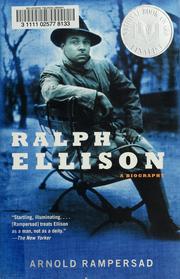
The major biography, unsparing about Ellison's later isolation and his quarrels with the Black Arts movement. Read it last, when you have the work in view and are ready for a complicated portrait.
Discussion
Keep reading
Paths that share books, cover the same subject, or open a related topic.