R.K. Narayan Reading Order: Where to Start
R. K. Narayan wrote a dozen novels and hundreds of stories set in one invented South Indian town, Malgudi, over more than fifty years. There is no plot running between them, so the order that matters is not chronological but tonal: begin with the two everyone reads, work forward through the early novels where the town and his method are being built, then the mature comedies where an ordinary man's small ambition quietly destroys him, and close with the stories, the memoir and the myth retellings.
Start Here
BeginnerMeet Malgudi and Narayan's deceptively plain comic voice in his most-loved and most-awarded novels.
▸ Study plan for this stage
Pace: 1 week for both, 184 and 223 pages. Narayan's chapters are short, his sentences are plain and there is no ornament to slow you down — most readers do Swami and Friends in two evenings and The Guide in three. Resist skimming: the flatness is deliberate and the jokes are quiet enough to miss at speed.
- Malgudi as a fixed invented town — the same river, the same Market Road, the same Mempi hills recur across fifty years of books, and this is the only continuity between them
- How little order actually matters: these are standalone novels with different protagonists, so the sequence in this path is tonal, not narrative. You can drop in anywhere; you just get more out of starting here
- The deceptively plain style — Narayan writes almost without metaphor, which is why the emotional turns land without warning
- Comic structure with a serious floor: an ordinary man is carried by circumstance somewhere he never intended, and the joke and the tragedy are the same event
- The Guide's double timeline, alternating between Raju's past and his present as a mistaken holy man, which is the most formally ambitious thing in the early path
- Sainthood by accident — the novel's central irony is that a fraud can produce a real transformation, and Narayan refuses to say whether it did
- Colonial India as unremarked background: the British are present in Swami and Friends as a fact of school life, not as a theme announced
- What is Swami actually afraid of in the schoolroom scenes, and how does Narayan make a child's fear funny without belittling it?
- In The Guide, what changes between Raju the tourist guide and Raju the swami — and does anything change at all?
- How does the alternating structure of The Guide control what you are allowed to know, and when?
- What does the ending of The Guide leave deliberately unresolved, and why would resolving it wreck the book?
- Where in either novel does the comedy tip into something harder, and can you find the sentence where it happens?
- Sketch a rough map of Malgudi from these two books — the river, the school, Market Road, the hills. Every later novel uses it and you will keep adding to it.
- Pick one paragraph of Narayan's prose and try to add a metaphor to it. Seeing what breaks is the fastest way to understand what the plainness is doing.
- In The Guide, mark the chapter breaks where the timeline switches. Reading only the present-tense strand straight through afterwards shows how much the interleaving was doing.
- Write down the moment you first stopped finding Raju likeable. Comparing that page with another reader's is the most productive argument these books produce.
Next up: You now know the town and the register, so the early novels can be read for what they are — a young writer working out how much weight this plain style will carry, in books that get progressively less funny.
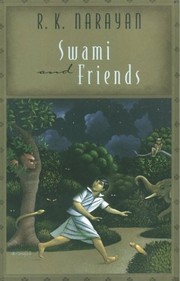
His first novel and the first appearance of Malgudi, seen through a schoolboy. The gentlest possible entry, and it establishes the town you will spend the rest of the path in.
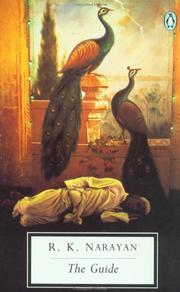
A tourist guide becomes a lover, a convict and finally a reluctant holy man. His best-known novel and the one where the comedy turns genuinely serious; read it second, once Malgudi is familiar.
The Early Malgudi Novels
BeginnerFollow the first sequence of books in the order he wrote them and watch a young writer find the register that made him.
▸ Study plan for this stage
Pace: 2 weeks for 265, 209 and 183 pages. These read as quickly as the first two. Take them in publication order as listed; it is the one stage in this path where sequence genuinely helps, because you are watching a technique develop. Give The English Teacher a gap of a day or two before starting it — it
- Publication order as development: read consecutively, these three show Narayan moving from student comedy to domestic realism to something close to grief writing
- A loose sequence of life stages, not a series — schoolboy, graduate, married man — but with different protagonists each time. Chandran and Krishna are not Swami grown up, and the books do not refer to each other
- The Bachelor of Arts and the standard Narayan arc: infatuation, rebellion, wandering, and a quiet return to exactly the life he fled
- Arranged marriage handled as social machinery rather than as an issue — the horoscope mismatch in The Bachelor of Arts is treated as an immovable fact of the world
- The Dark Room as the corrective to Narayan's reputation for charm: a wife leaves a bullying husband, and there is very little comedy in it
- Savitri's position and the limits of her exit — the novel is unusually direct about how few options a woman in this town actually has
- The English Teacher's break in two: a realist domestic novel about a marriage, then an attempt to reach the dead, drawn straight from Narayan's own bereavement
- Autobiography entering the fiction — this is the point where the invented town starts carrying the author's own life
- What does Chandran's period of wandering in The Bachelor of Arts accomplish, given where he ends up?
- How does Narayan present Ramani in The Dark Room — as a monster, a type, or an ordinary man behaving ordinarily?
- Why does Savitri's rebellion end as it does, and does the novel judge her for it?
- Where exactly does The English Teacher change genre, and does the second half convince you?
- Comparing these three, what has Narayan learned to do by the end that he could not do in Swami and Friends?
- How much does reading them in publication order add — and which one would still work perfectly well read first?
- Note the last two pages of each novel side by side. Narayan's endings are the most consistent thing about him and the pattern is clearest across a run of three.
- Read The Dark Room immediately after The Bachelor of Arts and write 200 words on the tonal difference. This is the cleanest evidence that his lightness was a choice.
- In The English Teacher, mark the page where the séance material begins and then read the first half's marriage scenes again. They are written by a man who already knew what was coming.
- Keep adding to your Malgudi map. Three more books should have given you the college, the hostel and the river bank.
Next up: With the early novels behind you the formula is visible — ordinary Malgudi man, outsized disruption, return to the ordinary — which is exactly what the middle-period comedies take up and then push as far as it will go.
Swami's world grown up: a graduate in love, in rebellion, and finally married off. The direct sequel in spirit to the first novel and best read straight after it.

A wife walks out on a bullying husband. His bleakest early book and the corrective to any impression that Narayan is merely charming.
A teacher loses his wife and tries to reach her after death. Drawn directly from Narayan's own bereavement; the most personal novel and the emotional peak of the early period.
The Mature Comedies
IntermediateRead the middle-period novels where the pattern is fixed — an ordinary Malgudi man is visited by an outsized ambition or an outsized stranger — and see how much variation Narayan gets from it.
▸ Study plan for this stage
Pace: 2–3 weeks for four short novels: 217, 182, 144 and 144 pages. None of them takes more than three evenings. Order within this stage is barely load-bearing — all four are standalone — but The Financial Expert first and The Painter of Signs last gives you the clearest arc from pure structure to open sc
- The fixed pattern of Narayan's middle period: an ordinary man with a small settled trade is visited by an ambition or a stranger far too large for him
- The rise-and-fall shape at its purest in The Financial Expert — Margayya's banyan-tree moneylending grows into an empire and collapses on a single domestic mistake
- Money in Narayan as a moral instrument rather than a subject: what characters do with it always exposes what they wanted from their families
- The Man-Eater of Malgudi as a deliberate reworking of a demon myth, where the destroyer is undone by his own nature and nobody has to defeat him
- Vasu as the pure Narayan intruder — loud, physically overwhelming, and immune to the town's social pressure, which is what makes him funny and dangerous
- The Vendor of Sweets and the generational collision: a Gandhian father and an Americanised son, with independence-era ideals meeting post-independence ambition
- The Painter of Signs and the family-planning campaigner Daisy — Narayan's most direct engagement with modernity arriving in the town, and his most sceptical
- How little Malgudi changes: fifty years of Indian history pass and Market Road stays recognisable, which is either the books' great limitation or their great point
- What ruins Margayya, and is it his greed or his indulgence of his son?
- How does the demon-myth structure of The Man-Eater of Malgudi determine Vasu's ending, and is that ending a cheat?
- In The Vendor of Sweets, whose side is the novel actually on — and does it stay there?
- What does Daisy want in The Painter of Signs, and why does Raman find her incomprehensible?
- Across these four, what does a Narayan protagonist always lose, and what does he always keep?
- Do these books ignore Indian politics of the period, or are they registering it in ways that are easy to miss?
- For each of the four, write one line naming the intruder and one line naming the ordinary life they disrupt. The pattern is undeniable in table form.
- Read the Vasu sections of The Man-Eater of Malgudi aloud. The comedy is largely in the rhythm of his speech and it flattens on the page.
- Put The Vendor of Sweets and The Painter of Signs side by side on the question of modernity. One is about a son, one is about a woman, and the novels reach different verdicts.
- Pick any one of the four and locate the page where you knew how it would end. Narayan's plots are visible early; the interest is entirely in the execution.
Next up: You have now read enough Malgudi novels to recognise the moves on sight, which is the right condition for the short stories that compress the same town into six pages, and for the memoir and the epic that show where all of it came from.
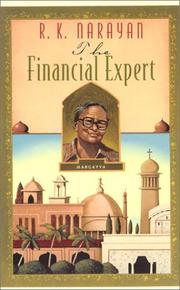
A moneylender operating under a banyan tree builds and loses an empire. The purest example of the rise-and-fall structure, and the best novel to read first in this stage.
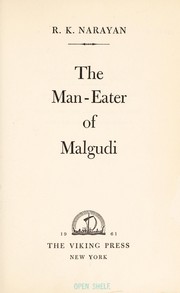
A mild printer's life is invaded by a taxidermist who will not leave. Narayan's funniest book and a deliberate reworking of a Hindu demon myth.

A Gandhian sweet-maker versus his Americanised son. The generational novel of the group, and the one where post-independence India presses hardest on the town.
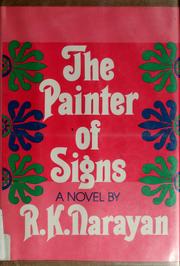
A sign-painter falls for a family-planning campaigner. The latest of the great comedies and the most sceptical about modernity, so it works as the closing note of the fiction.
Stories, Memoir and Myth
IntermediateRound out the novels with the short fiction that made him a household name in India, the autobiography, and the epic retelling that shows what he was drawing on all along.
▸ Study plan for this stage
Pace: 2 weeks. Malgudi Days (246) is best rationed — two or three stories an evening over a week, since they blur when read in bulk. My Days (186) and The Ramayana (171) are each a two- or three-evening read. Take them in this order: the stories, then the life, then the source material.
- Compression as the real test — a Malgudi Days story does in six pages what the novels take two hundred to do, and reveals how much of the novels was patient repetition
- The stories as most Indian readers' first Narayan, which is a fact about his standing at home rather than a claim about their quality
- Recurring types rather than recurring characters: the astrologer, the postman, the sign-painter, the vendor — Malgudi as a population of trades
- My Days as the key to the fiction: Mysore, the years of rejection, the marriage, and the bereavement that produced The English Teacher
- A writer's economic life laid bare — Narayan's account of trying to place a first novel from provincial India is unusually unromantic
- The Ramayana as prose retelling, and the recognition that the myth patterns have been quietly inside the Malgudi novels the whole time
- Narayan the condenser: the epic is delivered in under two hundred pages, and what he chooses to cut is as informative as what he keeps
- Which Malgudi Days stories could have been novels, and what does Narayan gain by refusing to expand them?
- What does My Days tell you about the origins of The English Teacher that changes how that novel reads?
- How does Narayan describe his own working method, and does it match the impression the novels give?
- Which Malgudi novel does The Ramayana most obviously stand behind — and is the resemblance structural or thematic?
- What does Narayan leave out of the epic, and what does that omission say about what he wanted from it?
- Having read the whole path, how much did order actually matter — and which stage would you now reorder?
- After each of five Malgudi Days stories, write one sentence naming the trade of the protagonist. The occupational map of the town assembles itself.
- Read My Days with the early novels beside you and mark every passage that clearly became fiction. The bereavement chapters and The English Teacher are the obvious pair, but they are not the only one.
- Compare Narayan's Ramayana against any summary of the full epic and list three things he dropped. His editorial instincts are the whole interest of the book.
- Go back to your Malgudi map one last time and see how complete it has become across a dozen books. That accumulation is the actual reward of reading him in quantity.
- Pick the novel you liked least and reread its first chapter now. Narayan improves considerably once you can see the pattern he is varying.
Next up: This is the end of the path — with the town, the life and the source myths in hand, the sensible next move is not another author but the Narayan novels this list left out, which you can now read in any order at all.

The short stories, and for many Indian readers the first Narayan they ever met. Read after several novels so you can see how much town he can fit into six pages.
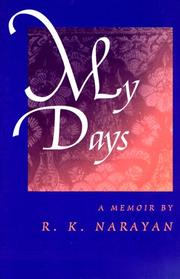
His memoir: Mysore, the failure to get published, the marriage and the loss behind The English Teacher. It re-reads the whole path for you.
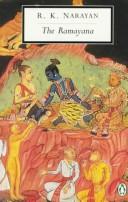
His prose retelling of the epic. Placed last because the myths he compresses here are the ones he had been quietly reusing in Malgudi for fifty years.
Discussion
Keep reading
Paths that share books, cover the same subject, or open a related topic.