Primo Levi Reading Order: Where to Start
This curriculum follows Primo Levi's own intellectual arc: beginning with his direct, shattering testimony of Auschwitz, moving through his hybrid science-and-memory essays, and arriving at his late philosophical reflections on survival, identity, and the human capacity for evil. Each stage builds the emotional and conceptual vocabulary needed to fully inhabit the next, so that by the end the reader can engage Levi not just as a witness but as one of the twentieth century's most rigorous moral thinkers.
The Testimony
BeginnerExperience Levi's foundational witness accounts of Auschwitz and its aftermath, establishing the factual and emotional ground on which all his later work rests.
▸ Study plan for this stage
Pace: 3–4 weeks, ~15–20 pages per day — a deliberately slow pace that allows the reader to absorb the weight of each episode rather than racing through the narrative.
- Testimony as moral obligation: Levi frames bearing witness not as a personal choice but as a duty owed to those who did not survive, establishing the ethical foundation of his entire literary project.
- The 'Gray Zone': Levi's nuanced concept of the morally ambiguous space where victims were sometimes forced into roles that blurred the line between perpetrator and victim, resisting simple moral judgments.
- Dehumanization as a systematic process: The camp's bureaucratic machinery — the stripping of names, the tattooing of numbers, the destruction of language and hygiene — is shown as a deliberate, industrial assault on human identity.
- The chemistry of survival: Levi's scientific training (his identity as a chemist) provides both a literal lifeline inside the camp and a narrative lens — precise, observational, and resistant to sentimentality.
- The Lager as a society: Auschwitz is not chaos but a grotesque social order with its own hierarchies, economies (the 'market'), languages, and unwritten laws that prisoners must rapidly decode to survive.
- Memory, language, and communication: The Tower of Babel-like cacophony of languages in the camp isolates prisoners; Levi's struggle to learn German and communicate is itself a survival strategy.
- The figure of the 'drowned and the saved': Even in this early text, Levi introduces the distinction between those who succumb (the Muselmänner) and those who adapt — a theme he will spend decades refining.
- Bearing witness after liberation: The final chapters and tone of the book raise the question of what it means to return to ordinary life carrying this knowledge, foreshadowing Levi's lifelong psychological burden.
- How does Levi use his identity as a chemist — both practically and narratively — to survive and to tell his story? Find at least two specific moments in the text where his scientific mindset shapes his account.
- What is the 'Gray Zone' as Levi describes it in the context of Auschwitz, and why does he insist that easy moral condemnation of figures like the Kapos is intellectually dishonest?
- Trace the process of dehumanization as Levi experiences it in the opening chapters. What specific acts does the camp system use to strip prisoners of identity, and how does Levi resist — or fail to resist — each one?
- How does the camp function as a distorted society with its own economy and hierarchy? Describe the informal 'market' and explain what it reveals about human adaptability under extreme conditions.
- Who are the Muselmänner, and what does Levi's description of them tell us about the limits of individual agency and will in the camp environment?
- By the end of the book, what emotional and philosophical questions is Levi left with? How does the act of writing this book seem to function for him personally?
- **Annotated re-reading of one chapter:** Choose a single chapter (the opening 'The Journey' or 'On the Bottom' are ideal) and re-read it with a pencil, marking every moment where Levi uses precise, scientific language to describe horror. Write a one-paragraph reflection on what that stylistic choice does to the reader.
- **Vocabulary and language log:** Each time Levi introduces a camp-specific term (Lager, Muselmann, Kapo, Prominenz, etc.), write it down with its definition and the page where it appears. At the end of the book, review the list — what does the sheer volume of specialized vocabulary tell you about the camp as a self-contained world?
- **Gray Zone case study:** Identify one figure in the book (e.g., a Kapo, a Blockältester, or Lorenzo) and write a 200-word character sketch that applies Levi's own 'Gray Zone' framework. Avoid simple moral verdicts — try to hold the ambiguity Levi demands.
- **Timeline of dehumanization:** Create a simple visual timeline of the first 48 hours Levi spends in the camp, listing each act of dehumanization in sequence. Then annotate each item with a brief note on what human quality or right it was designed to destroy.
- **Comparative reflection — before and after:** Before you begin reading, write one paragraph describing what you already know or assume about Auschwitz. After finishing the book, write a second paragraph. Compare the two: what did Levi's first-person witness account change, complicate, or deepen in your understanding?
- **Letter to Levi:** Write a one-page informal letter to Primo Levi responding to the book as if he could read it. Focus not on praise but on the questions his account leaves you with — this exercise trains close engagement with the text's open-ended moral challenges.
Next up: Survival in Auschwitz establishes the raw factual and emotional bedrock of Levi's experience; the next stage builds directly on this foundation by exploring how Levi — across years of reflection — returned to these same events with deeper philosophical and psychological tools, asking not just *what happened* but *why*, *how*, and *what it means for all of us*.

Levi's first and most essential book — a clear-eyed, almost clinical account of his year in the Lager. Its restrained prose is accessible to any reader and introduces the moral vocabulary (the 'grey zone,' the drowned and the saved) that echoes through everything he wrote afterward.
The Storyteller
BeginnerDiscover Levi as a literary inventor — a writer who uses fiction, fable, and his identity as a chemist to explore memory, work, and what it means to be human.
▸ Study plan for this stage
Pace: 3–4 weeks, ~15–20 pages/day — The Periodic Table has 21 self-contained chapters, so reading one chapter every 1–2 days allows time to pause, reflect, and journal between sessions without rushing the layered prose.
- The chapter-as-element structure: each of the 21 chapters is named after a chemical element and uses that element as a metaphor, symbol, or narrative lens — understanding this architecture is central to reading the book
- Autobiography through fiction: Levi blurs memoir and invention, embedding imagined characters and fable-like tales within a life story, making the book a hybrid form rather than a straightforward autobiography
- Chemistry as moral and philosophical language: Levi uses the properties of elements (inertness, reactivity, purity, contamination) to speak about identity, resistance, collaboration, and survival
- Work as human dignity: across chapters, skilled labor — assaying, distilling, synthesizing — is portrayed not merely as employment but as an act of self-assertion and meaning-making
- Memory, time, and transformation: the book moves non-linearly through Levi's life; elements serve as anchors that allow him to revisit the past without being imprisoned by it
- Jewish identity and marginalization in Fascist Italy: chapters like 'Zinc' and 'Gold' explore how racial laws shaped Levi's education, friendships, and sense of self before and during the war
- The scientist as storyteller: Levi demonstrates that precision, curiosity, and the habit of close observation — virtues of the laboratory — are also the virtues of great literary writing
- Resilience and irony: Levi's characteristic tone blends dark humor with clear-eyed acceptance, modeling a way of bearing witness that resists both sentimentality and despair
- How does Levi use the specific chemical properties of an element (e.g., the inertness of Argon, the impurity needed in Zinc) to illuminate a human or historical theme in that chapter?
- In what ways does The Periodic Table resist easy classification — is it memoir, fiction, short-story collection, or something else, and what does that ambiguity reveal about Levi's intentions as a writer?
- How does Levi portray the relationship between professional/scientific identity and personal survival, particularly in chapters set during or just after the war years?
- What role does irony play in Levi's voice, and how does it allow him to address traumatic material (antisemitism, the camps, loss) without overwhelming the reader or himself?
- Choose one chapter and explain how the element it is named after functions simultaneously as a literal substance, a biographical marker, and a metaphor.
- How does Levi's depiction of work and craft challenge or complicate the idea that the Holocaust reduced its victims entirely to powerlessness?
- Element mapping journal: After each chapter, write 3–5 sentences explaining the chosen element's symbolic role. By the end of the book you will have a personal 'periodic table of themes' that reveals the book's architecture at a glance.
- Close-reading a single paragraph: Select one paragraph from a chapter you found most striking. Annotate it line by line — identify one scientific term, one metaphor, one moment of irony, and one autobiographical detail. Write a short paragraph explaining how these four layers work together.
- Comparative tone exercise: Find one passage where Levi describes a laboratory procedure and one where he describes a human relationship. Write a one-page reflection on how his language and sentence rhythm change (or deliberately don't change) between the two.
- Personal element essay: Choose a chemical element not in the book and write a 300–500 word autobiographical vignette in Levi's style, using that element's properties as a metaphor for a moment in your own life. This forces active engagement with his hybrid method.
- Timeline reconstruction: Create a simple chronological timeline of Levi's life as reconstructed from the chapters (they are not in strict order). Note which chapters required inference versus explicit statement — this trains attention to non-linear narrative structure.
- Discussion or written response: The chapter 'Vanadium' closes the book with a haunting epistolary encounter. After reading it, write a one-page response to the question: 'What does this ending suggest about the possibility — or impossibility — of reconciliation?'
Next up: Mastering Levi's hybrid voice and his use of chemistry as moral metaphor in The Periodic Table gives the reader the interpretive tools — close attention to form, tone, and the interplay of fact and fable — needed to engage with his more direct and harrowing testimonial writing in subsequent stages.
Widely considered his masterpiece, this memoir-in-stories uses the elements of the periodic table as chapter headings to structure a life. It is the ideal bridge between testimony and essay: personal, witty, and intellectually playful, it shows Levi's full range as a writer.
The Moral Philosopher
IntermediateEngage Levi's most demanding and systematic thinking about the Holocaust, perpetrators, victims, complicity, and the limits of judgment.
▸ Study plan for this stage
Pace: 2–3 weeks, ~15–20 pages/day — the book is short (~170 pages) but each vignette rewards slow, rereading; allow extra time for reflection and journaling between chapters
- The 'Gray Zone' in practice: Moments of Reprieve dramatizes the moral ambiguity Levi theorized elsewhere, showing how survival often required complicity, compromise, and moral improvisation
- Individuation as ethical act: Levi's deliberate project of restoring individual faces, names, and stories to people the Holocaust reduced to numbers — a counter-move against dehumanization
- Memory as moral testimony: the book's origin in stories Levi told orally for decades before writing them down raises questions about how memory shapes, selects, and ethically frames the past
- Humor, play, and resistance: several vignettes (e.g., Rappoport, the theater episode) explore how moments of levity or creativity functioned as micro-acts of dignity and resistance inside the Lager
- The limits of judgment: Levi consistently withholds simple condemnation of figures who collaborated, traded, or bent rules — modeling a disciplined suspension of easy moral verdict
- Perpetrator adjacency: some vignettes place the reader uncomfortably close to figures who benefited from or enabled Nazi structures, testing the reader's own capacity for judgment
- Narrative form as ethical argument: the short-story/vignette structure itself makes a philosophical point — moral life in extremity was episodic, fragmentary, and resistant to grand narrative
- Witness and survivor guilt: the recurring tension between Levi's gratitude for having known these individuals and his guilt at having outlived them
- How does Moments of Reprieve function as a companion to or complication of the 'Gray Zone' concept — what does the narrative form allow Levi to do that an essay cannot?
- Choose one figure from the book (e.g., Rappoport, Cesare, Lorenzo). How does Levi construct their individuality, and what moral or philosophical point does that construction serve?
- Levi repeatedly notes that he is not a judge. What does this refusal of judgment actually look like on the page, and is it itself a moral position? What are its limits?
- How does humor function in the specific vignettes where it appears — is it escapism, resistance, humanity, or something more complicated?
- What is the relationship between oral storytelling and written testimony in this book, and how does that relationship affect the reader's sense of the text's reliability and authority?
- By the end of the book, what does Levi seem to believe about the possibility of preserving one's moral self inside a system designed to destroy it?
- Close-reading log: For each vignette, write 2–3 sentences identifying (a) the central moral tension, (b) Levi's stance toward the protagonist, and (c) one moment where judgment is withheld or complicated — build this into a running document to compare patterns across the book
- Character portrait exercise: Select one figure Levi portrays and write a one-page 'counter-portrait' from that person's own imagined perspective — then reflect in writing on what this exercise reveals about the ethics of testimony and representation
- Structural analysis: Map the book's vignettes on a simple axis of 'moral clarity ↔ moral ambiguity.' Where do most stories cluster? What does the distribution tell you about Levi's overall philosophical project in this book?
- Comparative passage exercise: Find one passage in Moments of Reprieve where Levi uses humor and one where he uses clinical, precise language. Write a paragraph analyzing how each rhetorical mode shapes the reader's moral response differently
- Judgment audit: After finishing the book, write a one-page personal reflection on a moment when you, as a reader, felt the urge to judge a character Levi refused to judge — interrogate where that urge came from and what Levi's restraint asks of you
- Discussion or journal prompt — 'The face behind the number': Levi's project is explicitly about restoring individuality. Research one historical effort to memorialize Holocaust victims by name (e.g., Yad Vashem's Hall of Names) and write a paragraph connecting that effort to Levi's literary method in this book
Next up: Moments of Reprieve grounds Levi's moral philosophy in vivid human particulars, preparing the reader to engage his more systematic and demanding ethical arguments — about judgment, perpetrators, and the 'drowned and the saved' — with a gallery of real, complex faces already in mind.
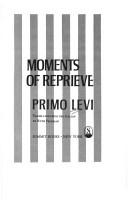
A collection of portraits of individuals Levi knew in the camp, each a small act of humanization. Read alongside The Drowned and the Saved, it provides the human faces that anchor his abstract ethical reflections.
The Essayist and Poet
ExpertEncounter Levi's full intellectual breadth — his science writing, his speculative fiction, and his poetry — to understand him as a complete literary and humanist figure.
▸ Study plan for this stage
Pace: 2–3 weeks, ~5–8 poems per sitting, 4–5 sittings per week — read slowly and re-read each poem at least twice before moving on; reserve the final 3–4 days for a full re-reading of the collection as a unified whole
- Poetry as testimony: how Levi uses compressed lyric form to bear witness in ways his prose cannot
- The tension between scientific rationalism and lyric emotion — Levi's dual identity as chemist and poet
- Intertextuality and literary allusion: Levi's deep dialogue with Dante, the Bible, and classical myth throughout the poems
- The figure of the 'drowned and the saved' transposed into verse — guilt, survival, and moral reckoning in poetic form
- Language under pressure: how Levi's precise, technical vocabulary collides with and enriches poetic diction
- Dark irony and understatement as ethical stances — what Levi refuses to say as much as what he says
- Time, memory, and the body: how the poems map the aging survivor's relationship to his own past and physical self
- The humanist vision: poems that address non-human life, the cosmos, and the future as extensions of Levi's ethical imagination
- How does Levi's background as a chemist shape his poetic imagery and diction — can you cite specific poems as evidence?
- In what ways do the poems revisit and reframe themes already present in his prose memoirs, and what does the shift in form allow him to do differently?
- How does Levi deploy classical and literary allusion (Dante, the Bible, mythology) and to what ethical or emotional effect?
- What is the emotional register of the collection as a whole — and how does Levi use irony, restraint, and understatement to manage extremity?
- Which poems most directly address the experience of survival and guilt, and how do they compare in tone and strategy to the famous 'Shemà'?
- How does the collection position Levi as a humanist thinker — what vision of humanity, nature, and responsibility emerges across the poems taken together?
- Close-reading journal: For at least 8 poems, write a one-page annotation covering diction, imagery, form, tone, and the poem's relationship to Levi's biography and broader work
- Intertextual mapping: Identify every explicit or implicit allusion to Dante's Inferno across the collection, note the specific canto or line being echoed, and write a short paragraph explaining what Levi gains by invoking Dante in each case
- Comparative prose-to-poem exercise: Choose one poem that shares a theme with a passage from 'If This Is a Man' or 'The Periodic Table' (even if those books are from earlier stages), write a 400-word comparison of how the two forms handle the same material differently
- Thematic grouping: Re-sort the poems yourself into 4–5 thematic clusters (e.g. survival/guilt, science/nature, myth/allusion, the future/humanity) and write a one-paragraph rationale for each cluster — then compare your groupings to the collection's own ordering
- Imitation exercise: Write a short poem (12–20 lines) in Levi's manner — use precise, concrete, even technical language to approach an emotionally charged subject with restraint and irony, then annotate your own choices
- Culminating essay: Write a 600–800 word essay arguing for a single, specific claim about what the *Collected Poems* reveals about Levi that his prose alone could not — use at least four poems as primary evidence
Next up: Mastering Levi's poetic voice and his full humanist intellectual range equips the reader to engage critically with scholarly and biographical perspectives on his entire body of work, making the next stage — critical reception and legacy — a natural culmination of the curriculum.

Levi's poetry — spare, precise, and haunting — distills his testimony and philosophy into their most compressed form. Saving it for last allows the reader to hear familiar themes (survival, identity, the camp) refracted through a completely different, deeply rewarding register.
Discussion
Keep reading
Paths that share books, cover the same subject, or open a related topic.