Labor Economics: The Best Books on Wages, Work and Jobs, in Order
Labor economics asks why wages are what they are, and it is the subfield where economics has most publicly changed its mind — the minimum-wage consensus of 1990 is not the consensus of today. This path deliberately starts outside the models with the reporting and argument books, so you have real workplaces in mind, then takes the textbook spine, then the empirical work that overturned the textbook, and ends with the frontier on skills, education and the gender wage gap.
Start with the arguments, not the models
BeginnerRead three books about what work is actually like, so the later supply-and-demand diagrams have something to describe.
▸ Study plan for this stage
Pace: 4 weeks for about 1,060 pages, none of it technical. Barbara Ehrenreich's Nickel and Dimed (242 pages) is a week — immersion journalism in which the author took a series of low-wage jobs and tried to live on the earnings; she writes as a participant and an advocate, and the wage levels, rents and we
- The arithmetic of low-wage work: hourly pay against rent, transport, childcare and the deposit you cannot raise, which is the constraint Ehrenreich makes concrete
- Job quality as distinct from wage — scheduling, monitoring, unpaid preparation time, and the search costs of holding two jobs
- Immersion journalism as a method: what a participant can observe that a dataset cannot, and what she cannot generalise
- Graeber's taxonomy of jobs he claims are pointless — flunkies, goons, duct tapers, box tickers, taskmasters — and the fact that the classification rests on self-report
- The distinction between a job being socially useless and a job being unproductive in the economic sense, which Graeber's argument depends on and does not settle
- Automation, retraining and the gig economy as Shell reports them, and the gap between retraining policy and retraining outcomes
- What is missing from a supply-and-demand account of the labour market: meaning, dignity, monitoring, and the employer's power over the day
- Reconstruct Ehrenreich's budget in one of her cities. Where exactly does the arithmetic fail, and is the failure about the wage or about a fixed cost?
- What is Graeber's evidence, and what would a labour economist say is wrong with it? Is the objection fatal to his claim?
- Shell reports on retraining programmes. What do they promise, what do they deliver, and what would you need to measure to settle it?
- Which features of low-wage work in these three books does a wage figure fail to capture?
- All three authors are arguing rather than measuring. For each, name the claim you would most want to see tested with data.
- Rebuild Ehrenreich's monthly budget from the figures in the book, then redo the same budget at your own area's current minimum wage and current median rent; the comparison is the whole point of reading a dated book
- Take Graeber's five categories and try to assign twenty real job titles to them; note how many resist classification and why
- For each of Shell's retraining case studies, write down the outcome measure the programme reports and the outcome measure you would want instead
- Write a one-page list of the things these three books say matter about a job, and keep it — you will check it against the variables in the Borjas textbook in stage three
- Find current data for one number Ehrenreich reports — a state minimum wage, a poverty threshold, a rent — and note how much has and has not changed
Next up: These give you the phenomena; the next stage explains where the employment relationship they describe came from and how it has been deliberately restructured.

Ehrenreich working minimum-wage jobs and failing to make the arithmetic work. Dated in its particulars and still the most-assigned book on low-wage work; read it first and read it critically.

The anthropologist's argument that a large share of paid work is understood by the people doing it to be pointless. Not economics and openly polemical, but it names something the models have no variable for.

Reported across automation, retraining and the gig economy, and the most current of the three. It sets up the questions the rest of the path answers with data.
The long view of work
BeginnerZoom out to how the employment relationship itself was built and is now being taken apart.
▸ Study plan for this stage
Pace: 6 weeks for about 1,220 pages. James Suzman's Work (408 pages, published as Work: A History of How We Spend Our Time in the UK and Work: A Deep History in the US) is an anthropologist's account running from foraging societies to the present; two weeks, and it is the widest frame here — it draws on h
- The wage relation as a historically recent arrangement rather than a natural form, which is Suzman's central and most contestable claim
- Working time across societies, and the affluent-forager argument about how many hours subsistence actually requires
- The postwar standard employment relationship — one employer, a career ladder, benefits — and the fact that it was itself a specific historical construction
- Hyman's argument that contingent work was designed and sold, by staffing firms and consultancies, rather than emerging from technology
- Weil's fissuring: large firms shedding direct employment to franchisees, subcontractors and staffing agencies while retaining control of standards and price
- Why fissuring lowers wages without any change in the work — the firm that sets the terms is no longer the legal employer
- Enforcement as the operative variable: who is liable for a wage violation once the workplace has been fissured
- Monopsony's institutional shadow — franchise agreements, non-competes and no-poach clauses as employer power written into contracts
- How much of Suzman's general argument about work rests on his Ju/'hoansi fieldwork, and how far can that base carry it?
- Hyman says contingent work was constructed. Who constructed it, what were they selling, and what would the alternative history look like?
- State the fissuring mechanism precisely: what changes for the worker, the lead firm and the subcontractor when a job is outsourced but the work is identical?
- Weil is describing an enforcement problem. What specific legal change would address it, and what would that cost?
- How does the standard employment relationship look after these three books — as a norm that eroded, or as an anomaly that ended?
- Pick a familiar service — hotel housekeeping, a fast-food outlet, a warehouse, a mobile phone shop — and map its actual employment structure: who signs the pay cheque, who sets the standards, who owns the brand; that map is Weil's argument applied
- From Hyman's account, build a timeline of the institutions that made contingent work possible, with dates and firms
- Take one of Weil's industry case studies and write down every party that would have to be liable for a wage violation to be remedied
- Compare Suzman's estimate of hours worked in the societies he describes with current average hours in your country, and note precisely what is and is not comparable between the two figures
- Return to your list of what matters about a job from stage one and mark which items fissuring makes worse and which it leaves untouched
Next up: With the institutions and their history in view, the next stage supplies the formal apparatus that the rest of the path either applies or attacks.

An anthropologist's deep history of how humans have spent their time, published as Work: A History of How We Spend Our Time in the UK and Work: A Deep History in the US. It is the widest frame on this path and makes the wage relation look recent and strange.

A history of how temporary, contingent and consultant work was deliberately constructed in postwar America. Read it as the historical mechanism behind the trend the next book measures.

Weil's account of how large firms shed direct employment to franchises, subcontractors and staffing agencies, and what that does to wages and enforcement. Catalogued under its full subtitle. The single most useful institutional book here.
The textbook spine
IntermediateGet the formal apparatus in one pass: labour supply and demand, human capital, compensating differentials, search.
▸ Study plan for this stage
Pace: 8–10 weeks for 544 pages, and this is a different activity from everything above. George J. Borjas's Labor Economics is the standard undergraduate textbook — chapters with models, diagrams, worked examples and problem sets — and it should be worked rather than read: two to three sections a week, wit
- The neoclassical labour supply decision: the budget constraint, the reservation wage, and the decomposition of a wage change into income and substitution effects
- Labour demand from the firm's problem, the marginal revenue product of labour, and short-run versus long-run elasticities
- The competitive equilibrium prediction that a binding minimum wage reduces employment, and the exact assumptions that prediction requires
- Human capital: the schooling decision as an investment, the internal rate of return, and the Mincer earnings function
- Compensating differentials — the theory that unpleasant or risky jobs pay more, all else equal, and the difficulty of testing it
- Search and matching as an alternative to instantaneous market clearing, with frictions, vacancies and unemployment as an equilibrium phenomenon
- Discrimination models — taste-based and statistical — and what each predicts about wage gaps persisting under competition
- Immigration's predicted effects on native wages under the standard model, and why Borjas's empirical treatment of it is disputed
- Derive the labour supply curve from the worker's optimisation problem and explain exactly when it bends backward.
- State the assumptions required for the competitive prediction that a minimum wage reduces employment. Which of them is doing the most work?
- Compute the return to a year of schooling in Borjas's human-capital framework. What is the framework treating as fixed that plainly is not?
- Compensating differentials predict higher pay for worse conditions. Why is that so hard to see in the data, and what does Borjas say about it?
- How does a search model change the interpretation of an unemployment figure compared with the competitive model?
- Which of the phenomena from stages one and two has no variable in this book at all?
- Work every problem in the labour supply and labour demand chapters, including the graphical ones, and keep the worked solutions
- Reproduce Borjas's own numerical examples with his numbers, then re-run one of them with a different elasticity and note how far the conclusion moves
- Derive the minimum-wage employment prediction from scratch and write down, in a list, each assumption used at each step; this list is what stage four attacks
- Estimate a Mincer earnings function specification on any public microdata you can access, or reproduce the estimation Borjas reports from his own table
- Take your list from stage one of what matters about a job and mark, item by item, whether the textbook has a variable for it — that annotated list is the honest summary of what the model does and does not cover
- Read the immigration chapter and separately list its theoretical claims and its empirical claims, so you can hold the contested part apart from the standard part
Next up: You now have the model whose central prediction the next stage tested and failed to confirm, which is the argument that reorganised the field.

The standard undergraduate textbook, and the reference the rest of this path argues with. Work the chapters on labour demand, human capital and immigration; the empirical chapters are where Borjas's own contested positions live, so read them alongside the next stage.
The empirical revolution
IntermediateRead the natural-experiment work that broke the old consensus, and the theory built to explain it.
▸ Study plan for this stage
Pace: 10–12 weeks for about 1,170 pages, all three of them research monographs rather than textbooks. David Card and Alan Krueger's Myth and Measurement (444 pages) is the origin of the modern empirical turn: it reports the minimum-wage natural experiments, including the New Jersey and Pennsylvania fast-f
- Natural experiments and difference-in-differences: using a policy change in one jurisdiction and a comparable neighbour as the counterfactual
- The New Jersey minimum-wage result — employment not falling where the competitive model predicted it would — and the data and measurement disputes that followed
- Publication bias and specification search as explanations the older literature had not accounted for, which Card and Krueger raise directly
- Monopsony as wage-setting power: if a firm faces an upward-sloping labour supply curve, it sets employment below and wages below the competitive level
- Manning's dynamic monopsony — power arising from search frictions, mobility costs and imperfect information rather than from a single employer in a town
- Why monopsony reverses the minimum-wage prediction: a wage floor between the monopsony wage and the competitive wage can raise employment
- Freeman and Medoff's exit-and-voice framework: unions as a collective voice mechanism, with effects on turnover, productivity and wage compression, not only on the wage level
- The union wage premium and wage compression as separate findings, and the contested question of net effects on productivity
- Explain the difference-in-differences design in the New Jersey study. What has to be true about Pennsylvania for the estimate to be valid?
- What were the main objections to Card and Krueger's data, and what did the subsequent literature conclude?
- Derive the monopsonist's employment and wage choice and show, with Manning's framework, the range of wage floors that raise employment.
- Manning locates employer power in frictions rather than concentration. What evidence does he give, and what would falsify it?
- What do Freeman and Medoff find that a pure wage-premium account of unions misses, and how strong is the productivity evidence?
- After these three: is the competitive model wrong, or a special case? Say precisely which assumption you would now drop first.
- Take the New Jersey and Pennsylvania employment table from Myth and Measurement and compute the difference-in-differences estimate yourself from the book's own numbers; confirm you get their figure
- Write out the assumptions of the competitive minimum-wage prediction from your stage-three list and mark, for each, whether Card and Krueger's result or Manning's model is what challenges it
- Work Manning's core monopsony model algebraically and solve for the employment-maximising minimum wage in terms of the labour supply elasticity to the firm
- Using Manning's separation-and-recruitment framework, compute the implied firm-level labour supply elasticity from the separation elasticities he reports
- Reproduce one union wage-premium estimate from Freeman and Medoff's tables and state what selection problem it faces
- Find a recent minimum-wage study, identify its identification strategy, and place it in the argument that Myth and Measurement started
Next up: Having broken the competitive prediction and replaced it with employer power and collective voice, the last stage turns to the long-run explanations of the wage structure those models operate inside.
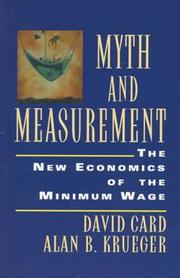
Card and Krueger's minimum-wage studies, which found no employment loss where the standard model predicted it. This book is the origin of the modern empirical turn and of a twenty-year argument.
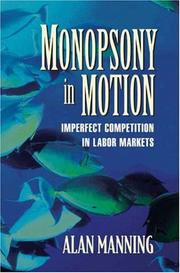
The theoretical answer to Card and Krueger: if employers have wage-setting power, the competitive prediction simply does not apply. The most important theory book on this path.

Freeman and Medoff's exit-and-voice account of unions, which found that the wage effect is only part of the story. Read it here because collective bargaining is the other classic departure from the competitive model.
Skills, education and the wage structure
IntermediateFinish with the long-run explanations of inequality between and within groups.
▸ Study plan for this stage
Pace: 7–8 weeks for about 790 pages. Claudia Goldin and Lawrence Katz's The Race Between Education and Technology (460 pages) is an economic history built on a century of constructed data series; it is technical in places and its argument depends on the data appendices, so give it four weeks and read the
- The race metaphor made precise: wage inequality tracks whether the supply of educated workers is growing faster or slower than skill-biased demand
- Skill-biased technical change as a demand-side explanation for the college wage premium, and the evidence for and against it
- The high school movement and the mid-century expansion of American education as the supply-side half of the story
- Constructing long-run series — how Goldin and Katz build comparable measures of schooling and wages across a century, and why that construction is the book's real contribution
- Institutional alternatives to the skills story: unions, the minimum wage, and top-income dynamics, which Goldin and Katz weigh and partly discount
- 'Greedy work' — Goldin's account of the gender earnings gap as arising from the disproportionate pay for long, inflexible and unpredictable hours
- Why the gap opens at parenthood rather than at hiring, and what that implies about which policies could close it
- Five cohorts of college-educated women as Goldin's organising structure, and how a cohort account differs from a cross-section
- State the race between education and technology as a testable proposition. What data would refute it?
- How much of the rise in inequality do Goldin and Katz attribute to supply, to demand, and to institutions? Where is that decomposition weakest?
- What is 'greedy work', and why does it produce a gender gap even with no discrimination in hiring or pay setting?
- Goldin locates the gap at parenthood. How does that finding sit with the discrimination models in Borjas and with the monopsony account in Manning?
- Career and Family and Myth and Measurement reach conclusions about wages by very different routes. What kind of question is each method good for?
- Having finished the path: what now determines a wage, in your own account, and which book would each part of your answer come from?
- Reproduce Goldin and Katz's college wage premium series for at least a few decades from their own reported figures, and plot it against their measure of educational attainment
- Work their supply-demand decomposition with their numbers, then re-run it with a different elasticity of substitution and note how much of the explanation survives
- Using Goldin's framework, compute the earnings penalty implied by a career interruption of a stated length from the figures she reports, and identify what is being held constant
- Take one occupation you know and assess it against Goldin's criteria for greedy work — hours, predictability, substitutability between workers — and predict the gap it should show
- Set Goldin's gender-gap explanation beside Borjas's discrimination chapter and write a page on where the two accounts genuinely conflict
- Close the path by rewriting your stage-one list of what matters about a job as a list of what actually determines pay, citing the book behind each item
Next up: This ends the path: reported work at the bottom of the labour market, the institutions that shaped it, the standard model, the natural experiments that broke its central prediction, and the long-run account of the wage structure the whole argument sits inside.

Goldin and Katz's argument that American wage inequality tracks whether educational attainment is outrunning skill-biased technical change. The most influential single explanation of the twentieth-century wage structure.

The Nobel-cited account of the gender earnings gap as a problem of greedy work, not of discrimination in hiring alone. Read last: it uses the whole apparatus above and reaches a conclusion none of the earlier books does.
Discussion
Keep reading
Paths that share books, cover the same subject, or open a related topic.