Colonial America: the best books to read, in order
Colonial America is usually taught as a prologue to the Revolution, which flattens two centuries into a countdown. This path treats it as its own subject: a continental overview first, then the different societies English settlers actually built, then the argument about how slavery and liberty grew together, and finally the Native world that was the real context for all of it. The last stage is the one most survey courses skip and the one that changes the picture most.
The Overview
BeginnerGet a continental frame — Spanish, French, Dutch and English — and a chronological spine to hang everything else on.
▸ Study plan for this stage
Pace: Five to six weeks for about 1,640 pages. Alan Taylor's American Colonies (535 pp) goes first at roughly 30 pages a day, two and a half weeks. Middleton's Colonial America (623 pp) is a textbook and should not be read straight through - work it in parallel over the same period, using the chapters tha
- The continental frame: Taylor gives New Spain, New France, the Dutch and the Pacific roughly as much space as the thirteen English colonies, which is the whole point of reading him first
- Colonisation as a set of competing imperial projects with different economic logics - extraction, trade, settlement - rather than one process
- The Columbian exchange and epidemic mortality as the precondition for everything else, not as a chapter in it
- The chronological spine: 1585 Roanoke to 1763 and the Peace of Paris, which is the frame Middleton supplies and the argument-driven books later assume
- Plymouth as a small and marginal colony in its own time, and the distance between that fact and its later place in national memory
- King Philip's War as the demographic and political hinge of New England, killing a larger share of the population than any later American war
- The difference between a survey (Taylor), a reference textbook (Middleton) and a narrative (Philbrick), and what each is good for
- What does Taylor's continental approach make visible that a history of the thirteen colonies alone would hide?
- How did the Spanish, French, Dutch and English colonial projects differ in what they wanted from North America, and how did that shape settlement patterns?
- Why does Taylor treat epidemic disease as structural rather than incidental?
- What is the actual chronology from Roanoke to 1763 - which wars, which charters, which turning points?
- Philbrick compresses King Philip's War; Lepore in the last stage of this path devotes a book to it. What does Philbrick leave out, and why might a narrative historian make that choice?
- Build a single timeline, 1492 to 1763, from Middleton's chapter structure, and then add Taylor's non-English material to it - New Spain's northern missions, New France's fur network, New Netherland. The gaps in the English-only version of the timeline are the argument of Taylor's book.
- Take one region Taylor covers in a chapter - the Chesapeake, say - and read Middleton on the same region. Write down where the textbook adds names and dates and where it adds nothing. This tells you how to use Middleton for the rest of the path.
- Map the Plymouth colony's population and territory against the surrounding Wampanoag polity, using Philbrick's own figures. The relative sizes are the thing most survey accounts fail to convey.
- Write two hundred words on King Philip's War from Philbrick's account and keep it. In the final stage you will read Lepore on the same war and compare the two versions.
Next up: With a continental chronology in place, the next stage stops asking what happened and starts asking why the English colonies produced such different societies from one another.
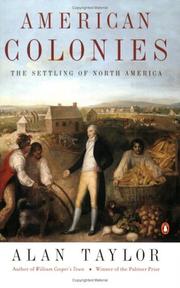
The best single volume, and deliberately continental: Taylor gives roughly as much space to New Spain, New France and the Pacific as to the thirteen English colonies. Read it first because it prevents the standard mistake of treating the English seaboard as the whole story.
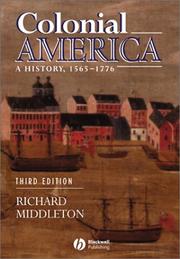
A straightforward chronological textbook covering 1585 to 1763. Useful second as a reference spine — dates, governors, wars — against which the argument-driven books that follow can be placed. The catalogue files it under the bare title; the published subtitle is A History to 1763.
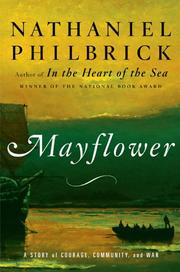
Narrative history of Plymouth from the crossing through King Philip's War, and the most readable way into New England. Third, as the first close-up after two wide shots — and note that Philbrick's account of the war is compressed compared with Lepore's later in this path.
The Societies the Settlers Built
IntermediateUnderstand why New England and the Chesapeake produced such different social orders, and what colonial households were actually like.
▸ Study plan for this stage
Pace: Seven weeks for about 1,870 pages, and the length is concentrated: Albion's Seed alone is 959 pages, which is three to four weeks at 35 pages a day. It is organised as four parallel case studies, so it can be read one folkway at a time rather than continuously. The Barbarous Years (614 pp) takes two
- Fischer's folkways thesis: four British regional migrations - East Anglian Puritans, southern English gentry, North Midlands Quakers, borderlands migrants - each seeding a durable American culture
- Why Fischer must be read as a hypothesis and not a finding: the determinism is the specific thing historians have contested for thirty years, and the book is more persuasive on New England than on the backcountry
- Bailyn's corrective: the first two generations, 1600-1675, as disordered, murderous and demographically catastrophic rather than purposeful
- The Chesapeake demographic regime - high mortality, skewed sex ratio, short marriages, few surviving grandparents - against the New England regime of long life and dense kin networks
- Ulrich's household economy: the specific work women did, reconstructed from probate inventories and court records rather than from prescriptive literature
- The methodological difference between the three books - Fischer argues from cultural traits, Bailyn from narrative and demography, Ulrich from records of individual households
- Why regional difference, not colonial unity, is the correct default assumption for the seventeenth century
- State Fischer's four folkways and the specific traits he assigns each one. Where is the evidence strongest, and where does it thin out?
- What exactly do critics object to in Albion's Seed, and does the objection damage the whole thesis or only parts of it?
- How does Bailyn's account of the first two generations contradict the sense of purpose in most founding narratives?
- What did New England's demographic regime allow that the Chesapeake's did not - in family structure, in property transmission, in institutions?
- What sources does Ulrich use, and what can be known from a probate inventory that cannot be known from a sermon?
- Take Fischer's four folkways and build a comparison table across his own categories - speech, building, family, marriage, work, order, power. Then mark each cell as well-evidenced or thinly evidenced from what he actually cites. The table is the fastest way to see where the thesis holds.
- Read Bailyn's account of the Virginia massacre of 1622 and Fischer's account of Virginia's founding culture, and write down where the two books are describing the same decades in incompatible terms.
- Reconstruct one household from Good Wives using Ulrich's own detail - who did what work, what the inventory contained, what it was worth - and then ask what Albion's Seed says about that household's folkway. Ulrich's evidence should complicate Fischer's category.
- Pick a single question - inheritance, say, or the age at marriage - and answer it three times, once from each book, citing the specific pages. Where the three answers differ, the difference is method, not fact.
- Write a page arguing against Fischer using only evidence from Bailyn and Ulrich. This is the exercise that fixes the stage.
Next up: Having seen how different the settler societies were from each other, the next stage takes up the argument that unites them - that colonial liberty and colonial slavery were produced by the same process.
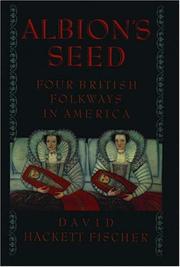
The argument that four distinct British regional cultures — East Anglian Puritans, southern English gentry, North Midlands Quakers, and borderlands migrants — seeded four durable American folkways. Hugely influential, hugely contested for its determinism; read it first here and read it as a hypothesis.
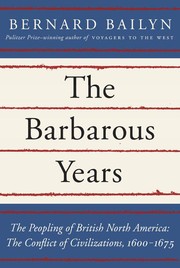
Bailyn on the first two generations, 1600 to 1675, and unsparing about how violent, disordered and mortal they were. The corrective to any account that makes early settlement sound purposeful; read it directly after Fischer.
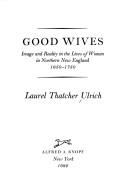
Northern New England women between 1650 and 1750, reconstructed from court records, diaries and probate inventories. It puts the household economy at the centre and shows what the survey books leave out; read it third, once you know the regional differences it works within.
Slavery and Freedom, Together
IntermediateFollow the central argument of the field — that colonial liberty and colonial slavery were built in the same process — and see it tested in both the South and the North.
▸ Study plan for this stage
Pace: Seven to eight weeks for about 1,965 pages. Morgan's American Slavery, American Freedom (454 pp) first, two weeks - it is the argument everything else answers. Jordan's White Over Black (651 pp) is the hardest reading on this path: dense, discursive, and best taken at 25 pages a day over three weeks
- Morgan's thesis: Virginia's planters secured a free and equal white political community by racialising bound labour, so liberty and slavery were not a contradiction but a single mechanism
- The shift from indentured servitude to racial slavery in the Chesapeake, and Bacon's Rebellion in 1676 as Morgan's hinge
- Jordan's question - whether English racial attitudes preceded slavery or were produced by it - and his demonstration that it is answerable from evidence rather than only assertable
- Berlin's distinction between a society with slaves and a slave society, and why the same institution produces different social orders at different densities
- Berlin's charter generations, and the argument that the first enslaved Africans in the mainland colonies occupied a position later closed off
- Warren's evidence that seventeenth-century New England was bound into Atlantic slavery both as a slaveholding society and through the export of captive Native people to the Caribbean
- How each book after Morgan supplies something his Virginia frame lacks: Jordan the intellectual history, Berlin the comparison, Warren the region he excluded
- State Morgan's argument in three sentences. What specifically about Virginia's labour history makes it work, and would it transfer to another colony?
- What does Jordan conclude about the sequence of racism and slavery, and what kinds of evidence does he use to get there?
- What is the operational difference between a society with slaves and a slave society in Berlin's terms, and where and when does each of his regions cross the line?
- How does New England Bound change the picture the other three books leave, and what specifically did the New England colonies do that survey accounts omit?
- Where do these four books genuinely disagree, as opposed to covering different ground?
- Reconstruct Morgan's chain of causation from the 1620s to the 1700s as a numbered sequence of steps, then mark which steps rest on quantitative evidence and which on inference. The weak links are where the field's later arguments attach.
- Take Berlin's four regions and, for each, write down the decade at which he places the transition to a slave society and the evidence he gives. Then check Morgan's Virginia chronology against Berlin's - they are dating the same process by different criteria.
- Read Jordan's treatment of the earliest English descriptions of Africans and list the specific texts he works from. Then ask what a historian would need to find to overturn his conclusion.
- Using Warren, list the concrete ways seventeenth-century New England participated in slavery - ownership, provisioning, the Native captive trade - and place each against Berlin's society-with-slaves criteria. Decide, with reasons, which side of his line New England falls on.
- Write a page on whether Morgan's thesis survives Warren's book. It is the honest test of whether the stage's argument is regional or general.
Next up: The final stage turns the whole period around and views it from Native country, which is where the actual balance of power sat for most of these two centuries.
The classic statement: Virginia's planters secured a free white political community by binding labour racially, so the two developments were not a contradiction but a mechanism. Read it first in this stage; almost everything after is a response to it.

The origins of racial attitudes in the English-speaking world from 1550 to 1812, and the book that established that the question of whether racism preceded slavery is answerable from evidence. Dense, and still the reference point.
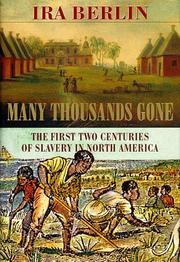
Berlin's distinction between societies with slaves and slave societies, worked out region by region across the first two centuries. Read it third: it gives Morgan's Virginia argument the comparative frame it lacks.
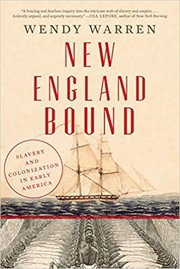
Slavery in seventeenth-century New England, including the trade in captive Native people. Placed last because it dismantles the assumption the previous three books can leave intact — that this was a southern institution.
Native Country
IntermediateSee the same two centuries from the other side of the frontier, and be able to explain why Native diplomacy, not settler intent, set the terms for most of the period.
▸ Study plan for this stage
Pace: Five to six weeks for about 1,465 pages. Richter's Facing East from Indian Country (336 pp) first, a week and a half. White's The Middle Ground (544 pp) is the demanding one - a long, closely argued monograph best read at 25-30 pages a day over three weeks. Lepore's The Name of War (337 pp) then tak
- Richter's reversal of perspective: the colonial period narrated from the interior looking east, which makes Native nations the majority power they actually were for most of it
- White's middle ground as a specific historical condition - mutual accommodation between Algonquians and the French in the pays d'en haut because neither side could impose its will - and not a synonym for cultural blending
- Why the middle ground ended, and what its collapse after 1763 tells you about the conditions that sustained it
- Lepore on King Philip's War as an event and as a text: the English wrote a war they largely won into a story about their own suffering, and that writing is the source base historians inherit
- The problem of colonial sources generally - nearly everything written about Native people in this period was written by the people fighting them
- Cronon's ecological argument: the transformation of New England's landscape follows directly from a change in how land was owned, so property regimes are visible in the soil
- Native diplomacy, not settler intent, as the variable that set the terms of the colonial period until the mid-eighteenth century
- What changes in the standard colonial narrative once Richter puts the interior at the centre?
- Define White's middle ground precisely. What conditions were necessary for it to exist, and what ended it?
- How did the English represent King Philip's War at the time, and what did those representations accomplish for them?
- Cronon argues that ecological change followed a change in property regimes rather than in technology. What is his evidence?
- Given the source problem Lepore identifies, how can a historian write about Native experience in this period at all - and what do Richter and White each do about it?
- Compare your two-hundred-word Philbrick summary of King Philip's War from stage one with Lepore's account. What did the narrative version leave out?
- Redraw your stage-one timeline with Native polities as the actors - Haudenosaunee, Wampanoag, Powhatan, the Algonquian nations of the pays d'en haut - and colonial governments as respondents. The events that now look like turning points are different ones, and that difference is Richter's whole argument.
- Take one negotiation White analyses in detail and write out what each side believed it had agreed to. The gap between the two readings is the middle ground operating.
- Read Lepore alongside the Philbrick account from the first stage on the same three episodes, and mark every point where a fact appears in one and not the other. Then identify which English-authored source each of them is relying on.
- Walk or look closely at any piece of long-settled land - a New England stone wall, a field edge, a stand of second-growth forest - and describe what Cronon's argument says produced it. His book is designed to be checked against ground, and doing so is the point.
- Write a final page answering the question the whole path has been building toward: what does colonial America look like when Native nations are the majority power, slavery and liberty are one process, and the settler societies are four rather than one?
Next up: This closes the path, and leaves the reader with the picture most survey courses do not assemble: two centuries that were not a prologue to anything.
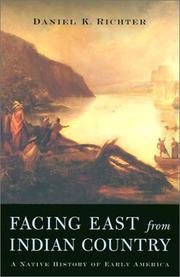
A deliberate reversal of perspective: the colonial era narrated from the interior looking out. Read it first here, because it establishes that Native nations were the majority power for most of the period covered.
The great Lakes pays d'en haut and the mutual accommodation between Algonquians and the French that neither side could impose alone. One of the most influential works of American history written in the last fifty years; read it after Richter.
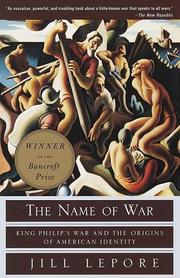
King Philip's War and, more importantly, the writing about it — how the English narrated a war of extermination into a story about their own suffering. The best single demonstration of how colonial sources have to be handled.
Short, and it reframes everything: the ecological transformation of New England as the direct consequence of a change in how land was owned. Read it last as the summary argument the other books imply.
Discussion
Keep reading
Paths that share books, cover the same subject, or open a related topic.