Best Books on Economic Inequality, in Reading Order
Inequality research splits into three questions that are easy to confuse: how unequal are we, why, and does it matter. This path takes them in that order — starting with the accessible overview and the evidence on social consequences, moving through what inequality looks like inside one rich country, then out to the global distribution, then to the two grand theories of why wealth concentrates, and finally to the concrete policy menu.
Start here
BeginnerGet the headline findings of two decades of inequality research and a clear reason to care about them beyond the raw numbers.
▸ Study plan for this stage
Pace: 2-3 weeks. A Brief History of Equality is 285 pages and deliberately readable — a week at 40 pages a day. Give The Spirit Level two weeks, because the reading you want is slower than the prose: stop at each scatterplot and ask what it would take to believe it before you read the caption.
- Piketty's long-run finding, stated as he states it: inequality has fallen in the periods when institutions — progressive taxation, public education, social insurance — forced it down, and risen when they were dismantled. Everything else in this path argues with that claim
- The difference between income inequality and wealth inequality, and why wealth is always far more concentrated. Piketty is careful about this; most public argument is not
- The vocabulary you will need throughout: Gini coefficient, top-decile and top-centile shares, pre-tax versus post-tax-and-transfer distribution. Be able to say what each one hides as well as what it shows
- Wilkinson and Pickett's thesis: that among rich countries it is the degree of inequality, not the level of average income, that predicts health, violence, trust and mobility outcomes
- The psychosocial mechanism they propose — status anxiety as the pathway from inequality to bad outcomes — which is the part of the argument that is asserted more than demonstrated in this book
- Why The Spirit Level is contested: small country samples, country selection, and the recurring problem that cross-country correlations cannot distinguish inequality causing bad outcomes from both being caused by something else. Read it as the case to be tested
- Piketty says equality advanced because of institutions. What is the alternative explanation for the same twentieth-century compression, and does his short book address it?
- Pick one Spirit Level scatterplot. What would removing two countries do to it, and does the book tell you enough to know?
- State the difference between income and wealth inequality, and explain why a country could improve on one measure while worsening on the other
- Wilkinson and Pickett argue inequality itself harms even the well-off. What evidence in the book supports that specific claim, as opposed to the claim that poverty harms the poor?
- If The Spirit Level's correlations turned out to be spurious, which parts of Piketty's argument would survive untouched?
- Write a 200-word summary of Piketty's central claim in A Brief History of Equality using no numbers at all. If you cannot, you are leaning on the charts rather than the argument
- Take three of The Spirit Level's country graphs and write, for each, one sentence on what it shows and one on what it cannot show. Keep this page — you will hold every later book to the same test
- Draw the twentieth-century arc of top-income shares from Piketty's account as a freehand curve, marking the two world wars, the postwar decades and the 1980s. You will annotate this curve in stages 4 and 5
- Write down, before going further, your own current answer to 'does inequality matter, and why'. Date it. You will compare it against the version you write at the end of stage 5
Next up: You have the headline numbers and a contested claim about why they matter; the next stage drops from national averages to the concrete mechanisms that produce them.

Piketty's short, readable summary of his own research programme and its long-run finding that inequality has fallen when institutions forced it to. Start here rather than with the 700-page Capital in the Twenty-First Century, which this book distils.
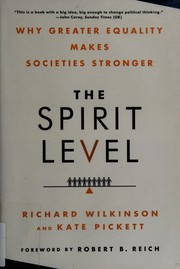
Wilkinson and Pickett's argument that more unequal rich countries do worse on health, violence, trust and mobility. Heavily contested on its statistics, so read it as the case to be tested rather than settled fact.
Inequality inside one rich country
BeginnerSee how national averages resolve into concrete mechanisms — housing, schooling, tax policy and the psychology of relative position.
▸ Study plan for this stage
Pace: 7-8 weeks for four substantial books. Our Kids (386 pages) and Evicted (448 pages) are narrative and go fast — two weeks each. The Price of Inequality is 560 pages of argument and needs three weeks at 25 pages a day. The Broken Ladder is 288 pages and the lightest; one week, read last.
- Putnam's opportunity gap: the widening difference in what children of rich and poor families receive — not just money but time, stability, extracurricular activity, and adult attention — documented by pairing families from the same towns
- Putnam's method and its limits: he pairs life histories against national trend data, so the interviews illustrate the statistics rather than establishing them. Notice where each is doing the work
- Desmond's central reversal: eviction is a cause of poverty, not merely its consequence. The chain runs eviction to job loss to worse housing to deeper poverty, and it is the finding the ethnography is built to establish
- The extraction mechanism in Evicted — that poor neighbourhoods can be more profitable per unit than affluent ones, so there is a business model in place that has no interest in the situation changing
- Stiglitz's rent-seeking account: that American inequality reflects political choices about tax, financial regulation, corporate governance and market rules rather than the undirected outcome of markets. This is a claim about causation, and it is the one to hold against Scheidel in stage 4
- Payne's relative-position finding: that feeling poor relative to those around you predicts health, risk-taking and political attitudes independently of absolute income — which supplies the causal mechanism The Spirit Level asserted
- How these four operate at different scales — one ethnographic, one comparative-community, one political-economic, one psychological — and why agreement across scales is stronger evidence than any of them alone
- Desmond argues eviction causes poverty. What in the book distinguishes that from the simpler story that poor people get evicted, and are you persuaded?
- Putnam's poor families and rich families live in the same towns. Why does that design matter, and what does it rule out that a national comparison could not?
- Stiglitz says the rules were written; a market-oriented economist would say the outcomes were earned. Name one specific policy Stiglitz discusses where you can articulate both readings honestly
- Payne finds effects from relative position. Does that argue for reducing inequality, or for changing who people compare themselves to? What in the book decides between those?
- Which of the four books would be least damaged if the others were wrong? What does that tell you about which evidence is doing the heavy lifting?
- Take Desmond's Milwaukee cases and draw the causal chain for one family as a flowchart, marking each point where a different policy would have broken it. Do it from the narrative before reading his concluding chapter
- Set the pages where Putnam discusses schooling beside Stiglitz's chapter on how policy shapes returns to education. Write 300 words on whether they are describing the same mechanism from two directions or two different mechanisms
- Look up your own city's eviction filing rate from a public source and compare it to the Milwaukee figures Desmond reports. Write a paragraph on what the comparison does and does not tell you
- Apply your stage-1 test to Payne: pick two of his studies and write what each shows and what it cannot show
- Write a 400-word account of how a child born poor in a rich country ends up poor as an adult, using all four books and citing which one supplies each link. Any link you cannot source is a gap in your reading, not in the literature
Next up: Having seen inequality inside one rich country, you are ready for the harder measurement problem — comparing people across countries rather than within them.

Follows children from rich and poor families in the same American towns to show the opportunity gap opening in real time. The clearest account of how inequality reproduces itself across generations.

A year with eight families and their landlords in Milwaukee, establishing eviction as a cause of poverty and not merely a symptom. Ethnography this good is what keeps the statistics honest.

A Nobel laureate's argument that American inequality is the product of rent-seeking and policy choices rather than markets working as designed. Read it for the political-economy mechanism the previous two books document from below.
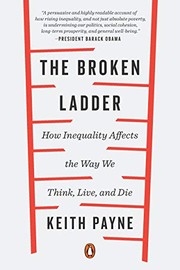
The psychology of relative position: what feeling poor does to health, risk-taking and politics, independent of absolute income. It supplies the causal story The Spirit Level asserted but did not fully demonstrate.
The global picture
IntermediateShift from within-country to between-country inequality and learn to read the global income distribution, including the famous elephant curve.
▸ Study plan for this stage
Pace: 4 weeks. Global Inequality (299 pages) deserves three of them; it is technical in places and the payoff is in understanding the data construction, not just the conclusions. Capitalism, Alone (272 pages) is more essayistic and can be read in a week.
- The three concepts of global inequality Milanovic distinguishes — unweighted between-country, population-weighted between-country, and true global inequality between individuals — and the fact that they can move in opposite directions at the same time
- The elephant curve: real income growth by global income percentile, with the big gains in the emerging middle (largely Asia) and near the very top, and stagnation in the developed-world lower-middle. Be able to draw it and to say which populations each hump contains
- Kuznets waves — Milanovic's revision of the original Kuznets curve into recurring cycles rather than a single inverted U, which is his answer to whether growth eventually equalises
- The data problem underneath everything: household surveys undercount the rich, purchasing-power adjustments carry large uncertainties, and much of this evidence Milanovic assembled at the World Bank himself. He is unusually candid about it; do not read past that candour
- Citizenship rent — the large share of a person's income determined by where they were born rather than anything they do, and its implication that migration is a distributional question
- The two capitalisms of Capitalism, Alone — liberal-meritocratic and political — and the different inequality dynamics each generates. Note this is a political argument built on the earlier measurement, not a further measurement
- Global inequality between individuals fell while inequality within many rich countries rose. Are those the same phenomenon or two different ones, and which does Milanovic think matters more?
- Draw the elephant curve from memory and label who sits at each point. Which political grievance in rich countries does the trough correspond to?
- Milanovic argues that where you are born determines most of your income. What does that imply for how you weigh national versus global redistribution?
- Stiglitz in stage 2 explained rich-world inequality by domestic policy choice; Milanovic points to global integration. How much of the same trend can each explain, and are they compatible?
- In Capitalism, Alone, which claims rest on the data Milanovic built and which are political forecast? Mark the transition point in the book
- Redraw the elephant curve by hand and annotate each region of it with a specific population — Chinese urban workers, American manufacturing workers, the global top one percent. Getting this wrong is the most common error in public discussion of the chart
- Write 250 words on the strongest objection to using purchasing-power-adjusted survey data for global comparisons, drawing only on Milanovic's own methodological discussion
- Take the twentieth-century curve you drew in stage 1 and add a second line showing the global rather than national picture over the same period. Where the two lines diverge is the whole subject of this stage
- Compute roughly what share of your own income is explained by your country of birth, using Milanovic's citizenship-rent figures. Write a paragraph on what, if anything, you think follows from it
Next up: With the measurement settled in both its national and global forms, you can turn to the two rival explanations of why wealth concentrates in the first place.

The definitive account of how the world distribution changed as Asia grew and Western middle classes stagnated. Milanovic assembled much of the underlying data himself at the World Bank.

The sequel, arguing the world now contains only two capitalisms — liberal-meritocratic and political — with different inequality dynamics. Read it second: it turns the measurement into a political argument.
The two grand theories
IntermediateEngage the major competing explanations of long-run wealth concentration and judge how much of history each one accounts for.
▸ Study plan for this stage
Pace: 10-12 weeks, and do not pretend otherwise — Capital and Ideology is over 1,100 pages. Read it at 25 pages a day across two months, allowing yourself to move faster through the case-study chapters on individual countries once the framework is clear. The Great Leveler is 528 pages and can be read in t
- Piketty's central thesis in Capital and Ideology: every inequality regime is sustained by an ideology that justifies it, so inequality is political and reversible rather than natural or technological
- His regime typology — ternary societies (clergy, nobility, everyone else), ownership societies, colonial and slave societies, social democracy, hypercapitalism — and the claim that each has its own justificatory story
- The comparative reach of the book: India, Brazil, China, and the Middle East alongside France and the US. This breadth is the argument, since a thesis about ideology needs cases where the ideology differed
- Scheidel's counter-thesis: across all recorded history, only mass-mobilisation war, transformative revolution, state collapse and pandemic have substantially compressed inequality — his four horsemen. Peaceful institutional reform has never done it at scale
- The uncomfortable implication Scheidel states plainly and does not flinch from: on his reading, the twentieth-century compression Piketty credits to institutions was a by-product of two world wars
- Where the two theories actually conflict and where they do not — both agree compression happened, both agree it reversed. The dispute is over the causal engine, and therefore over whether it can be repeated deliberately
- The methodological asymmetry to keep in view: Scheidel's evidence base is longer but thinner (millennia of fragmentary estimates), Piketty's is shorter but richer (tax records). Neither problem is fatal, but they are different problems
- Scheidel says only violence has ever levelled. Piketty says institutions did. Take the twentieth-century compression and write the case for each reading of the same episode — then say which specific evidence would separate them
- Piketty's argument requires that inequality regimes are sustained by belief. What would count as a case of an inequality regime that persisted without an ideology justifying it?
- Does Scheidel's finding, if true, entail pessimism about policy? Distinguish 'has never happened' from 'cannot happen', and say what work that distinction is doing
- Which of Piketty's non-Western cases does the most for his thesis, and which is the weakest? Be specific about the chapter
- After both books, is your view that the mid-century compression was caused by war, by the institutions war made politically possible, or by something else? Name the passage that moved you
- Build a single timeline from 1900 to the present with two annotation tracks: Piketty's institutional turning points above the line, Scheidel's violent levelling events below. Where they name the same year, mark it — those coincidences are the crux of the disagreement
- Write a 500-word response to The Great Leveler in Piketty's voice, using only arguments Piketty actually makes in Capital and Ideology. Then write Scheidel's 300-word reply the same way
- For one country Piketty treats at length, extract his account of the justificatory ideology into a single paragraph and then ask whether Scheidel's data for the same period contradicts it or is simply silent about it
- Return to the freehand top-income curve you drew in stage 1 and mark, for each major turn, which of the two theories explains it better. Count them. That count is your honest current position
- Take the fifteen years since the most recent compression episode either author identifies and write 250 words on which theory better predicts what happened
Next up: Having argued the causes, the last stage forces you to convert a position on why inequality happens into a position on what, specifically, should be done.

Piketty's much larger follow-up, arguing inequality is always justified by an ideology that can be changed. Demanding, comparative, and the fullest statement of the position introduced in stage one.

The bleak counter-thesis: across all recorded history only mass war, revolution, state collapse and plague have substantially compressed inequality. Read it directly against Piketty — one says institutions can level, the other says only catastrophe has.
What can actually be done
IntermediateMove from diagnosis to a concrete, costed policy programme and be able to argue for or against each item in it.
▸ Study plan for this stage
Pace: 3-4 weeks for 352 pages, and read it differently from everything before it: work proposal by proposal rather than chapter by chapter. Atkinson gives each of his fifteen proposals with its objections; do not move on from one until you can argue both sides of it.
- Atkinson's framing that the direction of technological change is itself a policy choice — a proposal that sits oddly with the rest of the list and is the one most worth arguing about
- The specific instruments in his fifteen: a more steeply progressive income tax, a capital endowment paid at adulthood, a national savings bond with a guaranteed return, a participation income, a public investment authority, and a statutory pay code
- That Atkinson costs his proposals rather than gesturing at them, and models the revenue. The costing is the reason this is the last book — it is where the argument stops being about description
- The distinction between predistribution (changing market outcomes before tax) and redistribution (changing them after), and which of the fifteen fall on each side
- Atkinson's authority and its limits: he built much of the measurement apparatus the whole path relies on, which makes him credible on the diagnosis and no more credible than anyone else on the politics
- The place where this stage collides with stage 4 — if Scheidel is right that peaceful reform has never levelled, Atkinson's list is a test of whether that record reflects a law or an absence of will
- Pick the three of Atkinson's fifteen proposals you find most persuasive and the three least. For each of the six, state the objection Atkinson himself raises and whether his answer satisfies you
- Which of the fifteen would Stiglitz endorse, and which would he consider insufficient given his rent-seeking diagnosis in stage 2?
- Atkinson's capital endowment addresses wealth; most of the list addresses income. Given what you learned in stage 1 about which is more concentrated, is the balance right?
- Would any item on this list have compressed inequality in the periods Scheidel studies? Answer honestly — the answer may be no, and what follows from that is the real question
- Rewrite the dated answer you sealed at the end of stage 1. What changed, and which book changed it?
- Make a one-page table of all fifteen proposals with four columns: what it does, who pays, the strongest objection, and your verdict. This table is the deliverable of the entire path
- Take one proposal and write a 500-word memo opposing it, using only arguments and evidence from books earlier in this path. If the strongest opposition you can build is weak, say so — that is a finding, not a failure
- Pick the country you live in and check which of Atkinson's fifteen already exist there in some form. Write a paragraph on what the partial versions suggest about the full ones
- Set your final table beside the Piketty-versus-Scheidel timeline from stage 4 and write 300 words on whether your policy positions are consistent with your causal theory. Most people's are not, and finding the inconsistency is the point
Next up: This is the end of the path: you can now separate the question of how unequal we are from why, and from whether it matters, and argue each on its own evidence.

Fifteen specific proposals from the economist who founded modern inequality measurement, each with its objections addressed. The right last book: it forces you to convert everything you have read into positions.
Discussion
Keep reading
Paths that share books, cover the same subject, or open a related topic.