Nearly everyone comes to Pompeii through the plaster casts, and that is why nearly everyone leaves with a distorted picture. The casts are the end product of a nineteenth-century technique applied to voids in the ash; they are interpretations, and treating them as photographs of a final moment is the standard error this literature spends its time correcting.
The fix is structural. Read the town first as an ordinary provincial place — its politics, water supply, bars, brothels and election graffiti — and the eruption interrupts something you can picture. Read the eruption first and the town never becomes more than a stage set.
The town, before the mountain
Mary Beard's Pompeii is the obvious first read and the best single book on the subject. She reconstructs daily life from the physical evidence and is scrupulous throughout about how much of the familiar picture is guesswork dressed up as fact.
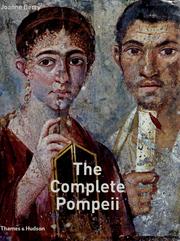
The Complete Pompeii is a heavily illustrated site-by-site survey, and it supplies the physical layout Beard assumes you can already visualise. Keep it open beside everything that follows.
The eruption
The letters of the younger Pliny contain, in two letters written decades after the fact, essentially everything any surviving ancient source says about 79 AD — including the death of his uncle. Read the whole collection rather than just the famous pair; the rest is an unmatched picture of Roman elite life.
Vesuvius covers the volcano itself across two thousand years of activity, written by a geographer. It is where you learn what a pyroclastic surge actually is and why it killed the way it did.
Robert Harris's Pompeii is a novel and makes no pretence otherwise, but it is built on the archaeology of the aqueduct system and on the best available reconstruction of the eruption timeline. It earns a place because it makes the physical geography stick.
The buried cities as evidence
Pompeii: The Living City reconstructs the town's last decades through named residents and the political and seismic upheavals they lived through — the bridge from general survey into specialist work. Our catalogue stores its title in capitals, which is a quirk of the record rather than the book.
Houses and Society in Pompeii and Herculaneum is the most influential book on this path: a landmark study of what domestic architecture reveals about Roman social relations, and the reason Herculaneum belongs here at all. Wallace-Hadrill's later Herculaneum: Past and Future is not in our catalogue, which is a gap on our side rather than a judgement on the book.
Resurrecting Pompeii is the sharpest corrective available. Lazer works through what the skeletal remains actually show, and how poorly earlier assumptions about who died, and why, have survived examination.
Excavation, afterlife, and the wider Roman world
The lost world of Pompeii covers the excavation history from 1748 onward and the site's precarious conservation, with photographs showing what has already been lost. Pompeii: An Archaeological Guide turns the previous stages into something you could walk through, and is useful whether or not you ever go.
SPQR ends the path by putting the town back where it belongs. Beard's history of Rome supplies the imperial context that no single provincial site can, and Pompeii finally matters as a window onto that.
Follow the whole path in order and the casts read as interpreted evidence rather than as a frozen photograph.
Follow the full ordered path here: Pompeii and Mount Vesuvius: The Best Books to Read, in Order.