Biblical Hebrew for beginners: books to read Genesis in the original
This curriculum takes you from zero knowledge of the Hebrew alphabet all the way to confident, independent translation of Biblical Hebrew prose and poetry. Each stage builds directly on the last — mastering the script and sounds first, then grammar, then vocabulary and reading fluency, and finally the advanced linguistic tools needed to tackle the full Hebrew Bible on your own.
The Aleph-Bet & First Steps
BeginnerRead and write all Hebrew letters and vowel points (nikud), recognize basic word shapes, and understand how the Hebrew writing system works before touching grammar.
▸ Study plan for this stage
Pace: 2–3 weeks, ~15–20 pages/day (focus on Part 1: "The Aleph-Bet & Vowel System")
- The 22 Hebrew consonants (aleph-bet) and their names, shapes, and pronunciation
- The five vowel points (nikud): qamets, patakh, tsere, hiriq, and shuruk, and how they modify consonant sounds
- The distinction between long and short vowels and their role in Hebrew phonology
- Dagesh (the dot inside a letter) and how it changes pronunciation and function
- The shewa (silent and vocal) and its role in syllable structure
- Basic word formation patterns: how consonants and vowels combine to create recognizable Hebrew word shapes
- The direction and mechanics of reading Hebrew: right-to-left orientation and letter connections
- Begat and other weak letters that behave irregularly in the writing system
- Can you identify and name all 22 Hebrew consonants and reproduce their shapes accurately in both print and script forms?
- What are the five primary vowel points in Biblical Hebrew, and how does each one change the pronunciation of a consonant?
- How do dagesh and shewa function in Hebrew words, and what is the difference between a vocal and silent shewa?
- Given a Hebrew word, can you identify its consonantal skeleton and predict how vowel points would affect its pronunciation?
- Why is understanding the Hebrew writing system (right-to-left, letter shapes, vowel placement) essential before learning grammar rules?
- Write out the entire aleph-bet from memory in both print and cursive forms, labeling each letter with its name and transliteration
- Create flashcards for all 22 consonants and five primary vowels; drill daily until you can recognize and produce each one instantly
- Copy 10–15 short Hebrew words from Pratico's word lists, focusing on clean letter formation and proper vowel point placement
- Practice reading aloud Hebrew words provided in the textbook, paying attention to how vowel points change pronunciation
- Transcribe 5–10 Hebrew words into English transliteration, then reverse the process (transliterate English words into Hebrew letters)
- Analyze 3–4 simple Hebrew words by separating consonants from vowels to understand the underlying word structure
Next up: Mastery of the aleph-bet and vowel system provides the foundation for recognizing word patterns and parsing verb and noun forms, which are essential before tackling the grammatical rules and morphology covered in later stages.
A gentle, widely-used introduction that walks absolute beginners through the alphabet, vowels, and the basic logic of the Hebrew writing system before any grammar is introduced.
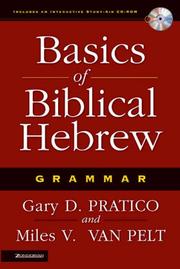
The most widely adopted introductory grammar in seminaries today; its first chapters reinforce the alphabet and vowel system with clear charts and exercises, making it the perfect bridge into formal grammar study.
Core Grammar Foundations
BeginnerUnderstand the essential grammatical categories of Biblical Hebrew — nouns, pronouns, the verb system (qal perfect, imperfect, imperative), and basic syntax — well enough to parse and translate simple sentences.
▸ Study plan for this stage
Pace: 8–10 weeks, ~20–25 pages/day (Pratico workbook first: 4–5 weeks; Seow grammar second: 4–5 weeks)
- Hebrew noun system: gender, number, and construct state (סמיכות) and how they affect meaning and agreement
- Pronoun types: personal, demonstrative, and relative pronouns, and their role in sentence structure
- The qal perfect tense: formation, meaning, and how it functions as the narrative backbone of Biblical Hebrew
- The qal imperfect tense: formation, volitional uses (jussive, cohortative), and its role in expressing ongoing or future action
- The imperative mood: formation across genders and numbers, and its use in commands and exhortations
- Basic verbal syntax: subject-verb-object patterns, word order conventions, and how verbs agree with their subjects
- Prepositions and particles: how they modify nouns and verbs, and their role in expressing relationships between words
- Simple sentence parsing: identifying the main verb, subject, object, and modifiers in Hebrew clauses
- How do gender and number affect noun endings in Biblical Hebrew, and why does noun-adjective agreement matter for translation?
- What is the construct state, how is it formed, and how does it differ from the absolute state in meaning and function?
- How do you form and parse the qal perfect tense, and what does it typically express in Biblical narrative?
- What is the difference between the qal imperfect, jussive, and cohortative, and when does each appear in biblical texts?
- How do you form the imperative across different genders and numbers, and what grammatical clues help you identify it in context?
- What are the main word order patterns in Biblical Hebrew clauses, and how do they differ from English?
- How do prepositions and particles attach to nouns and verbs, and what grammatical changes occur when they do?
- How do you parse a simple Biblical Hebrew sentence: what steps do you follow to identify the main verb, subject, object, and modifiers?
- Complete all parsing drills in the Pratico workbook (Lessons 1–15): identify nouns, pronouns, and verb forms in isolated words and short phrases
- Work through the Pratico workbook's translation exercises: translate 10–15 simple sentences per week, focusing on identifying the main verb and its subject
- Create a personal reference chart for noun endings (masculine/feminine, singular/plural, absolute/construct) and update it as you progress through Seow
- Conjugate the qal perfect and imperfect for 5–10 common verbs (e.g., שׁמר, כתב, נשׁמר) in all person/gender/number combinations
- Parse and translate 20–30 short biblical sentences (Genesis 1–5, Exodus 1–3) using Seow's grammar as your guide, writing out the grammatical function of each word
- Identify and list all prepositions and particles in a passage of 5–10 verses, noting how they attach to nouns/verbs and how they change the meaning
- Write out the formation rules for the imperative mood (masculine singular, feminine singular, masculine plural, feminine plural) and practice parsing imperatives in biblical texts
- Diagram 10–15 simple Hebrew sentences, showing subject, verb, object, and modifiers, then compare your analysis with a biblical commentary or translation note
Next up: This stage equips you with the grammatical scaffolding—nouns, pronouns, basic tenses, and sentence structure—needed to move into intermediate verb forms (niphal, hiphil, piel), more complex syntax (subordinate clauses, construct chains), and sustained passage reading.
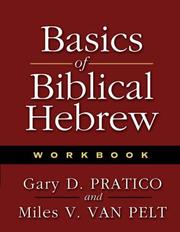
The companion workbook to the grammar above; working through it in parallel cements every paradigm with graded exercises drawn directly from the Hebrew Bible, which is essential at this stage.
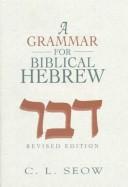
A rigorous but accessible second grammar that presents the same material from a slightly different angle, filling gaps and reinforcing paradigms — reading two grammars side-by-side at this stage dramatically improves retention.
Vocabulary Building & Graded Reading
IntermediateAcquire the high-frequency vocabulary of the Hebrew Bible (words occurring 50+ times) and begin reading real, lightly annotated Biblical texts with growing independence.
▸ Study plan for this stage
Pace: 8–10 weeks, ~40–50 pages/day (Van Pelt first: 2–3 weeks; Reader's Hebrew Bible: 5–7 weeks with graduated text complexity)
- High-frequency vocabulary mastery (50+ occurrence words) as the foundation for independent reading
- Recognition and retention of verbal stems (Qal, Niphal, Hiphil, Piel) in context, not in isolation
- Parsing and morphological analysis of real Biblical Hebrew forms in authentic texts
- Contextual meaning-making: how frequency vocabulary anchors comprehension of unfamiliar words
- Syntactic patterns in Biblical narrative prose (subject-verb-object, construct chains, clause relationships)
- Annotation systems and lexical aids as bridges to unaided reading
- Building reading fluency through repeated exposure to the same vocabulary across multiple texts
- Can you identify and define the 50 most frequent words in the Hebrew Bible and recognize them in any form (conjugated, declined)?
- How do you parse a verb form you encounter in a Biblical text, and what does the stem tell you about the word's meaning?
- When you encounter an unfamiliar word in a Biblical passage, what strategies do you use to infer its meaning from context and frequency vocabulary?
- What are the main syntactic patterns in Biblical Hebrew narrative, and how do they shape sentence meaning?
- Can you read a lightly annotated Biblical passage (e.g., from Genesis or 1 Samuel) with minimal dictionary lookups, understanding the main narrative flow?
- How does the annotation apparatus in A Reader's Hebrew Bible support your transition from vocabulary lists to authentic texts?
- Daily vocabulary drills: use Van Pelt's frequency lists to create flashcards (physical or digital) for the top 100 words; review 20–30 cards daily with active recall (cover the Hebrew, produce the English; reverse)
- Verbal stem practice: for each major stem (Qal, Niphal, Hiphil, Piel), collect 5–10 example sentences from A Reader's Hebrew Bible; parse each verb and explain how the stem modifies the root meaning
- Guided reading with annotation: work through 1–2 passages per week from A Reader's Hebrew Bible (e.g., Genesis 1, 2, 3, or 1 Samuel 1), reading aloud, parsing every verb, and noting which vocabulary items appear
- Vocabulary in context: select 10 high-frequency words from Van Pelt; find them in 3 different Biblical passages each in A Reader's Hebrew Bible; note how context shapes nuance
- Parsing drills: extract 20–30 verb forms from your current reading passage; write out the root, stem, person, number, and gender for each; check against the annotations
- Unaided reading sprint: choose a familiar short passage (e.g., Genesis 1:1–5); read it without consulting annotations or lexicon; then check your understanding against the notes
- Construct chain analysis: identify 10 construct chains in your reading; diagram the relationship between the construct noun and absolute noun; explain the grammatical and semantic link
Next up: This stage equips you with the vocabulary and morphological fluency to tackle longer, unannotated Biblical texts and more complex syntactic structures, preparing you for independent exegetical reading and advanced grammatical analysis in the next stage.
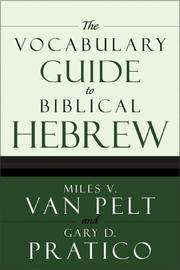
Organizes all Hebrew words by frequency and root, making vocabulary acquisition systematic and efficient; mastering this list is the single biggest lever for reading fluency.

Provides the full Hebrew Bible text with footnoted glosses for any word occurring fewer than 100 times, allowing you to read real scripture immediately without constantly stopping to use a lexicon.
Intermediate Grammar & Syntax
IntermediateMaster the derived verb stems (Niphal, Piel, Hiphil, etc.), the full verbal system, and the syntactic patterns of Biblical Hebrew prose well enough to translate unseen passages from narrative books.
▸ Study plan for this stage
Pace: 8–10 weeks, ~25–30 pages/day (Kelley first: 4–5 weeks; Waltke second: 4–5 weeks)
- The seven major verb stems (Qal, Niphal, Piel, Pual, Hiphil, Hophal, Hitpael) and their semantic relationships to the simple stem
- Formation and recognition of derived stem verbal forms across all tenses (perfect, imperfect, imperative, infinitive, participle)
- The complete verbal system: tense, aspect, mood, and their interaction in Biblical Hebrew prose
- Clause relationships and sentence structure in Biblical Hebrew narrative: coordination, subordination, and the role of the waw-consecutive
- Syntactic patterns of direct objects, prepositional phrases, and word order as meaning-bearing elements
- Parsing and identifying verbal stems and forms in context to disambiguate meaning
- Discourse analysis: how verb forms and syntactic patterns create narrative flow and emphasis in biblical prose
- What is the semantic difference between the Qal, Niphal, and Hiphil stems, and how do these relationships help you predict the meaning of a derived stem form you encounter for the first time?
- How do you form the perfect, imperfect, imperative, and participle in the Piel and Hiphil stems, and what visual markers distinguish them from Qal forms?
- What is the waw-consecutive (vav-consecutive), and how does it function in Biblical Hebrew narrative to advance the plot or create temporal sequence?
- How do word order variations and the placement of direct objects signal emphasis or change meaning in a Biblical Hebrew sentence?
- Given an unseen narrative passage, how would you identify the main clause, subordinate clauses, and the syntactic relationships between them?
- What role do participles and infinitives play in Biblical Hebrew syntax, and how do they differ from finite verbs in terms of function and meaning?
- Complete all paradigm drills in Kelley's chapters on derived stems (Niphal, Piel, Hiphil, etc.); write out full conjugations for 8–10 verbs across all stems and tenses
- Parse 50–75 verbal forms from biblical narrative (Genesis, Exodus, 1 Samuel) using Kelley's parsing methodology; identify stem, tense, person, number, and gender for each
- Translate 5–8 short narrative passages (8–15 verses each) from Genesis or Exodus, focusing on identifying waw-consecutive chains and explaining how they structure the narrative
- Analyze 3–4 complete narrative episodes (20–30 verses) using Waltke's syntactic framework; diagram clause relationships and identify main vs. subordinate clauses
- Create a personal reference chart mapping the semantic relationships between Qal and each derived stem (Niphal as passive/reflexive, Piel as intensive, Hiphil as causative, etc.) with 5–10 example pairs from biblical texts
- Translate 10–15 unseen verses from 1 Samuel or Joshua without a lexicon; rely on stem recognition, context, and syntactic patterns to determine meaning; compare with published translations
Next up: Mastery of the derived verb stems, the complete verbal system, and syntactic patterns in prose equips you to recognize how biblical authors manipulate grammar for rhetorical effect, preparing you to move into advanced topics such as poetry, discourse analysis, and the nuances of biblical theology expressed through language.
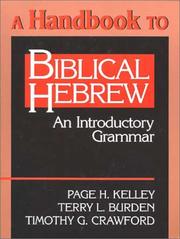
Returns to grammar at a deeper level, covering derived stems and complex syntax with extensive biblical examples; its prose-focused approach makes it ideal for consolidating intermediate knowledge.
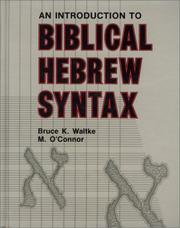
The definitive reference grammar for Biblical Hebrew syntax; at this stage it is used as a guided read-through of its major sections, giving you the analytical framework to understand why sentences are constructed as they are.
Advanced Reading & Independent Translation
ExpertRead Biblical Hebrew poetry, wisdom literature, and prophetic texts with confidence; use a full lexicon independently; and have the tools to engage with any passage in the Hebrew Bible without assistance.
▸ Study plan for this stage
Pace: 12–14 weeks, ~40–50 pages/day (alternating between lexicon reference work and syntax study, with 3–4 days/week dedicated to intensive translation projects)
- Mastering lexicon navigation: understanding root systems, morphological variations, semantic ranges, and how to disambiguate word meanings in context using HALOT
- Recognizing and parsing complex Hebrew syntax: clause relationships, subordination, word order patterns, and how syntax shapes meaning in poetry and prophecy
- Identifying discourse markers and cohesion devices that signal logical and narrative flow in extended biblical passages
- Understanding poetic structures: parallelism, meter, acrostics, and how syntactic compression in poetry differs from prose
- Developing independent problem-solving: using lexicon and syntax knowledge together to resolve ambiguities without external commentary
- Engaging with wisdom literature and prophetic texts: recognizing their distinctive syntactic and semantic patterns
- Building confidence in sustained reading: moving from word-by-word analysis to fluent comprehension of longer passages
- How do you use HALOT to determine which sense of a polysemous Hebrew word is correct in a specific biblical context, and what contextual clues guide your decision?
- What are the major syntactic patterns Fuller identifies for expressing subordination, and how do these patterns affect the logical relationship between clauses?
- How do poetic texts use syntactic compression and parallelism differently from prose, and what challenges does this create for translation?
- What role do discourse markers and conjunctions play in signaling coherence and flow in longer biblical passages, and how do you recognize them?
- Given an unfamiliar or ambiguous passage in biblical Hebrew poetry or prophecy, what systematic steps would you take to arrive at a defensible translation?
- How do the syntactic and semantic patterns of wisdom literature differ from narrative or prophetic discourse, and what does this tell you about the author's rhetorical intent?
- Complete 10–15 lexicon deep-dives: select difficult or polysemous words from biblical passages (e.g., דברים, חסד, שלום) and trace their semantic range through HALOT, noting how context narrows meaning in 3–5 different biblical uses
- Analyze 5–8 complex Hebrew sentences from prophetic texts (e.g., Isaiah, Jeremiah) using Fuller's syntax framework: diagram clause relationships, identify subordination patterns, and explain how syntax contributes to the passage's meaning
- Translate 3–4 complete poems or wisdom passages (e.g., Psalm 42, Job 3, Proverbs 8:22–31) without commentary, using only HALOT and Fuller's syntax principles; then compare your translation to 2–3 published versions and justify your choices
- Create a personal reference guide: compile 20–30 high-frequency syntactic patterns from Fuller with biblical examples, organized by function (e.g., expressing condition, purpose, result)
- Conduct a comparative syntax study: select one passage in two different genres (e.g., narrative vs. poetry, or wisdom vs. prophecy) and analyze how syntactic choices differ and why
- Translate a 50–100 verse passage from a prophetic book (e.g., Isaiah 40–48, Jeremiah 1–10, or Ezekiel 1–3) over 2–3 weeks, building a running lexicon of difficult words and syntactic patterns encountered
Next up: This stage equips you with the independent lexical and syntactic tools to read any biblical Hebrew text fluently; the next stage will likely deepen your engagement with historical-critical interpretation, textual criticism, and the theological and literary dimensions of the texts you can now read with confidence.
The standard scholarly lexicon of Biblical Hebrew; learning to use it fluently is the capstone skill that makes you a truly independent reader of the Hebrew Bible.

A comprehensive review grammar that integrates prose and poetry, consolidates all prior learning, and introduces the student to the full range of the Hebrew Bible's literary styles — the ideal final course text.
Discussion
Keep reading
Paths that share books, cover the same subject, or open a related topic.