Learn Vietnamese: a beginner's ordered reading and study path
This curriculum takes a complete beginner from zero Vietnamese to conversational and reading fluency across four carefully sequenced stages. Each stage builds on the last — starting with the sound system and survival phrases, moving through structured grammar and vocabulary, then into authentic reading and listening practice, and finally into advanced fluency resources that mirror real Vietnamese life and culture.
Stage 1: Cracking the Sound System & Survival Basics
BeginnerMaster the Vietnamese alphabet, 6 tones, and basic pronunciation so that every subsequent study session is built on accurate sounds rather than bad habits.
▸ Study plan for this stage
Pace: 2–3 weeks, ~15–20 pages/day (focusing on the Pronunciation Guide and Survival Phrases sections)
- The Vietnamese alphabet (29 letters) and how diacritical marks modify pronunciation
- The 6 Vietnamese tones (level, rising, falling, question, tumbling, heavy) and their pitch contours
- Tone marking system: how diacritics above/below vowels indicate tone changes
- Phonetic distinctions between similar consonants (d/gi, tr/ch, th/t) that don't exist in English
- Survival phrase patterns from the phrasebook (greetings, polite expressions, essential requests) tied to correct tone production
- The relationship between written Vietnamese and spoken Vietnamese through the phrasebook's romanized transcriptions
- Can you identify all 6 tones by ear and reproduce them accurately on a single syllable?
- How do the diacritical marks in the Vietnamese alphabet change the meaning of a word, and can you give 3 examples from the phrasebook?
- What are the key consonant clusters and sounds that don't exist in English, and how do you position your mouth/tongue differently?
- Can you read aloud 10 survival phrases from the phrasebook with correct tone and stress, and understand what they mean?
- Why is accurate tone production essential before moving to longer sentences, and what happens if you mispronounce a tone?
- How does the romanized transcription in the phrasebook help you map written Vietnamese to actual pronunciation?
- Spend 10 minutes daily on tone drills: repeat each of the 6 tones on the syllable 'ma' until you can hear and produce the pitch differences without thinking
- Write out the Vietnamese alphabet by hand 3 times, saying each letter aloud; then practice writing 5 common survival words from the phrasebook and mark their tones
- Record yourself reading 15 survival phrases from the phrasebook, then listen back and compare your tone contours to native speaker audio (if available online)
- Create flashcards for 20 survival phrases with the Vietnamese on one side and English + tone marks on the other; quiz yourself daily
- Practice minimal pairs from the phrasebook (words that differ only in tone, like 'ma' with different tones) until you can distinguish them by ear 9 out of 10 times
- Speak the survival phrases aloud in context: greet an imaginary person, ask for water, say thank you—focusing on tone accuracy over speed
Next up: This stage builds the phonetic foundation so that in Stage 2, you can learn grammar and vocabulary without fighting against ingrained mispronunciations, allowing you to absorb new words naturally with correct tones from the start.

Provides immediately usable survival phrases alongside a clear pronunciation guide, giving beginners real-world context and motivation while the sound system is still being internalized.
Stage 2: Core Grammar & Everyday Vocabulary
BeginnerBuild a working grammatical framework and a vocabulary of ~1,000 high-frequency words so you can form, understand, and manipulate basic sentences confidently.
▸ Study plan for this stage
Pace: 8–10 weeks, ~40–50 pages/day (mix of reading, grammar drills, and vocabulary review)
- Vietnamese phonology and tone system: mastering all 6 tones and their written markers to ensure correct pronunciation and comprehension
- Sentence structure and word order: SVO (subject-verb-object) patterns, particles (là, được, bị), and how they modify meaning
- Verb conjugation and aspect markers: understanding how Vietnamese uses particles (đã, đang, sẽ, vừa) instead of tense inflection
- Noun phrases and classifiers: using measure words (cái, chiếc, người, quyển) correctly with nouns and numbers
- Common particles and function words: particles like không, có, có phải, để, và, nhưng and their roles in negation, questions, and coordination
- High-frequency vocabulary (~1,000 words): prioritizing everyday nouns, verbs, adjectives, and expressions from both textbooks
- Listening and speaking integration: connecting written forms to natural speech patterns, especially colloquial variations covered in Colloquial Vietnamese
- Basic sentence manipulation: forming statements, questions, negations, and imperatives with confidence
- How do Vietnamese tones work, and how can you reliably produce and recognize all 6 tones in isolation and in context?
- What is the basic word order in Vietnamese, and how do particles like là, được, and bị change the meaning or function of a sentence?
- How does Vietnamese express tense and aspect without verb conjugation, and what is the role of particles like đã, đang, sẽ, and vừa?
- When and why do you use measure words (classifiers) in Vietnamese, and can you use them correctly with common nouns and numbers?
- What are the most common particles in Vietnamese (không, có, có phải, để, và, nhưng), and how do they function in negation, questions, and sentence coordination?
- Can you form, understand, and respond to basic statements, questions, negations, and imperatives using ~1,000 high-frequency words?
- Tone drills: daily practice isolating and producing each of the 6 Vietnamese tones using minimal pairs (e.g., ma, má, mà, mả, mã, mạ) until you can distinguish and produce them consistently
- Grammar pattern substitution: take model sentences from Elementary Vietnamese and systematically swap subjects, verbs, and objects to internalize SVO word order and particle placement
- Vocabulary flashcard sets: create and review 200–250 word cards per week from both textbooks, organized by semantic field (food, family, time, actions, descriptions) with tone marks and example sentences
- Listening and repetition: work through audio dialogues in Colloquial Vietnamese, pausing to repeat each phrase and noting colloquial variations versus formal written Vietnamese
- Sentence transformation drills: convert statements to questions (using có phải không, không, sao), negations (using không, chưa, không phải), and imperatives using particles from both texts
- Classifier practice: write out 30–40 common noun phrases with correct measure words (e.g., một cái bàn, ba chiếc xe, năm người bạn) and use them in sentences
- Dialogue role-play: select 5–6 dialogues from Colloquial Vietnamese and practice both roles aloud, focusing on natural intonation and colloquial speech patterns
- Timed written composition: weekly 5–10 sentence paragraphs describing daily activities, family, or simple narratives using grammar and vocabulary from the current week's reading
Next up: By mastering core grammar structures and building a solid 1,000-word vocabulary foundation, you'll be ready for Stage 3, which will deepen your conversational fluency, introduce more complex sentence patterns, and expand your vocabulary to handle real-world texts and extended dialogues.

The most widely adopted university-level beginner Vietnamese textbook in the English-speaking world; it covers grammar systematically with dialogues, drills, and cultural notes in a proven sequence.

A communicative course that complements the structural approach of Elementary Vietnamese by emphasizing spoken, colloquial patterns and natural dialogue, bridging the gap between textbook and real speech.
Stage 4: Advanced Fluency & Cultural Depth
ExpertAchieve near-independent fluency by engaging with authentic Vietnamese literature, culture, and idiomatic language, and by refining tone and register for real-world communication.
▸ Study plan for this stage
Pace: 8–10 weeks, ~40–50 pages/day (approximately 3,000–4,000 lines of verse; adjust based on annotation density and comprehension needs)
- Classical Vietnamese poetry structure: lục bát meter (6–8 syllable alternating lines) and its rhythmic/tonal effects on meaning and emotion
- Archaic and literary Vietnamese vocabulary, idioms, and cultural allusions embedded in The Tale of Kiều
- Narrative complexity: the interplay of fate (mệnh), virtue (đức), and moral ambiguity in Kiều's journey and choices
- Register and tone shifts: how Nguyễn Du employs formal, colloquial, and philosophical language to characterize different speakers and moments
- Vietnamese cultural values reflected in the text: filial piety, loyalty, shame, redemption, and the role of women in feudal society
- Intertextual references to Chinese classics (especially the source text) and how Nguyễn Du adapts and localizes them
- Stylistic devices: metaphor, parallelism, and symbolism in conveying psychological depth and social critique
- How does the lục bát meter shape the pacing and emotional resonance of key scenes in The Tale of Kiều, and what tonal effects does Nguyễn Du achieve through variations in rhythm?
- What is the significance of Kiều's choices at major turning points, and how does the text explore the tension between personal agency and fate?
- How does Nguyễn Du use archaic and literary vocabulary to establish tone and characterize different social classes and moral positions?
- What Vietnamese cultural values (filial piety, loyalty, shame) are central to the narrative, and how do they drive the plot and character development?
- How does The Tale of Kiều adapt or diverge from its Chinese source material, and what does this reveal about Nguyễn Du's artistic intent?
- What role do metaphor and symbolism play in conveying Kiều's inner life and the text's broader commentary on society and morality?
- Read aloud 10–15 lines of lục bát verse daily, focusing on tonal patterns and natural pauses; record yourself and compare your rhythm to native speaker recordings
- Create a glossary of 50+ archaic/literary terms from the text with modern equivalents; use each in a sentence reflecting the original context
- Analyze 3–4 key scenes (e.g., Kiều's separation from Vương Văn, her time with Thúc Sinh, her reunion with Vương Văn) by mapping the emotional arc and identifying the stylistic devices Nguyễn Du uses
- Write a 500–word comparative essay on how Nguyễn Du's version of the Kiều story differs from the Chinese source in characterization, tone, or moral emphasis
- Engage in weekly discussion or journaling: reflect on how Vietnamese cultural values in the text relate to contemporary Vietnamese society; what has changed, what persists?
- Memorize and recite 30–50 lines of your favorite passages, paying attention to how the meter and language reinforce meaning
Next up: Mastery of The Tale of Kiều's classical language, cultural depth, and poetic sophistication equips you to independently engage with other Vietnamese literary classics, contemporary literary fiction, and specialized texts in philosophy, history, or cultural studies, while developing the confidence to navigate authentic, unmediated Vietnamese discourse in all registers.
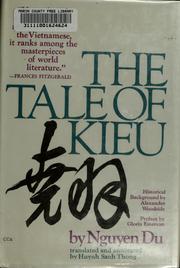
Vietnam's most celebrated literary work; reading it in a bilingual edition exposes the learner to classical Vietnamese poetic language and cultural values that are central to understanding the Vietnamese worldview.
Discussion
Keep reading
Paths that share books, cover the same subject, or open a related topic.