The Best Books on Perfumery and Fragrance Making
This curriculum takes an intermediate learner from a solid conceptual grounding in fragrance structure and raw materials, through hands-on blending technique, and finally into the advanced craft of professional perfumery and olfactory artistry. Each stage builds the vocabulary, sensory vocabulary, and practical skills needed to tackle the next, so that by the end the learner can both understand great perfumes and create their own with intention and confidence.
Foundations of Fragrance
BeginnerUnderstand the language of perfumery — fragrance families, the note pyramid (top/heart/base), key raw materials, and how professional perfumers think about scent — before touching a single bottle.
▸ Study plan for this stage
Pace: 4–5 weeks, ~40–50 pages/day (approximately 600 pages total)
- The sensory power of scent and its psychological/emotional impact on human behavior and memory
- How fragrance is constructed through layered composition (top, heart, base notes) as demonstrated through Grenouille's creations
- The distinction between natural raw materials (flowers, resins, animalics) and their properties, as revealed through Süskind's descriptions of scent sources
- The perfumer's mindset: obsession with capturing and isolating scent, treating fragrance as an art form requiring technical skill and vision
- The historical and cultural context of 18th-century perfumery as a craft and trade
- Scent as a narrative device: how fragrance can tell a story and evoke complex human responses
- The ethics and darker implications of pursuing olfactory perfection without moral constraint
- How does Süskind use descriptions of scent and fragrance-making to reveal Grenouille's character and psychology?
- What raw materials and scent sources are mentioned in the novel, and what properties do they represent in fragrance composition?
- Explain the structure of a fragrance in terms of top, heart, and base notes using examples from Grenouille's work in the novel.
- How does the novel illustrate the relationship between scent, memory, and human emotion?
- What does the novel suggest about the perfumer's role in society—as artist, craftsperson, or something darker?
- How does Grenouille's approach to fragrance-making differ from that of the established perfumers he encounters?
- Create a 'scent map' of the novel: identify 5–7 key fragrances or scent descriptions mentioned and categorize them by fragrance family (floral, woody, citrus, animalic, etc.) based on context clues in the text.
- Write a detailed sensory analysis of one scene from the novel focused on fragrance (e.g., the tannery, the flower fields, Grenouille's creations). Describe what you imagine the scent pyramid (top/heart/base) would be.
- Research one natural raw material mentioned in the novel (e.g., jasmine, civet, oakmoss, rose) and write a one-page summary of its properties, historical use in perfumery, and how Süskind portrays it.
- Identify and list all references to scent-making techniques, tools, or processes in the novel. Annotate each with what it reveals about 18th-century perfumery practice.
- Create a character-scent profile: assign a fragrance family or note structure to 3–4 main characters based on Süskind's descriptions and what their 'scent' reveals about them.
- Reflect in writing: How does the novel challenge or complicate your assumptions about what perfumery is? What surprised you about the craft as portrayed?
Next up: This stage grounds you in the sensory and emotional language of fragrance through narrative immersion, preparing you to move into the technical and practical foundations of perfumery—fragrance families, note structures, and actual raw materials—with a deeper appreciation for why these elements matter.

Reading this celebrated novel sharpens olfactory imagination and emotional attunement to scent in a way no textbook can; it trains the learner to think in smell before they start working with materials.
Raw Materials & the Perfumer's Palette
IntermediateDevelop a deep, ingredient-level understanding of natural essences — their origins, extraction methods, olfactory character, and how they behave in a blend — so you can make informed creative choices.
▸ Study plan for this stage
Pace: 8–10 weeks, ~40–50 pages/day. Start with Rhind's shorter, more conceptual work (weeks 1–3), then move into Worwood's comprehensive reference (weeks 4–10). Allocate 2–3 sessions per week for hands-on material testing and blending practice alongside reading.
- Plant anatomy and extraction methods (distillation, expression, solvent extraction, enfleurage) and how each method affects the chemical profile and olfactory character of the final essence
- The relationship between plant biochemistry, volatile compounds, and sensory perception—how molecular structure determines scent notes and therapeutic properties
- Olfactory families and character profiles of major natural essences (florals, herbals, citrus, woody, resinous, spicy) and their typical top, middle, and base note behaviors
- The psychosomatic effects of plant aromatics on mood, emotion, and wellbeing—how scent perception links to neurochemistry and memory
- Blending principles specific to natural materials: dilution ratios, synergy, fixation, and how individual essences interact in a composition
- Sourcing, quality assessment, and sustainability considerations for natural raw materials—how to evaluate purity and authenticity
- The chemistry of natural vs. synthetic fragrance components and why natural essences present unique blending challenges and opportunities
- Explain the differences between steam distillation, cold expression, and solvent extraction, and describe how each method affects the chemical composition and olfactory profile of the resulting essence.
- What are the main olfactory families of natural essences, and how do the volatile compounds in each family influence their behavior as top, middle, or base notes in a blend?
- How do the psychoactive and therapeutic properties of plant essences relate to their chemical constituents, and what does the research show about their effects on the nervous system and emotional state?
- Describe the principles of blending natural essences: what is fixation, why do some essences synergize while others clash, and how do dilution ratios affect both scent and stability?
- What are the key quality markers and sustainability concerns when sourcing natural raw materials, and how do you assess the authenticity and purity of an essence?
- How do the constraints and opportunities of natural materials differ from synthetic fragrance components, and what creative advantages do natural essences offer a perfumer?
- Create a detailed reference chart for 15–20 key essences (e.g., rose, lavender, bergamot, sandalwood, frankincense, ylang-ylang) documenting their origin, extraction method, main volatile compounds, olfactory character, therapeutic properties, and typical blending ratios—use both books as sources.
- Conduct a blind olfactory evaluation of 5–8 essences from different families, noting top/middle/base behavior, intensity, and emotional response; then compare your observations to the descriptions in Worwood's reference section to refine your sensory vocabulary.
- Research and document the extraction method and plant source for 3 essences (e.g., rose absolute vs. rose otto, bergamot oil, jasmine); explain how the method influences the final scent profile and therapeutic claims.
- Blend 3–4 simple two- or three-essence compositions (e.g., lavender + bergamot, frankincense + myrrh + sandalwood) at different dilution ratios (1:1, 1:2, 2:1); journal the results, noting synergy, balance, and how the blend evolves over time.
- Create a "psychosomatic profile" for 5 essences based on Rhind's framework: document the plant's traditional uses, the research on its neurochemical effects, and your own sensory/emotional response to it.
- Visit or research a reputable essential oil supplier; evaluate their sourcing practices, quality certifications, and transparency; write a brief assessment of how their standards align with sustainability and authenticity principles discussed in the books.
Next up: This stage equips you with the foundational knowledge of individual essences—their chemistry, behavior, and effects—so you can move into the next stage with confidence in formulation, composition structure, and the ability to make intentional creative decisions when building complex fragrance blends.
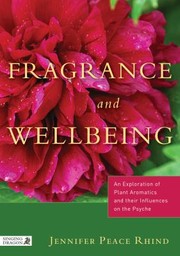
Rhind bridges aromatherapy science and perfumery, giving a rigorous account of how natural aromatic materials are extracted, classified, and experienced — essential groundwork for anyone working with naturals.
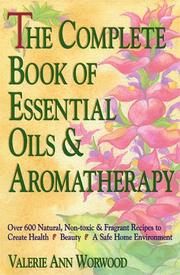
The most comprehensive single-volume reference on individual essential oils and absolutes; read after Rhind to build a detailed, ingredient-by-ingredient palette before you begin blending.
The Art & Science of Blending
IntermediateLearn structured blending methodology — accords, ratios, fixatives, dilution, and iterative testing — and begin crafting original perfumes with a repeatable, professional process.
▸ Study plan for this stage
Pace: 6–8 weeks, ~25–30 pages/day, with 2–3 days per week dedicated to hands-on blending practice
- Accord structure: how top, middle, and base notes combine to create coherent fragrance compositions
- Quantitative blending ratios and formulation mathematics: working with percentages, dilution calculations, and scaling recipes
- Fixatives and their role: how base materials extend longevity and stabilize volatile top notes
- Dilution methods and carrier systems: alcohol concentration, maceration, and aging for proper scent development
- Iterative testing and refinement: systematic note-taking, smell strips, and reformulation based on feedback
- Raw material properties: volatility, diffusion rates, and how individual ingredients behave in blends
- Professional blending workflow: from concept through documentation to final evaluation
- Sensory evaluation and objective assessment: training your nose to identify component contributions
- What is an accord, and how do top, middle, and base notes work together to create a balanced fragrance?
- How do you calculate dilution ratios and scale a fragrance formula up or down while maintaining its character?
- What role do fixatives play in a perfume composition, and how do they differ from other base materials?
- Describe a systematic testing and refinement process: what should you document, and how do you evaluate whether a blend needs adjustment?
- How does maceration time and aging affect fragrance development, and why is patience essential in the blending process?
- Given a fragrance brief or concept, how would you structure an accord and select materials to support it?
- Create 3–5 simple two-note and three-note accords using materials from Piesse's formulas; document scent character, longevity, and diffusion for each
- Reproduce one complete fragrance formula from Calkin's examples, following exact ratios; compare your result to the original intent and refine based on sensory feedback
- Conduct a dilution series: take a single fragrance concentrate and dilute it to 15%, 10%, 5%, and 3% alcohol; evaluate how concentration affects scent profile and longevity
- Build a fixative comparison test: blend the same accord with three different base materials (e.g., vetiver, oakmoss, sandalwood); evaluate how each changes the composition's character and staying power
- Document a full reformulation cycle: create an initial blend, evaluate it against your brief after 48 hours, identify weaknesses, adjust ratios, and test the revised version
- Create a personal fragrance journal with 10–15 blends, recording formula, ratios, maceration time, and sensory notes at days 1, 7, 14, and 30 to observe how compositions evolve
Next up: Mastering structured blending methodology and professional documentation prepares you to explore advanced topics such as fragrance families, market-oriented composition, and the chemistry of synthetic molecules in the next stage.

The classic 19th-century foundational text that first codified the 'odophone' (note scale) and blending principles; reading it gives historical depth and shows how enduring the core concepts of perfumery really are.
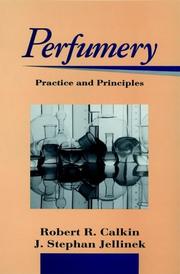
A rigorous, industry-standard technical manual covering accord construction, formula structure, and evaluation methodology — the most practical blending guide for a serious intermediate learner.
The Perfumer's Mind: Creativity & Mastery
ExpertThink and work like a master perfumer — understanding the creative process, the cultural history of great fragrances, and the sensory psychology that makes a perfume truly memorable.
▸ Study plan for this stage
Pace: 4–5 weeks, ~25–30 pages/day (approximately 170–200 pages total)
- The neuroscience of smell: how olfactory signals bypass the thalamus and reach the limbic system directly, creating immediate emotional and memory responses
- Scent and memory encoding: why smells trigger autobiographical memories more powerfully than other senses, and how this shapes fragrance perception
- The psychology of fragrance preference: how individual differences in genetics, experience, and culture determine what we find beautiful or repulsive
- Emotional and hedonic responses to odor: understanding pleasure, disgust, and the role of expectation and context in fragrance appreciation
- The cultural and evolutionary basis of scent preferences: why certain notes resonate across cultures while others are deeply personal
- Olfactory adaptation and habituation: how the nose 'tunes out' constant scents and what this means for fragrance longevity and design
- Fragrance as a tool for identity, mood regulation, and social communication: the psychology behind why people wear perfume
- Sensory integration and synesthesia: how fragrance interacts with other senses and memory systems to create holistic olfactory experiences
- Why does the olfactory system have a direct pathway to the limbic system, and how does this explain why smells evoke emotions and memories more immediately than visual or auditory stimuli?
- What is the relationship between scent, autobiographical memory, and personal identity? How can a perfumer use this knowledge to create fragrances that resonate emotionally with wearers?
- How do genetic variation, early experience, and cultural conditioning shape individual fragrance preferences? Give specific examples from the book.
- What is olfactory adaptation, and why is it a critical consideration for perfumers when designing fragrances meant to last throughout the day?
- How does context, expectation, and suggestion influence whether a scent is perceived as pleasant or unpleasant? What are the implications for fragrance marketing and wearing?
- How can understanding the psychology of scent help a perfumer create fragrances that serve psychological or emotional functions beyond mere aesthetics?
- Conduct a personal scent-memory audit: identify 3–5 fragrances or natural scents strongly linked to your own memories. Write a detailed account of the memory, the context, and why you think that scent became encoded with that memory. Reflect on what Herz says about olfactory-limbic connections.
- Perform an olfactory adaptation experiment: wear a fragrance for a full day and document when you stop noticing it. Then step outside for 10 minutes and return indoors—do you smell it again? Record your observations and connect them to Herz's discussion of habituation.
- Create a fragrance preference profile for yourself: rate 5–8 different fragrances or scent families (floral, woody, citrus, etc.) on a scale of 1–10. For each, write a brief explanation of why you prefer or dislike it, considering genetics, personal history, and cultural influences mentioned in the book.
- Interview 3–5 people about their signature scents: ask them why they chose it, what memories or emotions it evokes, and whether they'd describe it as part of their identity. Analyze their responses through the lens of Herz's psychology of fragrance and personal identity.
- Analyze a fragrance advertisement or marketing campaign: identify how it appeals to emotion, memory, identity, or social communication. Explain which psychological principles from Herz's work the marketing is leveraging.
- Blind-smell test with context manipulation: smell the same fragrance twice—once with no context, once while being told a story or shown an image associated with it. Document how your perception changes and relate this to Herz's discussion of expectation and suggestion in olfactory perception.
Next up: This stage grounds the perfumer in the sensory psychology and emotional architecture that makes fragrances memorable and meaningful, preparing you to apply these insights to actual fragrance composition, historical analysis, and the deliberate crafting of olfactory experiences in the next stage.
A neuroscientist's account of how smell works in the brain and why certain scents move us emotionally; this advanced perspective helps the perfumer make intentional, psychologically resonant creative decisions.
Discussion
Keep reading
Paths that share books, cover the same subject, or open a related topic.