Penelope Fitzgerald Reading Order: Where to Start
This curriculum traces Penelope Fitzgerald's arc from her compact, darkly comic early novels to her luminous late historical fiction, building the reader's feel for her signature compression, irony, and moral seriousness at each stage. Starting from her most accessible work, the path moves through her autobiographical and realist phase before arriving at the late masterpieces where her style reaches its full, elliptical power. A short biographical study is woven in to anchor the life behind the work.
Entry Point: The Early Comic Novels
IntermediateGet a feel for Fitzgerald's distinctive voice — her economy of language, dry wit, and ability to find tragedy inside comedy — through her most approachable, plot-driven early work.
▸ Study plan for this stage
Pace: 6–8 weeks total: Week 1–2 — The Bookshop (~170 pages, ~25 pages/day); Week 3–4 — Offshore (~140 pages, ~20 pages/day, slower pace to track the ensemble cast and shifting allegiances); Week 5–6 — Human Voices (~185 pages, ~25–30 pages/day); Week 7–8 reserved for review, re-reading marked passages, an
- Economy of language: Fitzgerald's prose is famously compressed — she omits what other novelists explain, trusting the reader to infer emotion, motive, and consequence from surface detail alone.
- Tragicomedy as a structural principle: all three novels generate genuine comedy (absurd institutions, hapless characters, social awkwardness) while simultaneously building toward quiet, devastating loss — Florence Green's doomed bookshop, the houseboat dwellers' impossible limbo, the BBC's wartime c
- The outsider protagonist: Florence Green (The Bookshop), Nenna James (Offshore), and Annie Asra (Human Voices) are each women operating at the margins of an institution or community that was never designed to include them, and Fitzgerald uses their precarity to expose the cruelty of 'normal' social
- Institutional satire: The Bookshop anatomises English provincial complacency; Offshore dissects the no-man's-land between land and river bureaucracy; Human Voices skewers the BBC's wartime self-importance — in each case, the institution outlasts and defeats the individual.
- Setting as moral atmosphere: Hardborough's damp, resistant landscape in The Bookshop; the Thames estuary's literal in-between-ness in Offshore; the blacked-out, bomb-threatened London of Human Voices — Fitzgerald makes physical environment carry thematic weight without ever becoming heavy-handed.
- Understatement and the withheld climax: Fitzgerald consistently refuses melodrama at the moment of maximum emotional pressure, and the reader must learn to feel the weight of what is not said or shown.
- Community and complicity: minor characters in all three novels are not merely background — they form the social web that enables or destroys the protagonist, and Fitzgerald distributes moral responsibility across the ensemble rather than locating it in a single villain.
- Fitzgerald's biographical shadow: The Bookshop draws on her experience running a bookshop; Human Voices on her time at the BBC — recognising this autobiographical texture helps readers understand why the institutional detail feels so precise and why the defeats feel so personal.
- In The Bookshop, how does Fitzgerald use the Old House, the cold, and the flooding to signal Florence Green's fate without ever stating it directly — and what does this technique reveal about her narrative method?
- Offshore is built around characters who belong neither fully to land nor to water. How does this literal in-between-ness function as a metaphor, and which character do you think Fitzgerald treats most sympathetically — and why?
- All three novels end in a form of defeat or dispersal for the central character. Compare the emotional register of the three endings: are they equally bleak, or does Fitzgerald modulate tone differently across the books?
- Fitzgerald's comedy often arises from institutional absurdity — the planning committee in The Bookshop, the harbour authority in Offshore, the BBC's Recording Department in Human Voices. What is she ultimately saying about institutions and the individuals who serve them?
- Identify one moment in each novel where Fitzgerald withholds an emotional reaction that a conventional novelist would have written out in full. What effect does the omission create, and how did you as a reader fill the gap?
- How does Fitzgerald's treatment of minor characters (Mrs Gamart, Richard, Sam Brooks) complicate any simple reading of the protagonist as innocent victim? Does she allow for moral ambiguity in her heroes?
- Close-reading log: Each week, copy out 3–5 sentences that strike you as quintessentially 'Fitzgerald' — unusually compressed, funny, or quietly devastating. Annotate each one: what is being left out? What is the sentence doing in one line that another writer might take a paragraph to achieve?
- Structural mapping: For each novel, draw a simple arc diagram marking the moments of apparent hope and the moments of reversal. Then note where the comedy peaks and where the tragedy lands — are they ever the same moment? This will make Fitzgerald's tragicomic structure visible on the page.
- Rewrite a scene: Choose one scene from The Bookshop or Human Voices and rewrite it in the style of a more conventional, emotionally explicit novelist (think detailed interiority, explained feelings, resolved dialogue). Then compare your version to Fitzgerald's. Write a paragraph on what her version gains by leaving things out.
- Character web for Offshore: Draw a diagram of all the houseboat characters and their relationships, noting what each one wants and what prevents them from getting it. Identify which characters are 'land-people' at heart and which are genuinely adrift — this will sharpen your reading of the novel's central metaphor.
- Institutional audit: For each of the three novels, write a one-paragraph 'case study' of the institution featured (the bookshop as business, the Thames moorings as community, the BBC as employer), describing how it functions, who holds power, and how it treats the protagonist. Compare the three paragraphs: what pattern emerges in Fitzgerald's view of organised human life?
- Reading journal synthesis: After finishing all three books, write a 400–600 word personal essay answering: 'What does Penelope Fitzgerald find funny, and what does she find sad — and is there a difference?' Use specific scenes from all three novels as evidence.
Next up: Mastering Fitzgerald's compressed, tragicomic voice in these plot-driven early novels equips the reader to appreciate how she applies the same techniques to richer historical canvases and deeper psychological interiority in her later, more ambitious work.
Her breakthrough novel and the ideal entry point: short, wry, and devastating, it introduces her core theme of quiet human defeat in the face of social indifference. Its realist setting and linear plot make it the most immediately accessible of her works.
Her Booker Prize winner, set among misfits living on houseboats on the Thames. Read second, it deepens the themes of precariousness and belonging introduced in The Bookshop, and begins to show her more elliptical, compressed style.

Set inside the BBC during the Blitz, this novel draws on her own wartime experience and rewards the reader who now recognises her ironic institutional satire. It bridges the early realist novels and her later, more interior work.
The Autobiographical Vein
IntermediateUnderstand the real-life sources of Fitzgerald's imagination by reading her two biographical works, which illuminate the literary and artistic worlds that shaped her sensibility.
▸ Study plan for this stage
Pace: 6–8 weeks total: Weeks 1–3 on "Edward Burne-Jones" (~25–30 pages/day, including time to pause and look up Pre-Raphaelite artworks referenced in the text); Weeks 4–7 on "The Knox Brothers" (~20–25 pages/day, given its denser interweaving of four parallel lives); Week 8 reserved for comparative reflec
- Biography as self-portrait: how Fitzgerald's choice of subjects — a Pre-Raphaelite painter and her own father and uncles — reveals her personal aesthetic and intellectual values
- The Pre-Raphaelite world as imaginative seedbed: in 'Edward Burne-Jones', understanding how Burne-Jones's commitment to beauty, myth, and craftsmanship over commerce anticipates themes Fitzgerald returns to in her fiction
- Artistic integrity under pressure: Burne-Jones's navigation of Victorian commercial success versus private artistic vision, a tension Fitzgerald herself lived as a late-blooming writer
- Family as a web of vocations: 'The Knox Brothers' presents four radically different careers — theology, cryptography, scholarship, humour — held together by shared intellectual seriousness and Anglican faith
- The Edwardian and wartime intellectual milieu: 'The Knox Brothers' situates Ronald, Dillwyn, Wilfred, and Eddie Knox within the specific historical pressures of two World Wars and a fracturing religious culture
- Fitzgerald's biographical method: her preference for close, affectionate observation over grand thesis-making, her use of letters, diaries, and anecdote as primary texture
- The role of loss and belatedness: both books are elegies — for a vanished aesthetic world (Burne-Jones) and for a generation of exceptional men (the Knoxes) — foreshadowing the elegiac tone of her novels
- Restraint and implication as style: how Fitzgerald withholds authorial judgment and lets subjects speak through selected detail, a technique directly carried into her fiction
- In 'Edward Burne-Jones', how does Fitzgerald characterise the tension between Burne-Jones's public fame and his private sense of artistic failure, and what does her sympathy for that tension tell us about her own values?
- What specific aspects of the Pre-Raphaelite Brotherhood's ethos — as filtered through Fitzgerald's account of Burne-Jones — reappear as themes or atmospheres in her later fiction?
- In 'The Knox Brothers', how does Fitzgerald manage the structural challenge of narrating four simultaneous lives without losing the reader or flattening any individual Knox into a type?
- What does the contrast between the four Knox brothers' vocations (Ronald's Catholicism, Dillwyn's codebreaking, Wilfred's Anglo-Catholicism, Eddie's comic writing) suggest about Fitzgerald's understanding of intellectual and spiritual vocation?
- Both books deal with worlds that have largely disappeared by the time Fitzgerald writes about them. How does she handle historical distance — with nostalgia, irony, scholarly detachment, or something else?
- How does reading these two biographical works change or deepen your understanding of Fitzgerald as a writer — what habits of mind, recurring preoccupations, or stylistic instincts do they reveal?
- Visual immersion for 'Edward Burne-Jones': Before and during your reading, gather reproductions of at least 8–10 Burne-Jones paintings and tapestries mentioned in the text (e.g. 'The Golden Stairs', 'King Cophetua and the Beggar Maid'). Keep a running log noting how Fitzgerald describes each work in words — then write a one-paragraph comparison of her verbal description against your own visual imp
- Marginal biography tracking for 'The Knox Brothers': Create a simple four-column chart (one column per brother) and, as you read, note each brother's key life events, defining intellectual commitments, and moments of crisis or joy. At the end, write a 300-word synthesis: what, if anything, unites all four men beyond blood?
- Letter and source detective work: Fitzgerald draws heavily on letters and diaries in both books. Identify three specific passages where she quotes primary sources directly. For each, write a sentence on what the quotation adds that paraphrase could not — and what this reveals about her biographical method.
- Elegy and tone exercise: Select one passage from 'Edward Burne-Jones' and one from 'The Knox Brothers' that you find most emotionally resonant. Write a 200-word close reading of each, focusing specifically on how Fitzgerald achieves an elegiac effect through word choice, sentence rhythm, and what she chooses NOT to say.
- Comparative biography essay (500–700 words): Argue whether 'Edward Burne-Jones' or 'The Knox Brothers' is more autobiographical in spirit. Use specific textual evidence from both books to support your case — consider subject choice, narrative voice, emotional investment, and thematic emphasis.
- Bridge journaling: After finishing both books, free-write for 20 minutes on this prompt: 'Which character from either biography would fit most naturally into a Fitzgerald novel, and why?' This exercise primes you to see the continuity between her biographical and fictional imaginations.
Next up: By mapping the real artistic and intellectual worlds that fed Fitzgerald's imagination — the Pre-Raphaelite studio, the Knox family's vocational seriousness, the elegiac sense of vanished excellence — this stage equips the reader to recognise those same preoccupations operating as living fictional forces when encountering her novels in the next stage.

Her biography of the Pre-Raphaelite painter reveals her deep engagement with the Victorian artistic world she would later fictionalise. Reading it here prepares the ground for The Gate of Angels and The Blue Flower.
A memoir-biography of her remarkable father and uncles, this is essential for understanding the intellectual and spiritual atmosphere that runs through all her fiction. It also shows her biographical prose at its most personal and precise.
The Transition: Towards the Historical
IntermediateFollow Fitzgerald as she begins to move away from contemporary realism into more lyrical, philosophically charged territory, developing the oblique narrative technique that defines her late style.
▸ Study plan for this stage
Pace: 6–8 weeks total: spend weeks 1–3 on The Beginning of Spring (~20–25 pages/day, allowing time to re-read key passages slowly), then weeks 4–6 on The Gate of Angels (~15–20 pages/day, given its denser philosophical texture), with weeks 7–8 reserved for comparative reflection, re-reading, and completin
- Oblique narration: Fitzgerald's habit of withholding motivation, backstory, and resolution, forcing the reader to infer meaning from surface detail and atmosphere rather than explicit statement
- Historical displacement as defamiliarisation: using pre-Revolutionary Moscow (The Beginning of Spring) and Edwardian Cambridge (The Gate of Angels) as estranging mirrors for universal human confusion and moral uncertainty
- Lyrical compression: the way Fitzgerald packs philosophical weight into apparently plain, even comic prose — short sentences, understatement, and strategic silence doing the work of long exposition
- The unreliable centre of consciousness: Frank Reid and Fred Fairly are both decent, limited men who fundamentally misread the worlds they inhabit, making the reader the more perceptive party
- The numinous and the inexplicable: The Gate of Angels introduces a genuinely supernatural or at least rationally unresolvable dimension (the collision, Daisy's appearance) that The Beginning of Spring only hints at through Russian mysticism and Nellie's disappearance
- Community and institution as character: the Moscow English colony and St Angelicus College are rendered as living organisms with their own logic, pressures, and absurdities, often more vivid than individual psychology
- Gender, power, and invisibility: both novels feature women (Nellie, Daisy) whose inner lives and agency are systematically obscured by the male perspective through which we see them — a deliberate structural choice
- The comedy of earnestness: Fitzgerald uses gentle but persistent irony to expose the gap between her protagonists' confident self-understanding and the opacity of the world around them
- In The Beginning of Spring, Frank Reid never fully understands why Nellie left or who Lisa Ivanovna really is — how does Fitzgerald use Frank's incomprehension as a narrative and thematic device, and what does it ask of the reader?
- How does Fitzgerald use the specific historical setting of 1913 Moscow in The Beginning of Spring not merely as backdrop but as an active force that shapes character behaviour, social possibility, and the novel's mood?
- The Gate of Angels is set in a Cambridge college that officially does not admit women, yet Daisy dominates the emotional and moral centre of the novel. How does Fitzgerald navigate this paradox, and what does it reveal about her technique of writing around absences?
- Both novels end without conventional resolution. Compare the two endings: what is withheld in each case, what is quietly affirmed, and how do the endings reflect Fitzgerald's broader philosophy of narrative restraint?
- Fred Fairly is a physicist at the dawn of quantum mechanics, yet he cannot explain the collision that brings Daisy into his life. How does The Gate of Angels use the tension between scientific rationalism and inexplicable experience as a structural and philosophical principle?
- Identify at least two moments in each novel where the prose shifts register — becoming suddenly more lyrical, strange, or heightened. What triggers these shifts, and what do they accomplish thematically?
- Close-reading journal: After finishing each chapter, write 2–3 sentences identifying what Fitzgerald chose NOT to tell you. Track these omissions across the whole novel and write a one-page reflection on the cumulative effect of her withholding.
- Character map of the unseen: Draw a diagram placing Frank (or Fred) at the centre, then map every character whose inner life is never directly accessed. Annotate each with what we know versus what we are left to infer — this makes Fitzgerald's structural choices visible at a glance.
- Rewrite a scene from a withheld perspective: Choose one scene from The Beginning of Spring written from Frank's point of view and rewrite it from Nellie's or Lisa's perspective, inventing plausible interiority. Then write a paragraph on what Fitzgerald gains by refusing to do this herself.
- Setting as argument: Select one extended description of Moscow in The Beginning of Spring and one of Cambridge/the Fens in The Gate of Angels. Write a comparative analysis (400–600 words) of how each setting encodes the novel's central themes — what does the physical world 'say' that the characters cannot?
- Tone tracking: Find three passages in The Gate of Angels where comedy and genuine pathos or philosophical unease coexist in the same paragraph. Annotate them line by line, identifying the specific words or syntactic choices that hold both tones simultaneously — this is the core skill of reading Fitzgerald's late style.
- Comparative essay (600–800 words): Argue whether The Beginning of Spring or The Gate of Angels represents the more decisive break with conventional realism, using specific textual evidence from both novels to support your case.
Next up: Mastering Fitzgerald's oblique narration and her use of historical displacement in these two novels equips the reader to fully appreciate The Blue Flower, where these techniques reach their most ambitious and philosophically demanding expression in her fictionalisation of the Romantic poet Novalis.
Set in Moscow in 1913, this is her first fully historical novel and a pivotal transitional work. Its atmosphere of spiritual unease and its refusal to resolve its mysteries are a direct preparation for the late masterpieces.
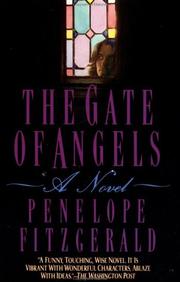
Set in Edwardian Cambridge, this short, strange novel blends physics, faith, and love with characteristic lightness. It consolidates the reader's grasp of her late style — allusive, compressed, and quietly metaphysical — before the summit.
The Late Masterpiece
ExpertExperience Fitzgerald at the absolute height of her powers: a historical novel of radical compression and emotional depth, widely considered one of the greatest British novels of the twentieth century.
▸ Study plan for this stage
Pace: 4–5 weeks total: Week 1 — read The Bookshop at a relaxed pace (~25–30 pages/day, finishing in ~5 days), then pause for reflection; Weeks 2–4 — read The Blue Flower slowly and deliberately (~15–20 pages/day), re-reading individual chapters as needed; Week 5 — dedicated re-reading of key passages from
- Radical compression: Fitzgerald's technique of leaving vast emotional and narrative territory deliberately unstated, forcing the reader to inhabit the white space between scenes
- The chapter as a unit of crystalline prose: how The Blue Flower's micro-chapters (some under a page) function as lyric poems rather than conventional narrative blocks
- Historical ventriloquism: Fitzgerald's method of inhabiting the early Romantic period and the mind of the real poet Novalis (Friedrich von Hardenberg) without anachronism or condescension
- The 'Philosophy of the Blue Flower' — the Romantic ideal of longing, the unattainable, and how Fitzgerald uses Fritz's obsession with the child Sophie von Kühn to interrogate the nature of inspiration and idealization
- Quiet catastrophe in The Bookshop: how Fitzgerald renders institutional cruelty and social exclusion through understatement, irony, and the refusal of melodrama
- The unreliable community: how both novels portray groups of people (the Hardenberg household, the Suffolk town) as simultaneously warm and suffocating, supportive and destructive
- Fitzgerald's use of the child or naïve figure (Sophie, Christine) as a moral and aesthetic touchstone that exposes the self-deception of more 'sophisticated' characters
- Economy of means as a moral stance: how Fitzgerald's refusal of excess — in prose style, plot, and sentiment — becomes itself an ethical and artistic argument
- In The Blue Flower, how does Fitzgerald use the fragmented, mosaic chapter structure to mirror the Romantic philosophy of the fragment, and what is the cumulative emotional effect of this form on the reader's experience of Fritz's story?
- Florence Green in The Bookshop is defeated by forces she never fully understands. How does Fitzgerald use free indirect discourse and ironic distance to make the reader simultaneously more and less informed than Florence — and what does this gap reveal about power and innocence?
- Sophie von Kühn is, by most objective measures, an unremarkable child, yet Fritz's idealization of her drives the entire novel. How does Fitzgerald present this tension without either endorsing Fritz's romanticism or dismissing it, and what does this ambivalence say about the nature of artistic inspiration?
- Both novels end in a form of defeat or loss. Compare the two endings: how does each achieve emotional devastation through restraint rather than explicit grief, and which techniques are shared across both books?
- Fitzgerald researched The Blue Flower meticulously yet the novel never feels like a historical document. What specific narrative and stylistic choices allow her to make the late 18th-century German world feel immediate and inhabited rather than reconstructed?
- How do minor and peripheral characters function differently in The Blue Flower versus The Bookshop? In each case, what does Fitzgerald's handling of the 'supporting cast' reveal about her vision of community, fate, and the limits of individual will?
- Close-reading log: Select five of The Blue Flower's shortest chapters (under two pages each) and write a one-paragraph analysis of each, identifying exactly what narrative or emotional work the chapter performs and what it conspicuously leaves out — then ask yourself what a conventional novelist would have written instead.
- Compression exercise: Take any single scene from The Bookshop that spans 2–3 pages and rewrite it in exactly one paragraph without losing its essential emotional meaning. Then reverse-engineer what Fitzgerald herself compressed to arrive at her own version — what did she choose to show, and what did she trust the reader to infer?
- Character dossier on Sophie von Kühn: Compile every direct description, piece of dialogue, and reported action involving Sophie across The Blue Flower. Write a one-page assessment of her as a character on the page versus her function as a symbol — and identify the precise moments where Fitzgerald allows the two to collide.
- Parallel endings essay (500–700 words): Write a comparative close reading of the final pages of both The Blue Flower and The Bookshop, arguing for a specific claim about what Fitzgerald believes — or refuses to believe — about hope, defeat, and the consolations of art.
- Research and reflection: Read a short biography of Novalis or a brief account of German Early Romanticism (the Jena circle), then return to three chapters of The Blue Flower and annotate what Fitzgerald invented, what she altered, and what she preserved — consider why each choice was made.
- Imitation exercise: Write a scene of no more than one page in Fitzgerald's late style — a scene in which something of great emotional consequence occurs but is never named directly. Use a peripheral character's mundane action to carry the weight of the central event.
Next up: Experiencing the full force of Fitzgerald's compression, historical imagination, and emotional restraint in these two novels equips the reader to engage critically with her legacy — how she has been received, misread, championed, and placed within the broader tradition of British and European fiction — which is the natural focus of any subsequent stage on her critical and biographical afterlife.

Her final and greatest novel, based on the life of the German Romantic poet Novalis. Every earlier stage of this curriculum has been preparation for this book's astonishing density, its leaps of implication, and its heartbreaking final silence. It should be read last.
Critical Afterword
ExpertConsolidate and deepen the reading experience with a scholarly critical biography that places Fitzgerald's entire body of work in biographical and literary-historical context.
▸ Study plan for this stage
Pace: 6–8 weeks, ~25–30 pages/day; allow extra time for re-reading passages that cross-reference earlier novels and for note-taking on Lee's critical apparatus (footnotes, bibliography, and chapter endnotes deserve close attention)
- Biographical determinism vs. artistic autonomy: Lee's method of tracing how Fitzgerald's life experiences (the sinking of the houseboat, the bookshop years, her late-blooming career) shaped but did not dictate her fiction
- The 'lateness' paradigm: Fitzgerald as a writer who published her first novel at 60, and what Lee argues this late start means for how we read themes of failure, resilience, and compressed intensity across the whole oeuvre
- Lee's critical biography as a genre: how she balances archival evidence (letters, diaries, marginalia) with close literary reading, and what that dual method reveals that either approach alone would miss
- Fitzgerald's literary genealogy: Lee's placement of Fitzgerald in relation to English literary traditions (Romanticism, the Modernist short novel, the comic novel of manners) and her quiet resistance to easy categorization
- The ethics of obscurity and reticence: Lee's sustained argument that Fitzgerald's deliberate withholding — of backstory, of authorial commentary, of resolution — is a principled aesthetic and moral stance, not mere difficulty
- Historical embedding: how Lee shows each novel to be saturated in a specific historical moment (Revolutionary Russia in 'The Beginning of Spring', wartime Florence in 'Innocence', Jena Romanticism in 'The Blue Flower') and what research and imaginative sympathy that required
- Reception and reputation: Lee's account of how Fitzgerald was overlooked, then championed (Booker Prize for 'Offshore', late American discovery), and what that arc reveals about literary taste and gender bias in 20th-century publishing
- Lee's own critical voice: identifying where Lee moves from biographer to advocate, and evaluating the persuasiveness and limits of her interpretive choices
- According to Lee, in what specific ways did Fitzgerald's biography — particularly her experiences of poverty, failure, and displacement — become transmuted (rather than directly transcribed) into her fiction?
- How does Lee characterize Fitzgerald's narrative technique of 'leaving things out,' and what literary and ethical values does Lee argue this technique embodies?
- What is Lee's argument about Fitzgerald's relationship to literary Romanticism, and how does she trace that relationship across the historical novels in particular?
- How does Lee account for the critical neglect Fitzgerald suffered during much of her career, and what structural or cultural factors does she identify as responsible?
- Where does Lee's biography seem most persuasive in its interpretive claims, and where might a reader push back or identify gaps in her evidence or argument?
- After reading Lee, how has your understanding of any single Fitzgerald novel you read earlier in this curriculum changed or deepened — and what specific passage in Lee prompted that shift?
- Annotated margin dialogue: As you read each chapter of Lee, go back to the corresponding Fitzgerald novel it discusses and annotate your copy with Lee's key claims — then write a one-paragraph response per chapter assessing whether Lee's reading matches your own experience of the text.
- Biographical-to-fictional mapping: Choose one documented episode from Fitzgerald's life as Lee presents it (e.g., the houseboat sinking, the bookshop on Charing Cross Road) and write a 400-word close reading of the Fitzgerald novel it most directly informs, distinguishing what Lee says from what you observe independently.
- Reception history timeline: Using Lee's account of reviews, prizes, and publishing history, construct a visual timeline of Fitzgerald's critical reception from her first publication to posthumous recognition, then annotate it with your own notes on what each turning point suggests about the literary culture of its moment.
- Counter-argument essay: Identify one interpretive claim Lee makes that you find overstated or under-evidenced, and write a 500-word essay presenting an alternative reading, citing both Lee and the primary Fitzgerald text in question.
- Comparative critical reading: Find one published review or academic essay on a Fitzgerald novel (from a journal or reputable literary magazine) written before Lee's biography, and write a 300-word comparison of how that earlier critic's reading differs from Lee's — noting what biographical context changes the interpretation.
- Synthesis reflection journal: Write a 600-word reflective entry answering: 'What does Hermione Lee's biography reveal about Penelope Fitzgerald that reading the novels alone could not?' Use at least three specific examples from Lee to support your answer.
Next up: Reading Lee's biography equips the reader with a fully integrated critical framework — biographical, historical, and literary-historical — that makes any further independent research, comparative study, or original writing about Fitzgerald's place in twentieth-century literature a genuinely informed and self-directed endeavor.
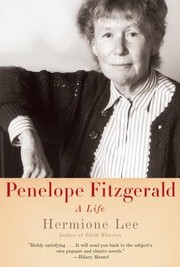
The definitive biography by one of Britain's foremost literary critics. Reading it last, after the complete fiction, transforms it into a rich retrospective commentary — every detail of the life illuminates the work you have already lived inside.
Discussion
Keep reading
Paths that share books, cover the same subject, or open a related topic.