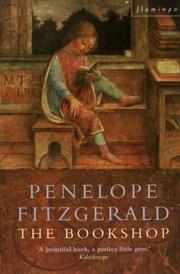
Start with The Bookshop. It is about 120 pages, it takes an evening, and it contains everything that makes Fitzgerald a serious writer: a widow opens a bookshop in a small Suffolk town in 1959, a local grandee decides she should not, and the novel records the defeat with almost no editorialising. The compression is extraordinary — social hierarchies, a marriage, a child's working life and a small tragedy, all in the space of a novella.
The alternatives usually proposed are Offshore, which won the Booker Prize in 1979, and The Blue Flower, which is generally regarded as her masterpiece. Both are better novels than The Bookshop. Neither is a better introduction, because both require you to already trust a writer who will not explain herself. Get that trust cheaply first.
The honest warning, up front
Fitzgerald's novels end abruptly. Not ambiguously — abruptly. A decisive event occurs in the last two pages, sometimes in the last two lines, and the book simply stops. First-time readers frequently assume pages are missing.
This is entirely deliberate and it is the source of her reputation. She refused to supply the consoling final chapter that explains how everyone felt about it. If you go in expecting that, the endings become the best thing about the books rather than a frustration.
The early novels, drawn from her own life
Fitzgerald published her first novel at fifty-eight, and the first four are built out of jobs and places she knew.
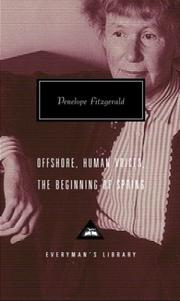
After The Bookshop, read Offshore, about a community living on barges on the Thames at Battersea, which is funnier and sadder than its plot suggests. Then Human Voices, set inside the BBC during the Blitz, which is the most purely comic of them and very sharp about institutional self-importance in wartime.
Her novel about a stage school, which completes this group, is not in this collection.
The late historical novels
Then something unusual happens: in her seventies, Fitzgerald stops writing about her own life and starts writing about places and periods she never saw, and the books get better.
The Beginning of Spring is set in Moscow in 1913, in an English-owned printing works, and it is conjured so convincingly that Russian readers have assumed she lived there. She did not. The Gate of Angels moves to Cambridge in 1912, where a young physicist committed to a materialist account of the world has an accident that his convictions cannot accommodate.
The Blue Flower, her last novel, is about the young Novalis and his engagement to a twelve-year-old girl, told in short chapters that feel like fragments of a life recovered rather than a narrative constructed. It is the one to end on. A catalogue note: it is stocked here in a two-in-one volume, The Blue Flower; the Bookshop, so you may end up owning your starting book twice.
The biographies
Fitzgerald wrote nonfiction before she wrote fiction, and it is not filler. Edward Burne-Jones is a life of the Pre-Raphaelite painter and unusually good on the practicalities and disappointments of an artistic career. The Knox brothers is the more interesting book: a group biography of her father and three uncles — an editor of Punch, a cryptographer, a Catholic priest and translator, and a New Testament scholar — written without once using the word I about herself, though she is the niece throughout.
Where to stop
If you read three: The Bookshop, The Beginning of Spring and The Blue Flower. That covers both halves of the career and both of her modes.
Hermione Lee's Penelope Fitzgerald is the authorised biography and an excellent one, particularly on the long unpublished decades before the first novel. Read it after at least three of the novels.
More twentieth-century British fiction paths are on Discover.
Follow the full ordered path here: Penelope Fitzgerald Reading Order: Where to Start.