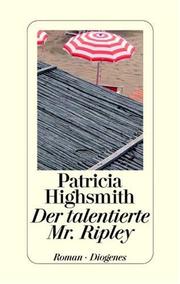
Start with The Talented Mr. Ripley. It is the third-best-known thing she wrote and the best entry by a distance: a young man is sent to Italy to persuade a rich acquaintance to come home, decides he would rather have the acquaintance's life, and takes it. What makes it remarkable is not the crime but the alignment — Highsmith constructs the novel so that you are anxious on Ripley's behalf, hoping he is not caught, and only afterwards notice what she made you do.
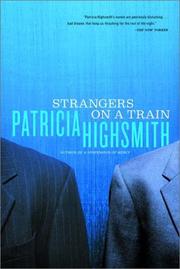
The obvious alternative is Strangers On a Train, her 1950 debut, which is more famous because of the Hitchcock film. It is worth reading and its premise is unimprovable — two men meet and one proposes they swap murders — but the second half sags badly once the psychological pressure has been established, and it is a weaker book than its reputation suggests. Read it second.
The Ripley quintet, in order
The Talented Mr. Ripley, Ripley Under Ground, Ripley's Game, The Boy Who Followed Ripley, Ripley Under Water. Publication order and internal chronology agree, so there is no controversy to adjudicate.
Read the first three. Ripley Under Ground finds him married, comfortable, and running an art forgery operation, and it is the book where his domestic respectability becomes as unsettling as his violence. Ripley's Game is the peak of the sequence and arguably her best novel: Ripley, mildly insulted at a party, arranges for the man who insulted him to be manipulated into committing a murder. The moral machinery is beautiful and the middle section on a train is one of the great sustained sequences in crime fiction.
Then the honest warning. The Boy Who Followed Ripley and Ripley Under Water are weaker. The fourth is slack and oddly sentimental in places; the fifth, published in 1991, feels like a writer revisiting a character out of obligation. Neither is bad. Neither is why anyone reads Highsmith. Stop after Ripley's Game unless you are committed.
The standalones worth reading
Highsmith wrote over twenty novels, and the non-Ripley books are more uneven but contain some of her most disturbing work.
The Cry of the Owl is the one to read first: a man watches a woman through her kitchen window, she notices, and instead of calling the police she befriends him. It is the purest example of her method, which is to remove the protection that a genre reader expects and let ordinary people ruin each other.
Deep Water is a marriage novel with a husband who tolerates his wife's affairs and mentions, at a party, that he killed one of her previous lovers. Whether it is a joke is the substance of the book. The Tremor of Forgery is her strangest and most admired standalone — an American writer stalls in Tunisia, may or may not have killed an intruder, and the novel declines to resolve it. Graham Greene called it her finest, and readers who want atmosphere and moral vertigo over plot usually agree.
Her novel about two women in 1950s New York, published under a pseudonym and later reissued under her name, is not in this collection and is unlike the rest of her work; it is the obvious next purchase if the crime novels wear you down.
What to expect
Two honest notes. The prose is functional rather than beautiful; her reputation rests entirely on construction and psychology. And her personal notebooks and biographies have documented views that many readers find repellent, with genuine disagreement about how much they colour the fiction — worth knowing about, and not something this guide will settle for you.
If you read four: The Talented Mr. Ripley, Ripley's Game, The Cry of the Owl and The Tremor of Forgery.
More crime and suspense reading paths are on Discover.
Follow the full ordered path here: Patricia Highsmith Reading Order: Where to Start.