DBT skills for beginners: an ordered reading list to start
This curriculum builds DBT skills from the ground up, starting with accessible self-help introductions, moving through the full official skill set, and finally deepening practice with mindfulness and advanced application. Each stage assumes the vocabulary and concepts of the previous one, creating a coherent arc from "What is DBT?" to genuine, practiced fluency — always as a complement to work with a trained DBT therapist.
Foundations: What DBT Is and Why It Works
BeginnerUnderstand the core philosophy of DBT — the dialectic between acceptance and change — and get a clear, jargon-free map of its four skill modules before diving into any workbook.
▸ Study plan for this stage
Pace: 2–3 weeks, ~25–30 pages/day (approximately 350–450 pages total across both books)
- The dialectic: holding acceptance and change simultaneously as complementary rather than contradictory forces
- The biosocial theory—how biological vulnerability and invalidating environments interact to create emotional dysregulation
- The four DBT skill modules (Mindfulness, Distress Tolerance, Emotion Regulation, Interpersonal Effectiveness) and their distinct purposes
- The therapeutic relationship in DBT: balancing validation with challenge, and the role of the therapist as coach
- Modes of treatment in DBT: individual therapy, skills training, phone coaching, and therapist consultation team
- Why DBT works: the integration of behavioral science, Zen Buddhism, and dialectical philosophy
- How DBT differs from standard CBT in its emphasis on acceptance-based strategies alongside change strategies
- Application to high-risk populations: understanding why DBT is particularly effective for suicidal and self-harming behaviors
- What is the dialectic in DBT, and why is it important to hold both acceptance and change simultaneously?
- Explain the biosocial theory: how do biological vulnerability and environmental invalidation interact to produce emotional dysregulation?
- Name and briefly describe the four skill modules of DBT. What is the primary goal of each?
- How does the DBT therapeutic relationship differ from traditional therapy? What does 'balancing validation with challenge' mean in practice?
- What are the four modes of treatment in DBT, and why is each one necessary?
- Why is DBT particularly effective for suicidal and self-harming adolescents, according to Miller?
- Create a one-page visual map of DBT's four skill modules with icons, definitions, and one real-world example for each (e.g., using Mindfulness to notice a craving without acting on it)
- Write a 2–3 paragraph explanation of the dialectic in your own words, then share it with someone unfamiliar with DBT to test whether it's jargon-free
- Identify a personal situation where you experience emotional dysregulation, and map it using the biosocial theory: What biological factors? What invalidating environmental triggers? How do they interact?
- Role-play or journal a therapy conversation where a DBT therapist validates a client's pain while simultaneously challenging them to change—notice how both can be true at once
- Compare DBT and standard CBT by creating a two-column chart (e.g., 'CBT emphasizes change; DBT emphasizes acceptance + change')
- Read Miller's case examples of suicidal adolescents and annotate: Where do you see the biosocial theory at work? Where do you see the four modules being introduced?
Next up: With a solid grasp of why DBT works and how its four modules fit together, you're ready to move into the first skill module—Mindfulness—which serves as the foundation for all other DBT skills.

The most accessible plain-language introduction to all four DBT modules. Reading this first gives beginners a complete conceptual map so that later, denser workbooks feel familiar rather than overwhelming.
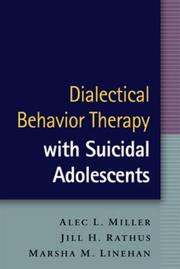
Miller, Rathus and Linehan wrote the manual that adapted DBT for adolescents, and it is still the reference clinicians train on. Denser than a workbook, so read it after you have the core skills — but it shows you the full structure the skills sit inside.
Foundations: What DBT Is and Why It Works
BeginnerUnderstand the core philosophy of DBT — the dialectic between acceptance and change — and get a clear, jargon-free map of its four skill modules before diving into any workbook.
▸ Study plan for this stage
Pace: 2–3 weeks, ~20–25 pages/day (approximately 150–180 pages total)
- The dialectic: balancing acceptance and change as the core DBT philosophy
- Emotional suffering vs. pain: why emotions are not the problem, but struggling against them is
- The four DBT skill modules (Mindfulness, Distress Tolerance, Emotion Regulation, Interpersonal Effectiveness) and their purposes
- Validation and change as complementary forces, not opposites
- How DBT differs from other therapeutic approaches in its dual focus
- The biosocial theory: how biology and environment interact to create emotional sensitivity
- Practical application: why understanding DBT's foundation matters before learning specific skills
- What is the dialectic in DBT, and why is it central to the entire approach?
- How does Spradlin distinguish between pain and emotional suffering, and what does this distinction mean for your own life?
- What are the four DBT skill modules, and what is the primary purpose of each?
- Why does DBT emphasize both acceptance and change rather than focusing on one or the other?
- According to Spradlin, how do biology and environment interact to create emotional sensitivity (the biosocial theory)?
- How might DBT's approach differ from other therapy or self-help methods you've encountered or heard about?
- Write a one-page summary of the dialectic in your own words, then identify one area of your life where you're stuck between acceptance and change
- Keep a 3-day emotion log: note moments when you felt pain vs. suffering, and reflect on what made the difference
- Create a visual map (diagram, poster, or digital graphic) of the four DBT modules with a brief description of each in simple language
- Identify a current emotional struggle and map it onto the biosocial theory—what biological factors and environmental factors are at play?
- Write a letter to yourself explaining why you're starting DBT and what you hope the acceptance/change balance will help you with
- Discuss with a partner or write a reflection: which of the four skill modules do you think you'll need most, and why?
Next up: This foundation stage equips you with the philosophical framework and skill-module roadmap needed to engage meaningfully with the first practical skill module (typically Mindfulness), so you'll understand not just *what* to do, but *why* DBT asks you to do it.
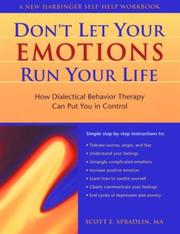
A gentle, workbook-style primer on emotion regulation rooted in DBT principles. It builds emotional vocabulary and self-awareness that makes the official Linehan workbook much easier to absorb.
Discussion
Keep reading
Paths that share books, cover the same subject, or open a related topic.