Learn Polish: an ordered reading list from grammar to fluency
This curriculum takes a complete beginner from zero Polish to genuine reading fluency through four carefully sequenced stages. It begins with structured grammar and pronunciation, builds core vocabulary and conversational patterns, then transitions through graded readers into authentic Polish literature — each stage unlocking the tools needed for the next.
Foundations: Grammar & Pronunciation
BeginnerUnderstand Polish sounds, the Latin alphabet with Polish characters, basic case system, and essential sentence structures for everyday communication.
▸ Study plan for this stage
Pace: 4–5 weeks, ~20–25 pages/day (alternating between grammar reference and conversational material)
- Polish phonetic system: consonant clusters, nasal vowels (ą, ę), and stress patterns (always on penultimate syllable)
- The Polish alphabet and orthography: 32 letters including ł, ń, ś, ź, ż, and diacritical marks and their pronunciation rules
- The seven-case system (nominative, genitive, dative, accusative, instrumental, locative, vocative) and how case endings change nouns, adjectives, and pronouns
- Gender agreement in Polish: masculine, feminine, and neuter forms across nouns, adjectives, and past tense verbs
- Present tense verb conjugation: regular -ać/-ić/-yć verbs and common irregular verbs (być, mieć, chodzić)
- Basic sentence structure: SVO word order, negation with nie, and question formation with czy
- Essential everyday vocabulary and phrases from Colloquial Polish: greetings, introductions, numbers, and common expressions for survival communication
- How do Polish nasal vowels (ą, ę) differ in pronunciation from standard vowels, and when do you use each?
- Explain the seven Polish cases and give an example of how a single noun changes across at least three cases.
- What is the relationship between grammatical gender and adjective/verb agreement in Polish, and how do you determine a noun's gender?
- How do you form the present tense of regular Polish verbs, and what are the conjugation patterns for -ać, -ić, and -yć infinitives?
- Describe the basic word order in Polish declarative and interrogative sentences, and how negation is marked.
- What are the key pronunciation rules for Polish consonant clusters and which letters require special attention (ł, rz, sz, cz)?
- How would you introduce yourself in Polish, ask basic questions, and handle numbers in everyday contexts using material from Colloquial Polish?
- Pronunciation drills: Record yourself reading Polish phonetic transcriptions and minimal pairs (e.g., ł vs. l, sz vs. s) from the grammar book, then compare with native speaker audio.
- Case declension tables: Create handwritten or digital charts for 10 common nouns (e.g., dom, kobieta, dziecko) across all seven cases, then use each form in a sentence.
- Verb conjugation practice: Conjugate 15 regular and irregular verbs (być, mieć, robić, chodzić, etc.) in present tense across all six persons, then write mini-dialogues using each.
- Sentence construction: Build 20 simple sentences following the SVO pattern from Colloquial Polish, varying between statements, negations, and yes/no questions with czy.
- Listening and repetition: Work through the audio material in Colloquial Polish, focusing on stress patterns and natural intonation; repeat each phrase 3–5 times.
- Vocabulary flashcards: Create 100+ flashcards from Colloquial Polish's everyday vocabulary (greetings, numbers, common nouns/adjectives), organized by topic, and review daily.
- Dialogue shadowing: Select 5–6 dialogues from Colloquial Polish, listen multiple times, then read aloud while mimicking pronunciation, stress, and intonation.
- Written exercises: Complete all grammar exercises in Polish—an essential grammar (case endings, verb conjugation, agreement) and write short paragraphs (5–7 sentences) describing yourself, your family, and daily routines using target structures.
Next up: This stage equips you with the phonetic, orthographic, and grammatical scaffolding needed to move into the next level, where you'll expand vocabulary, master more complex tenses (past and future), and engage with longer, more nuanced texts and authentic Polish media.
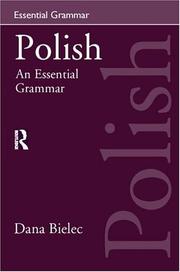
A clear, concise reference grammar written specifically for English speakers. Start here to get a reliable map of Polish's seven cases, verb aspects, and gender system before anything else.
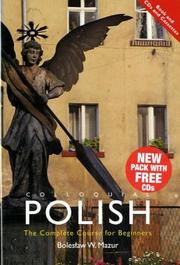
A structured self-study course with dialogues, exercises, and audio. Read this alongside Bielec's grammar to immediately apply rules in realistic conversational contexts.
Building Blocks: Vocabulary & Core Skills
BeginnerAcquire the most frequent 1,000–2,000 Polish words, internalize common verb conjugations, and develop confidence in reading and writing simple Polish sentences.
▸ Study plan for this stage
Pace: 8–10 weeks, ~20–25 pages/day (workbook exercises included)
- Mastery of the 1,000–1,500 most frequent Polish words across everyday topics (greetings, family, food, numbers, time, professions, locations)
- Present tense conjugation of regular -ać, -eć, and -yć verbs and common irregular verbs (być, mieć, chodzić)
- Nominative, accusative, and genitive cases in practical contexts for nouns and adjectives
- Basic sentence construction: subject-verb-object word order and simple questions using czy and question words (co, gdzie, kto)
- Gender agreement for nouns, adjectives, and past tense forms (masculine, feminine, neuter)
- Imperative mood for giving simple commands and requests
- Reading comprehension of short dialogues, descriptions, and simple narratives in Polish
- Can you introduce yourself in Polish, including your name, age, profession, and family members?
- How do you conjugate regular Polish verbs in the present tense, and can you apply this to at least 10 common verbs?
- Can you read and understand a short dialogue about daily activities, shopping, or social interactions and answer comprehension questions?
- What are the key differences between nominative, accusative, and genitive cases, and when do you use each in simple sentences?
- Can you write 5–10 simple sentences describing your routine, family, or preferences using correct verb conjugation and case agreement?
- How do you form and respond to yes/no questions and information questions in Polish?
- Complete all listening and speaking exercises in Hurra Po Polsku Vol 1, focusing on pronunciation and natural intonation of dialogues
- Write daily journal entries (5–10 sentences) in Polish describing your day, using present tense verbs and correct case endings
- Create flashcards for the 100 most frequent words from each unit and review them daily using spaced repetition
- Practice verb conjugation tables for at least 15 common verbs (być, mieć, chodzić, jeść, pić, pracować, uczyć się, etc.) and use each in 3 sample sentences
- Do all written workbook exercises in Hurra Po Polsku Vol 1, paying special attention to case agreement and gender marking
- Record yourself reading dialogues and short texts aloud, then listen back to check pronunciation and fluency
- Create a personal vocabulary notebook organized by topic (family, food, professions, locations) with example sentences for each word
- Practice writing 10 short dialogues (4–6 exchanges each) on everyday topics like ordering food, asking for directions, or meeting someone new
Next up: This stage establishes the grammatical foundations and core vocabulary needed to move into the next level, where you'll expand to more complex sentence structures, additional cases (instrumental and locative), and longer, more nuanced texts.

The most widely used Polish-as-a-foreign-language textbook series in Poland, designed for classroom and self-study. Its systematic vocabulary building and communicative exercises are the gold standard at this level.
Bridging the Gap: Graded & Simplified Readers
IntermediateTransition from textbook Polish to real reading by processing complete texts, expanding passive vocabulary, and building reading stamina with supported, level-appropriate material.
▸ Study plan for this stage
Pace: 4–5 weeks, ~20–30 pages/day (approximately 150–200 pages total for "Hurra!!! Po Polsku")
- Recognizing and processing authentic Polish narrative structures in simplified contexts without constant dictionary reliance
- Building passive vocabulary through repeated exposure to high-frequency words and thematic word families in graded texts
- Understanding Polish cultural references, idioms, and conversational patterns embedded in story-based content
- Developing reading stamina by completing full short stories and longer passages without breaking comprehension
- Inferring meaning from context clues, illustrations, and story logic rather than translating every word
- Distinguishing between formal and informal Polish register in dialogue and narrative voice
- Recognizing common Polish grammatical patterns (case endings, verb aspects, tense usage) in natural reading flow
- Can you summarize the main plot and character motivations of a story from 'Hurra!!! Po Polsku' without consulting a dictionary?
- What are 10–15 new vocabulary words you encountered, and how did context help you understand them?
- How do the stories in this book reflect Polish culture, humor, or everyday life?
- Can you identify the difference between formal and informal Polish in dialogue passages?
- What grammatical patterns (e.g., case usage, verb tenses) did you notice recurring across multiple stories?
- How has your reading speed and confidence changed from the beginning to the end of this book?
- Read one complete story (5–10 pages) per session without pausing to look up words; note unfamiliar words, then infer meaning from context before checking a dictionary
- Create a vocabulary log organized by theme (e.g., family, emotions, daily activities) from each story, noting context sentences
- Retell a story aloud in Polish (or Polish + English) to practice speaking the narrative structures you've read
- Identify and collect 5–10 examples of idioms, colloquialisms, or cultural references from the book; research their meaning and usage
- Write short answers (3–5 sentences in Polish) to comprehension questions about each story to reinforce understanding
- Compare formal vs. informal language: find examples of both in dialogue and rewrite sentences switching registers
Next up: Completing "Hurra!!! Po Polsku" establishes your ability to read longer, cohesive Polish texts with minimal support, preparing you to engage with less-simplified authentic materials and more complex narrative structures in the next stage.

Continues directly from level 1 with more complex grammar (advanced aspect usage, conditionals, reported speech) and longer reading passages — the natural bridge to independent reading.
Into Authentic Polish: Real Literature & Culture
ExpertRead genuine Polish prose written for native speakers, understand cultural and historical context, and achieve the reading independence needed to continue learning from any Polish text.
▸ Study plan for this stage
Pace: 12–14 weeks, ~40–50 pages/day (with cultural/historical research interspersed). Allocate 3–4 weeks per novel to allow for re-reading difficult passages and contextual study.
- Narrative voice and unreliable narration in Krall's testimony-based prose and Gombrowicz's metafictional commentary
- Historical trauma and memory in Polish literature: Holocaust witness testimony (Krall), interwar absurdism (Gombrowicz), and 19th-century social realism (Prus)
- Linguistic register and colloquialism: recognizing formal vs. informal Polish, period-specific vocabulary, and dialectal speech in authentic prose
- Cultural context and intertextuality: Polish Romanticism, positivism, and modernism as they appear in these texts
- Stylistic diversity across eras: Prus's realist narrative structure, Gombrowicz's grotesque modernism, and Krall's fragmented documentary style
- Reading independence: strategies for encountering unfamiliar vocabulary, cultural references, and complex syntax without constant dictionary reliance
- Critical engagement with primary sources: analyzing how authors represent Polish identity, morality, and social change
- How does Hanna Krall's use of fragmented narrative and dialogue in 'Zdążyć przed Panem Bogiem' serve to convey the experience of Holocaust survivors, and what effect does this form have on the reader's understanding of testimony?
- What is the role of 'immaturity' (niedojrzałość) as a concept in 'Ferdydurke', and how does Gombrowicz use it to critique Polish society and human nature more broadly?
- How do the three novels represent different historical periods in Polish literature, and what does each author's style reveal about the concerns of their era?
- In 'Lalka', how does Prus use the character of Stanisław Wokulski to explore the tension between individual ambition and social constraint in 19th-century Warsaw?
- What narrative techniques does each author employ to establish authority and credibility with the reader, and how do these techniques differ?
- How do these three texts collectively illustrate the evolution of Polish prose from realism through modernism to contemporary witness literature?
- Read 'Zdążyć przed Panem Bogiem' without a dictionary for the first pass; note unfamiliar words and phrases, then research their meanings and cultural significance in a second pass. Write a 500-word reflection on how Krall's language choices shape emotional impact.
- Create a timeline of Polish history (1863–1945) and map key events referenced in all three novels; annotate how each author engages with these historical moments.
- Select one chapter from 'Ferdydurke' and rewrite it in standard, 'mature' Polish prose; compare your version to Gombrowicz's original and analyze what is lost and gained.
- Analyze the opening pages of each novel side-by-side: identify the narrative perspective, tone, and stylistic markers. Write a comparative essay (800–1000 words) on how each author establishes their narrative voice.
- Listen to Polish-language audiobook excerpts (if available) or recordings of native speakers reading passages from these texts; practice pronunciation and internalize the rhythm of authentic Polish prose.
- Research the historical and biographical contexts: Krall's interviews with survivors, Gombrowicz's exile and return, Prus's role in Polish positivism. Write brief biographical sketches and connect them to thematic concerns in each novel.
- Identify 10–15 cultural references, allusions, or historical events in each novel that you initially missed; create an annotated glossary explaining their significance to Polish readers.
- Write a short critical essay (1200–1500 words) comparing how two of the three novels treat a shared theme (e.g., Polish identity, moral responsibility, social change).
Next up: This stage establishes the reader's ability to engage independently with unabridged, culturally embedded Polish prose across multiple genres and historical periods, preparing them to pursue specialized reading in Polish literature (literary criticism, poetry, drama, or contemporary authors) or to read Polish texts in other domains (journalism, philosophy, history) with confidence and nuance.
A short, journalistic masterpiece of modern Polish prose — its spare, clear sentences make it one of the most accessible authentic Polish books for advanced learners while delivering profound cultural and historical depth.
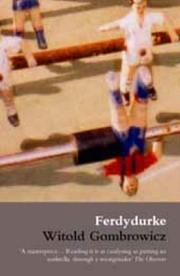
A canonical 20th-century Polish novel whose playful, absurdist language rewards the learner who has built a strong foundation; wrestling with Gombrowicz's style marks true advanced-level reading competence.
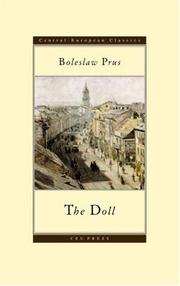
Widely considered the greatest Polish novel, set in 19th-century Warsaw. Reading Lalka is the capstone of this curriculum — a rich, rewarding challenge that confirms genuine literary fluency in Polish.
Discussion
Keep reading
Paths that share books, cover the same subject, or open a related topic.