Nikolai Gogol Reading Order: Where to Start
Gogol wrote one unfinished novel, one great play and about twenty stories, and the stories are where almost everyone should begin — The Overcoat and The Nose are the two most influential short stories in Russian literature. This path starts with the Petersburg tales, goes back to the Ukrainian folk stories he made his name with, then finishes with the play and the novel that broke him. Note that the stories are almost always sold in collections rather than singly, so the collections are what this path lists.
The Petersburg Stories First
BeginnerRead the four or five stories that made Gogol permanent — the clerk, the nose, the madman, the portrait.
▸ Study plan for this stage
Pace: 3 weeks, one story per sitting. ⚠️ Gogol's stories are almost never sold individually — they come in collections, which is why this path lists collections rather than titles, and why the two books in this stage overlap heavily. Buy ONE of them to start: the Collected Tales (464 pages) if you want th
- Start with The Overcoat. It is about a copying clerk of no importance who saves for a new coat, and it is the most influential short story in Russian literature — the line about all Russian writers having come out from under Gogol's overcoat is attributed to Dostoevsky and repeated because it is bro
- The Overcoat's peculiarity is its tone: it mocks Akaky Akakievich mercilessly for pages, then turns without warning into pity, and readers argue about exactly where the turn happens. Find the sentence yourself
- The Nose is a barber who finds a nose in his bread and a bureaucrat whose nose has left his face and is going about the city outranking him. Nobody in the story finds the premise impossible — only inconvenient — and that flatness is the entire technique
- Diary of a Madman is a clerk's descent narrated in dated entries that lose their grip on the calendar. The dates going wrong is how you know, before he does
- Nevsky Prospect follows two men down the same street to opposite fates, one comic and one appalling, and is the clearest statement of Gogol's view of the city: Petersburg lies, deliberately and about everything
- Rank is the common subject. Imperial Russia had a formal Table of Ranks fixing every official's place, and Gogol's clerks are defined by a number — it is worth five minutes of reading about before you start, because the stories assume it
- Gogol's effects live in the SENTENCE, not the plot. He digresses, contradicts himself, addresses the reader, and describes irrelevant things at length. A summary of any of these stories sounds like nothing
- He was born in what is now Ukraine and wrote in Russian; these Petersburg stories are the work of a provincial who found the imperial capital absurd, which is not incidental to what they see
- Where exactly does The Overcoat stop mocking Akaky and start grieving for him? Quote the sentence and defend the choice.
- In The Nose, how do the other characters react to a nose walking around in uniform? What is Gogol saying by making the supernatural merely awkward?
- Track the dates in Diary of a Madman. At what point do they break, and what has happened to Poprishchin by then?
- What is the joke in The Overcoat's ending, and is it a joke? The final pages change genre and readers disagree about whether it works.
- Nevsky Prospect gives two men parallel adventures with wildly different outcomes. What is the street's role, and why does Gogol end by warning you not to trust it?
- Pick any one story and describe its plot in three sentences. Then say what the three sentences left out — that remainder is Gogol.
- Read The Overcoat twice in one week. It is thirty pages and the second reading, knowing the ending, is where the tonal shift becomes visible.
- Spend ten minutes on the Table of Ranks — collegiate assessor, titular councillor, and where they sit. Half the jokes in these stories are rank jokes and are invisible without it.
- Read one page of The Nose aloud. The narrator's fussiness and the constant apologising for the story are where the comedy actually lives.
- Keep a list of Gogol's digressions in one story. Count how many pages of a thirty-page story are not about the plot; the proportion is startling and deliberate.
Next up: The Petersburg stories are the Gogol everyone knows; going back to the Ukrainian tales shows where the devils and the flatness about the impossible came from.
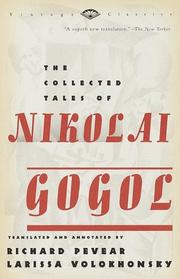
The Pevear and Volokhonsky selection, and the single most efficient purchase in Gogol: it contains The Overcoat, The Nose, Diary of a Madman, Nevsky Prospect and the Ukrainian tales together. If you buy one Gogol book, buy this one and read The Overcoat first.

The narrower alternative, gathering just the city stories in the order Gogol grouped them. Take this instead of the Collected Tales if you want the Petersburg cycle on its own; take it after if you want a second translation of the same stories.
The Ukrainian Tales
IntermediateGo back to the folk-horror comedies that made Gogol famous at twenty-two, and see where the absurdism comes from.
▸ Study plan for this stage
Pace: 5 weeks. Evenings on a Farm near Dikanka is 328 pages of linked stories — two weeks, one or two a sitting. Mirgorod (285 pages) another two, but stop after Viy and give it a day before continuing. Taras Bulba (336 pages in the edition here, which prints supporting material alongside the novella) tak
- Evenings on a Farm near Dikanka was Gogol's first book, published when he was in his early twenties, and it made him famous immediately: devils, witches, a stolen moon, village weddings, drunks and lost documents, framed as tales collected by a beekeeper
- The frame narrator is the joke. He apologises, wanders, promises stories he does not tell and vouches for events he cannot have witnessed — the same unreliable fussiness that later narrates The Nose
- The folklore is Ukrainian and the material is genuinely traditional: Christmas Eve devils, sunken manors, water nymphs. Reading it after the Petersburg stories makes visible how much of the later absurdism is simply folk material relocated to a city
- Mirgorod is the follow-up and the point where the mode darkens. Viy is the outright horror story — a seminarian made to read prayers over a dead witch for three nights — and it is still frightening
- Old-World Landowners, in the same collection, is the opposite: an elderly couple who do nothing but eat and love each other, described with a tenderness Gogol almost never allowed himself elsewhere. It is his saddest story and the least like his reputation
- The Tale of How Ivan Ivanovich Quarrelled with Ivan Nikiforovich, also in Mirgorod, ends on a line about the world being a dull place that is the closest thing he wrote to a personal statement
- Taras Bulba is the Cossack novella — violent, nationalist and unlike everything else here. Read it knowing that Gogol substantially revised it years after first publication, and that the revision is markedly more Russian-nationalist and more hostile in its portrayal of Poles and Jews than the origin
- That revision is not a curiosity; it is the version most translations use, and readers should know they are reading an author's later politics written back into an earlier book
- What does the beekeeper frame in Dikanka do for the stories? Compare his voice with the narrator of The Nose — how similar are they?
- In Viy, what actually happens on the third night, and why is the creature of the title so much less frightening described than anticipated?
- Old-World Landowners is affectionate about people with no inner life to speak of. Is the affection genuine or is Gogol still mocking? Point to evidence.
- What is being celebrated in Taras Bulba, and what is being justified? State both, plainly.
- Given the revision history, how should a modern reader handle Taras Bulba's treatment of Poles and Jews — as period detail, as authorial position, or as something the book is actively arguing for?
- Which Petersburg story has an obvious Ukrainian ancestor here? Name the pair and say what changed in the move to the city.
- Read Viy at night, alone, in one sitting. It is the only instruction in this path that is about atmosphere rather than comprehension, and it works.
- After Old-World Landowners, reread the first two pages of The Overcoat. The same narrator is capable of both and the range is the thing worth noticing.
- Look up the differences between the two versions of Taras Bulba before or after reading. Knowing which passages were added later is the only way to read the book honestly.
- List the supernatural events in Dikanka and note how each is treated by the villagers. The refusal to be astonished is already fully formed here, years before The Nose.
Next up: With both the folk mode and the city mode in hand, the two long works can be read as the same comic machinery scaled up to a whole town and then a whole country.
His first book: devils, witches, stolen moons and village weddings, framed as tales collected by a beekeeper. Read it after the Petersburg stories so you can feel how much of the later strangeness was already folklore.
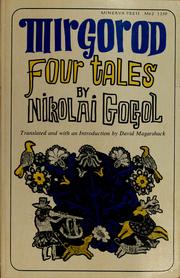
The follow-up collection, containing Viy and Old-World Landowners — the point where the folk material turns genuinely frightening and genuinely sad. Read second of the Ukrainian books.
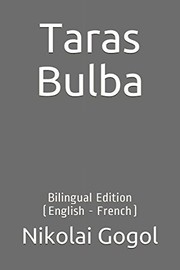
The Cossack novella, violent and nationalist and unlike anything else he wrote. Often published alone; read it here, and read it knowing Gogol revised it into something far more chauvinist than the first version.
The Play and the Novel
IntermediateFinish with the two long works — the satire that made him a national figure and the book that destroyed him.
▸ Study plan for this stage
Pace: 4 weeks. The Government Inspector is a short five-act play and can be read in a single evening — do that first, and read it aloud or at least hear the lines. Dead Souls is 317 pages and should take three weeks at 15 to 20 pages a day; it is episodic, so it survives interruption, but the digressions
- The Government Inspector is a nobody passing through a provincial town who is mistaken by its officials for an inspector travelling incognito, and who works out what is happening only after they have started bribing him
- It is the best comedy in Russian, still performed constantly, and it is short. Read it before Dead Souls: the novel is the same joke at national scale and the play lets you see the machinery in ninety minutes
- The officials are not caricatures of corruption — they are ordinary men whose corruption is simply the way their jobs work, and none of them thinks of himself as a criminal. That is the satire
- The final tableau, where the real inspector is announced and the entire cast freezes, is one of the most famous stage directions ever written, and it is the play's whole argument delivered in silence
- Dead Souls follows Chichikov travelling the Russian provinces buying up the names of dead serfs — legally still property until the next census — for a scheme the novel withholds for a long time
- Each landowner Chichikov visits is a complete comic portrait and could stand alone: the sentimental one, the liar, the hoarder, the bully. The book is a sequence of encounters rather than a plot, and readers expecting momentum should know that going in
- Gogol intended a three-part structure modelled loosely on Dante — this volume the inferno, with redemption to follow. He wrote the second part, burned it, wrote it again and burned it again days before he died
- He died in 1852 at forty-two, having refused food, under the influence of a priest who considered his writing sinful. The novel is unfinished because its author's religious crisis destroyed both the book and him, which is why it goes last: the comic machinery is much easier to enjoy before you know
- In The Government Inspector, at what point does Khlestakov realise what is happening, and what does he do differently after that? The play is two different comedies either side of that moment.
- None of the officials believes he is doing anything unusual. What does the play imply about a system where that is true?
- What is the effect of the closing tableau? Why silence, and why hold it?
- What is Chichikov's actual scheme in Dead Souls, and how long does Gogol withhold it? Why withhold it at all?
- Rank the landowners by how badly they come off. What is the vice attached to each, and does Gogol think any of them is worse than Chichikov?
- The lyrical digressions — the troika, the road, Russia itself — sit oddly against the comedy. Are they sincere, and how do you tell?
- Read The Government Inspector aloud with other people if you can, one act a sitting. It is a play and it does not fully work silently.
- In Dead Souls, write one line on each landowner as you finish the visit. The book is a gallery and the gallery is the argument.
- Mark every digression in Dead Souls where Gogol addresses Russia directly. Read them consecutively at the end; they are a second, entirely serious book running under the comedy.
- Read about Gogol's last months before you finish the novel, not after. Knowing that he burned the sequel changes how the unfinished ending reads and it is better met deliberately than discovered.
- Compare the mayor in the play with Chichikov. Both are operating a system rather than breaking it — which of them does Gogol treat more harshly?
Next up: The whole body of work is now behind you, which makes a second translation of the stories genuinely useful rather than a repetition.

A nobody is mistaken for a government inspector by a town of corrupt officials. The best comedy in Russian, still stageable, and short. Read it before Dead Souls — it is the same joke at a scale you can finish in an evening.
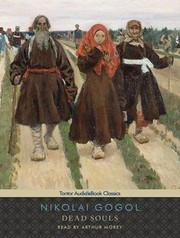
Chichikov travels Russia buying the names of dead serfs. The unfinished masterpiece and the last thing to read: Gogol burned the sequel and starved himself to death shortly after, and the book only fully lands once you know the comic machinery from everything above.
Another Translation, Another Angle
IntermediateFor readers who want the stories again in a different voice.
▸ Study plan for this stage
Pace: 2 weeks, 238 pages, and entirely optional — this stage exists for readers who finished the path and want more. Read only the stories you already know: The Nose, The Overcoat, Diary of a Madman. Take one story per sitting with the earlier translation open beside it. Reading the same story twice in a
- Gogol's effects live entirely in the sentence — rhythm, digression, sudden shifts of register, invented words — so translation choices change the reading experience more than they would for a plot-driven writer
- This Penguin selection uses Ronald Wilks's translation, against the Pevear and Volokhonsky version in the Collected Tales from stage one. The two have quite different instincts about how strange to let the English sound
- The recurring problem for any translator is Gogol's narrator: fussy, digressive, contradicting himself, breaking off. A translation that tidies him produces a clearer and much worse story
- Comparing two versions of The Nose will teach you more about how Gogol works than reading two stories you have never met, because you already know everything except the words
- It also settles the common suspicion that a confusing passage was the translator's fault. Sometimes it was; usually it is Gogol, and seeing the same knot in two versions is how you find out
- This is a second pass rather than new material — nothing here is a story you have not already read in stage one, which is the point of putting it last and marking it optional
- The wider lesson generalises: for any writer in translation whose reputation rests on voice, one version is a partial view, and a second is cheaper than learning the language
- If you enjoy this exercise, a third translation of The Overcoat exists in almost every anthology of Russian short fiction ever assembled, so continuing costs nothing
- Take the opening paragraph of The Nose in both translations. What is different, and which choice makes the story funnier?
- Where does one translator smooth a sentence the other leaves rough? What is lost or gained?
- Are the jokes in the same places? Comic timing is the hardest thing to carry across languages and the divergences are instructive.
- In Diary of a Madman, how does each translation handle the deterioration of the prose? The breakdown has to be rendered in English rhythm and the two solutions differ.
- Having compared, which translation would you recommend to someone starting Gogol, and what exactly is your reason?
- Put the two versions of the first page of The Overcoat side by side and mark every divergence. Twenty minutes of this teaches more about translation than an essay on it.
- Read The Nose in the new translation without consulting the old one first, then go back. Trusting your memory of the earlier version and checking it is the more revealing order.
- Pick the single sentence you like best in each translation and note which book it came from. Most readers find they are splitting their preferences rather than backing one.
- Write a paragraph on what a Gogol translator has to get right. Having read him twice, you are in an unusually good position to say.
Next up: That is Gogol whole — the stories, the folk tales, the play and the unfinished novel — and it is enough to read Dostoevsky, Bulgakov or Kafka and hear exactly whose narrator they inherited.

The Penguin Classics selection in Ronald Wilks's translation. Worth it as a second pass — Gogol's effects live entirely in the sentence, so reading The Nose in two translations tells you more than reading two different stories.
Discussion
Keep reading
Paths that share books, cover the same subject, or open a related topic.