Natural Wine: The Best Books to Read, in Order
Natural wine has no legal definition and no certification behind it, which is the single most important fact about buying it: the label cannot tell you anything, so you are buying the importer, the shop and the grower. This path starts with the books that define the category as clearly as anyone has managed, then the movement's own polemical history, then the styles that came out of it, then the biodynamic farming argument in its advocates' own words, and finally the wine-science counterweight — because the faults debate is a real disagreement and reading only one side of it will make you a worse buyer.
What Natural Wine Is
BeginnerGet a usable working definition, learn what low intervention actually excludes, and understand why no certification exists.
▸ Study plan for this stage
Pace: 2–3 weeks for 384 pages: Isabelle Legeron's Natural Wine (224 pages) first and carefully, then Alice Feiring's Natural Wine for the People (160 pages), which is a short buyer's handbook and reads in an evening or two. Read them with wine in front of you rather than as an armchair exercise — both boo
- The absence of any legal definition or certification, which is the single most important fact about buying natural wine: the label cannot tell you anything
- What you are actually buying instead — the importer, the shop and the grower
- Legeron's specific criteria: farming, native yeast, permitted sulphur additions, and the interventions she will not count
- Low intervention as a spectrum rather than a binary, and where different advocates draw the line
- Organic and biodynamic certification as claims about farming only, saying nothing about the cellar
- The difference between a fault and a style, which is the distinction the rest of this path argues over
- Sulphur dioxide as the central practical dispute: what it does, and what 'no added sulphites' actually means
- Why does no certification exist, and what would have to be true for one to be possible?
- State Legeron's criteria in order and identify which are about the vineyard and which about the cellar.
- What is the difference between organic certification and natural wine as Legeron defines it?
- Name three commonly described 'faults' and say what Feiring's handbook tells you about distinguishing each from a style.
- If the label tells you nothing, what is the practical procedure for buying a bottle you will like?
- Buy three bottles a shop describes as natural and, before tasting, write down everything the labels actually claim and everything they do not. This is Legeron's opening argument done as an experiment.
- Take Feiring's fault-versus-style descriptions to a tasting and write your own note for each wine before reading hers. Where you called something faulty and she would call it a style, work out which of you is describing the wine and which the category.
- Find one shop with a knowledgeable buyer and ask the three questions Feiring's handbook tells you to ask. The book's actual argument is that the shop is your certification, and the exercise tests it.
- Write your own one-paragraph definition of natural wine after Legeron and keep it. Every subsequent stage will pull at it, and revising it at the end is the path's final exercise.
Next up: With a working definition and a fault vocabulary in hand, the next stage explains why the people who use those terms are so heated about them.

The book that put a definition in print. Legeron is a Master of Wine and the founder of the RAW fair, and she is specific about farming, native yeast, sulphur additions and what she will not count. Start here — everything else in this path argues with or extends it.
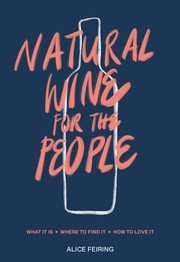
The short buyer's handbook — what to order, what a fault tastes like versus what a style tastes like, and how to talk to a shop. The least polemical of Feiring's books and the right one to read before the rest of hers.
The Movement's Own Story
IntermediateUnderstand where the movement came from, who it defined itself against, and why its rhetoric is as heated as it is.
▸ Study plan for this stage
Pace: 3 weeks. Alice Feiring's The Battle for Wine and Love comes first — a short polemic, subtitled how I saved the world from Parkerization — then Naked Wine (231 pages) and For the Love of Wine (171 pages), a week each. Read all three as advocacy: Feiring is a participant in the movement she is describ
- Parkerization as the movement's founding antagonist: the critic-driven, high-extraction, oak-heavy style of the 1990s
- Why natural wine's rhetoric is as heated as it is — the movement defined itself against a dominant commercial style, not against a neutral default
- The practical difficulty of making wine without additions, which Naked Wine reports from cellars rather than asserting
- Failure rates: what happens to a fermentation that goes wrong when there is nothing to correct it with
- The Georgian qvevri tradition and eight thousand years of amphora winemaking, which is the historical claim the movement leans on hardest
- The difference between an origin story and a history, and how to read a movement's account of its own past
- Feiring as an interested narrator throughout — the books are better read as testimony than as reference
- What exactly was Feiring arguing against, and what was the commercial mechanism she says produced it?
- Which specific interventions does the polemic target, and are they the same ones Legeron's criteria exclude?
- What does Naked Wine show about the practical risk of low-intervention winemaking that the definitional books do not?
- What is the Georgian qvevri claim, and what work is it doing rhetorically for the movement?
- Where does Feiring's position differ from Legeron's, and on what specific practice?
- Buy one wine made in the style Feiring is attacking — a high-extraction, heavily oaked red from a well-scored producer — and one natural wine of the same grape and region. Taste them together. The polemic makes considerably more sense with the opponent in the glass.
- In Naked Wine, mark every instance where a winemaker's attempt fails or nearly fails, and write down what a conventional cellar would have done at that point. That list is the honest cost side of the argument.
- Read For the Love of Wine and then find a qvevri-fermented Georgian wine and drink it against a conventionally fermented white. The historical claim is testable in the glass and the difference is not subtle.
- Set Feiring's criteria against the definition you wrote in stage one and mark where she is stricter, where looser, and where she simply asks a different question.
Next up: With the movement's self-account in view, the next stage covers the two wine styles it produced that are most likely to confuse a newcomer.

The founding polemic, subtitled how I saved the world from Parkerization. Feiring's target is the critic-driven, high-extraction, oak-heavy style of the 1990s, and you need that opponent in view to understand why natural wine's advocates talk the way they do.

The reporting book: Feiring in cellars watching people actually make wine without additions, including the failures. Read it after the polemic — it is where the argument meets the practical difficulty.

Georgia, qvevri, and eight thousand years of amphora winemaking, which is the historical claim the movement leans on hardest. Placed here as the bridge into the styles stage.
The Styles
IntermediateLearn the two categories most associated with natural wine, and the soil-first way of tasting the movement promotes.
▸ Study plan for this stage
Pace: 3–4 weeks for 844 pages: Simon Woolf's Amber Revolution (300 pages, photographed by Ryan Opaz), Rachel Signer's You Had Me at Pet-Nat (288 pages) and Alice Feiring's The Dirty Guide to Wine (256 pages). Read Amber Revolution before you buy your first skin-contact white — orange wine is the style mos
- Skin-contact white wine: what maceration does chemically, and why the result tastes structurally like a red
- The Georgian and Friulian roots of orange wine and the specific producers who revived it
- Pétillant naturel — the méthode ancestrale, bottled before fermentation finishes — and why the results vary bottle to bottle
- The economics of small-scale natural winemaking: yields, risk, cash flow, and why the wines cost what they cost
- Terroir as a soil claim, which is the movement's strongest and most contested theoretical commitment
- Organising a tasting by soil type rather than by region, which is Feiring's framework and is useful whether or not you accept the underlying argument
- Style versus fault applied to these two categories specifically — the point at which most newcomers give up on natural wine
- What does skin contact do to a white wine, in terms of tannin, phenolics and oxidation?
- How is a pét-nat made, and what accounts for the bottle variation the style is known for?
- What does Signer's account reveal about the economics that a producer's own marketing will not?
- State the soil-terroir claim as Feiring makes it. What evidence does she offer, and what would count against it?
- Given Amber Revolution, which characteristics of an orange wine are the style and which would you still call faults?
- Buy three skin-contact whites with different maceration lengths and taste them in ascending order. Amber Revolution gives you the vocabulary; the flight is what makes it stick.
- Open two bottles of the same pét-nat on different days and note the difference. The variability Signer describes is the style's actual characteristic and one bottle cannot show it to you.
- Run a tasting organised by Feiring's soil categories — pick three wines from three soil types, ideally same grape — and see whether you can tell them apart blind. Whether you can or cannot is the interesting result and she is honest that people differ.
- Return to the fault-versus-style notes from stage one and revise them for orange wine and pét-nat specifically. Both categories break the naive version of that distinction.
Next up: Having tasted what the movement makes, the next stage reads the farming argument its advocates use to explain why the wines are as they are.

The definitive book on skin-contact white wine — its Georgian and Friulian roots, the producers who revived it, and why it tastes the way it does. Orange wine is the style most likely to confuse a newcomer, so read this before buying one.

A memoir rather than a reference, and honest about the economics and the mess of small-scale natural winemaking. Read it for the picture of the actual working life behind the bottles.

Organises wine by soil type rather than region, which is the clearest expression of the movement's terroir claim. Useful as a tasting framework whether or not you accept the underlying argument.
The Farming Argument
IntermediateRead the biodynamic case in its advocates' own words and be able to separate the agronomy from the metaphysics.
▸ Study plan for this stage
Pace: 2–3 weeks. Nicolas Joly's Wine from Sky to Earth (199 pages) and What Is Biodynamic Wine? (162 pages) are short and take a week together; Monty Waldin's Biodynamic Wine takes a second week. Read Joly first and read him as an advocate's book — biodynamics' most prominent evangelist in wine, presentin
- Biodynamics as Steiner's agricultural system: the preparations, the compost, the horn silica and horn manure
- The lunar and planetary calendar, and the distinction between a planting schedule and a claim about causation
- Separating the agronomy from the metaphysics, which is the whole skill this stage teaches
- Which biodynamic practices overlap with ordinary good organic viticulture, and which are additional
- Certification bodies — Demeter and others — and what a certificate actually attests to
- Joly as an advocate and Waldin as a practitioner: two very different evidential standards applied to the same system
- What is demonstrable, what is plausible-but-untested, and what is asserted, as three separate categories to sort every claim into
- Describe the main biodynamic preparations and what each is claimed to do.
- Which practices in Joly's account would a conventional organic viticulturist also use, and which are specific to biodynamics?
- What is the calendar's claimed mechanism, and what evidence does Joly offer for it?
- Where does Waldin decline to follow Joly, and on what grounds — practical, evidential or commercial?
- Does biodynamic certification tell a buyer anything about what happened in the cellar?
- Read Joly with three columns open: demonstrable, plausible but untested, asserted. Sort every substantive claim in Wine from Sky to Earth into one of them. This is the exercise the stage exists for and Joly's book is the right one to do it on precisely because he does not do it himself.
- Take the same claims to Waldin and mark which he supports, which he qualifies and which he passes over in silence. A practitioner's omissions are informative.
- Look up what Demeter certification actually requires and compare it against the practices Joly describes as essential. The gap between the standard and the evangelism is instructive.
- Taste a certified biodynamic wine against a certified organic one from a comparable site and write an honest note about whether you could tell. Neither book asks you to do this and both arguments are better for it.
Next up: You have now read the movement's own case at full strength, which is the only responsible position from which to read the science that disputes parts of it.

Joly is biodynamics' most prominent evangelist in wine and this is his fullest statement. Read it as an advocate's book — the Steinerian cosmology is presented as fact, and the sceptical literature is not engaged with.
The shorter, more practical companion, covering the preparations and the calendar. Read it second if the first book convinced you it was worth understanding the method in detail.

The corrective, from someone who has actually run biodynamic vineyards commercially. Waldin is a practitioner and still far more measured than Joly about what is demonstrable, which is why he belongs last here.
The Science, and the Case Against
IntermediateRead the wine-science position on faults, sulphur and stability, and form your own view of the disagreement.
▸ Study plan for this stage
Pace: 3–4 weeks. Jamie Goode and Sam Harrop's Authentic Wine (272 pages) first, then Goode's The Science of Wine — published in the United Kingdom as Wine Science, which is how most catalogue records display it, so check when ordering. These are technical books but written for wine people rather than for
- Brettanomyces: what it is, what it produces, and why the same compounds are called complexity by one camp and spoilage by the other
- Volatile acidity and reduction as measurable phenomena with thresholds, and the argument over where those thresholds should sit
- What sulphur dioxide actually does — free versus bound, antimicrobial versus antioxidant — which settles more of the argument than any amount of rhetoric
- Oxidation chemistry and why low-sulphur wines age unpredictably
- Native versus inoculated fermentation, and the specific risks of the former
- Stability and travel: why some natural wines change in transit and what that means for buying imported bottles
- Goode and Harrop's method — taking the movement's goals seriously and then asking which practices survive scrutiny, which is different from dismissing it
- Holding both positions honestly: what you now believe, and how you would tell if you were wrong
- What compounds does brettanomyces produce, at what thresholds are they detectable, and why do palates differ so widely on them?
- Explain what free and bound sulphur dioxide each do. What does adding 20mg/l at bottling actually accomplish?
- Which natural-wine practices do Goode and Harrop conclude are defensible, and which do they conclude are not?
- What are the specific risks of native fermentation, and how do the growers in Feiring's Naked Wine manage them?
- Having read both sides, where do you now place the line between fault and style — and what evidence would move it?
- Taste a wine with recognisable brett beside one without, having read Goode and Harrop's chapter on it first, and write down whether you find it a fault. This is the central disagreement in the whole subject and it is settled personally, on a specific glass.
- Take three claims from Legeron or Joly and check each against the relevant chapter of The Science of Wine. Write down which survive intact, which need qualifying and which do not survive.
- Buy two bottles of the same low-sulphur wine, store one in a cool cellar and one at room temperature for three months, and taste them together. The stability argument is the one that most directly affects what you spend money on.
- Rewrite the one-paragraph definition of natural wine you drafted in stage one, now with the science in view. Comparing the two paragraphs is the honest measure of what this path was for.
Next up: This closes the path: you have the movement's definition, its history, its styles, its farming argument and the scientific case against parts of it, which is enough to buy on your own judgement rather than on anyone's label.

Goode and Sam Harrop take the movement's goals seriously and then ask which of its practices survive scrutiny. The chapters on brettanomyces, volatile acidity and reduction are the sharpest statement of the faults argument in print.
The technical foundation underneath that argument — what sulphur dioxide does, how oxidation works, what native fermentation actually risks. Published in the United Kingdom as Wine Science, which is how most catalogue records display it. End here: it gives you the vocabulary to judge every claim in the earlier stages.
Discussion
Keep reading
Paths that share books, cover the same subject, or open a related topic.