Muriel Spark Reading Order: Where to Start
Muriel Spark is one of the twentieth century's most distinctive novelists — wickedly comic, formally daring, and spiritually unsettling. This curriculum begins with her most accessible and celebrated short novels to build an ear for her voice, moves through the major works that reveal her full range, and ends with the late experimental fiction where her style becomes most compressed and strange. Each stage deepens your understanding of her signature techniques: the omniscient narrator who plays God, the satirical skewering of social pretension, and the uncanny blurring of reality and artifice.
Finding the Voice
BeginnerGrasp Spark's razor-sharp wit, her deceptively simple prose, and her habit of announcing plot outcomes in advance — the hallmarks that make her immediately recognisable.
▸ Study plan for this stage
Pace: 4–5 weeks total: Week 1–2 — Read "The Prime of Miss Jean Brodie" (~30 pages/day, including re-reading key passages); Week 3–4 — Read "The Girls of Slender Means" (~20 pages/day, slower pace to track structural details); Week 5 — Comparative review, reflection, and exercises.
- Prolepsis (flash-forward narration): Spark's signature technique of revealing future outcomes — who will betray whom, who will die — before the story reaches those moments, creating dramatic irony rather than suspense
- The unreliable yet authoritative narrator: Spark's narrators present facts with cool certainty while quietly withholding or distorting judgment, forcing the reader to read between the lines
- Razor-sharp wit and economy of prose: Spark strips sentences to their essentials; every word carries weight, and irony is embedded in understatement rather than exaggeration
- Character as performance: Jean Brodie consciously performs a self ('I am in my prime'); the May of Teck Club girls perform femininity and aspiration — Spark shows identity as constructed and theatrical
- The dangers of charisma and influence: Miss Brodie's hold over her 'set' dramatises how magnetic personalities can distort the moral compasses of those around them
- Community and constraint: 'The Girls of Slender Means' uses the physical narrowness of the May of Teck Club (and its one slim window) as a metaphor for the social and material limits placed on women in post-war Britain
- Catholicism and moral reckoning: Spark's own conversion to Catholicism shadows both novels — sin, betrayal, and spiritual consequence are never far from the surface, even when treated with ironic detachment
- The past refracted through the present: Both novels are structured so that meaning accumulates retrospectively; what happened only becomes fully legible once we know how things end
- In 'The Prime of Miss Jean Brodie', Spark tells us early on that one of the girls will betray Miss Brodie — how does knowing this in advance change the way you read every subsequent scene involving the 'Brodie set'?
- How does Spark use irony and understatement to make Jean Brodie simultaneously admirable and culpable? Find at least two passages where your sympathy shifts within a single paragraph.
- In 'The Girls of Slender Means', what does the slim window of the May of Teck Club symbolise, and how does the climactic scene involving it reframe everything that came before?
- Both novels are set partly in the past and partly in a narrative 'present' that looks back — how does Spark use this dual time-frame to control what the reader knows and feels at any given moment?
- How does Spark's prose style — short sentences, flat affect, sudden dark announcements — create a tone that is comic and unsettling at the same time?
- What role does betrayal play in each novel, and what does Spark seem to suggest about the moral responsibility of those who are betrayed as well as those who betray?
- Prolepsis hunt: Go through 'The Prime of Miss Jean Brodie' and mark every moment where the narrator jumps forward in time to reveal a future fact. List them in order and write one sentence on how each flash-forward shapes your emotional response to the scene it interrupts.
- Prose imitation: Choose one paragraph of Spark's narration from either novel — ideally one that delivers a shocking piece of information in a flat, matter-of-fact tone — and write a 150-word imitation set in a mundane modern context (an office, a commute). Focus on replicating her economy and deadpan irony.
- Character dossier: For Miss Jean Brodie and for one girl from the May of Teck Club, build a one-page 'dossier' separating (a) what the character claims about herself, (b) what other characters say about her, and (c) what Spark's narrator implies but never states outright.
- Comparative timeline: Draw a dual timeline for each novel showing the story's chronological events on one line and the order in which Spark reveals them on another. Annotate the gaps — what effect does each deliberate reordering produce?
- Close-reading journal: After finishing each novel, write a 300-word response to this prompt: 'What did I think this book was about on page 20, and how has that understanding changed by the final page?' Compare your two entries to identify Spark's recurring structural tricks.
- Debate exercise: Write a one-page argument FOR Miss Brodie (she was a visionary educator crushed by conformity) and a one-page argument AGAINST her (she was a narcissist who endangered children). Use only evidence from the novel. Then write a single closing sentence that captures Spark's own ambiguous verdict.
Next up: Mastering Spark's voice, ironic distance, and flash-forward structure in these two accessible novels gives the reader the interpretive toolkit needed to tackle her more formally experimental and theologically dense works, where the same techniques are pushed to stranger and more unsettling extremes.
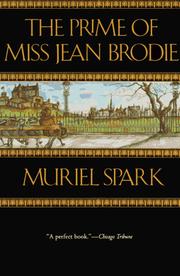
Spark's most famous novel and the perfect entry point: short, propulsive, and a masterclass in her technique of the 'flash-forward' narrator. It introduces her central obsessions — charisma, betrayal, and the dangers of playing God.
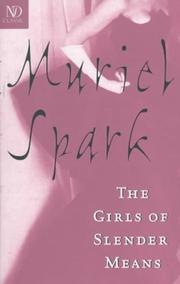
A slim, brilliantly constructed novel set in postwar London that pairs perfectly with Jean Brodie, deepening the reader's feel for Spark's dark comedy and her ability to make catastrophe feel both inevitable and shocking.
The Short Novels: Comic Menace
BeginnerExperience the full range of Spark's short-novel form — her satirical targets, her Catholic metaphysics, and her gift for making the sinister feel hilarious.
▸ Study plan for this stage
Pace: 6–8 weeks total: Week 1–2 — Memento Mori (~30 pages/day; it's ~224 pages); Week 3–4 — The Ballad of Peckham Rye (~25 pages/day; ~160 pages), with slower reading to savour the folk-tale rhythm; Week 5–6 — The Driver's Seat (~20 pages/day; ~117 pages), re-read the final chapter in Week 7; Week 7–8 — c
- Comic menace: how Spark generates dread and laughter simultaneously, making the sinister feel absurd and the absurd feel threatening
- Memento mori as structuring device: the anonymous phone call in Memento Mori literalises the medieval reminder of death, shaping every character's response as a moral self-portrait
- The diabolic intruder: Dougal Douglas in The Ballad of Peckham Rye as a figure who may literally be the devil — how Spark uses ambiguity about the supernatural to satirise postwar suburban conformity
- Proleptic narration and the annihilation of suspense: The Driver's Seat announces Lise's murder on the first pages, forcing the reader to ask 'why' and 'how' rather than 'what', a radical formal choice that mirrors Spark's Catholic determinism
- Catholic metaphysics in miniature: free will, predestination, sin, and the soul's fate are embedded in plot mechanics across all three novels without ever becoming didactic
- Satirical targeting: Spark skewers specific social worlds — the genteel elderly in Memento Mori, the working-class London suburb in Peckham Rye, the anonymous consumer landscape of European travel in The Driver's Seat
- The short-novel form as precision instrument: how extreme compression (none of these books exceeds 230 pages) forces every sentence to carry thematic weight, and how Spark's clipped, ironic prose style achieves this
- Character as type and mystery: Spark's characters are simultaneously flat satirical types and genuinely unknowable — especially Lise, whose interiority is withheld almost entirely
- In Memento Mori, different elderly characters interpret the phone call ('Remember you must die') in radically different ways. What does each character's reaction reveal about their moral or spiritual state, and how does Spark use this device to satirise attitudes toward aging and death?
- Dougal Douglas in The Ballad of Peckham Rye is described as having two small bumps on his head where horns might have been. How does Spark manage the ambiguity between a naturalistic and a supernatural reading of Dougal, and what is the satirical effect of placing a possible devil in 1950s suburban South London?
- The Driver's Seat opens by telling us Lise will be found murdered. How does this proleptic structure change your experience as a reader, and what argument might Spark be making — about fate, will, or the nature of fiction itself — by stripping away conventional suspense?
- All three novels are very short. Choose one and explain how its brevity is not a limitation but a deliberate formal strategy: what would be lost if the book were twice as long?
- Spark is a Catholic convert, and Catholic ideas about death, the soul, and evil surface in all three books. Identify one specific moment in each novel where a Catholic framework illuminates what is happening, without Spark ever stating it explicitly.
- How does Spark's narrative voice — cool, omniscient, lightly ironic — function as a kind of 'comic menace' in itself? Use examples from at least two of the three novels to show how the tone creates unease even while it seems detached.
- The reaction grid (Memento Mori): Draw a table with each major elderly character as a row. Columns: their reaction to the phone call, their dominant sin or virtue, their fate by the novel's end. Write a one-sentence thesis about what the pattern reveals about Spark's moral vision.
- Dougal's inventory (The Ballad of Peckham Rye): List every detail in the novel that could be read as evidence Dougal is (a) literally diabolical or (b) simply a charming con-man. Write a short paragraph arguing one side, then flip it and argue the other. Notice which reading feels more satisfying — and why.
- Prolepsis rewrite (The Driver's Seat): Take the opening two pages of The Driver's Seat and rewrite them in conventional third-person past tense, removing all proleptic hints. Then write a paragraph comparing the two versions: what is gained and lost emotionally and philosophically?
- Sentence-style imitation: Choose one paragraph from each of the three novels that feels quintessentially 'Spark'. Copy it out by hand, then write your own paragraph — about any subject — imitating its rhythm, irony, and compression. This trains your ear for her distinctive prose music.
- Satirical target map: For each novel, identify the specific social world being satirised (e.g., the English nursing-home culture, the postwar suburban factory town, the modern tourist-consumer). Write a short paragraph per novel explaining what Spark finds absurd or dangerous about that world and how the plot enacts her critique.
- Comparative essay (500–700 words): 'In all three novels, a figure of death or destruction arrives from outside a closed community and exposes its spiritual emptiness.' Agree or disagree, using specific evidence from Memento Mori, The Ballad of Peckham Rye, and The Driver's Seat.
Next up: Mastering Spark's short-novel compression and her blend of comedy with metaphysical menace prepares the reader to encounter her longer, more structurally ambitious masterwork The Prime of Miss Jean Brodie, where the same satirical precision and Catholic moral reckoning are applied to a fully realised, psychologically complex protagonist across a richer novelistic canvas.
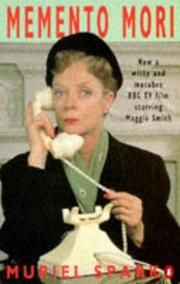
A darkly comic novel about elderly Londoners receiving anonymous phone calls reminding them they will die. It introduces Spark's theological wit and her unflinching gaze at mortality — essential preparation for her more demanding works.
A devilishly playful fable in which a possibly supernatural figure disrupts a South London community. Its folkloric energy and moral ambiguity show a different, more fabulist side of Spark's imagination.
A disturbing, almost plotless thriller about a woman who seems to be arranging her own murder. This is where Spark's style becomes genuinely experimental — the ideal bridge into her major and later works.
The Major Works
IntermediateEngage with Spark's most ambitious and structurally complex novels, where her satirical, spiritual, and metafictional concerns reach their fullest expression.
▸ Study plan for this stage
Pace: 8–10 weeks total: ~2.5–3 weeks per novel at roughly 20–25 pages/day. Suggested pacing — Week 1–3: The Mandelbaum Gate (longest and most politically layered; allow extra time for historical context); Week 4–6: The Public Image (short but dense; re-read key chapters); Week 7–9: Loitering with Intent (
- Metafiction and the self-conscious narrator: how Loitering with Intent uses Fleur Talbot's novel-writing to comment on Spark's own authorial power and the ethics of turning life into art
- The constructed self and public persona: The Public Image dissects how identity is manufactured, performed, and ultimately hollow — anticipating postmodern ideas about celebrity and image
- Pilgrimage, conversion, and spiritual crisis: The Mandelbaum Gate frames Barbara Vaughan's divided Catholic-Jewish identity as a literal and metaphysical journey through a partitioned Jerusalem
- Satire as moral instrument: across all three novels Spark uses wit and irony not merely for comic effect but as a theological and ethical stance against self-deception
- Structural economy and narrative control: Spark's prose style — compressed, precise, often withholding — is itself a formal argument about what fiction should and should not do
- The dangerous power of storytelling: in Loitering with Intent, Fleur's manuscript shapes real events, raising questions about whether the artist bears responsibility for the chaos art unleashes
- Geopolitical space as spiritual metaphor: the divided Jerusalem of The Mandelbaum Gate and the hollow glamour of Rome in The Public Image use physical settings to externalise inner moral states
- Female autonomy and artistic authority: all three novels centre women who insist on defining themselves against social, religious, and institutional pressures
- In The Mandelbaum Gate, how does Barbara Vaughan's dual Catholic-Jewish heritage function both as a personal crisis and as a structural device for exploring divided loyalties — religious, national, and moral?
- The Public Image presents Annabel Christopher's screen persona as a fabrication that gradually consumes her real self. At what point, if any, does Spark suggest a 'true' Annabel exists beneath the image — and what are the consequences of that ambiguity?
- In Loitering with Intent, Fleur Talbot claims that writing her novel causes the events it describes to happen. How does Spark use this conceit to interrogate the relationship between artistic creation and moral responsibility?
- How does Spark's use of ironic distance and narrative economy function differently across the three novels — and what does each novel's chosen form reveal about its central themes?
- All three novels feature protagonists who are, in different ways, outsiders (religious, cultural, artistic). How does outsider status enable Spark's satirical vision, and what does each novel suggest about the cost of that position?
- Taken together, how do these three novels develop Spark's recurring preoccupation with the dangers of self-mythologisation — whether in a pilgrim, a film star, or a novelist?
- Close-reading journal: After finishing each novel, select one passage of no more than one page that you consider the most concentrated expression of Spark's style. Write 300–400 words analysing how sentence-level choices (syntax, tonal register, point-of-view shifts, irony) enact the novel's larger themes.
- Identity mapping exercise (The Public Image): Draw a diagram of Annabel Christopher's identities — the studio-constructed image, her husband Frederick's version of her, her own self-perception, and the person revealed by the novel's ending. Annotate each node with specific textual evidence, then write a paragraph arguing which version Spark herself endorses, if any.
- Pilgrimage route annotation (The Mandelbaum Gate): As you read, track every physical crossing or boundary Barbara Vaughan navigates (geographical, religious, legal, emotional). Create a timeline or annotated map and write a short essay (500 words) arguing how Spark uses spatial movement to structure Barbara's spiritual arc.
- Metafictional parallel reading (Loitering with Intent): Identify at least five moments where events in Fleur's life mirror or anticipate events in the novel-within-the-novel she is writing. Chart these parallels in a two-column table, then write a reflection on what Spark implies about the relationship between lived experience and fictional invention.
- Comparative satirical targets essay: Write a 600–800 word comparative essay identifying the primary object of satire in each of the three novels (e.g., religious tribalism, celebrity culture, literary coteries). Argue whether Spark's satirical method is consistent across all three or whether it evolves — and what that evolution, if any, suggests about her moral vision.
- Spark's narrators in dialogue: Write a 400-word imagined exchange between Annabel Christopher (The Public Image) and Fleur Talbot (Loitering with Intent) on the question of whether a woman can control her own story. Use the exercise to sharpen your understanding of how differently Spark positions each character in relation to authorial power.
Next up: Mastering the structural complexity and thematic density of these three novels equips the reader to engage with Spark's shorter, more experimental late work, where the same satirical and spiritual preoccupations are distilled into increasingly radical and compressed forms.
Spark's longest and most novelistically conventional book, set in Jerusalem during the Eichmann trial. Reading it here reveals the full depth of her Catholic and moral thinking, and shows what she chose to leave behind in her later brevity.

A taut, brilliant novel about a film actress whose public persona is weaponised against her. It marks Spark's turn toward pure economy of means and anticipates her late style — a pivotal book in her development.
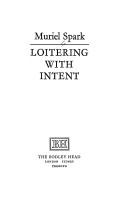
Widely considered her most autobiographical and self-aware novel, in which a young novelist finds her fiction coming to life. It is the ideal capstone to the major works, reflecting on the act of writing itself with characteristic mischief.
The Late Experimental Fiction
ExpertEncounter Spark at her most compressed, strange, and formally radical — novels that strip away everything inessential and demand an active, alert reader.
▸ Study plan for this stage
Pace: 8–10 weeks total: ~2.5–3 weeks per novel. A Far Cry from Kensington (weeks 1–3, ~15–18 pages/day); Symposium (weeks 4–6, ~12–15 pages/day — slower pace suits its dense, multi-strand structure); The Finishing School (weeks 7–10, ~10–12 pages/day, with extra time reserved for re-reading and close anal
- Narrative compression and economy: how Spark strips prose to its barest essentials, making every sentence load-bearing — especially visible in the short, aphoristic chapters of The Finishing School
- The retrospective narrator and temporal doubling: in A Far Cry from Kensington, Mrs Hawkins narrates from a future vantage point, creating dramatic irony and a sense of fate already sealed
- Malevolence as social comedy: Symposium's Margaret Murchie embodies Spark's late fascination with evil that is banal, hereditary, and darkly funny — neither melodramatic nor explained away
- The parasite and the creative: the figure of the talentless person who feeds on genuine artists (Hector Bartlett as 'pisseur de copie' in A Far Cry from Kensington; Roland in The Finishing School) as a recurring Sparkian archetype
- Structural fragmentation and the ensemble cast: Symposium's rotating cast of dinner-party guests forces the reader to construct meaning from juxtaposition rather than linear causality
- Metafiction and the anxiety of authorship: The Finishing School places the act of writing — and the jealousy it provokes — at the very centre of the plot, making the novel self-consciously about its own creation
- Catholicism, fate, and the uncanny: Spark's late work retains a theological undertow — characters seem subject to forces beyond psychology, and coincidence feels like providence or curse
- The aphorism as narrative device: Spark's late style deploys maxim-like statements that arrest the reader and function almost as chapter-level thesis statements
- In A Far Cry from Kensington, how does Mrs Hawkins's retrospective narration shape the reader's experience of suspense — and what does Spark gain by telling us early that things will resolve?
- What is the function of the term 'pisseur de copie' in A Far Cry from Kensington, and how does it connect to Spark's broader critique of fraudulent creativity across all three novels?
- How does Symposium use the dinner-party structure and its rotating perspectives to create a sense of dread — and what does the novel ultimately suggest about the relationship between social surfaces and hidden evil?
- In what ways is The Finishing School a metafictional novel, and how does Roland's jealousy of Rowland's novel-in-progress dramatise Spark's ideas about the nature of artistic talent and its discontents?
- All three novels feature characters who are, in some sense, parasites or predators operating within polite society. How does Spark's treatment of this figure evolve across A Far Cry from Kensington, Symposium, and The Finishing School?
- How does Spark's prose style in these three late novels differ from her earlier work (e.g. The Prime of Miss Jean Brodie), and what formal choices signal her increasing commitment to compression and strangeness?
- Close-reading log: After each chapter of all three novels, write one sentence identifying the single most load-bearing line — the sentence that could not be cut without losing something essential. At the end of each book, compare your selections and write a short paragraph on what they reveal about Spark's late style.
- Character web for Symposium: Draw a diagram mapping every character, their relationships, and the information revealed about each through the rotating perspectives. Annotate with the page on which each revelation occurs. Then write a 300-word reflection on how Spark controls what the reader knows and when.
- Rewrite a passage: Take any two-page scene from The Finishing School and rewrite it in the style of a conventional realist novel — adding interiority, explanation, and psychological motivation. Then write a paragraph analysing what is lost and what Spark's stripped-down version achieves that yours cannot.
- Track the 'pisseur de copie' archetype: Create a comparative table listing Hector Bartlett (A Far Cry from Kensington), Margaret Murchie (Symposium), and Roland (The Finishing School). For each, note: how their threat manifests, how other characters perceive them, and how Spark resolves (or refuses to resolve) their menace. Write a 400-word synthesis essay.
- Aphorism hunt: Collect 8–10 maxim-like statements from across all three novels. For each, identify its narrative placement (opening, mid-chapter, closing line) and argue in one sentence why Spark placed it there. Then try writing three original Spark-style aphorisms about creativity, envy, or social life.
- Retrospective narration experiment: Write a 400-word first-person opening to an imaginary story in which the narrator, like Mrs Hawkins in A Far Cry from Kensington, speaks from a future vantage point and has already survived the events — practising how to create tension when the ending is partially disclosed upfront.
Next up: Mastering Spark's late formal radicalism — her compressed sentences, unreliable social surfaces, and self-aware narrative voices — equips the reader to engage critically with her essays, interviews, and autobiography, where the same aesthetic principles are articulated in her own non-fictional voice, completing the portrait of a writer fully in command of her singular vision.
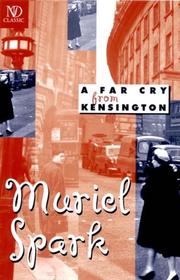
A warm but razor-edged late novel narrated by a woman looking back on her 1950s London life. It serves as a gentler entry into the late period, blending nostalgia with Spark's characteristic sudden violence.
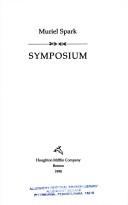
A dazzling, disorienting dinner-party novel in which evil circulates among the guests like a virus. Its fragmented, elliptical structure represents Spark's late style at its most demanding and rewarding.
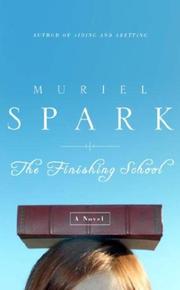
Her final novel, published when she was in her eighties, about a writing teacher consumed by envy of a student's talent. It is a perfect, miniature farewell — funny, sinister, and formally immaculate — that brings the whole curriculum full circle.
Discussion
Keep reading
Paths that share books, cover the same subject, or open a related topic.