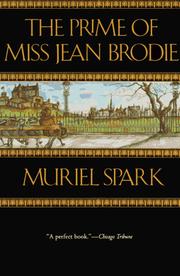
Start with The Prime of Miss Jean Brodie. For once the famous book and the best entry point are the same thing. It runs under 150 pages, it contains the technique Spark is important for, and that technique is visible from the first chapter: she tells you how the story ends while it is still beginning. A schoolgirl will betray Miss Brodie. Another will die in a fire in Spain. You know this early, and the novel proceeds anyway, which turns the reading experience from suspense into something closer to watching a set trap.
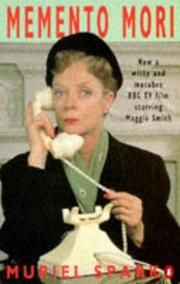
The reasonable alternative is Memento Mori, and it is a serious contender — a cast of elderly Londoners receiving anonymous phone calls saying only "remember you must die." It is funnier and colder. But The Prime of Miss Jean Brodie is the one that teaches you Spark's relationship to her characters, which is somewhere between a novelist and a Calvinist deity, and every other book makes more sense once you have seen it.
The great run: 1957 to 1963
Spark's early novels come fast and short, and this is the densest stretch of good work.
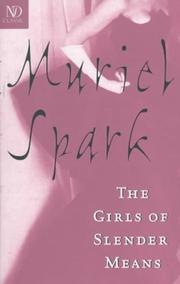
After The Prime of Miss Jean Brodie, read Memento Mori, then The ballad of Peckham Rye — a possibly diabolical Scotsman takes a job at a South London textile factory and systematically unpicks everyone's arrangements. Then The girls of slender means, set in a hostel for young women in London in 1945, which is the most perfectly constructed thing she wrote and the one where the technique of flash-forward is used to devastating effect. Four books, roughly 500 pages total, and you will know whether you love her.
The difficult middle
Two warnings here, and both are real.
The Mandelbaum Gate is her longest novel and her least characteristic — a substantial, sprawling book set in divided Jerusalem, which won the James Tait Black prize and which Spark herself later spoke of as an outlier. If you have come for the compression, this is not it. It is safely skippable on a first pass.
The driver's seat is the opposite problem: only a hundred pages, and by common consent the coldest thing she ever published. A woman travels abroad, behaving strangely, looking for something the reader works out well before she names it. Spark called it her favourite. Many readers find it unbearable. It is not a book to read if you are already low, and it is the best argument that she is a genuinely radical novelist rather than a witty one.
Public Image, about an actress whose manufactured persona survives her husband's death, sits between the two — sharp, minor, quick.
The late comeback
Spark's 1980s books are underread and several are among her best. Loitering with Intent is the one to prioritise: a novelist working for a strange autobiographical society discovers that the lives she is ghostwriting are starting to imitate her fiction. It is the most cheerful book she wrote and the most direct about her theory of what novelists do.
A far cry from Kensington follows, a postwar publishing novel with a narrator who tells a man he is a hack and spends the rest of the book dealing with the consequences. Symposium is a dinner-party novel with a murder in it, structurally clever and slightly chilly. The finishing school, her last novel, published at eighty-six, is slight but genuinely funny about literary envy.
Where to stop
The natural stopping point is after Loitering with Intent and A far cry from Kensington. If you read only five: The Prime of Miss Jean Brodie, Memento Mori, The girls of slender means, The driver's seat and Loitering with Intent.
More short, sharp twentieth-century fiction paths are on Discover.
Follow the full ordered path here: Muriel Spark Reading Order: Where to Start.