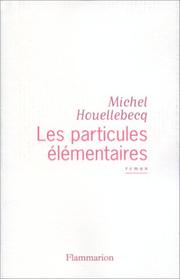
Start with The Elementary Particles. It is the novel that made Houellebecq an international argument rather than a French one, it contains every theme he has worked since, and at 320 pages it tells you within a week whether this is a writer you want to spend more time with.
Before that, one thing has to be said plainly, because it is the actual decision a new reader is making. Houellebecq is deliberately provocative about sex, race and Islam, and the provocation is not accidental, not confined to one book, and not a phase he grew out of. He was tried in France in 2002 over remarks he made about Islam and was acquitted. Serious critics have described the novels as misogynistic, racist and Islamophobic; other serious critics read them as satire on a European culture that has lost the ability to want anything. Both readings are held by people who have read the work carefully. Deciding here that this is not a shelf you want is a legitimate outcome of this article, and better made now than three books in.
Stage one: the two short ones
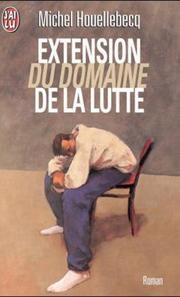
The Elementary Particles and Whatever, about two weeks for the pair. Whatever was his first novel, shorter and bleaker, and some readers prefer it as an entry point precisely because it is so compressed. It is the better book on office life and the worse book on everything else. Both are exhausting rather than difficult — 40 pages a sitting is fine, but most people want a gap between them.
Stage two: the major novels
Platform Proof, The possibility of an island and Map and the Territory, roughly four weeks. A cataloguing note on the first: it is the 2002 novel Platform, filed here under an edition title carrying the word Proof, not a separate work. It is also the most directly confrontational thing he has written, built around sex tourism and ending in a terrorist attack, and it is the book most often cited by people who argue the provocation has no purpose beyond itself.
Read Map and the Territory last in this group. It won the Prix Goncourt in 2010, it is the warmest novel he has written, and after the other two it functions as genuine relief.
Stage three: the political novels
Submission and Serotonin, about three weeks. Submission imagines a France with a Muslim president in 2022 and was published, by coincidence, on the day of the Charlie Hebdo attack — a fact that shaped its reception more than its contents did. It is the more discussed of the two. Serotonin is partly a retreat from it: smaller, sadder, more interested in agricultural decline than in civilisational decline. Read them in that order.
Where to stop
Most readers should stop after Map and the Territory or Submission. Everything essential about Houellebecq is in the first six books, and the returns diminish. Annihilation is the exception to note: at 544 pages it is much longer and much slower than anything else here, and it is not a quick coda — plan on 30 pages a day for three to four weeks. Readers who have found the earlier novels rewarding tend to like it more than readers who found them merely bracing.
His early essay on Lovecraft, which is the shortest route into what he is actually trying to do with prose, is not in our catalogue and would need to be sourced separately.
Other paths through modern European fiction are on Discover.
Follow the full ordered path here: Michel Houellebecq Reading Order: Where to Start.
Ready to learn something deeply?
Build a reading path — free