Medicinal chemistry is the science of turning a molecule into a medicine: understanding how structure meets a biological target, then optimizing everything from potency to how the compound behaves in the body. It draws on organic chemistry, pharmacology, and increasingly on computation, and the books are best read in a sequence that mirrors how a drug is actually developed.
Begin with the logic of drug-target interaction and you will read the later, more specialized volumes with a purpose. Jump straight to structure-based design or chemoinformatics and the methods float free of the medicinal reasoning they are meant to serve. These books complement formal study and lab training; they inform, they do not replace, professional credentials.
Get the fundamentals of drug action
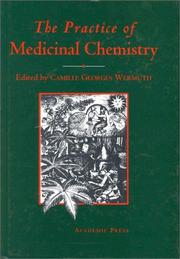
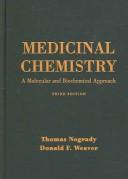
An Introduction to Medicinal Chemistry by Graham Patrick is the widely used entry point, clear on how drugs interact with targets, on pharmacokinetics, and on the overall discovery process. Read it first. Then The Practice of Medicinal Chemistry by Camille Wermuth broadens the picture into a working practitioner's reference, and Medicinal chemistry by Thomas Nogrady grounds the biochemical mechanisms.
Learn what makes a molecule a drug
Potency is not enough; a compound has to be absorbed, stable, and safe. Drug-Like Properties by Li Di and Edward Kerns is the practical guide to the physicochemical properties that make or break a candidate. Pharmacophore Perception, Development, and Use in Drug Design edited by Osman Guner introduces the pharmacophore concept that organizes much of modern design.
For the encyclopedic view, Burger's Medicinal Chemistry and Drug Discovery edited by Donald Abraham is the reference to keep nearby rather than read straight through.
Move to modern design and informatics
Structure-Based Drug Discovery edited by Harren Jhoti shows how protein structures guide design. Then the informatics layer: An introduction to chemoinformatics by Andrew Leach and Molecular Descriptors for Chemoinformatics by Roberto Todeschini teach how chemical data is represented and searched at scale. Close with Drug Discovery by Walter Sneader, a history that puts the whole enterprise in perspective.
Read in this order and each tool arrives with a reason. Follow the full path to keep the arc intact.
Follow the full reading path →
Ready to learn something deeply?
Build a reading path — free