Start with American primitive: Poems. The obvious alternative is whichever late collection is stacked by the till, or the handful of poems that circulate online — and that is precisely the problem, because it means meeting the gentlest and weakest work first. American primitive: Poems won the Pulitzer Prize in 1984 and is wilder and more physical than her reputation suggests: bodies, blood, bears, decay, appetite.
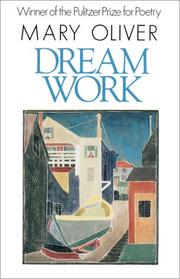
Read Dream Work immediately after. It is her most emotionally direct book and contains several of the poems everyone quotes, and reading them inside the collection that shaped them is a very different experience from reading them on their own. These two are also where the case for her is strongest, which matters for the argument below.
The sentimentality question, answered honestly
Oliver is frequently dismissed as sentimental, and the charge deserves a straight answer rather than either agreement or offence. The case against is real: the poems are formally uniform, the moves repeat, and the late work resolves toward consolation with some regularity. The case for is also real, and is best made from exactly these first two books, where the observation is exact, the natural world is predatory rather than comforting, and the darkness — including her own childhood — is present and unresolved.
Judge it after this stage rather than before it. Her actual technical signature is the line break: short free-verse lines, with the turn at the end of a line used to hold or release a sentence. It is invisible unless you read aloud, which is how these should be read anyway — slowly, a few poems at a time, with rereading built in.
The major middle books
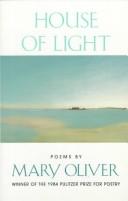
This is the 1990s run, where the voice is fully formed and the attention widens beyond New England. House of light follows Dream Work and refines it, and holds several of her most anthologised poems; it is the single best collection to read in one sitting, because its poems are in conversation with one another.
White Pine puts poems and prose poems together and is where she experiments most with the line. The prose poems are the strongest evidence against the uniformity charge — the same attention working without line breaks reads noticeably differently.
The selected volume here is New and Selected Poems, and it is worth knowing which one: our record is Volume Two, published in 2005 and covering the following decade. The National Book Award went to the first volume in 1992. A selected is not a substitute for the individual collections either, because Oliver's books have shapes — poems are arranged to answer one another, and extraction loses that.
The late work
The twenty-first-century collections are shorter, plainer and more openly religious, and they are the books most readers already know. Reading them last means you can see what changed rather than mistaking them for the whole.
Why I Wake Early is the best of the later collections and the most continuous with the 1980s books, which makes it the natural bridge. Thirst was written after the death of Molly Malone Cook, her partner of more than forty years, and in it grief and faith are inseparable; it is the most personal thing she published and the least like a gift book. The explicit Christian language that enters here is genuinely new.
A thousand mornings is late, short and plain — the register most people mean when they say Mary Oliver, and at this point in the sequence it reads as distillation rather than thinness. Check the edition when buying it: our catalogue's record lists a Spanish translator, so bilingual and translated editions are in circulation alongside the English original. Felicity is her love poems and the slightest of the collections, included honestly, because it is where the late manner reaches its limit and knowing that limit is part of knowing the work.
The prose and the craft books
A Poetry Handbook is a short, exacting guide to meter, line, sound and diction, and it is startling from a poet routinely described as artless. It is the strongest evidence in the whole path that the simplicity was constructed. Read it after the collections and her technique becomes visible in retrospect.
Upstream is her best essay collection — on Whitman, Wordsworth, Provincetown, and the discipline of paying attention — and is the clearest statement of what she believed she was doing. Her subject is a practice rather than a landscape, which reframes the nature-poet label entirely. Blue pastures is the earlier, more fragmentary prose and works as a last stop.
Oliver gave very few interviews and wrote almost no criticism of her contemporaries, so these three books are effectively the entire record of what she thought about poetry.
More poetry reading paths on Discover.
Follow the full ordered path here: Mary Oliver Reading Order: Where to Start.