Martin Beck Reading Order: Where to Start
Maj Sjowall and Per Wahloo wrote exactly ten Martin Beck novels between 1965 and 1975, one a year, and they planned them from the start as a single three-hundred-chapter book — thirty chapters each — dissecting Swedish social democracy through its police force. That makes this one of the very few detective series where a complete reading order is short enough to actually follow, and where the order genuinely is not optional: the politics sharpen, the squad ages, and the last book answers the first. The path below is all ten in publication order.
Start Here: Roseanna
BeginnerMeet Beck and the Stockholm squad, and adjust to a procedural that moves at the speed of real police work.
▸ Study plan for this stage
Pace: Two short novels, about 250 pages each, but budget two to three weeks rather than a weekend. Roseanna is the hazard: the investigation stalls for months of story time in its middle third, and the book expects you to sit inside that stall rather than skim it. The Man Who Went Up in Smoke moves faster
- The thirty-chapter frame. Each of the ten novels runs to thirty chapters, and Sjowall and Wahloo treated the sequence as a single three-hundred-chapter book about Sweden rather than as a series of cases.
- Time kept honestly. Weeks and months pass on the page, seasons are named, and the delay between the body and the identification is the realism rather than a flaw in the pacing.
- An ensemble, not a genius. Beck solves nothing alone; Kollberg, Melander and the provincial detective Ahlberg carry whole stretches of Roseanna, and the series keeps redistributing the work across the squad.
- Procedure as content. Interviews, telex traffic, tourist photographs and boat timetables get real page space instead of being summarised into a paragraph of deduction.
- Beck's domestic life as a running counterweight. His marriage is already failing in book one, it is described flatly and rarely, and the series is in no hurry to resolve it.
- The outsider's angle. An American detective in Roseanna and the Hungarian police in the second book let the authors describe Swedish policing from somewhere outside it.
- Flat, unadorned prose. Almost nothing is rendered emotionally; the effect is cumulative, and readers who want a strong narrative voice will not find one here.
- Publication order as the only order. The politics sharpen book by book, the squad ages continuously, and the tenth novel answers the first.
- How many months pass between the body coming out of the canal and the identification, and what finally produces her name?
- During the long stretch where the case goes nowhere, what is the squad actually doing? List the specific tasks the book shows you.
- Roseanna closes with an operation that deliberately puts someone at risk. What does the novel appear to think of that decision?
- How does the Budapest setting change Beck when he is cut off from his squad, his files and his family at once?
- After two books, what do you actually know about Beck's private life, and by what means were you told it?
- Write down the month each chapter of Roseanna takes place in as you go. At the end you will hold the case timeline the book deliberately never summarises for you, and you will see how much of the year it eats.
- Keep one line per squad member - Kollberg, Melander, Gunvald Larsson, Ronn, Ahlberg - naming the single habit or trait the book gives each of them. You will use that list for the next eight novels, and the series never reintroduces anybody.
- Read the first two pages of Roseanna aloud and count how many sentences carry a word of feeling. That register is the one the whole ten-book sequence is written in.
- Before starting book three, decide honestly whether the slow middle of Roseanna was the appeal or the obstacle. The series does not change to accommodate you, so an honest answer now saves you two hundred pages later.
Next up: Roseanna and the Budapest book install the squad and the tempo; the next three keep both but turn the attention outward, from the criminal to the society that produced him.
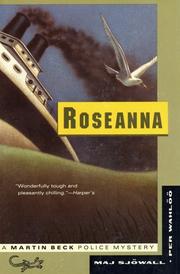
A woman's body is dredged from a canal and it takes months to learn her name. The first novel and the only place to start — the deliberate slowness is the method, and every later book assumes you have accepted it.
A Swedish journalist vanishes in Budapest and Beck is sent after him. Read it second: it takes the squad out of Sweden precisely once, which makes the eight domestic books that follow feel deliberately claustrophobic.
The Method Takes Hold
IntermediateRead the three central novels, including the one that won the Edgar and defined the police procedural for everyone after.
▸ Study plan for this stage
Pace: Three novels, roughly 700 pages together, in about a month. The Man on the Balcony is the shortest and the grimmest and goes down in a few sittings. The Laughing Policeman is the one to slow down for: it opens with nine people shot dead on a bus and then disperses into that many separate lines of ro
- Rotating viewpoint. Chapters follow whichever detective is doing the work, so the novels are narrated by the investigation rather than by a hero.
- Kristiansson and Kvant, the two useless patrolmen, as structural comedy - the authors cut from despair to farce and back, and the switch is doing more than lightening the mood.
- Gunvald Larsson's violence presented as a fact about the police rather than a quirk of one man. The books neither excuse it nor make a speech about it.
- Coincidence and dogged repetition as the real engines of a solution, in place of the deductive leap the genre usually supplies.
- Melander's memory, used openly as a plot device: the squad has one man who forgets nothing, which lets the authors reach back years without a contrivance.
- Weather and season as social pressure. The heat in The Man on the Balcony and the November rain in The Laughing Policeman are worked into the police work, not laid over it.
- The press as an actor in the case, distorting and hurrying the investigation, which will matter more with every later book.
- The series reaching backwards. Old files, unsolved cases and characters from earlier books start feeding the plots, which is why the order is not optional.
- In The Laughing Policeman, what is the actual break in the case, and how much of it is deduction and how much accident?
- The Man on the Balcony spends much of its length on a mugger while a child killer is loose. Why does the book keep the two cases side by side?
- What do Kristiansson and Kvant let the authors say about the force that a serious character could not say?
- How is Beck treated by his superiors here compared with Roseanna, and what has changed about his standing?
- The Fire Engine That Disappeared opens with a suicide note naming Beck. How long does the novel keep that personal hook alive, and what does it do with it?
- While reading The Laughing Policeman, keep a two-column note of which detective is working which thread. The book hands you nine victims and roughly as many investigators and never recaps.
- Mark the page in The Man on the Balcony where the heat finally breaks, and note what changes in the investigation within the same few pages.
- Read one Kristiansson and Kvant chapter and one Beck chapter of similar length back to back. The tonal switch between them is the series' central structural trick and it is easier to feel than to describe.
- Stopping point, stated plainly: The Laughing Policeman is the most famous of the ten and is the honest place to leave the series if you are only ever going to read one. If you finish it and are satisfied, you have read the book people mean when they cite Sjowall and Wahloo.
Next up: These three perfect the method on ordinary crimes; the next two keep the method and change the target, aiming it at the Swedish state rather than at anyone who broke the law.

A child killer in the Stockholm parks during a heatwave. The first book where the authors' anger at the society producing the crime is fully visible.

Nine people shot dead on a bus, one of them a detective. The most famous of the ten and the model for a generation of ensemble procedurals — but it turns on a case from an earlier book, so do not read it first.

A house explodes and a suicide note names Beck. The plotting is at its most intricate here, and the squad comedy — Kristiansson and Kvant — is fully developed.
The Politics Sharpen
IntermediateFollow the series as its target shifts from individual criminals to the Swedish state itself.
▸ Study plan for this stage
Pace: Two of the shortest books in the series, around 200 pages each, and about two weeks. They are also the two angriest, and they read faster than their predecessors because the plotting is simpler and the argument is doing the work. Murder at the Savoy is almost leisurely for its first half and then tu
- The authors' declared project. Sjowall and Wahloo were committed Marxists who said openly that the ten novels were written to use the crime novel to examine bourgeois society. By these two books the analysis is stated on the page rather than implied under it.
- The victim as the guilty party. An industrialist is shot at dinner and the novel is more interested in how he made his money than in who fired.
- The police as institution rather than as protagonists. The Abominable Man is a direct attack on the militarisation and centralisation of Swedish policing, written by two people who supported neither.
- Beck's own doubt about the job, which stops being a mood and becomes a position he has to hold or abandon.
- The question shifting from who did it to why this was always going to happen, which changes what a solution is worth at the end of a book.
- The squad's comedy thinning out. There is less Kristiansson and Kvant relief here, and the books are harsher for it.
- Social democracy examined from the left. The target is not conservatism but the welfare state the authors thought had stopped delivering, which is a more specific charge than most political crime fiction makes.
- Nobody much mourns the man shot at the Savoy. How does the novel establish that, and how early?
- In The Abominable Man, what exactly did the dead officer do, and how much of it was known and tolerated by his superiors?
- Where does the political argument sit in these books - in dialogue, in narration, or in what the plot chooses to show?
- Does the siege at the end of The Abominable Man support the authors' argument or undercut it?
- Has Beck's attitude to his own job changed since Roseanna, and can you point to the passage where you noticed?
- Mark every passage in Murder at the Savoy that indicts a class rather than a person. There are more than you expect and most are one sentence long, dropped into ordinary narration.
- Read the closing pages of The Abominable Man twice, once for the events and once for what the authors are saying about who armed these men and why.
- Compare the first chapter of The Abominable Man with the first chapter of Roseanna. Six books apart, the same two writers, and a completely different temperature.
- Second honest stopping point: the end of The Abominable Man. The politics do not soften from here, and a reader who has had enough of them has read seven of the ten and the two most representative of the authors' intent. Decide now rather than at book nine.
Next up: With the argument fully stated, the last three books can stop making it and start closing the design - which means returning to characters and cases the earlier novels left open.
An industrialist is shot at dinner and nobody much minds. The most openly political novel so far, and the point at which the authors' Marxism stops being subtext.
A brutal police officer is killed in his hospital bed and the response is a siege. The angriest book of the ten, and a direct attack on the militarisation of the Swedish police.
The Ending
IntermediateFinish the ten-book sequence and see the design the authors set out with in 1965 close.
▸ Study plan for this stage
Pace: Three books and the longest stretch of the path - about 970 pages, four to six weeks. First, our listing: the tenth novel appears here under its Swedish title, Terroristerna, because the English title The Terrorists collides in our catalogue with an unrelated omnibus by another author. It is the sam
- The Locked Room as deliberate parody. The authors take the most artificial device in golden-age detective fiction and run it beside a bungled, entirely unglamorous bank robbery, which is the joke and the argument at once.
- Beck rebuilt. He returns from the injury he took in The Abominable Man and his private life finally starts moving, after nine books of stasis described in flat sentences.
- The series reaching all the way back. Cop Killer picks up threads left in Roseanna nine novels earlier, which is the clearest evidence that the ten-book design was real and not retrofitted.
- The squad aged and dispersed. People have been promoted, worn down or moved on, and the books treat that as the ordinary erosion of a working life rather than as drama.
- Two investigations per book, running in parallel and commenting on each other, which is the mature form of the structure first tried in The Man on the Balcony.
- The final verdict. Terroristerna is where the authors deliver their judgement on the whole society the sequence has been examining, and it is not a subtle one.
- A closed design. Ten books, three hundred chapters, one country, finished on schedule - almost no crime series is completable in this sense, and this one was built to be.
- What is the joke in The Locked Room, and who is it on - the detective, the genre, or the reader?
- Cop Killer returns to a figure from Roseanna. What has the intervening decade done to that character, and what is the book saying by going back?
- By Terroristerna, what has become of Beck's marriage and his career, and how much of that change did you see happening?
- What is the final judgement the tenth book delivers, and does the sequence earn it or assert it?
- Reading the ten as one three-hundred-chapter book, what actually changed between chapter one and chapter three hundred - in Sweden, in the squad, and in Beck?
- Before starting Terroristerna, reread the last two pages of Roseanna. The tenth book is written for someone who has just done that, and the effect is almost entirely lost if you have not.
- Check the thirty-chapter claim yourself on these three books. It holds, and confirming it makes the architecture concrete rather than a fact somebody told you.
- Keep the squad list you started in stage one open while reading Cop Killer, and mark who has left, been promoted or stopped appearing. That list is the actual story of the series.
- Read the bank robbery sections of The Locked Room and the siege at the end of The Abominable Man close together. The same authors staging incompetence twice, once for comedy and once for horror.
Next up: You have finished a complete ten-novel design, which very few crime series allow; the two things worth doing next are rereading Roseanna, which reads entirely differently once you know what the last book does with it, and reading the Scandinavian procedurals that followed with the knowledge that this sequence is where their shape came from.

A classic impossible-crime puzzle running alongside a bungled bank robbery, with Beck returning from injury. The most formally playful of the ten and the one that most rewards knowing the squad well.

A small-town disappearance that reaches back to characters from Roseanna. The penultimate book, and it deliberately picks up threads left nine novels earlier.
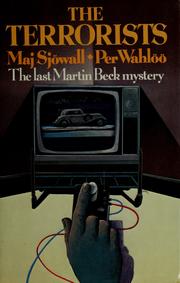
The tenth and last, published in English as The Terrorists: an assassination plot, an American senator, and a final judgement on the whole society the series has been examining. Read nothing else in between — it is the designed ending.
Discussion
Keep reading
Paths that share books, cover the same subject, or open a related topic.