Martin Amis Reading Order: Where to Start
Amis is a stylist first, which means the reason to read him is the sentences and the reason people give up on him is the plots. The career has a clear arc: brash early comedies, a mid-career London run that produced his two most famous novels, a late turn to the twentieth century's atrocities, and a body of memoir and criticism that many readers now rate above the fiction. This path follows that arc, and is honest about which books have aged badly.
The early comic novels
BeginnerMeet the Amis voice — comic, cruel, dense with unexpected verbs — in the two early novels that are still genuinely funny, and calibrate your tolerance for narrators designed to be unpleasant
▸ Study plan for this stage
Pace: 4 weeks. The Rachel Papers is 224 pages and goes down in three or four sittings. Money is 394 pages of unbroken first-person assault - it is exhausting at speed, so pace it at ~25 a night over three weeks rather than bingeing. Reading Money in large gulps is the most common way people bounce off Ami
- Amis is a stylist first - the reason to read him is the sentence, and the reason people abandon him is the plot
- The signature texture: unexpected verbs, brand names as poetry, low subject matter in high diction and the reverse
- Charles Highway's annotated self-presentation in The Rachel Papers as the debut's joke - a narrator who has prepared notes on his own seduction
- John Self as the fullest version of the Amis protagonist: appetite without interiority, and comic precisely because he cannot see himself
- The author-character called Martin Amis inside Money, and what a novel gains by putting its writer in the frame as an antagonist
- Money's conning plot as almost incidental - the book is a voice performance and the swindle is a pretext for it
- Deliberate unlikeability: Amis never wrote a sympathetic protagonist, so the usual question of whether you like the narrator is the wrong question
- What has aged badly - the treatment of women in both books is period-typical and worse, and reading Amis honestly means naming that rather than routing around it
- What is the joke of The Rachel Papers, and is it at Charles's expense or Rachel's?
- Money has almost no plot for two hundred pages. What is holding you, sentence by sentence?
- What does the character named Martin Amis do to the novel that a conventional narrator could not?
- Where does the comedy in Money curdle, and is the curdling controlled?
- How do you read the misogyny - as the narrator's, the novel's, or the author's? Point to the textual evidence for your answer.
- Copy out five sentences from Money purely for the verbs. Amis's reputation rests on word choice more than on structure and the list makes that concrete.
- Read twenty pages of Money aloud. The prose is engineered for the ear and the rhythm is invisible silently.
- Note every meal, drink and purchase John Self makes in one chapter. The catalogue is the characterisation - there is nothing else in him.
- Decide now how you will handle the misogyny for the rest of the path. Deciding in advance is more useful than relitigating it every hundred pages.
Next up: You have calibrated your tolerance for the voice at short and full length, which is what the London novels demand, since they run the same performance across a thousand pages with less plot to justify it.
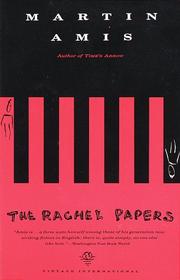
A precocious nineteen-year-old plots the seduction of an older girlfriend and annotates himself throughout. The debut, short and very funny, and the cleanest introduction to a writer who has never once written a likeable protagonist.
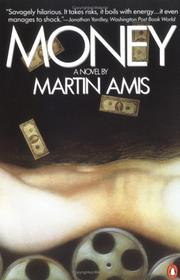
John Self, a director of commercials, eats and drinks and gambles his way across New York and London while a character called Martin Amis watches. Widely held to be his best book. Read it second, once the voice from The Rachel Papers is familiar, because here it runs at full power for 400 pages.
The London novels
IntermediateRead the ambitious mid-career novels about class, envy and millennial dread, and judge the trade Amis makes — extraordinary prose against plots that deliberately refuse to satisfy
▸ Study plan for this stage
Pace: 6-7 weeks, the longest stage. London Fields is 480 pages and The Information 493 - nearly a thousand pages of high-density prose. Three weeks each at ~25 a night. Both sag in the middle third by design; if you stall, push to the next set-piece rather than restarting.
- London Fields's inverted structure: the victim is arranging her own murder and the narrator is writing it down as it happens, so the mystery is not who but whether
- Nicola Six as a deliberate provocation - a woman constructed entirely from male fantasy, presented by a novel that knows it and is not fully excused by knowing it
- Keith Talent as Amis's most sustained class caricature, and the running argument about whether the book is contemptuous of him or delighted by him
- Millennial dread as the background radiation - the weather, the sky, the vague ending of things, all present without explanation
- The Information's subject is literary envy, and it is his funniest late comedy because the humiliation is so precisely observed
- The trade Amis makes: extraordinary sentence-level performance against plots that deliberately refuse to satisfy, which is why readers split so sharply
- The narrator-inside-the-novel device recurring from Money, now with far higher stakes for the plot
- Length as a problem Amis never solved - both books contain a superb 300-page novel and about 180 pages of ballast
- If you know the outcome of London Fields from the first chapter, what is generating suspense for five hundred pages?
- Is Nicola Six a critique of a male fantasy or an indulgence in one? Argue from a specific scene rather than the premise.
- How does Amis handle class in London Fields, and does the comedy require you to look down on Keith?
- What does The Information understand about literary envy that a less bitter book could not?
- Both novels are widely called overlong. Which two hundred pages would you cut, and what would be lost?
- Mark the point in London Fields where you stopped caring about the plot, if you did. That page is where the book asks you to read it as performance instead.
- Take one Keith Talent set piece and rewrite it without the comic diction. What remains tells you what the style was carrying.
- In The Information, list every humiliation Richard Tull suffers. The escalation is the structure.
- Compare a paragraph of London Fields with one from Money. Six years apart, the ambition is visibly larger and the control is not obviously better.
- Write 200 words defending or prosecuting the claim that Amis's plots are the price of his sentences.
Next up: Having watched the comic apparatus run on material that can absorb it, you are ready for the late novels, where Amis turns exactly the same machinery on the Holocaust and the Gulag.
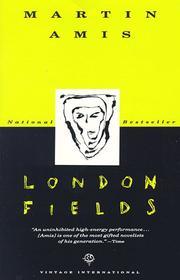
A murder mystery told backwards from the victim, who is arranging her own death. The most ambitious thing he wrote and the most divisive; read it after Money, which teaches you to enjoy the sentence-level performance for its own sake.
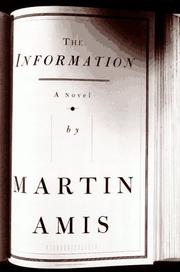
One novelist sets out to ruin his more successful best friend. Vicious about literary envy and the funniest of the later comedies. Read it here as the closing panel of the London sequence.
The serious late novels
IntermediateFollow Amis to the Holocaust and the Gulag, where the comic apparatus is turned on material that resists it, and assess whether the style survives the subject
▸ Study plan for this stage
Pace: 5 weeks. Time's Arrow is 176 pages but read it slowly - the reversed narration means every scene has to be mentally re-run forwards, which halves your speed. House of Meetings is 256 and controlled. The Zone of Interest is 308 and the hardest going; give it two weeks and expect to stop.
- Time's Arrow narrating a Nazi doctor's life in reverse, so that Auschwitz reads as an act of creation - a formal device that is also a moral argument about how perpetrators narrate themselves
- The novel's shortest and most formally perfect construction, and the first sign of the preoccupations that dominate the last twenty-five years
- House of Meetings as the fiction companion to his work on Stalinism: two brothers in a labour camp, in love with the same woman, told as a letter
- Restraint as a late development - House of Meetings is the most controlled prose in the path and the least characteristic
- The Zone of Interest running Auschwitz as a bureaucratic workplace, complete with office politics and a farcical love plot
- The comedy in The Zone of Interest is not a lapse of taste but the entire argument - the banality is rendered as banal, which is why it needs the earlier comic novels behind it
- The recurring question of whether Amis's style survives this material, and the fact that serious readers answer it in both directions
- Perpetrator perspective as the through-line: all three books are narrated wholly or partly by people implicated in the atrocity
- What does the reversed narration in Time's Arrow let Amis say that forward narration could not?
- Who is the narrating consciousness in Time's Arrow, and why does the book need it to be separate from the doctor?
- House of Meetings is his most restrained novel. Is restraint an improvement here or a loss?
- Is the farce in The Zone of Interest defensible? Make the strongest case for the position you do not hold.
- Does the Amis style survive this subject matter? Answer per book rather than in general - the three do not stand or fall together.
- Take one reversed scene in Time's Arrow and write it out forwards. The exercise shows exactly what the device is doing.
- Read the camp sections of House of Meetings and The Zone of Interest close together and compare their register. One withholds the style; one deploys it.
- Track the office-politics vocabulary in The Zone of Interest - targets, logistics, personnel. The horror is carried by the diction.
- Write down your verdict on whether the comedy works, before reading any criticism. Then read a review that disagrees.
- Note which of the three you would recommend and to whom. These are not interchangeable books.
Next up: You have now read the fiction across its whole range, which is the precondition for non-fiction in which Amis states outright the literary judgements that produced every choice you have just watched him make.
The life of a Nazi doctor narrated in reverse, so that Auschwitz becomes an act of creation. A short, formally perfect novel and the first sign of the late preoccupations. Read it before the other two.
Two brothers in a Soviet labour camp, in love with the same woman. His most controlled late novel, and the fiction companion to his non-fiction work on Stalinism.

Three narrators inside an Auschwitz run as a bureaucratic workplace, including a farcical love plot. The hardest book here, and it should be read last: it only works if you already know how his comedy operates, because the comedy is the point.
The memoir and the criticism
IntermediateRead the non-fiction many now consider his strongest work, and see the literary judgements that shaped the novels stated outright
▸ Study plan for this stage
Pace: 6 weeks. Experience is 416 pages, digressive and heavily footnoted - three weeks at ~25 a night, and read the footnotes rather than skipping them. The War Against Cliche is 505 pages of collected reviews and is not meant to be read straight through; take three or four pieces per sitting over three w
- Experience as a memoir organised in loops rather than sequence - Kingsley, the teeth, the cousin murdered by Fred West, all returned to rather than narrated once
- The footnotes as a second voice running under the first, which is the most novelistic thing about the book
- Why this changed his critical standing: the coldness readers objected to in the fiction turns out to have been a choice, and it is absent here
- Fathers and sons as the emotional centre - Kingsley Amis as a rival, a burden, a comic subject and an object of unguarded love
- The War Against Cliche's title as his whole aesthetic: cliche of the mind and the heart as well as of the sentence, and originality as an ethical requirement
- The criticism read backwards - almost every judgement in it explains a decision in the novels you have just finished
- Amis as a reader of Nabokov, Bellow, Joyce and Larkin, and how visibly the enthusiasms show up as technique
- The current view that the non-fiction is his strongest work, which you are now in a position to test rather than repeat
- What does the looping structure of Experience give the memoir that a chronological account would not?
- How does Amis write about his father here, and how does the treatment differ from the fathers in the novels?
- Which review in The War Against Cliche best explains a specific choice in London Fields, Money or Time's Arrow?
- Is the war against cliche a stylistic programme or a moral one? Amis claims both - does the criticism sustain it?
- Having read all four stages: is the non-fiction genuinely his best work, or is that judgement a reaction to the fiction's flaws?
- Read the footnotes of one chapter of Experience separately from its main text. They read almost as an independent essay.
- Pick the three reviews in The War Against Cliche covering writers you have read, and mark where you disagree. Arguing with him is how the book is meant to be used.
- Return to the five Money sentences you copied in stage one and judge them against the standard the criticism sets. Amis is a harsh grader of himself.
- Write your own one-page verdict on Amis: what he could do that nobody else could, and what he never learned to do. You have read eight books and are entitled to it.
Next up: This closes the path - the comedies, the London novels, the late atrocity fiction and the criticism that judges all three, read in the order the career was written.

A memoir about his father Kingsley, his teeth, and a cousin murdered by Fred West, told in loops rather than sequence. The book that changed how seriously he was taken, and the emotional counterweight to the coldness of the fiction.
Three decades of essays and reviews, and the clearest statement of what he thought good writing was. Read it last as the key to the whole path: every judgement here explains something about the novels you have just finished.
Discussion
Keep reading
Paths that share books, cover the same subject, or open a related topic.