Mark Twain Reading Order: Where to Start
This curriculum moves through Mark Twain's major works in roughly the order he wrote them, letting each book build the reader's ear for his voice, humor, and deepening moral vision. You begin with the beloved adventure novels that made him famous, travel through his sharp-eyed journalism of the wider world, and arrive finally at the bitter, philosophical late work that reveals the full complexity of the man.
Finding the Voice: The Classic Novels
BeginnerGet comfortable with Twain's vernacular prose, his humor, and his storytelling instincts through the two novels that define his reputation.
▸ Study plan for this stage
Pace: 4–5 weeks total: Week 1–2 — The Adventures of Tom Sawyer (~75 pages/week, reading in relaxed sittings of 20–25 pages); Week 3–5 — Adventures of Huckleberry Finn (~90 pages/week, slightly slower to absorb the denser dialect and moral weight). Plan for one short reflection session (15–20 min) at the e
- Vernacular narration: Twain's use of regional dialects (Missouri Ozark, African American AAVE, river-town speech) as a literary device, not mere transcription
- The 'boy's-eye view' vs. the moral conscience: how Tom Sawyer romanticizes boyhood adventure while Huck Finn uses a child narrator to expose adult hypocrisy and social evil
- Satire and humor as critique: the way Twain's comedy — tall tales, irony, deadpan understatement — masks sharp attacks on religion, respectability, and Southern society
- The Mississippi River as symbol: in Huck Finn especially, the river represents freedom, danger, and the tension between escape and the pull of 'civilization'
- Race and moral awakening: Huck's evolving relationship with Jim and the internal conflict ('All right, then, I'll go to hell') as the emotional and ethical core of Huck Finn
- Romanticism vs. realism: Tom Sawyer's world is filtered through literary romance (pirates, robbers, treasure); Huck Finn punctures that romanticism with harsh social reality
- The confidence man and performance: recurring figures of fraud, disguise, and performance (the King and the Duke in Huck Finn; Tom's theatrical schemes in Tom Sawyer) as commentary on American gullibility
- Episodic structure and oral storytelling: how both novels are built from loosely linked episodes that mimic the rhythm of spoken yarns rather than tightly plotted novels
- How does Twain's use of dialect differ between Tom Sawyer and Huck Finn, and what does that shift signal about each book's narrative ambitions?
- In what ways does Tom Sawyer's sense of 'adventure' depend on books and fantasy, and how does Huck Finn's sense of survival differ from it — using specific scenes from each novel?
- Trace Huck's moral reasoning in the chapter where he decides not to turn Jim in. What social and religious values is he rejecting, and why is his decision framed as a sin rather than a virtue?
- How do the King and the Duke function as satirical figures in Adventures of Huckleberry Finn? What specifically is Twain mocking through their schemes?
- What role does the widow Douglas / Miss Watson's household play at the opening of Huck Finn, and how does it set up the novel's central tension between 'civilization' and freedom?
- Compare the ending of Tom Sawyer with the ending of Huck Finn. What does each conclusion suggest about whether society can be escaped or reformed?
- Dialect transcription exercise: Choose one page of Jim's dialogue from Huck Finn and rewrite it in standard modern English. Then write a paragraph reflecting on what is lost — in rhythm, character, and authenticity — in the translation.
- Side-by-side scene comparison: Find one scene in Tom Sawyer where Tom 'performs' heroism (e.g., the whitewashing fence, his courtroom testimony) and one in Huck Finn where Huck acts morally without any audience. Write 200–300 words comparing their motivations.
- Humor autopsy: Select three passages — one from each book — that made you laugh or smile. For each, identify the specific technique Twain uses (irony, understatement, absurdity, comic timing) and explain what serious point, if any, hides beneath the joke.
- River mapping journal: As you read Huck Finn, keep a simple running log of each stop on the river journey. Note what Huck and Jim encounter on land vs. on the raft, and at the end ask: what pattern emerges about safety, freedom, and society?
- The 'I'll go to hell' close read: Re-read Chapter 31 of Huck Finn slowly and annotate it line by line. Mark every place Twain shows Huck's internal conflict, and write a one-page response: why is this considered one of the great moral moments in American literature?
- Comparative first-paragraph analysis: Read the opening paragraph of Tom Sawyer and the opening paragraph of Huck Finn back to back. Write a short analysis (150–200 words) of how each narrator immediately establishes a distinct voice, relationship to the reader, and tone.
Next up: Mastering Twain's vernacular voice and his use of humor as social critique in these two novels gives the reader the stylistic and thematic baseline needed to appreciate how Twain's later, darker, and more experimental works — such as his satirical essays, travel writing, and unfinished manuscripts — push those same instincts into more radical and often more bitter territory.

The natural starting point: shorter, lighter, and purely comic, it introduces Twain's Missouri world and his gift for capturing childhood and small-town life before tackling harder themes.
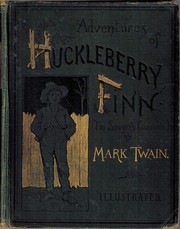
The masterpiece that follows directly from Tom Sawyer but deepens everything — the vernacular narration, the moral seriousness about race and freedom, and the satirical bite that defines Twain at his best.
The Traveler's Eye: Travel Writing
BeginnerUnderstand Twain as a journalist and travel writer — irreverent, observational, and laugh-out-loud funny — and see how travel sharpened his satirical worldview.
▸ Study plan for this stage
Pace: 10–12 weeks total, reading roughly 20–25 pages per day: ~4 weeks for The Innocents Abroad (330+ pages), ~3 weeks for Roughing It (~590 pages, lighter prose), and ~3 weeks for Life on the Mississippi (~450 pages). Allow a buffer week between books for reflection and exercises.
- The Irreverent Narrator: How Twain constructs a comic, skeptical persona — the wide-eyed American abroad or the greenhorn out West — who punctures pretension and myth at every turn
- Satire Through Observation: Twain's technique of letting close, deadpan description do the satirical work, especially in The Innocents Abroad where Old World monuments are measured against tourist hype
- The 'Greenhorn' Arc: In Roughing It, the narrator begins as a naive Easterner and is gradually humbled and educated by the raw West — tracing how experience reshapes voice and worldview
- Journalism as Literature: All three books grew from newspaper dispatches and lectures; understanding how Twain shaped raw reportage into cohesive, artful narratives reveals his craft as an editor of his own experience
- The Mississippi as Character: In Life on the Mississippi, the river is not mere backdrop — it is a living force, a teacher, and a symbol of America's restless, dangerous energy
- Nostalgia vs. Progress: Life on the Mississippi holds the remembered, romanticized river of Twain's piloting days in tension with the industrialized, commercialized river he revisits as a famous author
- American Identity on the Road: Across all three books, travel becomes a lens for defining what is distinctly American — its brashness, its humor, its democratic suspicion of Old World authority and Eastern refinement
- Comic Timing and Tall Tale Tradition: Twain deploys the vernacular tall tale (especially in Roughing It) as a structural and tonal device, rooting literary humor in oral, frontier storytelling
- In The Innocents Abroad, how does Twain use the gap between a site's legendary reputation and its actual appearance to generate both comedy and cultural criticism? Pick two specific scenes as evidence.
- How does the narrator's identity shift across Roughing It — what does he believe about the West at the start, and what has he learned (or lost) by the end? What episodes mark the turning points?
- Life on the Mississippi is split into two distinct halves: the apprenticeship memoir and the return journey. How do these two halves differ in tone, and what does the contrast reveal about Twain's feelings toward change and memory?
- All three books began as journalism or lectures. What traces of that origin can you identify in the prose style — in structure, in address to the reader, in pacing?
- Twain's humor often relies on a 'straight man' — a credulous companion, an overly reverent guidebook, or a pompous local. Find an example of this technique in each of the three books and explain how it works.
- How does travel, in each of these three books, function as a tool of self-discovery or self-definition for the narrator — and what vision of American identity emerges from all three taken together?
- Travel Journal Imitation: After finishing The Innocents Abroad, visit any local landmark or tourist site (or revisit a familiar place with fresh eyes) and write a 400–600 word Twain-style dispatch: lead with the hyped expectation, then deflate it with comic, specific observation. Focus on deadpan understatement.
- Tall Tale Workshop: Roughing It is full of frontier tall tales (the coyote, the Mexican plug horse, Buck Fanshaw's funeral). Write your own 300–400 word tall tale set in a modern context — a traffic jam, a job interview, a camping trip gone wrong — imitating Twain's escalating absurdity and vernacular voice.
- Guidebook vs. Reality Comparison: Choose one destination Twain describes in The Innocents Abroad (e.g., the Sphinx, Venice, the Holy Land). Find a modern travel article or guidebook entry about the same place and write a one-page comparison: What has changed in how we mythologize travel? What hasn't?
- River Map Annotation: While reading Life on the Mississippi, keep a running annotated sketch-map of the river towns and landmarks Twain mentions. Next to each, jot one word capturing his emotional tone (nostalgic, bitter, amused, awed). At the end, look at the map as a whole — what pattern emerges?
- Voice Comparison Essay: Write a 500-word informal essay comparing the narrative 'I' in all three books. How does the persona differ in confidence, naivety, and self-awareness? Use at least one direct quote from each book as evidence.
- Before-and-After Reading Log: Before starting each book, write a paragraph predicting what 'travel' will mean to Twain in that context. After finishing, write a paragraph on whether you were right. Collect all six paragraphs — they will form a useful personal record of how your reading of Twain evolved across the stage.
Next up: Mastering Twain's observational, satirical voice in these travel books — especially his ear for vernacular speech and his instinct for social hypocrisy — lays the essential groundwork for encountering those same powers turned inward on American society in his fiction, where the journey becomes the Mississippi of Huckleberry Finn and the targets shift from tourists and guidebooks to slavery, race,

Twain's first major book and a massive bestseller in his lifetime; his comic deflation of European and Holy Land pretension establishes him as America's great satirist of cultural pomposity.
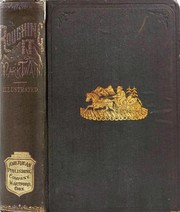
His account of heading West as a young man — mining camps, stagecoaches, Hawaii — reads as a companion to Innocents Abroad and shows how his own American myths are just as ripe for puncturing.
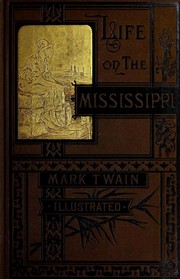
Part memoir, part travel writing, this is Twain's most personal non-fiction: the river is his spiritual home, and this book bridges his journalism and his fiction, directly feeding the world of Huck Finn.
The Satirist at Full Stretch: Mid-Career Fiction
IntermediateSee Twain expand beyond Missouri into historical satire and social comedy, using fantasy and farce to attack hypocrisy, monarchy, and American self-congratulation.
▸ Study plan for this stage
Pace: 5–6 weeks total: Weeks 1–3 cover A Connecticut Yankee in King Arthur's Court (~25–30 pages/day, pausing mid-novel at Hank's "eclipse" scene and again at the Battle of the Sand-Belt for reflection); Weeks 4–5 cover The Prince and the Pauper (~20–25 pages/day, a lighter read that moves quickly); Week
- Anachronistic satire: Twain transplants a 19th-century American industrialist into Arthurian England in Connecticut Yankee to expose the myth of a noble, chivalric past and mock both medieval superstition and Gilded Age arrogance simultaneously
- The unreliable progressive: Hank Morgan presents himself as a liberator but gradually reveals authoritarian, even destructive tendencies — Twain uses him to interrogate whether 'progress' and technology are inherently civilizing forces
- Farce and fantasy as critical vehicles: both novels use impossible premises (time travel, switched identities) not for escapism but as distancing devices that let Twain say things about power and class that realism would make too direct
- Class, costume, and identity: The Prince and the Pauper argues that social rank is entirely constructed — Edward and Tom are interchangeable once their clothes are swapped, indicting a society that mistakes costume for character
- Monarchy and institutional cruelty: both books portray kings and courts as engines of arbitrary violence and pageantry; Twain uses historical England as a safe mirror for critiquing American institutions (slavery's legacy, Gilded Age plutocracy, mob rule)
- The dark turn — Twain's pessimism breaking through: Connecticut Yankee ends in apocalyptic massacre rather than triumph, signaling Twain's deepening despair about human nature and the limits of reform that will define his late work
- Sentimentality vs. irony in tension: The Prince and the Pauper is Twain's most conventionally sentimental novel, yet even here irony undercuts the fairy-tale resolution — justice is accidental, not systemic
- American self-congratulation as a target: Hank Morgan's boosterism parodies the American belief in Yankee ingenuity and manifest destiny, suggesting the nation exports its own brand of imperialism
- In A Connecticut Yankee, Hank Morgan claims to be freeing the people of Camelot, yet the novel ends with him destroying them. How does Twain build the case across the novel that Hank's 'progress' is itself a form of tyranny, and what specific scenes most clearly turn the reader against him?
- The Prince and the Pauper hinges on the idea that identity is purely a product of circumstance and clothing. What does Twain suggest about the English legal and social system by showing that a pauper can rule — and a king can be brutalized — with no one noticing the difference?
- Both novels use a version of 'the outsider who sees clearly': Hank sees through Arthurian pretension, and Tom/Edward see through royal ceremony. How does each outsider perspective function differently, and what are the limits of what each character is allowed to understand?
- Connecticut Yankee is often read as a critique of both medieval romanticism (à la Tennyson and Sir Walter Scott) and Gilded Age capitalism. Find at least two passages that attack each target simultaneously — how does Twain manage to aim in two directions at once?
- How does Twain use humor — farce, wordplay, comic timing — to deliver what are ultimately very dark arguments in both novels? Where does the comedy feel like a shield, and where does it break down entirely?
- By the end of this stage, how has Twain's satirical method evolved beyond the regional, autobiographical humor of his earlier Missouri work? What new tools — historical distance, fantasy, allegory — has he added to his kit?
- Passage annotation exercise (Connecticut Yankee): Select the 'eclipse' scene (Ch. 6) and the 'Battle of the Sand-Belt' (final chapters). Annotate both in detail — mark every moment where Hank's self-image and the narrator's implied judgment diverge. Write a one-page note on how Twain engineers dramatic irony across the whole arc between these two scenes.
- Identity-swap close reading (The Prince and the Pauper): Choose any three scenes where Edward (as pauper) encounters the English legal system. For each, write a paragraph explaining what the scene would mean if read as a comment on 1880s America rather than Tudor England. What is Twain's actual target?
- Comparative villain chart: Create a two-column table listing every institution or type of person Twain attacks in each novel (the Church, knighthood, mob violence, Yankee boosterism, etc.). Note the specific scene, the satirical technique used (farce, irony, hyperbole, understatement), and rate how savage the attack is on a 1–5 scale. What patterns emerge?
- Rewrite a scene: Take the scene in Connecticut Yankee where Hank sets up his 'Man-Factory' (his school and industrial program) and rewrite it from the perspective of a skeptical Arthurian peasant who sees through Hank's benevolence. This forces engagement with Twain's buried critique of the 'civilizing mission.'
- Research and connect: Read a short summary of the Arthurian legend sources Twain was parodying (Malory's Le Morte d'Arthur, which Twain explicitly references) and Tennyson's Idylls of the King. Write a one-page explanation of why Twain found the Victorian romanticization of the Middle Ages politically dangerous — use at least two specific moments from Connecticut Yankee as evidence.
- Tone tracking journal: As you read The Prince and the Pauper, keep a running log of moments where the tone shifts from sentimental/fairy-tale to bitter/ironic. By the end, write a short essay arguing either that the novel's sentimentality undermines its satire, or that Twain uses sentiment strategically to make the satire land harder.
Next up: Mastering Twain's use of historical and fantastical distance in these two novels prepares the reader to recognize how he turns that same unflinching, darkening gaze onto his most personal material — the Mississippi River, race, and American memory — in the late masterworks that follow.

A time-travel satire that skewers both medieval chivalry and Gilded Age industrial progress — funnier and darker than it first appears, and a key bridge to his late pessimism.
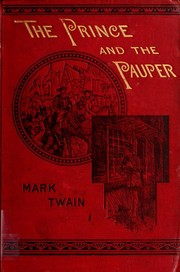
A more accessible historical novel that uses an identity-swap to interrogate class and justice; reading it here shows the range of Twain's moral imagination beyond the Mississippi.
The Dark Turn: Late and Posthumous Work
ExpertConfront the fully disillusioned Twain — grieving, philosophically bleak, and writing for posterity rather than the public — and understand why his late work is considered as important as his early triumphs.
▸ Study plan for this stage
Pace: 8–10 weeks total: Week 1–2 — "The Tragedy of Pudd'nhead Wilson" (~15–20 pages/day, including the paired "Those Extraordinary Twins" foreword and the maxims from "Pudd'nhead Wilson's Calendar"); Weeks 3–5 — "The Man That Corrupted Hadleyburg and Other Stories and Essays" (~12–15 pages/day, reading al
- Determinism and the Moral Sense: Twain's late conviction — crystallized in 'The Mysterious Stranger' and shadowed in 'Pudd'nhead Wilson' — that human beings are machines of heredity and environment, incapable of genuine free will or moral agency.
- Race, Identity, and the Arbitrariness of Social Categories: 'Pudd'nhead Wilson' uses the switched-at-birth plot to expose how racial identity is a legal and social fiction with lethal real-world consequences, not a biological truth.
- The Corruption of Collective Morality: 'The Man That Corrupted Hadleyburg' and companion essays demonstrate Twain's thesis that communities are more morally cowardly and corruptible than individuals, and that reputation is a hollow substitute for virtue.
- Satire as Elegy: In all three works, Twain's satirical mode has shifted from playful to mournful — the jokes are still present but they now serve as indictments rather than entertainments.
- Writing for Posterity: Twain deliberately suppressed or left unfinished works like 'The Mysterious Stranger,' understanding they were too bleak for his contemporary audience — the concept of the 'posthumous Twain' as a distinct literary identity.
- Grief, Loss, and Biographical Context: The deaths of his daughter Susy, his wife Olivia, and financial ruin shadow the late work; understanding the biographical pressure helps explain the escalating nihilism without reducing the work to mere autobiography.
- The Unreliable Cosmos — Satan as Narrator: In 'The Mysterious Stranger,' the figure of Young Satan (Philip Traum) functions as a philosophical mouthpiece who dismantles human pretension; the story's famous 'it was all a dream' ending collapses the boundary between reality and illusion.
- Irony as Structural Principle: Across all three texts, dramatic irony is not a device but the architecture — the reader always knows more than the characters, and that gap is where Twain's moral argument lives.
- In 'Pudd'nhead Wilson,' how does the switching of Tom and Chambers at birth function as a philosophical argument about race, nature, and nurture — and what does the novel's ending suggest about whether 'justice' is actually served?
- What is the precise mechanism of corruption in 'The Man That Corrupted Hadleyburg,' and how does Twain use the town's motto ('Lead Us Not Into Temptation') ironically to indict the relationship between untested virtue and moral collapse?
- How does Young Satan's argument in 'The Mysterious Stranger' — that the Moral Sense is humanity's curse rather than its gift — connect to and deepen the racial and social critiques already present in 'Pudd'nhead Wilson'?
- Across the 14 works in the 'Hadleyburg' collection, which essays or stories most clearly reveal Twain's evolving political and philosophical worldview (e.g., his anti-imperialism, his pessimism about democracy), and how do they contextualize the fiction?
- Why did Twain leave 'The Mysterious Stranger' unfinished and unpublished in his lifetime, and how does the posthumous, editorially assembled nature of the text affect how we should read its nihilistic conclusion?
- How does Pudd'nhead Wilson's Calendar — the chapter-heading maxims — function as a text-within-a-text, and what relationship do the aphorisms bear to the novel's plot and themes?
- Calendar Annotation Project: After finishing 'Pudd'nhead Wilson,' transcribe all of Pudd'nhead Wilson's Calendar maxims and write 2–3 sentences for each explaining how it ironically or directly comments on the chapter it precedes — then identify the three maxims you find most devastating and explain why.
- Corruption Autopsy: For 'The Man That Corrupted Hadleyburg,' draw a step-by-step diagram or flowchart of how the stranger's scheme works on the town. Then write a one-page counter-argument: could any individual in the story have resisted, and if so, how? Use textual evidence.
- Comparative Close Reading — Three Endings: Write a 600–800 word essay comparing the endings of all three works ('Pudd'nhead Wilson,' 'Hadleyburg,' and 'The Mysterious Stranger'). Argue whether Twain's conclusions are nihilistic, darkly hopeful, or something more ambiguous — and whether your answer changes across the three.
- Essay Mapping in the 'Hadleyburg' Collection: Choose three of the 14 non-fiction essays or lesser-known stories from the collection and write a one-paragraph précis of each. Then write a synthesis paragraph explaining what these three, taken together, reveal about Twain's late-career worldview that the famous fiction alone does not.
- The Satan Monologue: Select the single speech or passage by Young Satan in 'The Mysterious Stranger' that you find most philosophically forceful. Rewrite it in your own words as a modern argument (no archaic setting), then write a one-paragraph rebuttal from the perspective of a character from 'Hadleyburg' or 'Pudd'nhead Wilson.'
- Biographical Pressure Map: Create a one-page timeline placing key events from Twain's life (financial bankruptcy, Susy's death, Olivia's death, his exile abroad) alongside the composition dates of the three works in this stage. Annotate the timeline with specific passages from each book that seem to bear the direct weight of those events.
Next up: Mastering the late Twain's philosophical pessimism, his critique of collective morality, and his self-conscious writing-for-posterity prepares the reader to engage critically with Twain scholarship and biography — understanding not just what he wrote, but why the full shape of his career was suppressed, rediscovered, and continually reinterpreted by literary history.
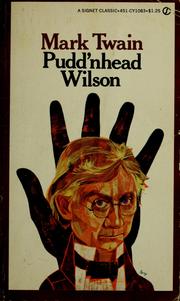
A disturbing novel about race, identity, and switched babies in the antebellum South — the humor is still present but the moral darkness is unmistakable, marking the turn toward his final phase.
![The Man that Corrupted Hadleyburg and Other Stories and Essays [14 works]](https://covers.openlibrary.org/b/id/8236375-M.jpg)
This devastating short story (often collected on its own) is Twain's most surgical attack on human greed and self-deception; it reads as a concentrated statement of his late philosophy.
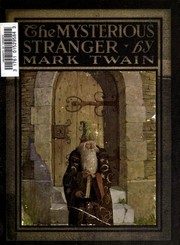
Left unfinished and published posthumously, this is Twain's bleakest and most philosophical work — a nihilistic fable that reframes everything you've read and reveals the full depth of his despair and genius.
Discussion
Keep reading
Paths that share books, cover the same subject, or open a related topic.