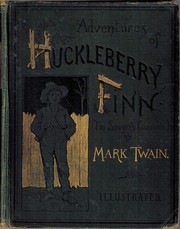
Start with Adventures of Huckleberry Finn. The standard advice is to read The Adventures of Tom Sawyer first because it was published first and Huck appears in it, but that gets the relationship backwards. Tom Sawyer is a nostalgic boys' book, deliberately minor, written for a family audience. Huckleberry Finn is the novel Twain is actually important for, and it requires nothing from its predecessor beyond a sentence of setup that the book itself supplies.
Two warnings before you open it, because they are the substance of every argument about this book. First, the racial language is relentless and the novel has been challenged on those grounds for over a century; readers disagree sharply about whether the satire earns it, and that disagreement is genuine rather than settled. Second, the last eleven chapters are widely considered a failure — once Tom Sawyer reappears at the Phelps farm and turns a real man's freedom into an elaborate game, the moral seriousness of the raft chapters collapses into farce. Hemingway told readers to stop before that section. That is defensible advice, though the ending is also the thing critics argue about most productively.
The travel books, which are underrated
Twain made his living as a humorist and a lecturer long before he was a novelist, and the travel books are where that voice is purest.
The Innocents Abroad is the one to read: a comic demolition of American tourists in Europe and the Holy Land, and still one of the funniest travel books in the language. Roughing It covers his years in Nevada and California during the silver rush, and is looser and more anecdotal. Life on the Mississippi is the essential companion to Huckleberry Finn — the first half is a superb memoir of learning to pilot a steamboat, and the second half, written years later on a return trip, is noticeably more mechanical. Read the first half properly and skim the rest without guilt.
The historical and satirical novels
A Connecticut Yankee in King Arthur's Court is the strangest major Twain and the most argued-over. It begins as broad comedy about a nineteenth-century mechanic outsmarting Camelot and ends in industrialised slaughter. The tonal shift is not a mistake; it is where the late, darker Twain first becomes visible.
The Prince and the Pauper is the slightest of the novels — pleasant, plotty, and safe to skip unless you want everything. The Tragedy of Pudd'nhead Wilson is the opposite: a short, bitter courtroom novel built on a swapped-babies premise that lets Twain say things about race and inheritance that he could not say directly. It is uneven, and it is the most surprising book on this list.
Late Twain, and where it gets dark
Twain's final decades were shaped by bankruptcy and the deaths of his wife and two daughters, and the work turns cold. The Man that Corrupted Hadleyburg is the great late story — a town famous for its honesty, methodically ruined by a stranger with a sack of gold — and it is the cleanest thing he ever built.
The Mysterious Stranger comes with a real caveat. The version circulated for most of the twentieth century was assembled after his death by his literary executor and a publisher from unfinished manuscripts, including an ending taken from a different draft. Scholars regard that text as an editorial construction rather than Twain's book. Read it for the famous closing pages, but know what you are reading.
Where to stop
If you want only the essentials: Huckleberry Finn, The Innocents Abroad, the first half of Life on the Mississippi, and The Man that Corrupted Hadleyburg. That is the writer in full.
More American literature reading paths are on Discover.
Follow the full ordered path here: Mark Twain Reading Order: Where to Start.
Ready to learn something deeply?
Build a reading path — free