Marilynne Robinson Reading Order: Where to Start
This curriculum moves through Marilynne Robinson's work in a sequence that lets each book deepen your reading of the next: beginning with her standalone novel Housekeeping to establish her prose voice and themes, then moving through the Gilead novels in their internal chronological/publication order, and finally arriving at her essay collections where her theological and philosophical thinking is laid bare. Because the learner starts at an intermediate level, no scaffolding primers are needed — the path goes straight into Robinson's own words, building intimacy with her style before tackling her most demanding ideas.
First Voice: The Standalone Novel
IntermediateAbsorb Robinson's foundational prose style — her lyrical sentences, her preoccupation with memory, loss, and the sacred in the ordinary — before entering the Gilead world.
▸ Study plan for this stage
Pace: 3–4 weeks, ~15–20 pages/day — Housekeeping rewards slow, ruminative reading; resist the urge to rush. Read in long, uninterrupted sittings when possible (45–60 min) to let the prose rhythm accumulate. Plan one full re-read of a chosen chapter in week 3.
- Lyrical prose and the sentence as unit of meaning: Robinson builds meaning through long, syntactically complex sentences that enact the very drift and meditation they describe — notice how the rhythm slows or accelerates with emotional weight.
- Memory as architecture: In Housekeeping, the past is not backdrop but living structure. Ruth's narration is an act of reconstruction, and the novel asks whether the past can ever be truly recovered or only endlessly imagined.
- Transience vs. permanence — the novel's central tension: The lake, the house, the town of Fingerbone all embody the conflict between rootedness and drift. Characters are sorted by which pull they obey.
- The sacred in the ordinary: Robinson locates transcendence not in churches but in light on water, a flooded kitchen, a train wreck at the bottom of a lake. Pay attention to how the mundane is rendered luminous.
- Female inheritance and unconventional kinship: The novel traces a matrilineal line of women defined by absence and wandering. 'Family' is reimagined outside patriarchal or nuclear norms.
- Sylvie as embodiment of 'transience': Sylvie's housekeeping — her hoarding of cans, her tolerance of leaves indoors, her nighttime absences — is a philosophy, not neglect. Read her behavior as a coherent worldview.
- Loss and grief as generative forces: Rather than obstacles to overcome, loss and grief in Housekeeping are the very conditions that produce interiority, imagination, and the novel's distinctive voice.
- The unreliable/limited narrator: Ruth narrates events she could not have witnessed and imagines interior lives she cannot know. Track the moments where her narration exceeds her possible knowledge — this is a key Robinson technique.
- How does Robinson use the landscape of Fingerbone — particularly the lake — as a symbolic and structural element, and what does it represent for Ruth and Sylvie respectively?
- In what ways does Sylvie's style of 'housekeeping' constitute a coherent philosophy of transience? Use at least two specific scenes from the novel to support your answer.
- Ruth's narration frequently exceeds what she could realistically know. Identify two or three such moments: what effect does this have on the reader's trust in her voice, and why might Robinson have made this choice?
- How does Robinson render the ordinary sacred? Choose one passage of close description (light, water, domestic space) and analyze how its language achieves a sense of the transcendent.
- Housekeeping is often described as a novel about female inheritance. Trace the line from the grandmother through Helen to Ruth and Lucille — what is being inherited, and what does each woman do with it?
- Lucille and Ruth respond to Sylvie's influence in opposite ways. What does this divergence reveal about the novel's central tension between rootedness and drift, and which resolution does the novel ultimately endorse — or does it?
- Sentence dissection journal: Each reading session, copy out one sentence or paragraph that stopped you. Write a short note (3–5 sentences) on what the syntax is doing — where it pauses, what it accumulates, how it earns its ending. Collect 15–20 of these by the end of the novel.
- The 'sacred ordinary' inventory: As you read, keep a running list of every moment Robinson transforms a mundane object or event (water, light, canned goods, a flooded floor) into something numinous. After finishing, write a one-page reflection: what techniques (diction, rhythm, imagery, juxtaposition) does she consistently use?
- Character philosophy statement: Write a one-paragraph 'manifesto' from Sylvie's point of view — in her voice, not Robinson's — articulating her philosophy of housekeeping and transience. Then write a counter-manifesto from Lucille's point of view. Compare them.
- Narrator reliability map: Go back through the novel and flag 4–5 passages where Ruth narrates something she could not have directly witnessed. For each, write one sentence explaining what imaginative or emotional work the passage is doing in place of factual reporting.
- Imitation exercise: Choose a landscape or domestic space you know well and write one page in Robinson's style — long, meditative sentences, present-tense description layered with memory, at least one moment of the ordinary becoming sacred. Read it aloud to test the rhythm.
- Re-read a key chapter (suggested: the chapter of the flood, or the final chapter) after finishing the novel. Write a one-page close reading focused solely on how Robinson handles time — what is past, what is present, and how the prose moves between them.
Next up: Housekeeping establishes Robinson's core stylistic and thematic DNA — lyrical interiority, the sacred ordinary, memory as the medium of consciousness — so that when the reader enters the Gilead novels, they will immediately recognize these as a coherent artistic vision rather than encountering them as unfamiliar, and can focus on how Robinson deepens and complicates them through theology, communit
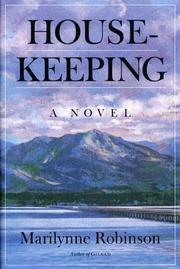
Robinson's debut novel establishes every signature of her writing: the luminous, meditative prose, the Pacific Northwest landscape as spiritual geography, and the tension between rootedness and transience. Reading it first gives you the stylistic and thematic vocabulary the Gilead novels assume.
The Gilead Novels: The Heart of the Work
IntermediateFollow the interlocking stories of Gilead, Iowa across generations and perspectives, understanding how Robinson builds a novelistic world through voice, theology, and moral attention.
▸ Study plan for this stage
Pace: 16–18 weeks total; roughly 3–4 weeks per novel at ~20–25 pages/day. Suggested pacing: Gilead (weeks 1–4), Home (weeks 5–8), Lila (weeks 9–12), Jack (weeks 13–16), with weeks 17–18 reserved for cross-novel reflection and synthesis work.
- Epistolary voice and mortality: Gilead is structured as a dying father's letter to his young son, making narrative voice inseparable from theological urgency and the awareness of time running out.
- Polyphony and perspective: Home retells the events of Gilead from the Boughton household's point of view, teaching the reader how the same world looks radically different depending on who is watching and what they carry.
- Typology and the prodigal son: The story of Jack Boughton across all four novels consciously echoes the parable of the prodigal son, and Robinson uses this biblical archetype to interrogate grace, predestination, and whether a person can change.
- Lila's outsider theology: Lila brings a perspective formed by poverty, displacement, and survival rather than inherited faith, forcing the Calvinist world of Gilead to encounter its own limits through her questions.
- Calvinist inheritance and doubt: Robinson engages seriously with Reformed theology — election, grace, predestination — not as settled doctrine but as living, contested inheritance that her characters wrestle with across generations.
- Moral attention as novelistic method: Robinson's prose style enacts a form of ethical seeing; close, slow, non-judgmental attention to ordinary life is itself a moral and spiritual act in her fictional world.
- The town of Gilead as novelistic world: Across the four novels, Gilead, Iowa accumulates history, memory, and meaning — functioning less as a setting than as a shared imaginative space shaped by race, faith, family, and the American Midwest.
- Interracial love and social impossibility in Jack: Jack and Della's relationship in 1950s America places Robinson's theological themes — grace, acceptance, the beloved community — in direct collision with legal and social segregation, grounding the abstract in the political.
- In Gilead, John Ames writes to a son who will read the letter only after his death — how does this temporal gap shape the novel's tone, its theology, and the reader's relationship to Ames's voice?
- Home covers much of the same chronological ground as Gilead but centers Glory and Jack Boughton. What does Robinson gain — and what does the reader gain — by refusing to privilege a single authoritative perspective on these events?
- Lila's past life on the road with Doll is rendered in fragmented, non-linear memory. How does this narrative structure reflect Lila's psychology, and how does it challenge the ordered, text-based faith of the Ames and Boughton households?
- Jack Boughton is described as a source of grief and bewilderment by nearly every character who loves him. By the time you have read all four novels, do you feel Robinson has given you an explanation for Jack — or has she deliberately withheld one, and why might that matter?
- How does Robinson use the specific theology of Calvinism — particularly the doctrines of election and grace — as both a source of comfort and a source of cruelty across the four novels?
- By the end of Jack, Robinson has placed her most theologically charged themes (grace, the beloved community, the possibility of redemption) inside a story about an interracial couple in a segregated city. What does this juxtaposition argue about the relationship between private faith and public justice?
- Parallel passage journaling: Each time you finish a novel, find one scene or event that also appears (directly or by reference) in another novel in the sequence. Write a 300–400 word comparison of how Robinson renders it differently — what details shift, what is omitted, what the new perspective reveals.
- Theological glossary: As you read, keep a running glossary of Calvinist and broader theological terms that appear (grace, election, predestination, sanctification, the covenant, typology). For each term, note the page where it appears, who uses it, and whether the character treats it as comfort, burden, or open question.
- Voice imitation exercise: After finishing Gilead, write one page in the voice of John Ames — a letter to his son about a mundane moment (a meal, a walk, a piece of music). Then, after finishing Home, write the same moment from Glory Boughton's third-person perspective. Compare the two drafts: what does each voice allow and foreclose?
- Character timeline across all four novels: Build a single master timeline of Jack Boughton's life as reconstructed from all four books. Note which novel supplies which information, where the accounts agree, and where they are silent or contradictory. Use this as the basis for a short essay on what Robinson's withholding of information about Jack achieves.
- Lila's questions as a reading lens: Make a list of every explicit theological or moral question Lila asks (aloud or in her interior monologue) across her novel. After finishing Jack, return to the list and ask which, if any, of her questions the sequence as a whole has answered — and which it has left open.
- Mapping Gilead, Iowa: Draw or diagram the physical and social geography of Gilead as it accumulates across all four novels — churches, houses, families, racial boundaries, histories. Annotate the map with events from each book. Reflect in a short paragraph on what the town 'means' by the end of Jack that it did not yet mean at the end of Gilead.
Next up: Mastering how Robinson builds meaning through voice, theology, and interlocking perspectives in the Gilead novels equips the reader to engage her essays and nonfiction — where the same preoccupations with Calvinist inheritance, American history, and the moral imagination are argued directly rather than dramatized through character.
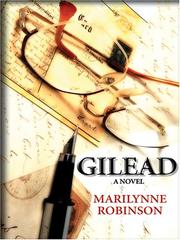
The first and central novel, written as a dying Congregationalist minister's letter to his young son. Its epistolary intimacy and Calvinist meditation on grace set the moral and spiritual coordinates for everything that follows — read it first so the other novels resonate as expansions of its world.
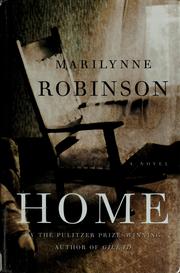
A companion novel to Gilead, retelling the same period from the perspective of the Boughton family next door. Reading it immediately after Gilead reveals how Robinson uses multiple viewpoints to complicate and deepen a single moral situation.
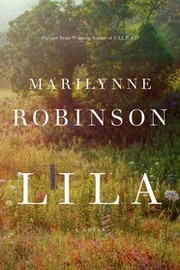
The third Gilead novel centers on the minister's young wife, whose itinerant, impoverished past stands in stark contrast to Gilead's settled world. It rewards readers already grounded in the community's values, making its outsider perspective all the more striking.

The most recent Gilead novel follows the prodigal son of the Boughton family in St. Louis, exploring race, grace, and predestination. Having read the earlier novels, you will feel the full weight of Jack's history and Robinson's most politically engaged storytelling.
The Essays: Theology, Democracy, and the Life of the Mind
ExpertEncounter Robinson as a public intellectual — understanding the Calvinist, humanist, and American democratic ideas that underpin all her fiction, and seeing how her essays and novels form a single, unified project.
▸ Study plan for this stage
Pace: 10–12 weeks total: ~3–4 weeks per book at roughly 20–25 pages/day. The Death of Adam is the densest and most historically argued — give it the most time (4 weeks). Absence of Mind is shorter and more philosophical — 3 weeks. When I Was a Child I Read Books is the most personal and politically urgent
- Robinson's rehabilitation of Calvinism: her argument in The Death of Adam that Calvin and his intellectual legacy have been systematically misread, caricatured, and stripped of their humanist content
- The 'paramodern' critique: Robinson's sustained argument across all three books that modernity has impoverished itself by discarding the religious, moral, and aesthetic frameworks it inherited from the Reformation and earlier Christian humanism
- The self and consciousness as sacred: the central thesis of Absence of Mind — that reductive scientific accounts of the human mind (Freud, Dawkins, E.O. Wilson) fail to account for the felt reality of subjectivity, and that this failure is not a scientific achievement but a philosophical error
- Democracy as a spiritual and moral project: Robinson's reading of American democracy — especially through Lincoln, Whitman, and the Puritan founders — as inseparable from a theology of human dignity rooted in the idea that every person is made in the image of God (imago Dei)
- The role of literature and the humanities in sustaining democratic culture: the argument in When I Was a Child I Read Books that reading, imagination, and the liberal arts are not luxuries but civic and moral necessities
- The unity of Robinson's project: the essays and the fiction share a single animating concern — the defense of the individual human soul against reductive, utilitarian, and ideological forces that would diminish it
- Fear as a cultural pathology: Robinson's diagnosis in When I Was a Child I Read Books that contemporary American public life is governed by fear, and her argument that this fear is both a moral failure and a political danger
- The relationship between beauty, attention, and grace: Robinson's insistence, running through all three books, that the capacity to attend carefully to the world — to find it beautiful and strange — is itself a form of theological and ethical seriousness
- After reading The Death of Adam, can you articulate Robinson's core argument about Calvin — not just what she defends, but why she thinks the misreading of Calvin matters for contemporary culture and politics?
- Absence of Mind engages directly with figures like Freud and Dawkins. What is Robinson's specific philosophical objection to their accounts of the mind, and how does she distinguish between the legitimate claims of science and what she calls 'parascientific' ideology?
- How does Robinson define and use the concept of the 'soul' across all three books — is it a strictly theological term, a humanist one, or something else? How does her usage evolve or remain consistent?
- In When I Was a Child I Read Books, Robinson argues that fear has become the dominant mode of American civic life. What are the sources of this fear according to her, and what does she propose as its antidote?
- How do the essays illuminate the fiction you have read in earlier stages? Can you identify at least three specific moments in Gilead, Home, or Housekeeping that are deepened or reframed by arguments Robinson makes explicitly in the essays?
- Robinson is both a Calvinist and a passionate defender of American democratic idealism. How does she reconcile these two commitments — and where, if anywhere, does the tension between them remain unresolved in these three books?
- Close-reading journal: For each essay in The Death of Adam, write a one-paragraph précis of the central argument and a one-sentence statement of what Robinson wants the reader to unlearn. This trains you to track her revisionist, counter-intuitive rhetorical method.
- Philosophical dialogue exercise: After finishing Absence of Mind, write a 1–2 page imagined dialogue between Robinson and one of her interlocutors (Freud, Dawkins, or E.O. Wilson) in which you steelman both sides. This forces you to test whether her objections are as decisive as she presents them.
- Cross-book concept map: Create a visual map (on paper or digitally) linking the key terms — soul, grace, Calvinism, democracy, fear, consciousness, imagination — across all three books, noting where the same concept appears in different argumentative contexts. Draw lines to corresponding moments in her fiction.
- Annotated reading of one primary source Robinson cites: Choose one text Robinson engages with substantially (e.g., Calvin's Institutes, a Lincoln speech, or a Whitman poem) and read a short excerpt alongside Robinson's discussion of it. Write a paragraph assessing whether her reading is persuasive.
- Essay draft — 'Robinson's Unified Project': After completing all three books, write a 600–800 word argumentative essay answering the question: 'Do the essays and the fiction form a single unified project, or does the fiction exceed and complicate the essays' arguments?' Use specific evidence from all three books in this stage.
- Curated re-reading: Return to one chapter from each book that you found most difficult or most resistant to your own views. Annotate it a second time specifically looking for the moves Robinson makes to preempt objections — this builds awareness of her rhetorical and argumentative architecture.
Next up: By mapping the full theological, democratic, and humanist architecture of Robinson's thought through the essays, the reader is now equipped to return to the later novels — Lila and Jack — with the conceptual vocabulary to read them not just as stories but as philosophical and theological arguments in narrative form.
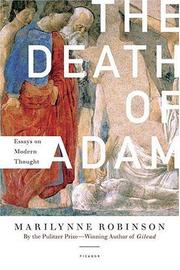
Her first essay collection rehabilitates Calvinist thought and critiques reductive modern narratives about history and human nature. Reading it after the novels reveals the explicit intellectual scaffolding behind Gilead's theology.
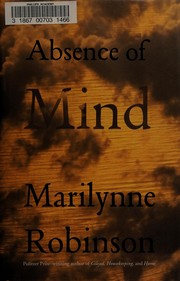
A concentrated argument against scientific reductionism and in defense of the interior life of consciousness. It deepens the philosophical stakes of her fiction and is best read once you are fully inside her way of thinking.
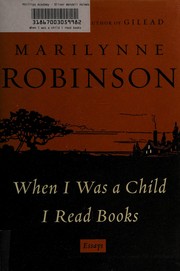
Essays on American identity, literature, and the Puritan tradition that shaped Robinson's moral imagination. This collection ties her fiction, theology, and politics together most accessibly, making it a fitting capstone to the whole curriculum.
Discussion
Keep reading
Paths that share books, cover the same subject, or open a related topic.