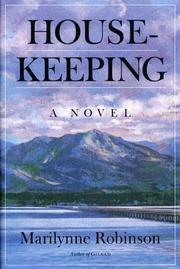
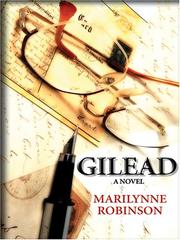
Start with Gilead. It is a dying Congregationalist minister writing a letter to his young son, it has almost no plot, and it is the book that makes the other three legible. The obvious alternative is Housekeeping, her 1980 debut, which came twenty-four years earlier and is a genuinely great novel — but it is unconnected to the quartet, and its cold, water-logged, Idaho register gives a misleading impression of what Robinson mostly writes.
The reason to begin with Gilead rather than jump around is that all four quartet novels tell the same few months from different vantage points. Whichever one you read first becomes the fixed point the others revolve around, and Gilead is the one designed to be the fixed point: John Ames sees the least and understands the most, so his account leaves exactly the right gaps for the later books to fill.
The Gilead quartet, in order
Read Gilead, then Home, then Lila, then Jack. Publication order is chronological in terms of composition, and it is the sequence Robinson wrote for.
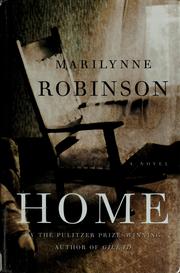
Home is where readers get thrown. It retells almost the same period from the Boughton house across town, following Glory and her prodigal brother Jack. Almost nothing new happens in plot terms. If you read it expecting a sequel it will feel static; read it as the same events seen from inside the family that Ames only observes from outside, and it becomes the most painful book of the four. Many readers name it the best.
Lila goes backwards, to the drifter who becomes Ames's wife, and it is the most narratively conventional of the quartet — the one to recommend to someone who found Gilead too static. Jack moves to St. Louis and to the interracial marriage that the earlier books circle without entering. It is the most divisive, and the case against it is fair: its long opening in a locked cemetery is slow even by Robinson's standards.
Housekeeping, and where it belongs
Read Housekeeping whenever you like, but read it. It is a shorter, stranger, more physically vivid book than anything in the quartet — a story of two sisters and an itinerant aunt in a lakeside town, written in prose that keeps threatening to dissolve into water imagery. Slotting it after Gilead works well, because the contrast shows how much Robinson changed.
The essays
Robinson's nonfiction is not decorative. The Death of Adam is the essential one: essays defending Calvin, attacking what she sees as a cheapened modern account of the self, and arguing against the reflex to explain human beings in purely economic terms. It is combative, sometimes overstated, and it explains what the novels are arguing for.
Absence of mind is her Terry Lectures against what she calls parascientific dismissals of the inner life — an argument several readers find more assertive than demonstrated, and worth reading with that in mind. When I was a child I read books is the gentlest of the three and the best on American history and the vocation of reading.
Where to stop, and what to expect
Nothing here is padded, so there is no slog to warn about, but there is a real tonal warning: Robinson writes slowly and undramatically about grace, forgiveness and old religious arguments. If two hundred pages of a minister thinking about light on a wall sounds like an ordeal, no reading order will fix that.
Stopping after Gilead is entirely legitimate — it stands alone completely. Stopping after Home is the most common natural exit. Jack is best read only if the other three have already earned your patience.
More slow, character-driven American fiction paths are on Discover.
Follow the full ordered path here: Marilynne Robinson Reading Order: Where to Start.