Lutheranism: the best books to read, in order
Lutheranism is easier to read about than most confessional traditions, because it has an unusually clear centre: one man's argument about how a person is made right with God, and one book of agreed documents that defines what the church built on that argument holds. This path works outward from both. It begins with Luther the historical figure — the biography everyone starts with, the major modern life, and the printing revolution that made him possible — then puts you in his own prose, which is blunt, funny and frequently offensive and which no summary conveys. From there it moves to the confessional documents and the theological structure that supports them, and finishes with the church across five centuries, including a twentieth-century Lutheran who tested the tradition's own doctrine of secular authority to destruction.
The man and the moment
BeginnerKnow the biography, the 1517 to 1546 chronology, and why the Reformation succeeded in Germany when earlier reform movements had failed
▸ Study plan for this stage
Pace: Six weeks for 336, 592, 380 and 392 pages, in this order. Roland Bainton's Here I Stand is fast narrative and takes a week; Lyndal Roper's Martin Luther is the long modern scholarly life and needs three. Our catalogue displays Roper's under the bare title Martin Luther and Heiko Oberman's under the
- The 1517 to 1546 chronology: the indulgence controversy, Leipzig, Worms, the Wartburg, the Peasants' War, the confessional settlement
- Why the Reformation succeeded in Germany when earlier reform movements were suppressed
- Bainton's Luther as a crisis-driven hero, and what a 1950s Protestant biography takes for granted
- Roper's psychological and bodily reading, and her direct treatment of the antisemitism of the late writings
- Oberman's reorienting argument that Luther makes sense only as a late medieval man living in expectation of the end
- Pettegree's material explanation: the Wittenberg printing trade, the pamphlet as a form, and Luther learning to write for it
- Luther's position in the Peasants' War of 1525 and what it shows about the two-kingdoms doctrine in practice
- What did the Ninety-Five Theses actually object to, and why did that particular objection spread?
- Where does Bainton's narrative warmth shape the story, and what does Roper correct?
- What is Oberman's evidence that Luther's frame was apocalyptic rather than modern?
- How much of the Reformation's spread does Pettegree attribute to printing, and what would the counterfactual be?
- What did Luther write about the Jews late in life, and how does each of these biographers handle it?
- Which of the three biographies would you now recommend first, and to whom?
- Build a single chronology from 1517 to 1546 as you read Bainton, then annotate it with Roper's and Oberman's corrections rather than starting again.
- Take Pettegree's account of one pamphlet's print run and distribution and set it against the theological account of the same episode in Bainton — the two explanations of the same event are the point.
- Read one page of Luther's late writing on the Jews as Roper quotes it, and write down how each of the three biographers frames it; do not skip this because the biographies differ most here.
Next up: Three biographies have told you what Luther argued; the next stage puts you in his own prose, which no summary conveys.
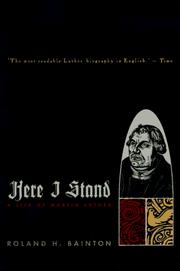
The 1950 biography that has introduced Luther to more English readers than any other book, and still the best first read: vivid, fast, and organised around the crises. Start here even though the scholarship has moved on — the later books are much easier once you have Bainton's narrative.
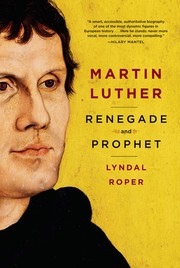
The major modern life, by a historian of early-modern Germany who reads Luther psychologically and does not flinch from the antisemitism of his late writings. Our catalogue displays it as simply Martin Luther. Read it second, as the correction to Bainton's warmth.

Oberman's argument, catalogued under the bare title Luther, is that Luther makes no sense at all as an early modern man and only makes sense as a late medieval one living in expectation of the end. The most intellectually reorienting of the three biographies; read it third.
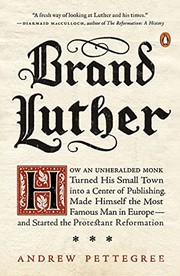
The material explanation the theological books leave out: how the printing trade in Wittenberg turned a university dispute into a mass movement, and how Luther learned to write for the pamphlet. Closes the stage by explaining the mechanism.
Luther in his own words
IntermediateRead the primary texts on justification by faith, the bondage of the will and the two kingdoms, and be able to state the doctrines from the source rather than a summary
▸ Study plan for this stage
Pace: Five weeks. The Freedom of a Christian is 102 pages in our catalogue and the treatise itself is about thirty — read it in a sitting and read it first, since Luther himself recommended it to people who wanted the core. The Lull and Russell anthology, Martin Luther's Basic Theological Writings, has no
- Justification by faith stated in Luther's own terms, from The Freedom of a Christian's central paradox
- The bondage of the will: Luther's 1525 reply to Erasmus and the book he considered his most important
- Two kingdoms — the temporal and the spiritual — as set out in the treatise on secular authority
- The Ninety-Five Theses and the Heidelberg Disputation read as documents rather than as landmarks
- The Small Catechism as the form in which most Lutherans have actually encountered the tradition
- The difference between Luther arguing and Luther teaching, visible between the Bondage of the Will and the catechism
- Reading a polemic as a source: what the invective tells you about the stakes as he understood them
- State the paradox at the centre of The Freedom of a Christian in one sentence, in Luther's terms.
- What is Erasmus's position on free will, and what precisely does Luther deny?
- How do the two kingdoms divide authority, and what does the division forbid each side to do?
- What does the Small Catechism assume about who is teaching and who is learning?
- Where in these texts does the doctrine of justification do work that the later systematic accounts will have to tidy up?
- Read The Freedom of a Christian in one sitting, then write its argument in five sentences; if you cannot, reread it, because everything in the next two stages depends on it.
- Read Erasmus's On Free Will, or a good summary of it, before The Bondage of the Will, and mark where Luther is answering Erasmus and where he is changing the subject.
- Take the Small Catechism's explanation of one commandment and set it beside the corresponding passage in one of the 1520 treatises; the compression is the skill worth noticing.
- Use the Lull and Russell anthology selectively — the Heidelberg Disputation, the treatise on secular authority and the Ninety-Five Theses — rather than reading it through.
Next up: Luther in scattered treatises is not yet a church, and the confessional documents are where his arguments were turned into what a Lutheran congregation agrees to hold.
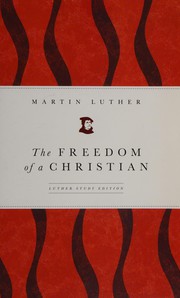
The best single entry into Luther's own writing — about thirty pages, from 1520, containing the whole of his teaching on faith and works in one paradox. Read this before anything longer; it is the treatise he himself recommended to people who wanted the core.

The standard one-volume anthology, edited by Lull and Russell, gathering the Ninety-Five Theses, the Heidelberg Disputation, the treatises on secular authority and the great 1520 pamphlets in one place. This is the book to own; work through it selectively rather than front to back.

Luther's 1525 reply to Erasmus on free will, which he considered his most important book. Long, ferocious, and the place where the doctrine of justification is pushed to its hardest conclusion. Our catalogue holds it under the older title Martin Luther on the Bondage of the Will; read it after the anthology.
A few dozen pages written for parents to teach children, and the text through which most Lutherans have actually encountered the tradition. Read it here, immediately before the confessional documents, because it is the compressed form of everything they say at length.
The confessions and the theology
IntermediateRead the documents that define what a Lutheran church confesses, and the two systematic accounts of the theology holding them together
▸ Study plan for this stage
Pace: Five to six weeks. The Book of Concord in Kolb and Wengert's translation gathers the Augsburg Confession and its Apology, the Smalcald Articles, both catechisms and the Formula of Concord in one substantial volume — our catalogue's page count for it is plainly wrong, so judge the length from the boo
- The Augsburg Confession of 1530 as the defining statement of what a Lutheran church confesses
- The Apology as the argued defence of that confession, and why it is longer than the confession itself
- The Formula of Concord as the settlement of disputes among Luther's own successors after his death
- What a confessional document is for: a boundary of agreement rather than a systematic theology
- Althaus's doctrinal rearrangement of Luther's scattered occasional writings, and what that gains and flattens
- The theology of the cross: God known in suffering and weakness rather than in glory, and what it rejects
- The distinction between law and gospel as the interpretive key the confessions assume
- Which articles of the Augsburg Confession were presented as agreed with Rome, and which as disputed?
- What questions did the Formula of Concord have to settle, and what does that tell you about the generation after Luther?
- How does Althaus organise Luther, and what does his arrangement smooth over?
- What does the theology of the cross deny, and about which alternative theology?
- How do law and gospel function together in these documents, and what goes wrong if either is dropped?
- Read the Augsburg Confession straight through in one sitting and mark each article as doctrinal or as a matter of practice; the proportion is the confession's actual argument.
- Take one doctrine — justification is the obvious choice — and trace it through The Freedom of a Christian, the Small Catechism, the Augsburg Confession and Althaus's chapter, noting what changes at each step.
- Use McGrath to locate the theology of the cross in the Heidelberg Disputation you read in the last stage, and mark the theses he rests it on.
Next up: The confessions define what the church holds; the last stage follows the institution that held them across five centuries and three continents.
The confessional documents of the Lutheran church in one volume — the Augsburg Confession and its Apology, the Smalcald Articles, both catechisms and the Formula of Concord. The Kolb and Wengert translation from 2000 is the current scholarly standard; the older Tappert edition of 1959 is also in our catalogue and still widely cited.

The classic systematic presentation of Luther's thought, arranged by doctrine rather than chronology, which is exactly what you need after reading him in scattered treatises. Read it directly after the Book of Concord to see how the pieces fit.
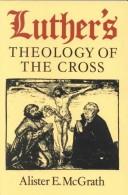
A focused study of the single idea — that God is known in suffering and weakness rather than in glory — that most distinguishes Luther from the scholastic tradition he came out of. Placed last in this stage because it presupposes the doctrine of justification you have now read three ways.
The church that followed
IntermediateTrace Lutheranism from Wittenberg through Scandinavia, Germany and America, and see the tradition tested by a twentieth-century crisis of its own doctrine of authority
▸ Study plan for this stage
Pace: Four to five weeks for 350, 299 and 319 pages, in this order. Eric Gritsch's A History of Lutheranism is the map and should be read first here. Steven Paulson's Lutheran Theology is a contemporary systematic theology written from inside the tradition and deliberately combative about it, and it assum
- The confessional consolidation, Lutheran Orthodoxy and the Pietist reaction as the movement's first three centuries
- The Scandinavian state churches and the very different American synodical pattern of immigrant Lutheranism
- Lutheranism as an institution rather than an idea, and where the two diverge
- Paulson's contemporary restatement, and what present-day Lutherans think is currently at stake
- Cheap grace as Bonhoeffer's charge, and against which reading of Luther it is aimed
- The two-kingdoms doctrine under a totalitarian state, and the German church struggle of the 1930s
- That Bonhoeffer's case is an internal criticism, made from inside the confession rather than against it
- What is the sequence from Orthodoxy through Pietism to the modern churches, and what drove each turn?
- Why did American Lutheranism organise into competing synods rather than a single church?
- What does Paulson argue is misunderstood about justification today, and by whom?
- What does Bonhoeffer mean by cheap grace, and how does he distinguish it from Luther's own teaching?
- How does the two-kingdoms doctrine constrain a church under a state it judges criminal, and what did Bonhoeffer conclude?
- After the whole path, what is the single argument that makes a church Lutheran rather than generically Protestant?
- Draw the institutional map from Gritsch — Germany, Scandinavia, North America — with dates, and mark where each branch's confessional commitment was contested.
- Set Paulson's account of justification beside Althaus's from the last stage and list where a contemporary systematician differs from a mid-century one.
- Read Bonhoeffer's opening chapter on cheap grace directly after rereading The Freedom of a Christian, and write out whether the charge lands against Luther or against Luther's readers.
- Trace the two-kingdoms doctrine from Luther's treatise on secular authority through the Augsburg Confession to Bonhoeffer, in three paragraphs; that line is the path's real argument.
Next up: You have the man, his own prose, the documents his church confesses and five centuries of the institution built on them — enough to read any Lutheran or anti-Lutheran argument and place it.

The standard one-volume history of the movement as an institution rather than an idea: the confessional consolidation, Pietism, Orthodoxy, the Scandinavian state churches and the American synods. Read it first here, for the map.

A contemporary systematic theology written from inside the tradition and deliberately combative about it, which makes it the liveliest way to see what present-day Lutherans think is at stake. It assumes the Book of Concord, so it belongs at this point and not earlier.

A Lutheran pastor executed by the Nazi state, writing on cheap grace and what following Christ actually costs. Read it last: it is the sharpest test the tradition's two-kingdoms doctrine has faced, made by someone who never left the tradition to make it.
Discussion
Keep reading
Paths that share books, cover the same subject, or open a related topic.