The history of the printing press: books to read, in order
Almost everyone knows that printing changed Europe. Almost nobody can say what the causal claim actually is, and it turns out historians have been arguing about it for forty years. This path builds the argument properly: first Gutenberg and the physical craft, then what the early book trade was really like as a business, then the central dispute — Elizabeth Eisenstein's case that print itself was an agent of change against Adrian Johns's case that the fixity she credits to print had to be laboriously constructed — and finally censorship, news and the eighteenth-century underground. It ends with the book as an object and as something people did things with, which is where the field has moved since the argument.
Gutenberg and the machine
BeginnerKnow what movable type actually was as a piece of metalwork, what problems Gutenberg solved that others had not, and roughly how a printing house in the 1450s operated — before anyone tells you what it all meant.
▸ Study plan for this stage
Pace: Four to five weeks for 1,010 pages. Man's The Gutenberg Revolution and Kapr's Johann Gutenberg are both 316 pages, but they are not the same kind of reading: Man is popular narrative and goes down in a week, Kapr is a typographer-historian's biography with the documentary evidence set out and argued
- What movable type actually was as metalwork: the punch, the matrix, the adjustable hand mould, and the type-metal alloy. The mould is the invention — reusable, adjustable, and capable of casting identical sorts in quantity — and printing from carved blocks long predates it.
- The other problems Gutenberg had to solve simultaneously: an oil-based ink that would adhere to metal rather than run off it, a press adapted from other trades, and the capital to run a workshop for years before selling anything.
- How thin the documentary record is. Much of the standard Gutenberg story is reconstruction from lawsuits and account entries, and Kapr is explicit about where the evidence stops and inference begins.
- The lawsuit with Fust and the loss of the workshop — the founding fact of the trade is that its inventor was, in commercial terms, unsuccessful.
- Febvre and Martin's reframing: printing as an industry with inputs and constraints. Paper supply was the binding one, and paper, not type, is often the limiting factor in what could be printed and where.
- Distribution and capital as the shaping forces — fairs, agents, credit, and the long delay between laying out money on a print run and recovering it.
- That every book on the rest of this path is arguing with Febvre and Martin, agreeing with them, or extending them, so it is worth knowing their claims precisely.
- Describe the type-casting process from punch to finished sort. What exactly is reusable, and at what point does an individual letter get made?
- Which of Gutenberg's problems was hardest, on Kapr's evidence, and what makes you think so?
- Name three claims Man states as fact that Kapr treats as inference. What documents underlie each?
- What did the early trade mostly print, according to Febvre and Martin, and how does that compare with what a general reader assumes it printed?
- Why was paper supply a constraint on the geography of printing, and what would you expect the map of early printing towns to look like as a result?
- Draw the sequence from punch to printed page as a labelled diagram, from Kapr's account rather than from memory. If you cannot label every step, you have read the story of the invention rather than the invention.
- Take five specific claims from Man and check each against Kapr. Record for each whether Kapr confirms it, qualifies it, or attributes it to legend. This is the whole method of the stage in miniature.
- From Febvre and Martin, extract the economics of a single print run: capital required, time to production, distribution channel, and where the risk sits. Keep the sheet — Pettegree and Darnton in later stages are both filling this in with real ledgers.
- Write half a page on what would have happened to European printing without a paper industry, using Febvre and Martin's evidence rather than speculation.
Next up: You now know the craft and the outline of the industry, which is the necessary background for a stage devoted entirely to how precarious that industry actually was.
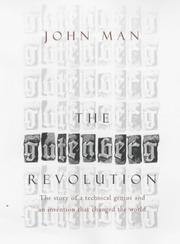
The most approachable entry: a popular narrative of Gutenberg's workshop, the punches and matrices, the loans and the lawsuit that lost him his own press. Published in the United States as Gutenberg: How One Man Remade the World with Words — the two titles are catalogued as separate records, so buy one only.
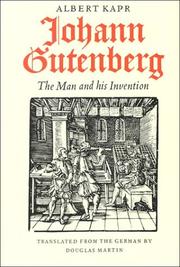
The serious biography, by a German typographer and historian, and far better than Man on the technical detail and the documentary evidence — which is thin enough that a good deal of the standard story is inference. Read it second, as the correction to the popular version.
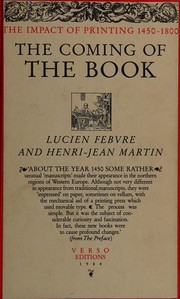
Febvre and Martin's 1958 study is where the social history of printing begins, and it is still the best single account of print as an industry: paper supply, capital, distribution, what the trade printed and for whom. Every book that follows is arguing with, or building on, this one.
What the early trade was actually like
IntermediateReplace the image of print as an engine of enlightenment with the commercial reality — most printers went broke, most output was small and religious, and the Reformation succeeded partly because Luther was unusually good at the format.
▸ Study plan for this stage
Pace: Three to four weeks for two Pettegree books and 832 pages. The Book in the Renaissance is 440 pages and is the substantial one — a survey of the first century and a half of European printing built on bibliographic data, so read it steadily over a fortnight rather than in bursts; the argument is made
- The commercial reality: most printers operated on thin margins, many went bankrupt, and the trade survived on short, cheap, fast-selling items rather than on the great folios that fill modern collections.
- What actually paid — indulgences, schoolbooks, almanacs, official proclamations, devotional pamphlets — and the survival bias that makes the printed record we inherit unrepresentative of the printed output.
- Pettegree's use of bibliographic evidence: counting editions and surviving copies rather than reasoning from famous books, which is what allows him to correct the enlightenment-engine picture.
- Why the Reformation is a printing story in a specific and limited sense: not that print caused it, but that Luther wrote in a format the trade could produce and sell profitably at speed.
- The Luther pamphlet as an invented format — short, in German, cheaply produced, quickly reprinted, and identifiable at a glance through its typography and title page design.
- The Wittenberg printers as collaborators rather than suppliers, and Luther's involvement in how his books looked, which made him a brand in a trade that had not had one.
- The asymmetry of the confessional print war: what it means that one side's material was better suited to the economics of the trade than the other's.
- Reconstruct the finances of a jobbing printer from Pettegree. Where did the reliable income come from, and what made a large book a risk rather than an opportunity?
- State the survival-bias problem in your own words. How does Pettegree get around it, and how confident should you be in the correction?
- What was distinctive about Luther's pamphlets as physical objects, and how much of their success does Pettegree attribute to that?
- Print is often said to have made the Reformation possible. After Brand Luther, what is the precise version of that claim you would be prepared to defend?
- Why did the Catholic response fare worse in print, on Pettegree's account? Is his explanation economic, theological, or organisational?
- Build a table of the categories of output Pettegree identifies, with an estimate of volume and profitability for each. Then rank them by what a general reader would guess mattered most, and compare the two orderings.
- Take one of the pamphlets Brand Luther describes and write out its physical specification: format, sheets, print time, likely price, likely print run. The exercise is to turn a famous text into a manufactured object.
- Return to the print-run economics sheet you made in stage one and correct it with Pettegree's figures. Note where Febvre and Martin's general picture holds and where Pettegree sharpens it.
- Write a paragraph arguing that the Reformation would have happened without printing, using only evidence from these two books. Then write the rebuttal. You are stress-testing a causal claim you are about to see argued at full length.
Next up: Knowing what the trade actually produced and how precariously, you are equipped to judge the two large theses about what print did — which is the argument the whole subject turns on.

The best modern account of the first century and a half of European printing, and a deliberate corrective: Pettegree shows a fragile, frequently bankrupt trade whose profits came from indulgences, pamphlets and schoolbooks rather than from the great folios we remember. Read it before you assess anyone's thesis about print's effects.
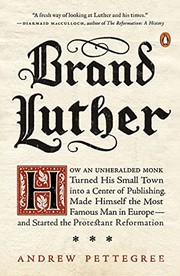
The Reformation case study, and a demonstration of Pettegree's argument in miniature: Luther wrote short, printed cheap, worked with a Wittenberg printer on typography and title pages, and effectively invented a new publishing format. The concrete answer to 'print and the Reformation' that the general claim usually skips.
The argument: was print an agent of change?
IntermediateState Eisenstein's thesis and Johns's objection in their strongest forms, and be able to say which parts of the disagreement are empirical and which are about what would count as evidence — this is the live scholarly dispute the subject turns on.
▸ Study plan for this stage
Pace: Six to seven weeks for 1,449 pages, and the two central books should be read back to back with nothing between them. Eisenstein's The Printing Revolution in Early Modern Europe is 300 pages and is her own abridgement of the larger two-volume study, which is catalogued separately; read the short vers
- Eisenstein's thesis in its precise form: printing brought fixity, standardisation, wide dissemination and the ability to compare texts side by side, and these were preconditions for the Reformation, the Renaissance and the scientific revolution.
- The specific mechanisms she proposes, which are more interesting than the headline — cross-referencing, cumulative correction of errors across editions, the assembling of previously scattered data into comparable form.
- Johns's counter-case: in early modern England, print was not fixed at all. Piracy, unauthorised editions, misattribution and corrupted texts were normal, and a reader's first question about a printed book was whether to believe it.
- Johns's positive claim, which is not merely a denial: fixity and credibility were achievements, constructed through the social apparatus of the trade — guild regulation, reputations, personal vouching — rather than delivered by the technology.
- Where the disagreement is empirical and where it is not. Some of it turns on evidence about English printing practice; some turns on what would count as evidence for a claim about a technology's effects at all.
- The problem of technological determinism as the underlying stake: whether a technology can be an agent, or whether agency always belongs to the people using it and the institutions around it.
- Eisenstein's historiographical move in Divine Art, Infernal Machine — that printing has been described as divine gift and engine of sedition simultaneously since the fifteenth century, which puts your own reading in a long series.
- State Eisenstein's thesis in the form she would recognise, in five sentences, including at least two of her specific mechanisms rather than the general claim.
- State Johns's objection in the form he would recognise. Is he denying that print had large effects, or denying something narrower?
- Find one point on which they simply contradict each other about a fact. Find another where they agree about the facts and disagree about what follows. Which kind of disagreement is more of the book?
- Johns's evidence is heavily English. What would you need to know about the German, Italian or French trades before generalising from it?
- How does Pettegree's picture of the trade from the previous stage bear on this dispute? Whose case does it help, and is that decisive?
- After Divine Art, Infernal Machine, can you name a claim about printing that is being made today and that appears in the historical series she traces?
- Write both theses as numbered propositions on a single sheet, Eisenstein on the left, Johns on the right, and draw lines between propositions that directly conflict. The propositions with no line are the ones nobody is actually arguing about, and there will be more of them than you expect.
- Take one of Johns's English case studies and ask what Eisenstein's framework would say about it. Then take one of Eisenstein's examples of cumulative correction and ask what Johns would say. Neither exercise should produce a knockout, which is the finding.
- Pick a claim of your own about a modern technology's effects and write it out. Then apply Johns's objection to it verbatim. This is the transferable part of the stage and it takes fifteen minutes.
- Using Divine Art, Infernal Machine, list five distinct things printing has been credited or blamed for across the centuries, with who said each. Note how many are mutually exclusive.
Next up: With the central argument in hand, the next stage takes print into the businesses it created, where the questions about credibility and control get concrete.
Eisenstein's own one-volume abridgement of her case: that print brought fixity, standardisation and wide dissemination, and that these were preconditions for the Reformation, the Renaissance and the scientific revolution. Read this rather than the two-volume The Printing Press as an Agent of Change unless you need the full apparatus — the argument is the same and it is catalogued separately.
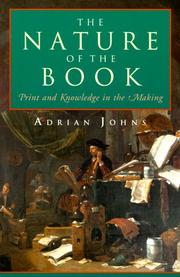
The great rebuttal, and a formidable book in its own right. Johns argues that print in early modern England was anything but fixed — piracy, misattribution and unreliable texts were the norm — so credibility had to be manufactured socially rather than delivered by the technology. Read it directly after Eisenstein; taken alone either book is convincing.

Eisenstein's late book on how printing has been talked about since the fifteenth century — as divine gift and as engine of sedition, often simultaneously. It is the historiographical step back that lets you see your own argument as one more entry in a long series, and it is where she answers her critics.
News, censorship and the underground trade
IntermediateFollow print past the Reformation into the businesses it created — periodical news, the licensed and the illicit book trade — and see censorship as an economic force shaping what got printed rather than merely as a list of banned titles.
▸ Study plan for this stage
Pace: Six weeks for 1,342 pages. Pettegree's The Invention of News is 453 pages covering four centuries of commercial information, and reads steadily at forty pages a session over a fortnight. Darnton's The Business of Enlightenment is 631 pages and is the most demanding book in the stage — an archival re
- News as a commodity before newspapers: manuscript newsletters sold by subscription, commercial correspondents, and the postal and mercantile networks that carried them.
- The verification problem, which is Pettegree's through-line and picks up directly from Johns: without institutions of credibility, a report's trustworthiness had to be inferred from its channel and its source, not from its contents.
- Why the periodical newspaper was a difficult business proposition — regular costs against irregular news — and why the earliest ones were often dull, official and unprofitable.
- Censorship as an economic force rather than a list: privileges, licensing, and monopolies determined who could print what profitably, and the illegal trade existed because the legal one was rationed.
- Darnton's method and what it makes possible: the Societe typographique de Neuchatel archive lets him show print runs, prices, smuggling routes, discounts and actual buyers for the Encyclopedie, rather than reasoning about influence from content.
- The gap between an intellectual monument and its commercial life — the Encyclopedie as a speculative venture, padded, repackaged and sold to subscribers who were not necessarily reading it.
- Darnton's argument about the underground: the hack writers, libels and pornography of Grub Street corroded royal authority more effectively than the philosophes' treatises did, which is a claim about how ideas actually circulate.
- Describe how a piece of news travelled from event to reader before the newspaper. Name the intermediaries and say who paid each of them.
- Pettegree's book is a sequel to Johns's credibility problem in a different domain. State what the two problems have in common and where they differ.
- From Darnton, reconstruct the commercial life of the Encyclopedie: who financed it, how it was printed, how it crossed borders, and who bought it.
- What does an archive of a printing house let a historian establish that content analysis cannot? Give three specific examples from The Business of Enlightenment.
- State Darnton's Grub Street argument and the strongest objection to it. Does the evidence in his own book settle it?
- Was censorship in the Old Regime effective? Answer as a question about the economics of the trade rather than about intentions.
- Chart the smuggling route of one shipment from Darnton's archive, with the actors, costs and risks at each stage. Then compare it to the legal distribution of an authorised book.
- Take Pettegree's account of one news event and list every form in which it circulated. Rank the forms by speed and by reliability and note that the ranking is not the same.
- Read the two Darnton books in the intended order and write a page on what the short polemical book gains by resting on the long archival one. Then ask whether the argument would convince you on its own.
- Using both authors, write half a page on what 'public opinion' consisted of physically in the eighteenth century — what objects, sold by whom, read by whom.
Next up: Having followed print into news, money and law, the final stage returns to the book itself, which is where the field went after the big causal argument stalled.

How news became a commodity between 1400 and 1800: manuscript newsletters, broadsheets, the first newspapers, and the persistent problem of whether any of it was true. The natural sequel to the Johns argument about credibility, now applied to information rather than to books.
Darnton reconstructed the publishing history of the Encyclopedie from a printer's surviving archive — the financing, the smuggling, the padded print runs, the buyers. The best demonstration in the field of what an intellectual monument looks like from the accounts ledger.
The illegal trade in pre-revolutionary France: the hack writers, the libels and the pornography that Darnton argues did more to corrode royal authority than the philosophes did. Shorter and sharper than The Business of Enlightenment; read it second for the argument rather than the method.
The book as object, and readers as agents
IntermediateFinish where the field now is — with the physical book and with reading practices — and be able to say why 'what did the printing press do?' has largely been replaced by narrower, better-evidenced questions.
▸ Study plan for this stage
Pace: Two to three weeks for 540 pages, and this is the lightest stage since the first — deliberately, as a landing. Chartier's The Order of Books is only 126 pages but is by far the denser of the two: short theoretical essays on catalogues, libraries and authorship, translated from French, and worth a we
- Chartier's shift of attention from production to ordering — that catalogues, libraries and classification systems shape what a body of printed matter is, as much as the printing of it does.
- The author function as a historical construct: the idea of the author as the unit by which texts are attributed, collected and owned is itself something that had to come into being.
- Reading as a practice with a history: aloud and silently, intensively and extensively, in company and alone — and why a claim about print's effects is empty without a claim about how the printed thing was used.
- Why the field moved from 'what did printing do?' to narrower questions. The big causal question proved hard to make evidential, whereas questions about specific readers, specific books and specific institutions can be answered from sources.
- The material vocabulary Houston supplies: substrate, ink, type, imposition, binding, and the physical constraints each imposes on what a book can be.
- That the codex itself is a technology with a history and competitors, and that most of the properties readers attribute to books belong to the codex rather than to printing.
- How the material turn and the Eisenstein-Johns argument connect: Johns's constructed credibility is a claim about practices, and practices leave physical traces in books.
- What does Chartier mean by the order of books, and what does the phrase pick out that a history of printing would miss?
- Give two examples from Chartier where the way texts were catalogued or collected changed what they meant to readers.
- Which properties of a book do you now attribute to the codex rather than to printing? Name at least four, using Houston.
- Take one physical feature Houston describes — the signature, the format, the binding structure — and say what it lets a historian infer about how a book was produced or used.
- The subject started with a large causal question and has ended with libraries, bindings and reading practices. Is that a retreat or a repair? Argue it using a specific claim from stage three.
- Pick up any physical book and describe it in Houston's vocabulary: substrate, format, imposition, typeface, binding structure. Then say what those choices cost and what they were chosen for.
- Apply Chartier to your own shelves or to a library catalogue you use. Write half a page on what its ordering makes findable and what it hides.
- Return to the two-column Eisenstein-and-Johns sheet from stage three and add a third column: what Chartier's questions would ask instead of either. The exercise is to see a field changing the subject rather than settling an argument.
- Write a final page answering the question the path opened with — what did the printing press do — with every claim in it sourced to a specific book on this path, and with the claims you cannot source left out.
Next up: The path ends here, with the causal question replaced by better-evidenced ones, which is the honest description of where the field now stands.

Chartier's short, dense essays on catalogues, libraries and the idea of the author shift attention from producers to the systems that organised what was produced. The theoretical bridge between the Eisenstein-Johns argument and the material turn that followed it.
An unashamedly enjoyable technical history of the book as a physical thing: papyrus, parchment, paper, ink, type, binding. Read it last as a reward and a grounding — after four stages of argument about what print meant, it is useful to be reminded in detail of what a book physically is.
Discussion
Keep reading
Paths that share books, cover the same subject, or open a related topic.