Louise Gluck Reading Order: Where to Start
Gluck published twelve slim collections over fifty years, and each one is a designed book rather than a gathering of poems — which is why a Collected is the worst way to meet her and a single volume is the best. Start with the Pulitzer-winning book of talking flowers, move through the two collections built on marriage and myth, then take the late masterpieces, and only afterwards go back to the severe early work, which is much easier to admire once you know where it was heading. Her prose comes last, because it explains the method rather than performing it.
Start Here: The Wild Iris
IntermediateMeet Gluck's voice at its most immediately available, and learn to read a collection as a single structured argument.
▸ Study plan for this stage
Pace: About two weeks for 131 pages, and that ratio is correct: a Gluck collection of sixty-odd pages takes longer than a three-hundred-page novel, because the unit of reading is the poem, not the page. Read The Wild Iris straight through in one sitting first, roughly an hour, without stopping to understa
- The Wild Iris runs on three speakers: flowers that talk, each poem titled for its plant; a gardener whose poems are titled Matins and Vespers after the canonical hours; and something like a god that answers in weather. Identify which of the three is speaking before you read a line further.
- Repeated titles are the structure. Several poems are called Matins and several Vespers, so the book is one sequence of prayers across a single growing season rather than a gathering of separate lyrics.
- A Gluck collection is a designed book making one structured argument from first poem to last, which is why this path uses single volumes and never a Collected - the order and the covers are part of the work.
- Ararat is the same architecture with the mythology stripped out: the flattest, plainest vocabulary she ever used, deployed on a father's death and the silences of the family left behind.
- The family in Ararat is a fixed cast seen from a fixed angle - mother, father, sister, the speaker - and poems accumulate into a portrait no single poem contains.
- Death is the constant subject in both books and she does not offer comfort about it; the tone is not depressive, it is unconsoling, which is a different thing.
- White space and the line break do as much work as the words. The poems are short because she has cut, not because she had little to say.
- The first person here is a constructed voice, not a diary entry, even in Ararat where the material is closest to her own life.
- By the end of The Wild Iris, can you say what the gardener actually wants, and whether the god ever grants it?
- The flowers speak from the position of things that die every year and come back. What does that let them say to a human speaker that a human speaker cannot say back?
- Reading the two side by side, what does The Wild Iris get from myth and metaphor that Ararat deliberately refuses - and what does Ararat get in exchange?
- Which poems in Ararat would lose the most if you met them alone in a magazine, and what does that tell you about reading Gluck by the book rather than by the poem?
- Did either book console you at any point? If not, does the book seem to think consolation is available at all?
- Read The Wild Iris straight through at speed and write one sentence naming the season the book ends in. Then read it again slowly and mark each poem in the contents F, G or D for flower, gardener or divine. The pattern of those three letters down the table of contents is the book's argument.
- Read every poem titled Matins in order, one after another, skipping everything else; then do the same for the Vespers poems. You are reading two sequences hidden inside the sequence.
- Read the opening poem, The Wild Iris, and the closing poem, The White Lilies, aloud back to back, and say out loud what has changed between them.
- Take one poem from Ararat and one from The Wild Iris on the same subject - a death in the family - and copy both out by hand. The difference in vocabulary will register in your wrist before it registers in your head.
- Decide before going on whether you actually want austerity. If the tone felt punishing rather than bracing, stop here: the later books get harder, not warmer.
Next up: Having watched her build one book around a garden and another around a father's death, you are ready for Meadowlands, where she runs a myth and a marriage over the top of each other at once.

A garden speaks, a gardener answers, and something like God answers back — a three-voiced sequence across one growing season. Her most loved book and the correct entry point: strange but never obscure, and it teaches you to expect a whole collection to cohere.
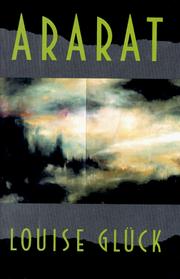
A father's death and a family's silences, in the flattest, plainest language she ever used. Read it second as the counterweight to The Wild Iris — the same architecture with the mythology stripped out.
Marriage and Myth
IntermediateWatch Gluck lay a classical story over a contemporary one, which is the manoeuvre most of her later work depends on.
▸ Study plan for this stage
Pace: Two to three weeks for 119 pages. Meadowlands is the funniest book she wrote and the fastest to get through - one evening for the first pass - but it is built as an argument between voices, so the second pass matters more: take a week over it, reading the Penelope poems, the Telemachus poems and the
- The overlay is the technique: the Odyssey is laid over a contemporary marriage collapsing, and both stories are literally true at the same time in the same poem. Nearly everything she does later depends on this manoeuvre.
- The Telemachus poems form a run - Detachment, Guilt, Kindness, Dilemma and others - so a son revises his account of his parents over the length of a book.
- Circe gets her own run of poems, and she is not a villain in them; the book distributes sympathy rather than assigning blame.
- Meadowlands is unexpectedly funny, and the comedy is deadpan and domestic. This surprises readers who arrived from Ararat expecting only severity.
- Vita Nova takes its title from Dante's book about the life that follows a lost love; here the new life follows a divorce, and the title is a claim being tested rather than a fact reported.
- Descent and return - the underworld, Orpheus looking back - become the recurring frame, and they will still be there twenty years later in Averno.
- Nostos, homecoming, is the Greek idea the whole of Meadowlands turns on: the marriage is the thing that cannot be returned to.
- The myth is never decoration. She uses a classical story because it already contains its own ending, which frees her from having to invent one.
- Meadowlands gives Penelope, Odysseus, Telemachus and Circe their own poems. Whose account do you believe, and does the book allow you to decide?
- Where exactly is the joke in Meadowlands? Name three poems that are funny and say whether the comedy makes the grief lighter or worse.
- Vita Nova means new life. By the last poem, has the speaker got one, or only announced one?
- Ararat handled a father and a family without myth; Meadowlands handles a husband with one. What changes in the treatment of domestic material once a myth is carrying it?
- If you deleted every Greek name from Meadowlands, what would be left, and would it still be a book?
- Read the Telemachus poems in order, one straight after another, ignoring everything between them. Then do the same with the Circe poems. Write down what each character's sequence on its own claims happened to the marriage.
- Read one Meadowlands poem aloud twice - once as an Odyssey poem, once as a poem about two people in a kitchen. It should survive both readings. If it does not, you have misidentified the speaker.
- Keep one index card for Meadowlands listing which poems belong to which voice. You will want it again at Averno, where the same technique returns without any of the jokes.
- Read the last poem of Meadowlands and the first poem of Vita Nova back to back, in that order and in one sitting. That junction is the hinge of the whole path.
- Reread the gardener's Matins poems from The Wild Iris immediately after Penelope's poems. Same voice under pressure, different costume - and noticing that is what makes stage three readable.
Next up: Meadowlands and Vita Nova train you to read a myth and a life as one text, which is the exact skill Averno demands when the myth is Persephone's abduction and the life is a mother's.
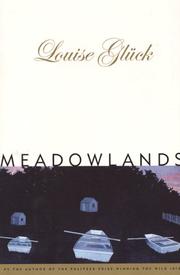
A marriage collapsing, narrated by Penelope, Odysseus, Telemachus and a suburban couple at once — and unexpectedly funny. Read it after Ararat: the domestic material is the same, the technique is a jump.
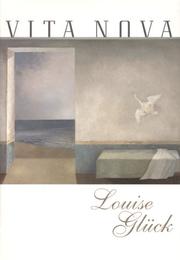
The book after the divorce, taking its title from Dante and its energy from starting over. It completes the arc Meadowlands opens and should follow it directly.
The Late Masterpieces
BeginnerRead the four late collections, where the poems get longer, stranger and more openly concerned with death.
▸ Study plan for this stage
Pace: Six to eight weeks, and do not compress it. Averno is the most demanding book in the path: only 88 pages, but the two long Persephone poems and the October sequence each want a whole sitting and then a reread, so give it two to three weeks by itself. A Village Life then reads almost like a different
- Averno is Persephone: the abduction, the mother, the underworld, and the question of whether the daughter was taken or went. Averno is a real crater lake near Naples that the Romans took for an entrance to the dead.
- Two long poems in Averno work the same Persephone material and do not agree with each other; the disagreement is the design, not an oversight.
- The long multi-part sequence replaces the short lyric in the late work. Poems now run in numbered sections and the individual section is no longer the unit.
- A Village Life abandons the compression she spent thirty years perfecting - long loose lines, an unnamed Mediterranean village, many ordinary speakers, no myth. Read it as a deliberate renunciation.
- Faithful and Virtuous Night is spoken largely by an invented ageing male painter and is her most sustained use of a made-up speaker; the title turns on a child's confusion between knight and night.
- Much of Faithful and Virtuous Night is in prose poems, which for a poet this committed to the line break is a serious move rather than a stylistic holiday.
- The late books talk about death directly and at length, and the poems get longer and stranger as they do it.
- Winter Recipes from the Collective takes spareness to the edge of disappearance: fifteen poems about age, and it is the last book. In a Collected it would be almost invisible, which is the argument for reading it as its own object.
- Averno prints two long poems on the same Persephone material. Read together, do they contradict each other, and is the contradiction a flaw or the point?
- A Village Life gives up the compression of the previous thirty years. Reading it directly after Averno, does the looser line buy her anything, or is it a straight loss?
- Faithful and Virtuous Night is spoken largely by an invented ageing male painter. What can he say that a speaker recognisably like Gluck could not?
- Test one prose poem from that book: retype a paragraph as lines. Does it become a poem, or does it just become narrower?
- Winter Recipes from the Collective is fifteen poems long. Is that a book, or the residue of one, and does the difference matter to how it reads?
- Read the two Persephone poems in Averno back to back in one sitting, then write down which of them you think she wanted to come last in the book, and check whether you were right.
- Read the October sequence aloud in one go, all parts, no breaks - about twenty minutes. It is the poem in this path that most repays the voice, and it will not work silently.
- Take ten consecutive lines of A Village Life and ten consecutive lines of Ararat and count the words per line in each. The two numbers are the argument of this stage.
- Read Faithful and Virtuous Night straight through as a story, ignoring genre entirely, and afterwards write a one-paragraph plot summary. That you can do this at all is the strangest thing about the book.
- Read Winter Recipes from the Collective in one sitting, aloud, and then immediately reread the closing poem of The Wild Iris. Twenty-nine years apart, the same subject, and you can hear exactly what has been taken away.
Next up: Now that you know what her late line loosens into, the 1968 debut becomes legible as the thing she spent fifty years getting out of, which is why Firstborn comes here rather than first.
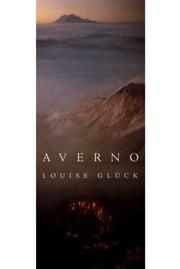
Persephone and her mother, set against a crater lake the Romans thought was an entrance to the underworld. Many readers rank it above The Wild Iris; it is certainly the more demanding of the two, which is why it sits here.
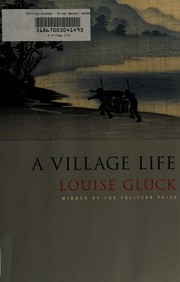
A deliberate break — long, loose lines and an unnamed Mediterranean village observed by many voices. Read it after Averno to feel her abandoning the compression she had spent thirty years perfecting.
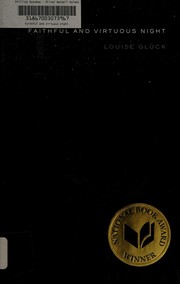
The National Book Award collection, told largely in prose poems by an ageing male painter. Her most sustained experiment with an invented speaker, and it depends on your already trusting her ear.

The last book, published after the Nobel: fifteen poems, extremely spare, about age and disappearance. A short, quiet ending to read straight through in one sitting.
Back to the Beginning
BeginnerReturn to the first four collections and hear the severity that everything later is a loosening of.
▸ Study plan for this stage
Pace: Three to four weeks for four thin books, 209 pages in total, read in publication order. Firstborn is the one book in this path that is genuinely unpleasant to read straight through - clenched, sour, audibly borrowed - so take it in two sittings and do not linger over it. The House on Marshland is 42
- Reading the debut late is the whole point of this stage: you can only hear a poet before her voice arrives if you already know what arrived. Read first, Firstborn tells you nothing; read fifth, it tells you what she had to get rid of.
- Firstborn is audibly indebted to the confessional poets she later disowned. The tight bitter syntax is not yet hers, and she was hard on the book herself.
- The leap from Firstborn to The House on Marshland is the largest in her career, and it is where impersonality arrives - the speaker stops being a person with grievances.
- The House on Marshland brings in fairy-tale and biblical material, Gretel and the Magi, which is the first appearance of the borrowed-story method that produces Meadowlands and Averno.
- Descending Figure supplies imagery that comes back thirty years later: hunger treated as a discipline, the drowned or dead child, the sister, desire as a form of starvation.
- The Triumph of Achilles brings the Greeks fully into the work and is the direct ancestor of Meadowlands and Averno; the loop closes here rather than opening.
- Read across four books in publication order you are watching a technique being acquired, which is a different experience from admiring a finished one.
- What does she keep from Firstborn and what does she drop? Name one habit that survives into The House on Marshland and one that vanishes.
- Would you have read on if Firstborn had been your first Gluck? Answer honestly, because the answer is why this stage is fourth and not first.
- The House on Marshland is 42 pages and Firstborn is longer. By what mechanism does the shorter book feel larger?
- Descending Figure treats desire as a kind of starvation. Where exactly does that argument reappear in Averno, and has it changed?
- The Triumph of Achilles contains Mock Orange, probably her most anthologised poem. Read inside its book rather than alone, what does it gain?
- Read The Chicago Train, the opening poem of Firstborn, and All Hallows, the opening poem of The House on Marshland, one straight after the other. Seven years separate them. Say aloud what changed.
- Read Gretel in Darkness and then any flower poem from The Wild Iris. Both put a non-authorial speaker in the first person; decide which one you believe more, and why.
- Copy out Dedication to Hunger from Descending Figure and one of the Persephone poems from Averno onto the same page. The imagery runs continuously across twenty-six years and seeing it in one field of view makes that undeniable.
- Read Mock Orange aloud, then read the poems that follow it in The Triumph of Achilles. Decide whether the book or the anthology serves the poem better - that single test is the whole case for single volumes.
- Put the four books in a row and read only the first and last poem of each, in order. Sixteen poems, one career.
Next up: You have now read the poems in an order she did not write them in, so the last thing missing is her own account of the method, which is what Proofs and Theories supplies in prose.

The 1968 debut, tight and bitter and audibly indebted to the confessional poets she later disowned. She was hard on it herself, which is exactly why it is interesting to read late.
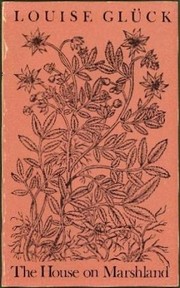
The book where the voice becomes hers — impersonal, mythic, absolutely controlled. The single biggest leap in her career and best appreciated with Firstborn still fresh.
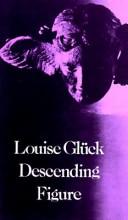
Anorexia, a dead sister, and desire treated as a kind of starvation. The coldest of her books and the source of much of the imagery that returns thirty years later in Averno.
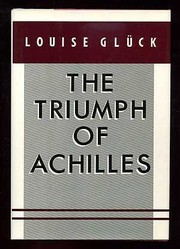
The collection that first brought the Greeks fully into her work, and the direct ancestor of Meadowlands and Averno. Closes the loop on the early period.
Gluck on Poetry
BeginnerRead her criticism and hear her state the principles the poems obey.
▸ Study plan for this stage
Pace: One week, and this stage reads at prose speed. Proofs and Theories is a book of critical essays, not poems, so every cadence rule from the previous four stages is suspended: 134 pages at twenty to thirty pages an evening is right. The autobiographical essays and the pieces on silence go quickly and
- This is prose. Essays and reviews, no poems in it - do not open it expecting the voice you have been reading in lines for four stages.
- Education of the Poet is the autobiographical essay: the anorexia, the years of analysis, the long silences, and the reasoning behind writing the way she does.
- Disruption, Hesitation, Silence states outright the principle behind the white space you have been reading around since The Wild Iris.
- Her critical standard is identical to her poetic one - unforgiving, allergic to charm, suspicious of abundance - so the prose performs the same severity it describes.
- She is hard on her own early work here, which is worth reading immediately after Firstborn while your own verdict is still fresh.
- Criticism by a working poet is a description of a method and a defence of it, not neutral judgement. Read it as evidence about her rather than as law about poetry.
- It was published in 1994, so it stops before the last four collections; nothing in it accounts for A Village Life, Faithful and Virtuous Night or Winter Recipes from the Collective, and that gap is informative.
- Which of the principles she states in the essays can you find being obeyed in The Wild Iris, and which does she break by the time of A Village Life?
- She argues for silence and omission. Point to a specific poem you have read where an omission is doing exactly the work she claims for it.
- Does the prose explain the poems or defend them? Find the point where she stops describing and starts arguing.
- Having read her account of her own beginnings, does Firstborn look better or worse than it did in the previous stage?
- What does she value in the other poets she writes about, and is it the same thing she does herself?
- Read Education of the Poet and then immediately reread Ararat. The essay is the key to that book's flat surface, and the two together take one evening.
- Read Disruption, Hesitation, Silence, then take any single poem from The Wild Iris and mark every place she declined to say something. Count them.
- Write down in three sentences of your own the rule she seems to be following, then test it against Winter Recipes from the Collective, published twenty-seven years after these essays.
- Pick the one essay on a poet whose work you do not know and read it anyway. Watching what she looks for when you have no stake in the verdict is the cleanest view of her standard you will get.
Next up: You have read her from the 1968 debut to the last book of 2021 and then the prose behind all of it, so the next move is not another title but a return: go back to the one collection you argued with hardest and read it again, now that you can hear the rule it was obeying.
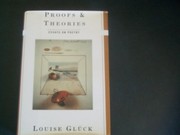
Essays on her own education, on silence, and on other poets, written in the same unforgiving prose as the poems. Read it last: it is the most useful commentary on her work that exists, and it spoils nothing once you know the books.
Discussion
Keep reading
Paths that share books, cover the same subject, or open a related topic.