Louise Erdrich Reading Order: Where to Start
Erdrich's work splits into two kinds of book, and confusing them is the main reason readers bounce off her. Roughly a third of her novels belong to one enormous interlinked cycle set around a fictional Ojibwe reservation in North Dakota, where families recur across a century and a minor character in one book narrates the next; the rest are self-contained novels that need no prior reading at all. This path deliberately begins with two standalones, because starting inside the cycle with no map is what defeats people, then works through the cycle in publication order, which is also the order in which its secrets are meant to be revealed.
Start with a standalone
BeginnerRead two self-contained novels that require no knowledge of the cycle, and get used to Erdrich's rotating narrators, dark comedy and refusal to separate the ordinary from the supernatural
▸ Study plan for this stage
Pace: 5 weeks. The Round House is 352 pages and moves like a thriller - a week to ten days at ~35 a night. The Night Watchman is 464 pages with a much larger cast and no single engine driving it, so give it three weeks at ~25 a night and keep a name list from the first chapter.
- Erdrich has two kinds of book - self-contained novels and the interlinked reservation cycle - and starting with a standalone is the difference between orientation and drowning
- The Round House as her most conventionally plotted novel: one narrator, one crime, one propulsive year, and no prior reading assumed
- The jurisdictional gap at the centre of The Round House - which court can prosecute a crime depends on where on the land it happened and who committed it, and that is a legal fact rather than a plot device
- Joe as a thirteen-year-old narrator recalled by his adult self, so the comedy of boyhood and the gravity of the crime share a page without clashing
- The Night Watchman's rotating ensemble, based on her grandfather's fight against 1950s federal termination policy - the first real dose of the technique the cycle uses at full strength
- Erdrich's refusal to partition the ordinary from the supernatural: ghosts, dreams and omens sit in the same register as jobs and casseroles, and nobody in the book finds this notable
- Comedy as structural, not relief - the funniest scenes usually sit directly beside the worst ones
- Community as the real protagonist even in a standalone, which is the habit the cycle will make explicit
- What specifically prevents the prosecution in The Round House, and how does the novel make a jurisdictional technicality feel like a moral crisis?
- How does the adult narrator's presence change scenes his thirteen-year-old self is living through?
- The Night Watchman has no single protagonist. What holds it together instead - a place, a policy, a family, or a pace?
- Where does the supernatural enter each book, and what is the tone at that moment?
- Which of the two prepared you better for a novel with fifteen point-of-view characters, and why?
- Keep a running family tree while reading The Night Watchman. It is practice for the cycle, where the tree becomes essential rather than helpful.
- Mark the three funniest passages in The Round House and note what is on the facing page. The adjacency is deliberate.
- Write one paragraph explaining the jurisdictional problem to someone who has not read the book. If you cannot, reread the courthouse scenes.
- Note every dream, ghost or premonition and how the surrounding prose treats it. The flatness of the treatment is the technique.
Next up: You have met Erdrich's rotating narrators and her matter-of-fact supernatural inside books that explain themselves, which is exactly the footing needed to enter a cycle that explains nothing.

A thirteen-year-old boy investigates the assault of his mother, and runs into the jurisdictional gap that makes prosecuting crimes on tribal land almost impossible. The best entry point in her whole body of work: one narrator, one propulsive plot, and no cycle knowledge required.
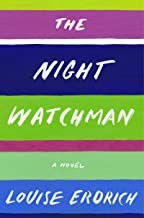
Based on her grandfather's fight against the 1950s federal policy of terminating tribal recognition. The Pulitzer winner, warm and populous, and read second because it shows the wider ensemble technique before you meet it at full strength in the cycle.
The Love Medicine cycle, in publication order
IntermediateEnter the interlinked reservation novels and learn to hold the four founding families in your head — reading them as published rather than in internal chronology, so the reveals land as written
▸ Study plan for this stage
Pace: 6-7 weeks, and read these four in the listed order without substituting. Love Medicine and Tracks are both short novels - well under a week each - while The Beet Queen is 338 pages and The Bingo Palace 274, at ~25 a night. One caution about editions: the catalogue records for Love Medicine and Track
- Publication order is the reading order, deliberately: Love Medicine (1984), The Beet Queen (1986), Tracks (1988), The Bingo Palace (1994) - not the internal chronology, which would put Tracks first
- Tracks is set earliest, from 1912, and is read third on purpose - its power comes from recognising names you already carry, so a reader who starts there meets strangers instead of origins
- What publication order buys you: you meet people as adults and are then handed their beginnings, so revelation arrives as recognition rather than as setup
- What internal chronology would cost you: Tracks read first is simply a hard historical novel about strangers, and Love Medicine loses every reveal it was built to deliver
- Erdrich wrote each book knowing what its readers had already read, so the later books are constructed to reward exactly this sequence - the ordering is authorial design, not accident of publication
- Love Medicine's method: linked chapters in many voices across fifty years, with the Kashpaw and Lamartine families as the load-bearing structure
- The Beet Queen widening the map into the town of Argus and its mostly white families, who turn out to be entangled with the first book's cast
- The Bingo Palace returning to the present with Lipsha Morrissey and answering questions Love Medicine left open - the most direct sequel in the cycle
- Which characters did you meet as adults in Love Medicine and then meet again as young people in Tracks, and how did the second meeting change the first?
- Name one revelation in Tracks that would have been ordinary exposition had you read it first. This is the argument for the ordering, stated concretely.
- What does The Beet Queen do that the other three do not, and why is widening outward the right second move rather than digging down?
- How did the land get lost, and which characters in the later books are still living with that loss without naming it?
- Nanapush narrates part of Tracks to a listener. Who is she, and what does knowing her from earlier books do to the telling?
- Would you now recommend chronological order to anyone? Make the case against your own instinct.
- Build one family tree covering all four books, adding to it as you go rather than starting over each time. This is the single most useful thing you can do in this stage.
- Each time a name in Tracks is one you already know, write it down with the page. That list is the physical evidence for why the order is what it is.
- After Tracks, reread the first chapter of Love Medicine. It is a different chapter now, and noticing how is the point of the whole sequence.
- Log which narrator has which chapter in Love Medicine. The distribution of voice is how Erdrich distributes authority.
- For The Bingo Palace, note every question it answers from Love Medicine and every one it leaves open. The open ones go to the next stage.
Next up: You now hold the founding families and their origins in the order Erdrich intended, which is the only position from which the later cycle novels can rewrite what you think you know.

The book that started the cycle: linked chapters in many voices spanning fifty years of the Kashpaw and Lamartine families. Begin the cycle here even though the events of Tracks come earlier — Erdrich wrote it first, and the later books are constructed to reward readers who met these people this way.
Moves off the reservation into the nearby town of Argus and its mostly white families, who turn out to be entangled with the first book's cast. Read second: it widens the map before Tracks digs down into its history.
Set earliest of all, from 1912, telling how the land was lost and how Fleur Pillager and Nanapush came to matter. Read it third, not first — its power comes almost entirely from recognising names you already know from the two previous books.
Returns to the present with Lipsha Morrissey, and answers questions Love Medicine left hanging. The most direct sequel in the cycle, so read it once the previous three are behind you.
Deeper into the cycle
IntermediateRead the two later cycle novels that reward the accumulated history, and understand how Erdrich keeps retelling the same events from a new angle rather than moving forward
▸ Study plan for this stage
Pace: 4 weeks. The Last Report on the Miracles at Little No Horse is 365 pages and structurally demanding - three weeks at ~20 a night, since it loops across a century rather than running forward. Four Souls is 210 pages and much more direct; read it in the final week, close behind, because it continues t
- Erdrich's late-cycle method: she does not advance the story so much as retell known events from a new angle, and each retelling makes the earlier version look partial
- The Last Report as the high point of the cycle and completely dependent on Tracks - the priest's secret rewrites much of what Tracks appeared to establish
- Identity as something performed and sustained over decades rather than revealed in a scene, which is why the novel needs fifty years of narrative to work
- Faith handled without satire: Catholicism and Ojibwe belief coexist in these books as competing but equally serious accounts of the world
- Four Souls following Fleur Pillager to Minneapolis on a mission of revenge against the man who took her forest, which turns the land loss from history into plot
- Revenge as a moral problem rather than a satisfaction - Erdrich almost never lets it deliver
- How a cycle sustains suspense without sequence: the tension in these two books is about what really happened, not what happens next
- The narrators' unreliability as historical rather than psychological - they are reporting a community's memory, and communities disagree
- What does The Last Report reveal, and which specific scenes in Tracks does it force you to reread?
- How does Erdrich sustain the priest's secret for decades of narrative without the concealment feeling like a trick?
- Is Fleur's revenge in Four Souls successful? Consider what she wanted rather than what she achieved.
- These two books cover ground you already know. What makes retelling feel like progress rather than repetition?
- Where do Catholic and Ojibwe frameworks collide in The Last Report, and does the novel adjudicate between them?
- Before starting The Last Report, reread twenty pages of Tracks. The rewriting only registers if the original is fresh.
- List every event that appears in both Tracks and The Last Report, with the version each book gives. The discrepancies are the novel's argument.
- Track Fleur across all the books she appears in and write her chronology out. She is the cycle's spine and no single book contains her.
- Note where The Last Report's timeline jumps, and mark the year in the margin. The looping is navigable once you make it visible.
Next up: With the cycle's deepest layer read, you can turn to the contemporary novels, where the same community appears in the present and the historical weight you have accumulated does the work silently.

A priest on the reservation for fifty years harbours a secret about his own identity, and the novel rewrites much of what Tracks appeared to establish. The high point of the cycle, and it depends completely on having read Tracks.
Follows Fleur Pillager to Minneapolis on a mission of revenge against the man who took her forest. A direct continuation of the Tracks storyline, and best read close to it.
The Justice trilogy and the late novels
IntermediateComplete the loose contemporary trilogy that The Round House sits inside, and finish with the most recent work, where Erdrich writes about her own bookstore and the present day
▸ Study plan for this stage
Pace: 7 weeks and the longest stage - The Plague of Doves 352, LaRose 384, The Sentence 400, about 1,140 pages at ~25 a night. The Plague of Doves has the most fragmented structure of the three and needs the slowest reading; LaRose and The Sentence both carry a stronger forward pull and go faster than the
- The loose Justice trilogy - The Plague of Doves, The Round House, LaRose - connected by place, law and consequence rather than by continuous plot, so no reading order is enforced by story
- Reading The Plague of Doves after The Round House rather than before: it is chronologically the earlier book, and once again Erdrich rewards meeting the consequence before the cause
- The 1911 lynching of innocent Ojibwe men as an inheritance rather than an event, working through three generations who mostly do not discuss it
- Multiple narrators across generations telling one crime, which is Love Medicine's method applied to a single historical injury
- LaRose's premise - a man accidentally kills his neighbour's son and gives his own child to the grieving family, following an old practice - as a real test of how far restorative justice can go
- Justice as the trilogy's actual subject: three books asking whether law, revenge or restitution can repair anything, and reaching three different answers
- The Sentence as the closest thing Erdrich has written to a self-portrait, set in a Minneapolis bookstore haunted by a dead customer, through the pandemic and the killing of George Floyd
- The late work still changing shape - a ghost story, a bookseller's diary and a novel of the immediate present, from a writer forty years into a career
- How does The Plague of Doves quietly underwrite The Round House, and what would you have lost by reading it first?
- Is the exchange in LaRose justice, restitution, or something the English word justice does not cover?
- Across the three Justice novels, which mechanism comes closest to repair - the law, an old practice, or time?
- What does the ghost in The Sentence want, and why is a bookstore the right place for her?
- The Sentence writes about events that were weeks old when it was published. What does that immediacy gain, and what does it risk?
- Having finished all four stages: do the standalones and the cycle feel like one body of work or two? You are now the only person who can answer that for yourself.
- Read the opening chapter of The Plague of Doves twice before continuing. Its narrators arrive fast and the whole book depends on placing them.
- Write one paragraph on what the Iron family owes the Ravich family in LaRose, then one on what they actually give. The gap is the novel.
- Note which characters or family names in these three books connect back to the cycle. The link is thinner than in stage two, and where it holds is worth marking.
- Reread the first page of The Round House now that The Plague of Doves is behind you. The Justice trilogy has no fixed order but it does have an effect, and this is where you feel it.
- Write your own recommended Erdrich reading order for a friend, and state where you would depart from this one and why.
Next up: This closes the path - you have read Erdrich outward from the standalones, through the cycle as published, and into the present-day work, which is the sequence in which her reveals land as she wrote them to land.
A 1911 lynching of innocent Ojibwe men and its consequences three generations later, told by several narrators. Chronologically the first of the loose Justice trilogy, but read it here — after The Round House, whose events it quietly underwrites.
A man accidentally kills his neighbour's son and, following an old practice, gives his own child to the grieving family. The third Justice novel, and the one that most tests how far restorative justice can actually go.
A Minneapolis bookstore haunted by a dead customer, through the pandemic and the killing of George Floyd. Placed last as the closest thing she has written to a self-portrait, and the best demonstration that the late work is still changing shape.
Discussion
Keep reading
Paths that share books, cover the same subject, or open a related topic.