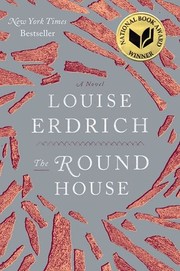
Start with The round house. The obvious choice is Love Medicine, her 1984 debut and the opening of the linked cycle that most of her work belongs to, but it is a demanding first book: a chorus of narrators from several intermarried families, arriving with no map and no chronology, over five decades. It rewards patience enormously and it turns away a lot of first-time readers.
The round house asks nothing in advance. It is a single narrator, a thirteen-year-old boy on a North Dakota reservation in 1988, telling the story of the attack on his mother and his own attempt to get justice when jurisdiction over the crime is legally unclear. It won the National Book Award, it moves like a thriller, and it teaches you the world — the families, the tribal court, the geography, the humour — without ever stopping to explain. Read it first and Love Medicine becomes easy.
The cycle, in publication order — and why
Read Love Medicine, then Beet Queen (published as The Beet Queen), then Tracks, then The Bingo Palace, then The Last Report on the Miracles at Little No Horse, then Four Souls.
Tracks is set from 1912 to 1924, earlier than anything around it, and readers regularly ask whether to move it to the front. Do not. The publication order is the design, and the design is the point. You meet Fleur Pillager and Pauline as figures already deep in their consequences — feared, diminished, gossiped about — and only afterwards are you handed the years that made them. The revelation lands as recognition rather than as setup. Read chronologically, Tracks becomes an origin story and the later books become explanations. Read third, it detonates.
The same logic holds across the whole cycle. Erdrich builds by returning: a minor voice in one novel takes the centre of the next, a family rumour turns out to be true from an angle nobody had. That structure only works if you accumulate the rumours before you get the facts.
Beet Queen is the odd one out and worth flagging. It centres on the off-reservation town of Argus and a largely white cast, and it is the coldest, most stylised book in the cycle. A number of readers find it the weakest and a number find it the most controlled. The Last Report on the Miracles at Little No Horse is the one to make time for — a priest on the reservation for fifty years, holding a secret the whole novel is built to release. Four Souls is short and functions almost as a coda to Tracks.
Two cycle novels, Tales of Burning Love and The Painted Drum, are not in our catalogue. Their absence does not break the sequence.
The justice trilogy
The Plague of Doves, The round house and LaRose are read as a loose trilogy about crime, retribution and repair in the same corner of North Dakota. You have already read the middle one. Take The Plague of Doves next — a lynching in 1911 and its descendants a century later, told through voices that turn out to be more entangled than any of them know — then LaRose, in which a man accidentally shoots his neighbour's son and gives his own son to the grieving family, following an older tradition. LaRose is the warmest book she has written.
The recent standalones
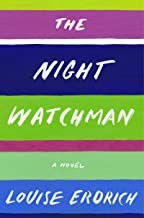
The Night Watchman won the Pulitzer and is based on her grandfather's fight against a 1953 congressional bill to terminate federal recognition of the Turtle Mountain Band. It is the most historically grounded of her novels and the most accessible entry point after The round house. The Sentence is contemporary, funny, and haunted in a literal sense — a Minneapolis bookshop, a persistent ghost, and the events of 2020 arriving in real time.
Where to stop
If the cycle is not holding you after Love Medicine and Tracks, stop there. Those two plus The round house are a real Erdrich education, and the linked structure means there is no ending being withheld from you — there is no final volume that resolves anything. Alternatively, read only the justice trilogy and the two recent standalones and skip the cycle entirely; every one of those five stands alone. More reading paths are on Discover.
Follow the full reading path →