Locke and Key Reading Order and Guide
Locke and Key is unusually easy to read in order because Joe Hill planned it as a single finite story: six collected volumes, published in sequence, with a beginning and a real ending. There is no branching continuity and nothing to catch up on. What this path adds is a warning about where the extras belong — the side stories are written to be read after the main six, not interleaved with them, because several of them spoil the central mystery.
Start here
BeginnerMeet the Locke family and Keyhouse, and learn the rule the whole series runs on: every key does one strange thing, and adults forget.
▸ Study plan for this stage
Pace: One week, or two evenings if you cannot stop. Volume one runs about 160 pages and volume two about 220 — each is roughly ninety minutes of reading. Read them back to back; volume two changes what volume one was about, and a long gap between them costs you that. Slow down on Gabriel Rodríguez's estab
- Locke and Key is a finite planned story in six collected volumes with a real beginning and a real ending — there is no branching continuity, nothing to catch up on, and the reading order is simply one to six
- Read the warning plainly: this is horror, its protagonists are children, and volume one opens with the brutal murder of their father during a home invasion, followed by sexual violence in its backstory. It is not a young-adult book despite its teenage cast
- The violence is not incidental atmosphere; the series is about what a family does with trauma, and it stays with the aftermath rather than moving past it
- The rule the whole series runs on is established here: every key does one strange specific thing, and adults cannot retain the memory of magic
- That adults-forget rule is the engine of the plot and the source of most of the horror — the children cannot be believed and cannot be helped
- Volume two introduces the Head Key, the single best idea in the book, and turns the series from a haunted-house premise into something much stranger and more psychological
- Rodríguez's art is precise and architectural — Keyhouse is drawn consistently enough to navigate — and Joe Hill writes to that strength, hiding information in backgrounds
- Our catalogue lists these as bare numbered volumes; the published subtitles are Welcome to Lovecraft and Head Games, and the numbers are the reliable way to buy in sequence
- What exactly does the Head Key allow, and why is it a better idea than a straightforwardly frightening key?
- How does the adults-forget rule change what the children can do about their situation?
- Volume one is unusually brutal for an opening. What does the series need that brutality to establish?
- Track each Locke sibling's response to the father's death. The three responses are the three plots of the series.
- Where does Rodríguez hide information in the art that the script does not state?
- Decide before starting whether this is a book you want. Horror with child protagonists is not for everyone and volume one gives you the full measure of it.
- Keep a list of keys and what each one does. The series introduces them steadily and expects you to remember them five volumes later.
- Reread the first ten pages of volume one after finishing volume two. They read completely differently once you know what the house is.
- If you have seen the television adaptation, note the differences early. It is markedly softer than the comic, and expecting its tone will mislead you.
Next up: The house, the rule and the central key are all in place, which is exactly what the middle volumes escalate.
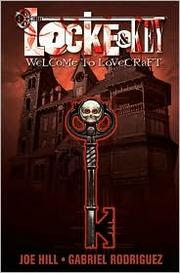
The first volume and the only place to start. It is the most brutal opening in the series and sets up the murder that everything else answers to.
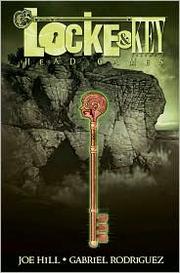
Introduces the Head Key, the single best idea in the book, and turns the story from a haunted-house premise into something stranger. Read it immediately after volume one.
The middle
BeginnerFollow the escalation as the keys multiply and the antagonist's plan becomes legible.
▸ Study plan for this stage
Pace: One to two weeks for the two volumes, around 150 pages each. Volume three is the fastest read in the series because so much of it is near-wordless; resist the speed and look at the pages. Volume four is the one to slow down for — its formal experiments only reward a reader paying attention to how ea
- Volume three is the most horror-forward book in the run and the point where the threat stops being uncanny and becomes physical
- Rodríguez carries several near-wordless sequences here, and they are the best argument in the series for reading comics slowly — the storytelling is entirely in panel-to-panel movement
- Volume four is the most formally playful, including a full issue drawn in the style of Calvin and Hobbes and other pastiches that use a familiar visual language against the reader
- Those experiments only land because you know the cast by now; a reader encountering them cold would see a gimmick rather than a gut-punch
- The escalation across these two volumes is structural: the keys multiply, the antagonist's plan becomes legible, and the children's information advantage over the adults starts to cost them
- Hill plots in trade-sized units, so each collected volume has its own shape and climax while advancing the whole — which is why reading in volumes rather than single issues is the right choice
- The horror here is closer to body horror and dread than to jump scares, and the child protagonists make it land harder rather than softer
- By the end of volume four the series has shown you almost all its mechanics; what remains is the history behind them
- Pick the longest wordless sequence in volume three and describe what happens. What did you learn, and from what visual cue?
- Why does the Calvin and Hobbes pastiche in volume four work? What does borrowing a familiar style let Hill and Rodríguez do?
- How does the antagonist's plan become clear to the reader before it becomes clear to the characters, and what tension does that produce?
- Which of the keys introduced in these volumes turns out to matter most, and could you have guessed?
- What has changed about the Locke siblings' relationships since volume one?
- Read volume three twice — once at your natural pace, once forcing yourself to spend ten seconds per panel on the silent sequences. The difference is large.
- Update your key list. By the end of volume four it should be long enough to need organising.
- In volume four, note what each pastiche issue is parodying and what it uses the parody to conceal.
- Write down your theory of the antagonist's plan before starting volume five. The next volume is designed to reframe it.
Next up: The mechanics are all on the table; the ending stage explains where they came from and then uses them.
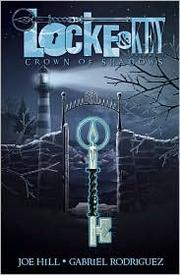
The most horror-forward volume and the one where the threat becomes physical. Gabriel Rodriguez's art carries several near-wordless sequences here.
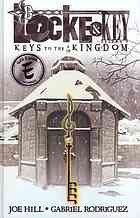
The most formally playful volume, including a whole issue drawn in the style of Calvin and Hobbes. Its experiments only land because you know the cast by now.
The ending
IntermediateRead the two volumes that resolve the story, in the order they must be read.
▸ Study plan for this stage
Pace: One week for the two, around 160 and 130 pages. Read them directly back to back — volume six is the second half of the same movement as volume five, and splitting them is the one pacing mistake available in this series. Give volume five the slower reading; it is a backstory volume with two historica
- Volume five is the backstory volume, going back to the Revolutionary War and to 1988 to explain the door and where the keys came from
- Nearly everything you assumed across four volumes gets reframed here, which is why it sits immediately before the finale rather than earlier
- The 1988 sequence explains the adult characters' behaviour throughout the series, and several of them become far more sympathetic or far worse in retrospect
- Volume six is a genuine finale: the story ends, the ending sticks, and the series does not reopen — a rarity in serialised comics
- Read it directly after volume five, which is published as Clockworks; the two are one continuous movement and the finale assumes the reframing is fresh
- The ending resolves the adults-forget rule as well as the plot, which is the harder of the two problems and the reason the series is admired
- Hill and Rodríguez planned this ending from the start, and the evidence is retrospective — moments from volume one that only make sense once you have finished
- Our catalogue has the complete main run of six volumes, so nothing in the core story is missing here
- What does the historical backstory in volume five change about the door and about who is responsible for it?
- After the 1988 sequence, which adult character do you understand differently, and does the series ask you to forgive them?
- How does the finale resolve the adults-forget rule? Is the resolution satisfying or convenient?
- Find three moments from volume one that only make full sense after the ending.
- Is this ending earned by the horror that preceded it, or does it soften what the series did to these children?
- Reread the opening pages of volume one immediately after finishing volume six. That twenty-minute reread is the best argument for the series' construction.
- Hold the two timelines of volume five apart on paper — Revolutionary War and 1988 — before starting the finale.
- Check your key list against the finale. Every key that mattered was introduced earlier, and confirming it is the proof of planning.
- Write one paragraph on what the series says about what children survive. That is the question underneath the horror machinery.
Next up: The main story is complete and closed, which is the only condition under which the side material makes sense.
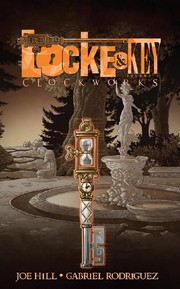
The backstory volume, going back to the Revolutionary War and 1988 to explain the door. Everything you assumed for four volumes gets reframed here.

The finale, and a genuine one — the series ends and stays ended. Read it directly after Clockworks; it is the second half of the same movement.
The side stories
IntermediatePick up the extras knowing they are supplements, not sequels, and that they assume you have finished the main six.
▸ Study plan for this stage
Pace: An evening, around 75 pages. This is a short supplementary volume and should be treated as such — read it in one sitting, some weeks after the finale rather than immediately, so it registers as epilogue rather than as anticlimax.
- Heaven and Earth collects one-shots and stray stories from around the edges of the series, and is pure supplement rather than continuation
- The extras are written to be read after the main six, not interleaved with them, because several of them touch on the central mystery
- It is worth reading only if you want more of Keyhouse after the ending; skipping it costs you nothing about the story
- The short-story form suits the premise well — one key, one idea, one self-contained horror — and a couple of these are as good as anything in the main run
- It also shows how strong the concept is as a generator: any key implies a story, which is why the series produced so much peripheral material
- Our catalogue does not currently carry the other Locke and Key side collections published since; that is a gap on our side rather than the end of the material
- Because the pieces are standalone, this is the only volume in the path that can be read out of order or in fragments without damage
- Treat it as dessert: the ending you were given in the finale is the ending, and nothing here revises it
- Which of these short pieces would have strengthened the main run, and where would it have gone?
- What does the short form do for the key premise that a six-volume arc cannot?
- Do any of these stories contradict or complicate the finale? Should a supplement be allowed to?
- Having finished everything, what is the single best key in the series and why?
- Would you recommend reading these at all, and to whom?
- Read this at least a few weeks after the finale. Immediately afterwards it reads as an anticlimax; later it reads as a return.
- Pick the strongest story here and work out its structure in one paragraph. The good ones are all built the same way: introduce a key, establish the cost, spring it.
- Invent a key and a single-issue story for it. The premise is generous, and doing this once shows why the series generated so much extra material.
- Look up which further side collections exist before buying anything else, so you know what is a supplement and what is a reprint.
Next up: You have the whole planned story plus the extras that assume it, and a series that genuinely ends where it says it does.

Collects the later one-shots and stray stories from around the edges of the series. Pure epilogue material — worth it only if you want more of Keyhouse after the ending.
Discussion
Keep reading
Paths that share books, cover the same subject, or open a related topic.