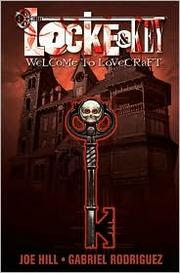
Start with Locke & Key, Vol. 1, published as Welcome to Lovecraft, and read straight through to volume six. This is a finite, planned story in six collected volumes with a real beginning and a real ending. There is no branching continuity, no crossover backlog, and nothing to catch up on — the reading order is simply one to six, and the numbers on the spines are more reliable than the subtitles when you are buying.
Read the warning plainly before you begin. This is horror, its protagonists are children, and volume one opens with the brutal murder of their father during a home invasion, with sexual violence in the backstory. It is not a young-adult book despite the teenage cast. The violence is not incidental atmosphere either: the series is about what a family does with trauma, and it stays with the aftermath rather than moving past it.
The first two volumes
Locke & Key, Vol. 1 establishes the rule the whole series runs on: every key does one strange specific thing, and adults cannot retain the memory of magic. That second rule is the engine of the plot and the source of most of the horror, because the children cannot be believed and cannot be helped.
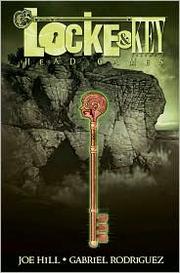
Locke & Key, Vol. 2, published as Head Games, introduces the Head Key — the single best idea in the book — and turns the premise from a haunted house into something much stranger and more psychological. Gabriel Rodriguez draws Keyhouse consistently enough to navigate, and Joe Hill writes to that strength by hiding information in backgrounds.
The middle
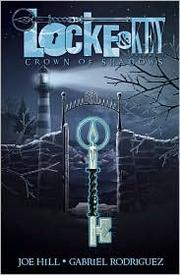
Locke & Key, Vol. 3 is the most horror-forward book in the run and the point where the threat stops being uncanny and becomes physical. Several near-wordless sequences here are the best argument in the series for reading comics slowly, since the storytelling is entirely in panel-to-panel movement.
Locke & Key, Vol. 4 is the most formally playful, including a full issue drawn in the style of a familiar newspaper strip and other pastiches that use a borrowed visual language against the reader. Those experiments only land because you know the cast by now; encountered cold they would read as a gimmick rather than a gut-punch. Across these two volumes the keys multiply, the antagonist's plan becomes legible, and the children's information advantage starts to cost them.
The ending
Locke & Key, Vol. 5, published as Clockworks, is the backstory volume, going back to the Revolutionary War and to 1988 to explain the door and where the keys came from. Nearly everything you assumed across four volumes gets reframed, and several adult characters become far more sympathetic or far worse in retrospect. That is why it sits immediately before the finale rather than earlier.
Read Locke & Key, Vol. 6 directly afterwards. The two are one continuous movement, and the finale assumes the reframing is fresh. It is a genuine ending: the story closes, the ending sticks, and the series does not reopen — a rarity in serialised comics. It also resolves the adults-forget rule as well as the plot, which is the harder of the two problems and the reason the series is admired.
The side stories
Locke & Key: Heaven and Earth collects one-shots and stray stories from around the edges of the series. It is pure supplement rather than continuation, written to be read after the main six rather than interleaved with them, because several pieces touch on the central mystery. Skipping it costs you nothing about the story. The short form suits the premise well — one key, one idea, one self-contained horror — and a couple of these are as good as anything in the main run.
Our catalogue does not currently carry the other Locke and Key side collections published since; that is a gap on our side rather than the end of the material.
Where to stop
After volume six, unless you want more of Keyhouse. Because the extras are standalone, Locke & Key: Heaven and Earth is the only book here that can be read in fragments or out of order without damage. Treat it as dessert — the ending you were given is the ending, and nothing in it revises that.
More comics reading orders on Discover.
Follow the full ordered path here: Locke and Key Reading Order and Guide.