Little House on the Prairie Reading Order: Where to Start
The Little House books are read in publication order, which is also the order Laura ages in — from a five-year-old in a Wisconsin cabin to a married woman on a Dakota claim — and there is only one apparent oddity. Farmer Boy sits second and is not about Laura at all: it follows Almanzo Wilder's boyhood on a prosperous New York farm, nine years before she was born. Keep it second. Wilder wrote it second, it is placed second in every numbered edition, and its whole function is to plant Almanzo long before he arrives in Laura's life in book seven, so that his farm, his horses and his money-sense already mean something. It also gives the series its only picture of American plenty, which makes the hunger in The Long Winter land far harder.
Start Here: The Big Woods
BeginnerMeet the Ingalls family and the other childhood the series is quietly measuring them against.
▸ Study plan for this stage
Pace: 1–2 weeks. Little House in the Big Woods is 228 pages and Farmer Boy 372, both in large print with illustrations — an adult reads each in two or three evenings. Read them back to back rather than spaced out; the contrast is the whole point of the pairing.
- Wilder's method is inventory: the series teaches by describing processes — butchering, smoking, churning, making bullets — in full sequence, and plot is secondary
- The Wisconsin cabin as a closed, sufficient world, with the woods as boundary rather than threat
- Pa's fiddle and Ma's propriety as the two poles of the family's values, established here and never abandoned
- Farmer Boy is not a digression: Almanzo Wilder is the man Laura marries in book eight, and this is where his money, his horses and his standards are planted
- Almanzo's Malone farm as American abundance — the food catalogues in Farmer Boy are famous, and they exist to be remembered later
- The narrative distance: Wilder writes a five-year-old's perceptions in third person, sixty years after the fact, and the gap is deliberate
- The books were written in the 1930s about the 1870s and 1880s, so Depression-era readers are the intended audience for stories of self-sufficiency
- Wilder spends pages on how a pig is butchered and how bullets are moulded. What is that detail doing that a plot summary would not?
- Why does Farmer Boy sit second rather than being folded in later, given that it is about a different child in a different state nine years earlier?
- List what the Wilder family eats in a single Farmer Boy chapter. What is being established about their economic position relative to the Ingallses?
- How does Wilder handle Pa's restlessness — the impulse that moves the family repeatedly — in Big Woods, before it has caused any harm?
- Both books open with a year's cycle of seasons. What does that structure do to a reader's sense of what a childhood is?
- Make a two-column inventory of food as you read: everything the Ingallses eat in Big Woods on the left, everything the Wilders eat in Farmer Boy on the right. Keep the page — you will want it during The Long Winter.
- Pick one process chapter from each book (the sugaring-off in Big Woods, the ice-cutting or the threshing in Farmer Boy) and write out the steps as a numbered procedure, as if for someone doing it. Note where Wilder assumes knowledge she never explains.
- Write 200 words on Almanzo's fifty-cent piece and what his father tells him about it. Then, after you finish the whole series, come back and note where that scene pays off.
- Copy out the first paragraph of each book side by side and mark the differences in sentence length and vocabulary. Wilder is calibrating to different ages of protagonist; identify how.
Next up: With the Wisconsin cabin and the Malone farm both in your head as fixed points of comfort, the two moves west that follow read as loss rather than adventure.
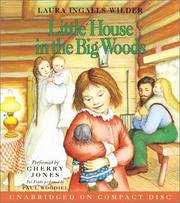
Book one and the only place to start. Almost plotless — a year of butchering, churning, sugaring and storytelling in a Wisconsin cabin. The domestic detail is the series' whole method, established before any plot arrives.
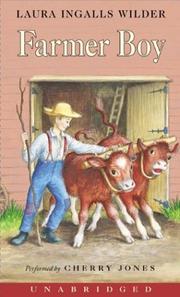
Book two, and the one people want to skip. Do not: Almanzo's well-fed New York boyhood is the deliberate opposite of everything that follows, and he is the man Laura marries in book seven. Read here, the contrast does its work for six more books.
West
BeginnerFollow the family out of the woods and onto the plains, through the two moves that give the series its name.
▸ Study plan for this stage
Pace: 1–2 weeks. Little House on the Prairie is 309 pages and On the Banks of Plum Creek 338. Read Prairie with a note-taking habit — the Osage material is best handled by marking passages as you go rather than reconstructing them afterwards.
- The Kansas year as illegal settlement: the Ingallses build on Osage Diminished Reserve land and are eventually moved off it, which the book narrates without naming as trespass
- Ma's fear of the Osage and Pa's more ambivalent position — the book presents both from inside the family's assumptions, with no external framing
- The famous line 'the only good Indian is a dead Indian' spoken by Mrs Scott, and the fact that the narrative does not endorse or refute it
- House-building as narrative spine: the whole first half of Prairie is a construction sequence, cabin, well, chimney, door
- Plum Creek and the dugout: living in the ground, and the shift from wilderness to a settlement with a town, a church and a school
- The grasshopper plague as the series' first encounter with total, unearned economic ruin, and Pa's walk east to find work
- Nellie Oleson's arrival, and Laura emerging as an individual with a temper rather than one of a set of sisters
- On whose land is the Kansas cabin built, and how does the book explain the family's departure? Compare that with what the historical record says about the 1870 removal.
- Mrs Scott says a notorious sentence about Indians. What does Pa say in response, what does he not say, and how would you describe the narrative's position?
- Plum Creek introduces a town, a shop, a church and a school. What changes in the kinds of conflict Laura experiences once those exist?
- The grasshoppers destroy a crop that was already mortgaged. What does the book show you about debt and risk on a wheat farm, and how much of it is stated outright?
- By the end of Plum Creek, what has Laura learned to want that she did not want in Big Woods?
- Mark every passage in Little House on the Prairie where the Osage appear or are discussed — there are roughly a dozen — and write a single page describing what the family believes, what they observe, and where those two diverge.
- Draw the Kansas cabin from Wilder's description alone: dimensions, door, window, chimney, floor. Then note every detail she gives that you needed and every one she omits.
- Trace the family's route on a real map from Pepin, Wisconsin to Independence, Kansas to Walnut Grove, Minnesota, and mark the years. Keep this map; it grows for the next three books.
- Write 250 words comparing the Nellie Oleson scenes in Plum Creek with Laura's behaviour toward her. Whose side is the narrator on, and how do you know?
Next up: The family arrives in Dakota Territory already twice ruined, which is the condition the three strongest books in the series build on.

Book three, the Kansas year, and the most famous title in the series. Third — it is also the book that most needs reading with a modern eye open, since the Osage are written from inside the family's assumptions rather than from any distance.
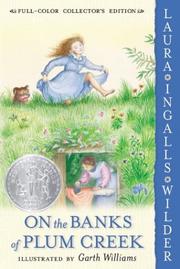
Book four, Minnesota, the dugout, and the grasshoppers. Fourth: this is where Laura becomes the narrator's real subject rather than one child among several, and where Nellie Oleson arrives.
Dakota
BeginnerRead the three books of the Dakota years, including the one most adults name as the best in the series.
▸ Study plan for this stage
Pace: 3 weeks, one book a week. By the Shores of Silver Lake is 290 pages, The Long Winter 335, Little Town on the Prairie 305. Do not read The Long Winter quickly — its effect depends on the accumulation of near-identical blizzard chapters, and skimming destroys it.
- The scarlet fever and Mary's blindness happen between books, reported in a few sentences at the opening of Silver Lake — the series' most striking omission
- The tonal break: Silver Lake opens on illness, debt and the death of Jack the dog, and the childhood register of the first four books does not return
- Railroad work, the homestead claim and the town site — the family stops being isolated settlers and becomes part of a speculative land economy
- The Long Winter's structure: seven months, near-identical chapters, diminishing food, and prose that gets flatter as the characters get weaker
- Twisting hay for fuel and grinding seed wheat in a coffee mill as the two images the book is remembered for
- Almanzo and Cap Garland's ride for wheat, and Wilder's decision to give the rescue to a character the reader met in book two
- Little Town's deliberate relief — socials, name cards, school exhibitions — and Laura at fifteen becoming a sharper, funnier narrator
- Laura's teaching certificate at fifteen as the economic engine of the family's plan for Mary's college
- Mary's blindness is disposed of in a paragraph. Why do you think Wilder handled the series' largest catastrophe that way, and what does it do to the reader?
- Count the chapters in The Long Winter that consist mainly of the family sitting in the kitchen while the wind blows. What is the cumulative effect, and how would the book fail if there were three of them instead?
- How does Farmer Boy change your reading of The Long Winter? Point to a specific scene where the earlier book's abundance is doing work.
- The town survives because Almanzo has hidden seed wheat and because two teenagers ride out into open prairie. What does that say about the relationship between the homesteads and the town?
- Little Town is far lighter than the book before it. Is that a failure of nerve or a structural choice, and what evidence in the text supports your answer?
- Keep a food ledger through The Long Winter: what the family eats, in what quantity, in each chapter. Chart it against the chapter number, then set the chart beside your Farmer Boy food inventory from stage one.
- Write out the sequence for twisting hay into a fuel stick from Wilder's description, then try to reconstruct it with actual straw or long grass. Note what the text leaves out.
- Find the passage in Silver Lake where Laura first sees the open prairie with no trees, and the passage in The Long Winter where she looks at the same landscape in October. Set them side by side and write 200 words on what has changed in the narration, not the scenery.
- List every named resident of De Smet as they appear across the three books, with what each does for a living. The town's occupational structure explains most of the plot of Little Town on the Prairie.
Next up: Laura now has a teaching certificate and a suitor, which is exactly the material of the two books that close the story Wilder chose to tell — and the one she did not.
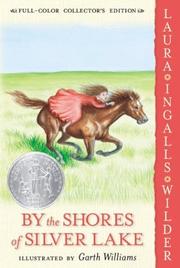
Book five, opening after a scarlet fever epidemic and Mary's blindness — the first genuinely sombre book. Fifth: it makes the leap from childhood to adolescence, and the tonal shift is intentional.
Book six, seven months of blizzards and a town slowly starving. The best book Wilder wrote and the one that repays Farmer Boy most directly. Sixth, exactly in place.

Book seven, De Smet in spring, with socials, school and Almanzo walking Laura home. Seventh — the relief after book six is calculated, and Laura at fifteen is a much sharper narrator.
Growing Up
BeginnerFinish the series Wilder published, then read the posthumous manuscript that shows what she chose to leave out.
▸ Study plan for this stage
Pace: 1–2 weeks. These Happy Golden Years is 304 pages and The First Four Years only 134. Read them in immediate succession; the shock of the second depends on the first being fresh.
- The Brewster school section: Laura at sixteen boarding with a family in visible marital crisis, the bleakest sustained passage in the published series
- The courtship conducted almost entirely in a sleigh, twelve miles each way, every Friday and Sunday, which Wilder renders as weather and horses rather than as conversation
- Laura's removal of 'obey' from the wedding vows, stated plainly and without comment
- These Happy Golden Years as the intended ending — Wilder wrote it as the last book and the closing image is the deliberate full stop
- The First Four Years was found unrevised after Wilder's death in 1957 and published in 1971: it is a manuscript, not a finished book, and reads like one
- The difference in voice: no softening, no fiddle, crop failure, diphtheria, Almanzo's partial paralysis, a dead infant son and a house fire, told flatly
- What the revision process was actually doing across the other eight books, which only becomes visible when you read a book that never had it
- Wilder wrote almost nothing about the interior of the courtship. What does she substitute for it, and why might that be more effective than dialogue?
- Name three specific events in The First Four Years that the finished books would have handled differently, and describe how — softer, offstage, or omitted entirely.
- The First Four Years has no chapter titles and almost no scene-setting. Which of those absences is the manuscript's incompleteness and which is a genuine change in Wilder's approach?
- Is The First Four Years part of the series or an appendix to it? Argue either way using the ending of These Happy Golden Years as evidence.
- Laura refuses to say 'obey'. Given how Ma is portrayed across eight books, is this a break with her upbringing or a continuation of it?
- Write 300 words on the Brewster school chapters as if they were a short story — what happens, what is implied, what is never said. Then note how much of the menace is carried by things Laura observes without interpreting.
- Take one event that appears in both registers — a crop failure will do — and rewrite the First Four Years version in the prose style of The Long Winter. The exercise is to identify, concretely, what Wilder's revision added and removed.
- Build a timeline of Laura's life from the nine books: birth year, each move, each school term, the wedding date, the four years after. Cross-check it against the publication order and note where the two diverge.
- Read the last page of These Happy Golden Years and the last page of The First Four Years together, and write a paragraph on which one you would call the ending of the series, and why.
Next up: The First Four Years stops in 1889 with the family still in Dakota; the one remaining Wilder book picks up the road out.
Book eight, Laura teaching at sixteen and courting through it, ending with the wedding. Eighth, and the intended ending — the series closes here on purpose.
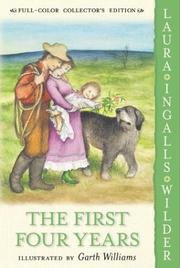
Book nine, published in 1971 from an unrevised manuscript found after Wilder's death: the first four years of the marriage, told with none of the softening the other books apply. Read it last and expect a different, bleaker writer.
Past the Series
IntermediateRead the one further Wilder book that continues the story in her own words.
▸ Study plan for this stage
Pace: A single sitting. On the Way Home is 112 pages, most of which is Rose Wilder Lane's framing memoir rather than the diary itself. Genuinely optional — treat it as an afternoon, not a stage.
- The 1894 wagon journey from De Smet, South Dakota to Mansfield, Missouri, which is the trip out of the setting of every previous book
- Wilder's diary voice: clipped, practical, weather and mileage and prices, with almost none of the shaping that makes the novels novels
- The hundred-dollar bill and what happens to it, which is the only piece of narrative suspense in the book
- Rose Wilder Lane's framing memoir, and the fact that her editorial hand is now visible on the page rather than hidden inside the series
- The long-running question of Lane's role in the nine books, which this volume is the most accessible entry point to
- The Ozarks as destination — Rocky Ridge Farm, where every one of the Little House books was later written
- How does the diary voice differ from the novel voice? Point to two specific entries that a novelist would have expanded and explain what she would have added.
- What does Rose's framing memoir do that the diary alone cannot, and where can you see her shaping the reader's response?
- Knowing that Wilder wrote the novels at Rocky Ridge in her sixties, does seeing the journey there change how you read the nostalgia of Big Woods?
- The First Four Years ends in 1889 and this diary begins in 1894. What happened in between, and why is neither book willing to cover it?
- Read the diary entries for three consecutive days and rewrite them as a chapter in the style of On the Banks of Plum Creek — roughly 600 words. This is the fastest way to feel what Wilder's revision process consisted of.
- Extend the route map you started in stage two to Mansfield, Missouri, and mark the 1894 journey against the earlier moves. The whole geography of the series now fits on one page.
- Write 250 words on the strongest evidence in this volume for Rose Wilder Lane having shaped the novels, and the strongest evidence against.
Next up: This is where Wilder's own account ends; anything further means biography and scholarship rather than her own words.

Wilder's 1894 diary of the wagon journey from South Dakota to Missouri, published with a framing memoir by her daughter. Genuinely optional, and it picks up exactly where The First Four Years leaves off.
Discussion
Keep reading
Paths that share books, cover the same subject, or open a related topic.