Stage Lighting Design: The Best Books, In Order
This curriculum builds from the core principles of stage lighting—color, angle, and quality of light—through the technical and artistic craft of control systems and cueing, and finally into the professional practice of designing for theatre and live events. Starting at an intermediate level, each stage assumes growing fluency and pushes toward genuine design mastery.
Foundations of Light
IntermediateEstablish a rigorous vocabulary and intuition for the fundamental properties of light: color, angle, intensity, and how they interact on stage.
▸ Study plan for this stage
Pace: 4–5 weeks, ~25–30 pages/day. Begin with Pilbrow's technical chapters (weeks 1–2), then transition to Jones's conceptual framework (weeks 3–4), with overlap week for synthesis and exercises.
- The physics of light: wavelength, intensity, color temperature, and how these properties behave on stage
- Color theory applied to theater: additive vs. subtractive color mixing, psychological and emotional associations, and practical gel/filter selection
- Angle and direction as compositional tools: how light position creates form, shadow, mood, and visual hierarchy on stage
- The relationship between light intensity and visibility: contrast, visibility thresholds, and how to sculpt space through brightness variation
- Dramatic imagination as the bridge between technical properties and artistic intent: using light to reveal character, emotion, and narrative
- Practical vocabulary: beam angle, throw distance, color temperature (Kelvin), CRI, intensity ratios, and how these terms translate to design decisions
- Light as a design element equal to scenery and costume: how to think of light as a character and storytelling tool, not merely illumination
- The interplay of all four properties: how color, angle, intensity, and timing work together to create a unified visual language
- Explain how the three primary properties of light (color, angle, intensity) work together to create mood and reveal form on stage. Give a specific example from a play you know.
- What is the difference between additive and subtractive color mixing, and when would you use each approach in theater lighting?
- How does light angle affect the perception of an actor's face and body? What angles create intimacy, power, or distortion?
- Define color temperature in Kelvin and explain how it influences the emotional tone of a scene. What temperature would you choose for a warm, intimate moment versus a cold, hostile one?
- According to Jones, what is the role of dramatic imagination in lighting design, and how does it differ from purely technical competence?
- Design a simple lighting state (3–5 fixtures) for a 10-second scene using Pilbrow's technical vocabulary and Jones's dramatic principles. Justify each choice.
- Read Pilbrow's chapters on color and intensity (typically chapters 2–4) and create a one-page reference sheet with the visible spectrum, common gel colors, their emotional associations, and practical intensity ratios for different theatrical contexts.
- Study a scene from a play (e.g., a confrontation, a revelation, a moment of solitude). Write a 1–2 page lighting design proposal using Pilbrow's technical language and Jones's dramatic imagination framework, specifying color, angle, intensity, and timing for at least 4 light cues.
- Conduct a hands-on experiment: if you have access to stage lights or even household lamps, position them at different angles (front, side, back, top) on a subject (a face, an object, or a small set piece) and photograph or sketch how each angle changes perception of form, emotion, and visibility. Document your observations.
- Create a color palette for a specific play or scene: select 5–8 gel colors that would support the narrative and emotional arc. For each, note the color temperature, psychological effect (per Jones), and practical intensity level needed.
- Read Jones's chapters on light and imagination (typically the middle sections of *The Dramatic Imagination*) and write a 2–3 page reflection on how his ideas about light as a storytelling tool either confirm or challenge your previous assumptions about what lighting design is.
- Design two contrasting lighting states for the same stage space (e.g., a bedroom at dawn vs. at midnight, or a courtroom in justice vs. in corruption). Use Pilbrow's technical vocabulary to specify fixtures, colors, angles, and intensities; use Jones's framework to explain the dramatic intent behind each choice.
Next up: This stage equips you with both the technical language and the artistic sensibility needed to move into applied design—learning how to translate these fundamental properties into coherent lighting plots, cue sequences, and responses to specific scripts and genres.
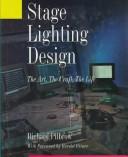
A richly illustrated, practitioner-written classic that grounds the reader in color, angle, and the visual grammar of stage light — the ideal starting point for an intermediate learner who needs both theory and professional context.
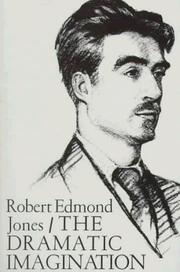
A short but essential artistic manifesto that reframes lighting as storytelling and mood-making; reading it early ensures the technical study that follows is always anchored to dramatic purpose.
Color, Angle & Quality
IntermediateDevelop deep, practical command of color mixing, color temperature, beam angles, and the psychological and visual effects they produce.
▸ Study plan for this stage
Pace: 4–5 weeks, ~25–30 pages/day, with 2–3 days per week dedicated to hands-on lighting exercises and color/angle experiments
- Color temperature (Kelvin scale) and how it affects mood, visibility, and audience perception in concert environments
- Color mixing principles: additive (RGB) vs. subtractive color mixing and their practical application in concert lighting rigs
- Beam angles, throw distances, and fixture selection: how to match optics to venue geometry and performance needs
- Psychological and emotional effects of color: warm vs. cool palettes, saturation, and color relationships in performance contexts
- Light quality (hard vs. soft light) and how diffusion, reflection, and fixture type shape visual texture and visibility
- Practical color theory for concert lighting: complementary colors, color contrast, and readability on stage
- Angle of incidence and key/fill/back light ratios: three-dimensional modeling of performers and scenery
- Practical constraints: lamp availability, color filter limitations, and real-world fixture behavior in concert settings
- How does color temperature (in Kelvin) influence the perceived mood and energy of a concert scene, and what are the practical implications for fixture selection?
- Explain the difference between additive and subtractive color mixing, and describe a scenario where you would use each in concert lighting design
- Given a venue with a 40-foot throw distance and a 20-foot stage width, how would you select beam angles and fixture types to achieve even coverage with appropriate key and fill light?
- What is the relationship between light quality (hard vs. soft), beam angle, and the visual texture of a performer's face and body on stage?
- How do you use complementary colors and color contrast to direct audience attention and create visual hierarchy in a concert lighting design?
- Describe the three-dimensional lighting approach (key, fill, back) and explain how angle of incidence affects the modeling and visibility of performers
- Color temperature mapping: Photograph or observe the same subject under 3000K, 4000K, and 5600K light sources (or use gels to simulate). Document how mood, skin tone, and visual warmth shift, then write a 1-page analysis of when you'd use each in concert contexts
- Color mixing experiments: Using a lighting rig (or simulator software), mix primary colors (red, green, blue) to create 5 different secondary colors and document the results. Test additive mixing on a white surface and subtractive mixing with color filters
- Beam angle and throw distance calculation: For 3 different venue scenarios (small club, mid-size theater, large arena), calculate appropriate beam angles and fixture types given stage dimensions and throw distances. Sketch the light coverage patterns
- Lighting a performer in 3D: Set up a simple rig with key, fill, and back light on a volunteer or mannequin. Adjust angles and intensity ratios to achieve flattering modeling, then photograph/document the results at different angle combinations
- Color contrast and attention study: Design two 30-second concert lighting cues—one using complementary colors and one using analogous colors. Note how each guides the viewer's eye and affects perceived performer position/importance
- Practical filter and fixture inventory: Research 5 concert lighting fixtures (e.g., ETC Source Four, Chauvet Maverick, etc.) and document their beam angles, color filter compatibility, and typical throw distances. Create a reference chart for future design work
Next up: This stage equips you with the foundational language and practical skills of color, angle, and light quality—the building blocks of visual communication—preparing you to move into dynamic cue sequencing, intensity layering, and the temporal choreography of lighting design.
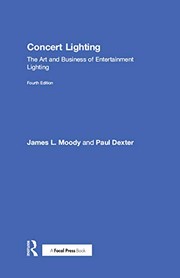
Expands color and angle thinking into the high-contrast, saturated world of live entertainment, introducing moving lights and color-mixing systems that are now standard in all live event work.
Control Systems & Programming
IntermediateUnderstand lighting consoles, DMX/networking protocols, fixture types, and how to think systematically about programming and patch.
▸ Study plan for this stage
Pace: 6–8 weeks, ~25–35 pages/day (alternating between both books; start with "Automated Lighting" for 3–4 weeks, then "Electricity for the Entertainment Electrician" for 3–4 weeks)
- DMX512 protocol: signal structure, universe limitations, addressing, and data transmission over serial and Ethernet networks
- Lighting console architecture: control surfaces, faders, buttons, playback systems, cueing logic, and how consoles interpret and transmit commands
- Automated fixture types and their control requirements: moving lights, color changers, intelligent fixtures, and how fixture parameters map to DMX channels
- Patching: the relationship between physical fixtures, DMX addresses, console channels, and how to organize patch for efficient programming
- Electrical fundamentals for entertainment: voltage, current, power calculations, circuit protection, and grounding as they apply to lighting systems
- Systematic programming workflow: planning cue sequences, using groups and palettes, managing complexity in large-scale shows
- Networking protocols beyond DMX: Art-Net, sACN, and when to use them for expanded control and distribution
- Troubleshooting methodology: diagnosing communication failures, addressing conflicts, and testing fixture response
- How does the DMX512 protocol structure data, and what are the practical limitations of a single DMX universe?
- Explain the complete signal path from a lighting console fader to a moving light fixture responding on stage.
- What is patching, and why is organizing your patch systematically essential before programming begins?
- How do you address and control different fixture types (dimmers, moving lights, color changers) on the same console?
- What electrical principles (voltage, current, power, grounding) are critical for safe operation of automated lighting systems?
- Describe a systematic approach to programming a complex cue sequence using groups, palettes, and playback logic.
- Map out a complete DMX patch for a hypothetical 20-fixture rig (mix of dimmers, moving lights, and color changers); document fixture types, DMX addresses, and console channel assignments.
- Using a lighting console simulator or real console if available, create a simple 5-cue sequence with groups and palettes; record the process and test playback logic.
- Build a wiring diagram for a small automated lighting system showing console, DMX distribution, fixtures, and power circuits; identify all connection points and potential failure modes.
- Perform a hands-on electrical calculation exercise: given fixture power ratings, calculate total load, required circuit protection, and safe cable gauges for a sample rig.
- Troubleshoot a simulated DMX communication failure (e.g., missing fixture response, partial control); document your diagnostic steps and resolution.
- Research and compare three networking protocols (DMX512, Art-Net, sACN) in a brief written summary; explain when and why you would choose each for different venue sizes.
Next up: This stage equips you with the technical foundation and systematic thinking needed to move into advanced show design, where you'll apply these control and programming skills to complex, multi-system productions with real-world constraints and creative demands.

The definitive technical reference for moving lights, DMX, and networked control systems; provides the engineering literacy needed before tackling complex cueing.
Fills in the electrical and systems knowledge that underpins safe, confident work with any control rig — best read alongside or just after the automated lighting text.
Professional Practice: Theatre & Live Events
ExpertApply everything to real-world professional contexts — theatrical production, touring, and large-scale live events — and understand the business and collaborative demands of working designers.
▸ Study plan for this stage
Pace: 4–5 weeks, ~25–30 pages/day, with 2–3 days per week dedicated to case study analysis and professional project planning
- Lighting design as a collaborative art form within theatrical and live event production hierarchies
- Aesthetic principles and emotional storytelling through light in professional contexts
- Technical execution, equipment selection, and rig design for theatre and touring productions
- Budget constraints, scheduling, and resource management in professional lighting design
- Adapting lighting designs across different venues, stages, and event scales
- The designer's role in pre-production planning, technical rehearsals, and live problem-solving
- Safety, code compliance, and industry standards in professional theatre and events
- Building a professional portfolio and understanding career pathways in lighting design
- How does Palmer define the relationship between the lighting designer and other production departments (director, set designer, costume designer)?
- What are the key aesthetic principles Palmer emphasizes for creating emotional impact through light in theatrical storytelling?
- How do technical constraints (venue limitations, budget, equipment availability) influence design decisions in professional productions?
- What is the process Palmer outlines for adapting a lighting design to different theatre spaces or touring venues?
- How should a designer approach the technical rehearsal process to troubleshoot and refine a design in real time?
- What business and professional considerations does Palmer address regarding contracts, timelines, and collaboration with producers and venue managers?
- Analyze a published lighting design from a professional theatre production (using production photos or designer interviews): identify Palmer's key principles in action and note how the designer solved specific technical or aesthetic challenges
- Create a detailed lighting design proposal for a one-act play, including: lighting plot, equipment list, cue sheet, and a written rationale explaining how your design serves the story and characters
- Develop a touring lighting package for a theatrical production: specify essential equipment, adaptations for different venue sizes, and contingency plans for technical failures
- Interview or shadow a working lighting designer in theatre or live events; document their workflow, decision-making process, and how they manage collaboration and constraints
- Design a lighting rig for a venue you have access to (theatre, black box, outdoor space): measure the space, assess existing infrastructure, and create a scaled technical drawing with equipment placement
- Write a post-production reflection on a live theatrical or event lighting design you attend: analyze what worked, what didn't, and what you would change if you redesigned it
Next up: This stage grounds you in the real-world application of lighting design within professional theatrical and live event contexts, preparing you to either specialize further in a specific domain (concert lighting, architectural lighting, film/TV) or to begin building your professional practice and portfolio as an independent designer.
A sophisticated, aesthetics-focused study of theatrical lighting that challenges the reader to think critically about design choices at a professional and artistic level.
Discussion
Keep reading
Paths that share books, cover the same subject, or open a related topic.