Documentary photography is easy to start and hard to do well, because the camera is only part of it. The harder work is learning to see honestly and to reckon with what it means to photograph other people. Skip that and you make competent images with nothing underneath.
So the reading order here is deliberate: first how images carry meaning, then the ethics of looking, then the practitioners who turned it into a body of work. Read it this way and you build judgment alongside technique.
Learn to see and read images
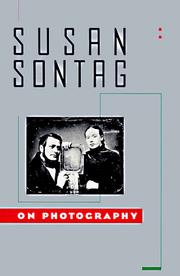
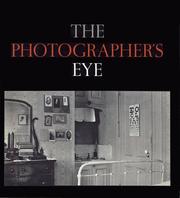
Begin with On Photography by Susan Sontag and Ways of Seeing by John Berger, two short, argumentative books that change how you understand what a photograph does to its subject and its viewer. Then The photographer's eye by John Szarkowski gives you a working grammar of the frame, the vocabulary you'll use to talk about why an image succeeds.
The ethics of looking
Documentary work lives on a moral edge, and this stage names it. Let us now praise famous men by James Agee is the landmark attempt to photograph poverty without exploiting it, and Regarding the Pain of Others, Sontag's later book, questions what showing suffering actually accomplishes. An Ethics of Seeing by Fred Ritchin extends the argument into the digital era and the responsibilities that come with it.
Study the masters
With eye and conscience in place, study the work itself. Subway by Bruce Davidson is a masterclass in a sustained project, and The Ongoing Moment by Geoff Dyer reads across photographers to reveal recurring themes. Magnum contact sheets by Kristen Lubben shows the frames around the famous ones, teaching how great images are found rather than plucked. Close with Photojournalism and Documentary Photography by Luc Delahaye and The Photo Essay by W. Eugene Smith to understand how single frames become a coherent story.
Read in this order, the theory and the practice reinforce each other. If lighting and framing pull at you, the related lighting design path digs into how light shapes an image. Follow the full reading path to work through every stage.
Follow the full reading path →
Ready to learn something deeply?
Build a reading path — free