Learn Serbian: Best Books to Read in Order
This curriculum takes a complete beginner from zero Serbian to conversational fluency across four carefully sequenced stages. It begins with script and survival basics, builds systematic grammar, expands vocabulary and reading ability, and finally pushes toward authentic, native-level comprehension — each stage's books directly preparing the learner for the next.
Script & Survival Basics
BeginnerMaster both the Cyrillic and Latin Serbian scripts, learn essential survival phrases, and gain a first feel for Serbian pronunciation and word order.
▸ Study plan for this stage
Pace: 2–3 weeks, ~15–20 pages/day
- Cyrillic alphabet: letter shapes, pronunciation, and common letter combinations
- Latin (Roman) script for Serbian: when and why it's used alongside Cyrillic
- Essential survival phrases: greetings, politeness, numbers, and basic requests
- Serbian pronunciation patterns: stress, vowel sounds, and consonant clusters
- Basic word order: SVO (Subject-Verb-Object) structure in simple sentences
- Gender and number agreement in nouns and adjectives
- Present tense of common verbs (to be, to have, to go)
- Listening comprehension: recognizing spoken Serbian at natural speed
- Can you read and write the Cyrillic alphabet fluently, and identify which letters correspond to Latin equivalents?
- What are the key pronunciation rules in Serbian, and how do stress patterns differ from English?
- Can you introduce yourself, greet someone, and ask basic survival questions (Where is...? Do you speak English?) with correct pronunciation?
- How does Serbian word order differ from English, and what role do case endings play in signaling meaning?
- Can you count from 1–20 in Serbian and understand numbers in context?
- What is the difference between formal and informal address (ti vs. vi), and when would you use each?
- Write out the entire Cyrillic alphabet by hand 3–5 times, then practice writing common survival phrases in both scripts
- Record yourself reading aloud passages from the book and compare your pronunciation to the audio (if available); focus on stress and vowel clarity
- Create flashcards for 30–40 survival phrases (greetings, numbers, polite expressions) and drill them daily for 10 minutes
- Practice the present tense of 5–6 high-frequency verbs (biti, imati, ići, znati, moći, hteti) by conjugating them in all persons
- Do a 'survival scenario' role-play: order food, ask for directions, introduce yourself—speaking aloud or with a language partner
- Listen to the audio tracks (if included) 2–3 times per week, repeating after each phrase to internalize rhythm and intonation
Next up: By mastering the scripts and survival essentials, you'll have the confidence and foundational phonetic awareness needed to move into the next stage, where you'll expand your vocabulary systematically and begin constructing longer sentences with more complex grammar.

The most widely used self-study Serbian course in English; it introduces Cyrillic alongside Latin script from lesson one and builds basic conversation through realistic dialogues, making it the ideal first active coursebook.
Core Grammar & Everyday Conversation
BeginnerInternalize Serbian's seven-case noun system, verb aspects, and core tenses well enough to hold simple conversations and write basic sentences correctly.
▸ Study plan for this stage
Pace: 8–10 weeks, ~20–25 pages/day (with 2–3 days/week for grammar consolidation and conversation practice)
- The seven Serbian cases (nominative, genitive, dative, accusative, instrumental, locative, vocative) and their functions in sentence structure
- Perfective vs. imperfective verb aspects and how they affect meaning and usage in everyday contexts
- Present, past, and future tenses in both aspects, with emphasis on natural conversational patterns
- Gender and number agreement rules for nouns, adjectives, and verbs across the case system
- Common conversational phrases, greetings, and social formulas from Colloquial Serbian
- Word order flexibility in Serbian and how cases reduce ambiguity compared to English
- Reflexive verbs and their role in everyday speech
- Prepositions and their case requirements, especially those used in daily interactions
- How do the seven Serbian cases function, and can you identify which case a noun is in within a sentence and explain why?
- What is the difference between perfective and imperfective aspects, and when would you use each in a simple conversation?
- Can you form present, past, and future tense sentences in both aspects, and do they agree correctly with the subject?
- How do gender and number affect adjective and verb agreement, and can you apply these rules in a short paragraph?
- Can you hold a basic conversation using common greetings, introductions, and everyday questions from Colloquial Serbian?
- How do prepositions govern case selection, and can you use at least five common prepositions correctly in sentences?
- Case identification drills: Take 20 sentences from Colloquial Serbian and identify the case of each noun, explaining its grammatical function
- Aspect conversion practice: Rewrite 15 sentences, converting between perfective and imperfective verbs and noting how meaning shifts
- Tense conjugation tables: Create full conjugation charts for 10 high-frequency verbs across present, past, and future in both aspects
- Agreement exercises: Write 10 short sentences with adjectives and verbs, ensuring gender and number agreement with nouns across different cases
- Conversation role-plays: Record yourself or practice with a partner performing 5 dialogues from Colloquial Serbian (introductions, ordering food, asking directions, etc.)
- Preposition + case mapping: List 15 common Serbian prepositions and the cases they require, then write 3 example sentences for each
Next up: Mastering the case system, aspects, and core tenses in this stage gives you the grammatical foundation to move into more complex sentence structures, conditional forms, and nuanced conversational contexts in the next stage.

Written by the foremost English-language scholar of Serbian, this course deepens grammar coverage with authentic dialogues and cultural notes, consolidating what Teach Yourself introduced.
Vocabulary Expansion & Reading
IntermediateBuild a working vocabulary of 2,000–3,000 words, read graded and simplified texts fluently in Cyrillic, and begin engaging with authentic written Serbian.
▸ Study plan for this stage
Pace: 8–10 weeks, ~40–50 pages/day from the textbook + 20–30 minutes daily grammar review
- Systematic vocabulary acquisition across thematic units (family, daily routines, shopping, travel, etc.) using the textbook's structured lessons
- Cyrillic fluency: automatic recognition and reading speed in both Cyrillic and Latin scripts
- Core grammar patterns from Alexander's Grammar: case system (nominative, accusative, genitive, dative, locative, instrumental), verb aspects (perfective/imperfective), and tense formation
- Reading comprehension of graded texts: moving from controlled dialogues and exercises to simplified authentic passages
- Active vocabulary production: forming sentences using new words in correct grammatical forms, not just recognition
- Collocation and phrase patterns: learning words in context with typical collocations and fixed expressions
- Bridging from textbook exercises to independent reading: recognizing how grammar rules apply in real texts
- Can you read a 200–300 word graded Serbian text in Cyrillic without significant pausing, and identify the main ideas?
- How do you form the genitive case for nouns, adjectives, and pronouns, and when is it used (possession, negation, after certain prepositions)?
- What is the difference between perfective and imperfective aspects, and how do you recognize which form to use in context?
- Can you construct 5–10 original sentences using new vocabulary from the textbook units, with correct case agreement and verb forms?
- What are the main patterns for present, past, and future tense formation in Serbian, and how do they differ from English?
- How do you approach an unfamiliar word in a graded text: what contextual and morphological clues help you infer meaning?
- Daily Cyrillic speed drills: read 2–3 pages of textbook dialogues aloud, timing yourself to increase fluency and automaticity
- Vocabulary cards with context: create flashcards for 10–15 new words per unit, including example sentences from the textbook, not isolated words
- Grammar pattern mapping: for each major case (genitive, dative, locative, instrumental), collect 15–20 example sentences from the textbook and identify the pattern
- Controlled production: complete the textbook's fill-in-the-blank and sentence construction exercises, then write 3–5 original sentences per unit using the same structures
- Graded text reading: after completing each textbook unit, read the corresponding simplified texts at the end of chapters aloud, then summarize in English
- Case agreement drills: take 10 nouns from each unit and decline them through all six cases, then use each form in a sentence
- Verb aspect practice: identify 5–10 perfective/imperfective pairs from the textbook, conjugate them in present/past tense, and write minimal pairs showing the difference
- Weekly vocabulary review: spend 15 minutes reviewing previous units' vocabulary using spaced repetition, focusing on words you've marked as difficult
Next up: Mastery of 2,000–3,000 words and confident handling of core grammar patterns positions you to tackle authentic Serbian texts (news, literature, online content) with minimal dictionary support, setting the stage for the next level's focus on fluency, cultural nuance, and independent reading.
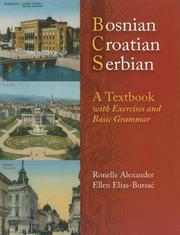
The most rigorous university-level textbook for the South Slavic standard languages; its structured vocabulary lists, grammar drills, and reading passages in all three scripts push intermediate learners to a new level of precision.

The companion reference grammar to the textbook above; reading it at this stage lets you resolve every remaining grammar question with scholarly depth while reinforcing vocabulary in context.
Authentic Texts & Path to Fluency
ExpertRead and understand authentic, unabridged Serbian literature and non-fiction, develop a feel for register and style, and move from 'advanced learner' to genuine fluency.
▸ Study plan for this stage
Pace: 8–10 weeks, ~40–50 pages/day (with close reading and annotation); allow 1–2 weeks for re-reading passages and thematic synthesis
- Pavić's lexicon-as-narrative structure: understanding how the dictionary format encodes plot, character, and philosophical meaning
- Register and stylistic layering: recognizing shifts between scholarly, poetic, historical, and intimate registers within a single work
- Intertextuality and cultural allusion: tracing references to Serbian history, Orthodox theology, Kabbalah, and Eastern European literary tradition
- Unreliable narration and metafiction: how Pavić blurs the boundary between reader, author, and text through self-referential devices
- Lexical density and semantic precision: mastering rare, archaic, and specialized vocabulary in Serbian (theological, historical, mystical terms)
- Thematic coherence across fragmentation: synthesizing meaning from non-linear, alphabetically-ordered entries into unified philosophical and narrative arcs
- Stylistic imitation and voice: developing sensitivity to Pavić's distinctive tone—erudite, melancholic, playful, and metaphysically probing
- How does the dictionary structure of *Hazarski rečnik* function as both form and content? What does Pavić achieve by organizing narrative through alphabetical entries rather than conventional plot?
- Identify and explain three major thematic threads that run through the novel (e.g., love, death, the search for meaning, East-West duality). How do they interconnect across disparate entries?
- What role do historical and mythological references (Serbian medieval history, Kabbalah, Orthodox mysticism) play in the novel's meaning? Cite at least two specific examples.
- How does Pavić's use of register shift—moving between scholarly tone, lyrical passages, and intimate confessions—create meaning and affect the reader's relationship to the text?
- Describe the novel's treatment of time, memory, and narrative reliability. How does the fragmented structure challenge conventional notions of plot and character development?
- What is the significance of the Khazar Polemic as a historical and metaphorical frame? How does it anchor or complicate the novel's philosophical questions?
- Vocabulary journal: For each reading session, extract 8–10 unfamiliar or semantically rich words (especially archaic, theological, or specialized terms). Record the entry, context, definition, and a note on why Pavić chose this particular word. Review weekly.
- Entry mapping: Create a visual map (digital or paper) tracking how characters, themes, and motifs recur across alphabetically-distant entries. Use color-coding to show thematic connections (e.g., all entries about love in one color, death in another).
- Close reading analysis: Select 3–4 particularly dense or stylistically distinctive entries (e.g., entries on key characters or concepts). Annotate them line-by-line, noting register shifts, allusions, wordplay, and ambiguities. Write a 500-word analysis of how form and content interact in one entry.
- Comparative register study: Identify one entry written in scholarly tone, one in lyrical tone, and one in confessional tone. Analyze how Pavić's language, syntax, and vocabulary differ across registers. Rewrite a passage from one register into another and reflect on what is gained/lost.
- Historical and cultural research: Choose 2–3 major historical or mythological references in the novel (e.g., the Khazar Polemic, Orthodox theology, Kabbalistic symbolism). Research their historical context independently, then re-read the relevant entries with this knowledge. Write a 1-page reflection on how this deepens your understanding.
- Thematic synthesis essay: After completing the novel, write a 1500–2000 word essay identifying and analyzing the three most significant thematic threads. Use specific entries as evidence and explain how the fragmented structure either supports or complicates your argument.
- Stylistic imitation: Write 2–3 original dictionary entries (300–500 words each) in Pavić's style—blending scholarly, poetic, and intimate registers; incorporating historical or personal allusions; and exploring a single concept or memory through fragmented, layered prose. Aim to capture his tone and technique.
Next up: Mastering *Hazarski rečnik*—its structural innovation, lexical sophistication, and philosophical depth—equips you to engage with other postmodern and experimental Serbian literature, and to read contemporary Serbian authors who build on or respond to Pavić's legacy of linguistic playfulness and metafictional complexity.
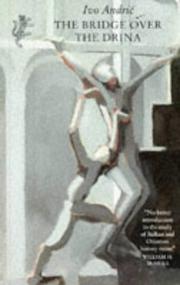
The Nobel Prize-winning novel by the greatest Serbian-language prose writer; its relatively clear narrative style makes it the canonical first 'real' literary text for advanced learners, and its rich vocabulary rewards careful reading.
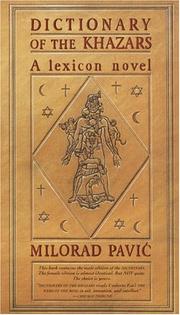
Pavić's internationally celebrated novel is written in sophisticated, inventive modern Serbian; tackling it last challenges the learner with literary vocabulary, complex syntax, and wordplay that marks true near-native reading ability.
Discussion
Keep reading
Paths that share books, cover the same subject, or open a related topic.