Learn Croatian: Best Books to Read in Order
This curriculum takes a complete beginner from zero Croatian to conversational fluency and solid grammatical understanding across four progressive stages. Each stage builds directly on the last — starting with the sound system and survival phrases, moving through core grammar and vocabulary, then into authentic reading and listening, and finally into advanced fluency resources for near-native command of the language.
Foundations: Sounds, Scripts & Survival Croatian
BeginnerMaster the Croatian alphabet, pronunciation, and essential everyday phrases; gain enough confidence to introduce yourself and handle basic interactions.
▸ Study plan for this stage
Pace: 4–5 weeks, ~15–20 pages/day, with 2–3 review days per week
- Croatian alphabet, diacritical marks (č, ć, đ, š, ž), and their pronunciation rules
- Stress patterns and intonation in Croatian words and sentences
- Present tense conjugation of common verbs (biti, imati, raditi) and their usage
- Noun gender, number, and basic case system (nominative and accusative) with articles
- Essential survival phrases for greetings, introductions, politeness, and basic requests
- Listening comprehension and oral production of everyday conversational exchanges
- Cultural context: formality levels (ti vs. vi) and social conventions in Croatian communication
- Can you accurately pronounce all Croatian letters and diacritical marks, and explain the difference between č, ć, and đ?
- How do you introduce yourself in Croatian, including your name, where you're from, and what you do?
- Can you conjugate biti (to be) and imati (to have) in the present tense and use them correctly in sentences?
- What are the key differences between formal (vi) and informal (ti) address, and when should each be used?
- Can you handle basic survival interactions: ordering food, asking for directions, asking for help, and thanking someone?
- How do Croatian nouns change form based on gender and case, and can you identify nominative and accusative forms?
- Pronunciation drills: Record yourself saying each Croatian letter and diacritical mark, then compare with native speaker audio from the book or online resources
- Alphabet mastery: Write out the full Croatian alphabet daily and practice recognizing letters in short words from the book
- Verb conjugation tables: Create and fill in conjugation charts for biti, imati, and raditi in present tense; practice writing 5–10 sentences daily using each verb
- Introduction script: Write and memorize a 30–60 second self-introduction in Croatian (name, origin, occupation, hobby), then record and listen for pronunciation accuracy
- Dialogue practice: Select 3–4 survival dialogues from Colloquial Croatian (greetings, ordering, asking directions); read aloud multiple times, then role-play with a language partner or mirror
- Listening and repetition: Listen to audio dialogues from the book, pause after each phrase, and repeat aloud to internalize rhythm and intonation
- Flashcard drills: Create flashcards for 50–75 essential survival words and phrases (greetings, numbers 1–20, common questions); review daily for 10–15 minutes
- Formal vs. informal practice: Write 5 sentences using ti and 5 using vi in appropriate contexts; explain why each register is correct for its scenario
Next up: Mastering these foundational sounds, scripts, and survival phrases equips you with the confidence and linguistic tools to move into the next stage, where you'll expand your grammar, build vocabulary thematically, and engage in longer, more complex conversations.
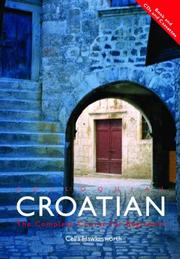
The single most widely-used beginner course for Croatian in the English-speaking world. It introduces the Latin script, pronunciation rules, and basic grammar through dialogues and exercises, making it the ideal starting point.
Core Grammar: Building the Grammatical Framework
BeginnerUnderstand Croatian's case system (all 7 cases), verb conjugation, aspect, and sentence structure well enough to construct and decode original sentences.
▸ Study plan for this stage
Pace: 8–10 weeks, ~25–30 pages/day, with 2–3 days per week dedicated to grammar drills and written exercises
- The seven Croatian cases (nominative, genitive, dative, accusative, locative, instrumental, vocative) and their primary functions in sentences
- Case endings for nouns, adjectives, and pronouns across all seven cases in singular and plural forms
- Present, past, and future tense conjugation patterns for regular and irregular verbs
- Perfective vs. imperfective aspect and how it shapes meaning and usage in Croatian
- Agreement rules: how adjectives, pronouns, and verbs must agree with nouns in case, gender, and number
- Word order patterns in Croatian declarative, interrogative, and imperative sentences
- Prepositions and their case government (which cases follow specific prepositions)
- Reflexive verbs and their conjugation patterns
- What are the seven Croatian cases, and what is the primary grammatical function of each?
- How do noun, adjective, and pronoun endings change across the seven cases in singular and plural?
- What is the difference between perfective and imperfective aspect in Croatian, and how does it affect sentence meaning?
- How do you conjugate regular and irregular verbs in the present, past, and future tenses?
- Which cases follow specific prepositions, and how do you determine case government in prepositional phrases?
- What are the rules for agreement between nouns, adjectives, pronouns, and verbs in Croatian sentences?
- Complete case declension tables for 10–15 common nouns (e.g., 'kuća', 'čovjek', 'dijete') across all seven cases and both numbers
- Identify the case of every noun, adjective, and pronoun in 20–30 sample sentences from Alexander's grammar, and explain why each case is used
- Conjugate 15–20 regular and irregular verbs across present, past, and future tenses, then use each form in an original sentence
- Write 10 pairs of sentences (perfective vs. imperfective) to demonstrate how aspect changes meaning; translate and explain the difference
- Create a preposition chart mapping 20–25 Croatian prepositions to their governing cases, then write 3 example sentences for each
- Construct 15–20 original sentences using target grammar structures (e.g., 'dative + verb', 'locative + preposition', 'reflexive verb in past tense')
- Parse 10–15 complex sentences by identifying all cases, agreement relationships, and tense/aspect forms
- Practice reflexive verb conjugation with 8–10 common reflexive verbs across all tenses, then use them in dialogues
Next up: Mastery of Croatian's case system, verb conjugation, and aspect provides the grammatical foundation needed to move into practical vocabulary building and conversational patterns, where you'll apply these structures to real-world communication scenarios.

Written specifically for English-speaking learners, this academic yet accessible grammar explains the case system and verbal aspect with clear English-language examples — the perfect complement to Babić's native-speaker reference.
Vocabulary & Conversation: Going Deeper
IntermediateExpand active vocabulary to 2,000+ words, internalize common conversational patterns, and begin reading and listening to authentic Croatian material with confidence.
▸ Study plan for this stage
Pace: 8–10 weeks, ~40–50 pages/day with active vocabulary practice and conversation drills
- Expansion of active vocabulary from 1,000 to 2,000+ words through thematic units (family, work, daily routines, travel, shopping, dining) in Alexander's textbook
- Mastery of common conversational patterns and dialogues: greetings, small talk, asking for directions, ordering food, making plans, and handling social situations
- Internalization of aspect (perfective vs. imperfective) in real conversational contexts, not just abstract grammar rules
- Recognition and production of authentic Croatian speech patterns, idioms, and colloquialisms presented in Alexander's dialogues
- Development of listening comprehension skills through dialogue-based material and authentic pronunciation models
- Building confidence with authentic reading material: short texts, menus, signs, and simple news excerpts embedded in or supplementing the textbook
- Integration of grammar (cases, verb conjugation, word order) into communicative contexts rather than isolated exercises
- Transition from controlled practice to semi-authentic material that mirrors real-world Croatian communication
- Can you hold a 3–5 minute conversation in Croatian covering familiar topics (family, work, daily activities, travel plans) with appropriate vocabulary and conversational patterns?
- How do you distinguish between perfective and imperfective aspect in context, and when would you use each in a real conversation?
- Can you read and understand a short authentic text (menu, travel guide excerpt, simple news article) and extract key information without translating every word?
- What are the most common conversational patterns in Croatian for ordering food, asking directions, making plans, and handling polite refusals or agreements?
- Can you listen to a slow-to-moderate-speed authentic Croatian dialogue and identify the main topic, key vocabulary, and speaker intent?
- How has your active vocabulary expanded, and can you use 2,000+ words naturally in both written and spoken contexts?
- Complete all dialogue-based exercises in Alexander's textbook, reading aloud and recording yourself to internalize pronunciation and natural rhythm
- Create flashcard sets (digital or physical) organized by thematic units from the textbook (family, food, travel, work); review daily and test active recall by using words in sentences
- Practice 15–20 minute daily conversation sessions using the dialogues from Alexander as templates: adapt them, swap vocabulary, and role-play different scenarios with a language partner or tutor
- Transcribe and translate 2–3 short authentic Croatian audio clips (podcasts, YouTube videos, or language learning platforms) aligned with textbook themes; compare your comprehension with provided transcripts
- Write short journal entries (100–150 words) 3–4 times per week in Croatian using vocabulary and patterns from the current chapter in Alexander; have a tutor or language exchange partner review for accuracy
- Collect and study 10–15 authentic Croatian texts (menus, travel guides, simple news articles, social media posts) related to textbook themes; annotate new vocabulary and practice reading aloud
- Complete all grammar-in-context exercises in Alexander focusing on aspect, cases, and verb conjugation; then create your own example sentences using new vocabulary to reinforce integration
- Participate in weekly 30–45 minute conversation sessions (in-person or online) with a native speaker or tutor, using topics and vocabulary from the current textbook unit
Next up: This stage equips you with a solid foundation of active vocabulary, natural conversational patterns, and the ability to engage with authentic Croatian material, preparing you to move into advanced reading and specialized topics (literature, media, professional communication) while maintaining fluency in everyday dialogue.
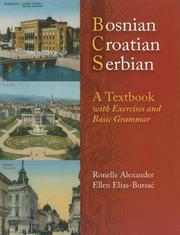
A university-level textbook used in Slavic language programs worldwide. At the intermediate stage it pushes the learner into longer texts, nuanced grammar points, and richer vocabulary through structured reading passages and exercises.
Fluency: Reading, Culture & Advanced Expression
ExpertAchieve near-fluent reading comprehension, understand cultural and literary register, and express complex ideas naturally in both spoken and written Croatian.

A Nobel Prize-winning novel originally written in the South Slavic literary tradition and widely available in Croatian. Reading an authentic literary masterwork is the ultimate test of fluency and exposes the learner to rich, formal Croatian prose.
Discussion
Keep reading
Paths that share books, cover the same subject, or open a related topic.