Best Books to Learn Irish (Gaeilge), in Order
This curriculum takes a complete beginner from zero Irish to genuine reading and conversational fluency across four carefully sequenced stages. It opens with a structured audio-based course to build spoken instincts, moves through grammar and pronunciation reference, then explores the living dialects, and finally builds real fluency through graded and authentic readers.
First Steps: Spoken Irish from Day One
BeginnerBuild a working spoken foundation — basic vocabulary, sentence patterns, and the sound system — so that grammar study has something real to anchor to.
▸ Study plan for this stage
Pace: 4–5 weeks, ~20–25 pages/day with daily audio practice (30–45 minutes)
- Irish phonetic system: broad and slender consonants, vowel sounds, and stress patterns that differ from English
- Core sentence structures: simple present tense statements, questions, and negations in conversational contexts
- Essential vocabulary clusters: greetings, introductions, numbers, days/times, family, and everyday objects organized by communicative function
- Verb conjugation basics: present tense of common verbs (bheith, déanamh, dul) with focus on spoken patterns rather than written rules
- Mutation system (lenition and eclipsis): recognition of how initial consonants change and why, grounded in real spoken examples
- Listening comprehension: training the ear to distinguish Irish phonemes and recognize word boundaries in natural speech
- Confidence-building through repetition: mastering a small set of high-frequency phrases before expanding vocabulary
- Can you introduce yourself in Irish with your name, where you're from, and a simple personal detail?
- How do broad and slender consonants differ in Irish, and can you identify examples of each in common words?
- What are the main present-tense verb forms for 'to be' (bheith) and 'to do' (déanamh), and how do you use them in simple sentences?
- Can you count from 1 to 20 in Irish and tell the time using basic phrases?
- What is lenition, when does it occur (e.g., after certain prepositions or possessives), and can you recognize it in spoken examples?
- Can you understand and respond to basic conversational prompts: greetings, 'How are you?', 'What's your name?', and simple questions about family or daily activities?
- Daily shadowing: Play audio dialogues from the book and repeat aloud, focusing on mimicking pronunciation and intonation before consulting the written text
- Flashcard drills: Create cards for high-frequency phrases (greetings, questions, responses) and practice 10–15 minutes daily until automatic recall is achieved
- Spoken narration: Record yourself introducing yourself, describing your family, and answering basic questions, then compare your pronunciation to the book's audio
- Mutation spotting: Listen to audio examples and identify when lenition or eclipsis occurs, marking them in the text; discuss why the mutation happened
- Conversation simulation: Use the dialogues in the book as templates; substitute names, numbers, or family members and speak the modified version aloud without reading
- Weekly listening comprehension: Listen to a short passage (2–3 minutes) from the book's audio without reading the text, then write down what you understood and compare with the transcript
Next up: Mastering these foundational sounds, sentence patterns, and high-frequency phrases gives you a reliable spoken base and ear training that will make the grammar rules in the next stage feel like explanations of patterns you've already internalized, rather than abstract rules imposed from above.

The classic Irish state-produced beginner course, designed around natural spoken phrases and audio. Starting here trains the ear and mouth before the learner is overwhelmed by spelling rules.
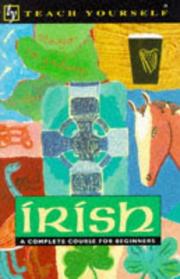
A structured, self-study course with dialogues, exercises, and audio that consolidates what Buntús Cainte introduces and adds systematic vocabulary building — the ideal bridge to grammar study.
Grammar & Pronunciation: The Structural Core
BeginnerUnderstand Irish grammar systematically — mutations, verb conjugations, noun declensions, and the logic of the sound-spelling relationship — so nothing feels arbitrary.
▸ Study plan for this stage
Pace: 4–5 weeks, ~25–30 pages/day with daily grammar drills
- Irish consonant mutations (lenition, eclipsis, and their grammatical triggers) and how they signal grammatical relationships
- Regular and irregular verb conjugations across tenses (present, past, future, conditional) and the VSO word order that governs Irish sentences
- Noun declensions and gender agreement: how the four cases (nominative, accusative, genitive, dative) change noun and article forms
- The sound-spelling relationship in Irish: how pronunciation rules follow consistent patterns once you understand the underlying system
- Prepositions and their fusion with pronouns (prepositional pronouns) and how they trigger mutations
- Adjective agreement with nouns in gender, number, and case, and their position in Irish sentences
- The copula (is) versus the substantive verb (bheith) and when to use each in Irish sentences
- What are the three main types of consonant mutations in Irish, and what grammatical situations trigger each one?
- How do regular verb conjugations work in Irish across the present, past, and future tenses, and why does Irish use VSO word order?
- Explain the four cases of Irish nouns and how they change form; give examples of how gender affects these changes.
- Why does the Irish spelling system seem irregular at first, and what consistent pronunciation rules underlie it?
- How do prepositions combine with pronouns in Irish, and what mutations do they trigger?
- What is the difference between the copula (is) and the substantive verb (bheith), and when would you use each?
- Complete mutation drills from McGonagle: identify which mutation type (lenition or eclipsis) applies in 20–30 sentences, then explain why each mutation occurs.
- Conjugate 10 regular verbs across all tenses (present, past, future, conditional) and write 3 sentences with each to show how they function in VSO word order.
- Decline 15 nouns across all four cases in both singular and plural, noting gender and how articles change; create a reference chart organized by gender.
- Transcribe 5–10 short Irish sentences phonetically using the sound-spelling rules from McGonagle, then listen to native speaker audio to verify your pronunciation.
- Create a prepositional pronoun table (e.g., 'ag' + pronouns = agam, agat, aige, aici, etc.) and write 10 sentences using different prepositional pronouns to show mutations.
- Write 20 sentences contrasting the copula (is) and the substantive verb (bheith) in different contexts, then identify which one you would use in new sentences.
Next up: Mastering these structural foundations removes the sense of arbitrariness from Irish grammar, equipping you to recognize patterns in real texts and prepare for the next stage's focus on conversational vocabulary and practical usage in authentic contexts.
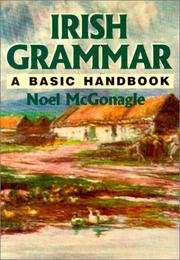
A clear, accessible reference grammar written for English speakers that explains the initial mutations, cases, and verbal system without overwhelming jargon — the right first grammar book.
The Dialects: Munster, Connacht & Ulster
IntermediateUnderstand how the three main dialects — Munster, Connacht, and Ulster Irish — differ in pronunciation, vocabulary, and grammar, and begin reading authentic dialect literature.
▸ Study plan for this stage
Pace: 4–5 weeks, ~20–25 pages/day (accounting for dialect annotation and pronunciation study)
- Munster Irish phonetic features: lenition patterns, vowel shifts, and characteristic consonant clusters (e.g., 'dh' and 'gh' pronunciation)
- Peig Sayers' West Munster dialect as preserved in 'Peig': vocabulary choices, grammatical structures, and oral storytelling conventions
- Comparative dialect markers: how Munster forms differ from standard written Irish in verb conjugations, prepositions, and particle usage
- Oral tradition and folklore language in 'Peig': formulaic expressions, narrative patterns, and the cultural context of the Blasket Islands
- Reading strategies for dialect literature: using context clues, glossaries, and phonetic guides to navigate non-standard spelling and pronunciation
- The relationship between spoken dialect and literary representation: how 'Peig' captures authentic speech while remaining readable
- What are the key phonetic features that distinguish Munster Irish from standard Irish, and where do you encounter them in 'Peig'?
- How does Peig Sayers use dialect-specific vocabulary and grammar to convey authenticity and cultural identity in her memoir?
- What oral storytelling conventions and formulaic expressions appear throughout 'Peig', and what do they reveal about Blasket Island culture?
- How would you explain the differences between how a character in 'Peig' speaks and how the same phrase might appear in standard written Irish?
- What strategies help you read and understand dialect literature when you encounter unfamiliar spellings, pronunciations, or grammatical forms?
- How does understanding Munster dialect enhance your appreciation of 'Peig' as both a linguistic and cultural document?
- Create a dialect comparison chart: select 10–15 passages from 'Peig' and note Munster-specific features (pronunciation, vocabulary, grammar) alongside their standard Irish equivalents
- Record yourself reading aloud 3–4 passages from 'Peig' using a pronunciation guide; compare your recording to native speaker audio (if available) to internalize Munster phonetics
- Annotate 2–3 chapters of 'Peig' by marking all dialect markers, oral formulas, and cultural references; write brief notes explaining their significance
- Write a short character sketch (200–300 words) of Peig in Irish, deliberately using Munster dialect features you've identified in the text
- Conduct a close reading exercise: select one memorable anecdote from 'Peig' and rewrite it in standard Irish, then reflect on what is lost and gained in the translation
- Listen to recordings of native Munster Irish speakers (if available) while following along with passages from 'Peig' to train your ear to the dialect's rhythm and intonation
Next up: Understanding Munster dialect through 'Peig' provides the foundation to explore Connacht and Ulster variants, allowing you to recognize regional patterns and appreciate how dialect shapes meaning and cultural identity across all three major Irish-speaking regions.
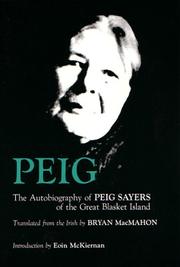
The most famous Munster Irish autobiography, dictated by a native Blasket Island speaker. Reading it now exposes the learner to authentic Munster dialect, rich idiom, and the oral storytelling tradition.
Building Real Fluency: Readers & Authentic Texts
ExpertDevelop genuine reading fluency and feel for literary Irish by working through graded readers and canonical modern prose, internalising natural idiom and style.
▸ Study plan for this stage
Pace: 8–10 weeks, ~40–50 pages/day (alternating between close reading and immersive reading phases)
- Idiom and colloquial expression in Aran Island Irish: recognizing and internalizing authentic speech patterns from An t-oileánach
- Narrative voice and perspective: understanding Tomás Ó Criomhthainn's first-person memoir style and its linguistic texture
- Stream-of-consciousness and modernist technique in Cré na cille: following Ó Cadhain's fragmented, multi-voiced narrative without translation aids
- Register and dialect variation: distinguishing formal, colloquial, and archaic Irish across both texts and understanding their stylistic effect
- Literary idiom vs. textbook Irish: recognizing metaphor, wordplay, and cultural references embedded in natural prose
- Rhythm and musicality of Irish prose: developing an ear for sentence structure, repetition, and sound patterns that characterize each author's style
- Historical and cultural context: situating both texts within 20th-century Irish literary tradition and Gaeltacht life
- How does Tomás Ó Criomhthainn's use of first-person narrative in An t-oileánach create intimacy and authenticity, and what linguistic features reinforce his voice as an Aran Islander?
- What are the major recurring idioms and colloquial expressions in An t-oileánach, and how do they differ from standard written Irish you might encounter in textbooks?
- How does Máirtín Ó Cadhain's stream-of-consciousness technique in Cré na cille challenge conventional narrative structure, and what linguistic strategies does he use to distinguish between voices?
- What role does dialect and register play in both texts, and how do the authors use variation in language to create character and atmosphere?
- How would you describe the distinctive prose style of each author—what patterns of syntax, vocabulary, and rhythm characterize Ó Criomhthainn versus Ó Cadhain?
- What cultural and historical references embedded in both texts require knowledge beyond the literal words, and how do they enrich understanding of the narrative?
- Read An t-oileánach in two phases: first pass (immersive, 20–25 pages/day, minimal dictionary use) to absorb rhythm and voice; second pass (close reading, 10–15 pages/day) to annotate idioms, colloquialisms, and cultural references
- Create a personal idiom journal: collect 15–20 recurring expressions from An t-oileánach (e.g., phrases about weather, work, community life) and note their literal vs. idiomatic meaning; use each in a sentence of your own
- Transcribe and analyze 2–3 short passages (100–150 words each) from An t-oileánach, marking syntax patterns, verb tenses, and word order; compare your findings across passages to identify Ó Criomhthainn's stylistic signatures
- Read Cré na cille in short, focused sessions (15–20 pages/day) with a notebook; track which voice/character is speaking in each section and note the linguistic markers that distinguish them (vocabulary, tone, rhythm)
- Select one complex scene from Cré na cille (e.g., a multi-voice exchange) and rewrite it in standard narrative prose; compare your version to the original to understand what Ó Cadhain achieves through fragmentation
- Conduct a comparative style analysis: choose one thematic passage from each book (e.g., descriptions of hardship or community) and write a 300–400 word reflection on how each author's linguistic choices shape meaning and emotion
Next up: Mastery of authentic idiom, modernist technique, and authorial voice in these canonical texts equips you to engage independently with contemporary Irish literature and literary criticism, moving from guided reading to self-directed literary exploration and deeper cultural engagement.

The masterpiece of Blasket Island literature, written by a native speaker in vivid, idiomatic Munster Irish. By this stage the learner can appreciate its style and use it as a model of authentic expression.

Widely regarded as the greatest Irish-language novel, written in rich Connacht dialect. Tackling it last is a genuine milestone — proof of deep fluency and the reward for the whole curriculum.
Discussion
Keep reading
Paths that share books, cover the same subject, or open a related topic.