Irish has two features that ambush learners who start reading at random. The first is initial mutation: the beginning of a word changes depending on what precedes it, so bád becomes an bhád and mo bhád and ár mbád. Until you internalise lenition and eclipsis you cannot reliably look words up in a dictionary, because the form on the page is not the headword.
The second is dialect. There is no single spoken standard. Munster, Connacht, and Ulster Irish differ in pronunciation, stress placement, some verb forms, and everyday vocabulary, and the written Caighdeán Oifigiúil is a spelling and grammar standard rather than a spoken accent. Learners who mix dialects mid-course end up with speech no native speaker quite recognises. Choose one early and stay with it — this path's course leans Munster, so if you want Connacht or Ulster, substitute accordingly and keep the rest of the order intact.
Work one course through
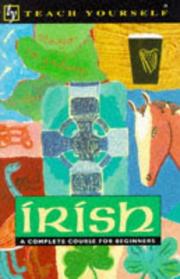
Teach yourself Irish by Diarmuid Ó Sé is a complete beginner-to-intermediate course with dialogues, graded grammar, exercises with answers, and audio. Ó Sé is a linguist of the Munster dialect, and the course is consistent in a way that many Irish materials are not. Do the exercises rather than reading passively — the copula (is versus tá), the verbal noun, and the prepositional pronouns (agam, agat, aige) are the three things that must become automatic, and they only become automatic through production.
Keep a grammar at your elbow
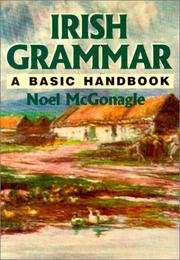
Irish grammar by Noel McGonagle is the reference you consult when the course explains something once and you need it laid out systematically. Declension classes, the full mutation tables, irregular verbs, the genitive — these are the things you will look up dozens of times, and having them in one organised place saves hours. It is not a book to read straight through; it is a book to keep open.
Then the Blasket classics
The Great Blasket autobiographies are the traditional next step, and there is a reason every Irish course points at them: they are written in a rich but unaffected Munster Irish by people describing a world they actually lived in.
Peig by Peig Sayers is the notorious one — a generation of Irish schoolchildren was force-fed it and came to loathe it, which is a fact about curriculum design rather than about the book. Read at your own pace, as an adult, its account of hardship on the island is direct and often striking. An t-oileánach by Tomás Ó Criomhthainn is the better book of the two by most readers' reckoning: sharper, drier, and containing the famous closing claim that the like of them will not be seen again. Both are available in editions with glossaries, and both reward a second pass.
The hardest and best
Cré na cille by Máirtín Ó Cadhain is the summit and belongs last. It is a novel narrated entirely by the dead, arguing and gossiping from their graves, written in dense Connemara Irish with almost no narration to orient you. Native speakers find it demanding. Come to it after the Blasket books, ideally with a translation to check yourself against, and it is one of the genuine masterpieces of twentieth-century European fiction.
Five books, one dialect, and a great deal of listening alongside. Follow the order and Cré na cille stops being an impossible wall.
Follow the full ordered path here: Best Books to Learn Irish (Gaeilge), in Order.
Ready to learn something deeply?
Build a reading path — free