Kate Atkinson Reading Order: Where to Start
Atkinson's books split into three groups that people constantly confuse: Life After Life and A God in Ruins are a linked pair and must be read in that order; Case Histories begins a five-book detective series about Jackson Brodie that runs in publication order; and the rest are standalone novels. This order starts with the linked pair, because it is her best work and needs no context, then takes the Brodie series from the beginning, then the early standalones, then the later ones.
Start here: the linked pair, in order
BeginnerRead the two novels that share a family and must be read in sequence, and see the structural trick that defines her mature work.
▸ Study plan for this stage
Pace: Five to six weeks for 997 pages: Life After Life 529 and A God in Ruins 468. Life After Life is best read in long sittings — the repetitions build a rhythm that short bursts destroy — so aim for 40 pages at a time over three weeks. A God in Ruins is more conventional and reads faster, but leave a fe
- Get the shape of her books straight before you start, because readers confuse the groups constantly. Life After Life and A God in Ruins are a linked pair sharing one family and must be read in that order. The Jackson Brodie books are an entirely separate detective series, in a different register, re
- Life After Life gives Ursula Todd a life that restarts every time it ends. She is born in a snowstorm in 1910, dies, is born again, and each version diverges from a small changed detail. The premise explains itself within ten pages and requires no patience.
- The repetitions are not drafts of a single correct life. Atkinson is interested in contingency — the cord, the roof tile, the bathing beach, the flu — and in how little separates a long life from a short one.
- Ursula's dim awareness across versions is deliberately underpowered. She gets dread, déjà vu and a compulsion to act, never memory, which is what keeps the book from becoming a puzzle to be solved.
- The London Blitz sections are the strongest sustained writing she has done and are researched in detail — the ARP work, the rescue of bodies from collapsed buildings, the specific streets. They recur across several versions and get worse each time.
- A God in Ruins follows Ursula's brother Teddy: a Halifax bomber pilot flying over Germany, and then the long unremarkable English life afterwards, with a daughter who cannot forgive him for something he did not do.
- It is explicitly a companion, not a sequel. There is no restarting device, the structure moves freely across seventy years instead, and Atkinson said herself she did not consider it a sequel in the usual sense.
- The bomber sections make the moral case in both directions: the crews were nineteen years old and terrified, and what they were doing to German cities was what it was. Atkinson does not resolve it and the novel is better for that.
- The last pages of A God in Ruins reframe everything that came before, and the effect depends entirely on having read Life After Life first. Avoid reviews, jacket copy and discussion of the ending. This is the one place on this path where a spoiler genuinely destroys the book.
- Which small changed detail launches each new version of Ursula's life? Track three and see how far each diverges.
- What does Ursula know, and how does Atkinson show it without letting her remember?
- The Munich sections raise an obvious question about what Ursula might do with her situation. How seriously does the novel take that idea, and where does it undercut it?
- In A God in Ruins, why is Viola so angry, and does the novel think she is entitled to be?
- What does the bombing campaign look like from inside the aircraft, and what does Atkinson refuse to let you forget about the other end of it?
- Having finished both: what is the pair arguing about fiction itself?
- Keep a Todd family list from the first fifty pages of Life After Life — Sylvie, Hugh, Maurice, Pamela, Ursula, Teddy, Jimmy, Izzie. Both books assume it permanently.
- Mark each 'darkness fell' and note what has changed on the next attempt. The pattern is the novel's argument, made in about a dozen moves.
- Read the Blitz chapters consecutively at some point, skipping between versions. They form a single sustained account and it is remarkable read that way.
- In A God in Ruins, note the points where the narration jumps decades mid-scene. Atkinson does this constantly and deliberately, and it is doing work you will understand at the end.
- Do not look up anything about the ending of A God in Ruins. If somebody starts to tell you, stop them.
Next up: That pair is her best work and it is complete in itself; the next stage is a different writer in the same body — a proper detective series.
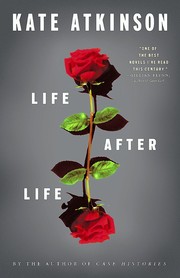
Ursula Todd is born in 1910 and dies, and is born again, over and over through the twentieth century. Her best novel and the right first book: the premise explains itself in ten pages.
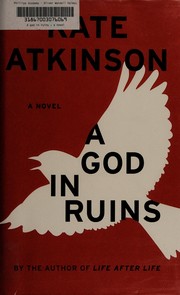
Ursula's brother Teddy, a Halifax bomber pilot, and the long life after. It is a companion rather than a sequel, but its ending only detonates if you have read Life After Life first.
The Jackson Brodie novels, in publication order
BeginnerFollow the detective series in the order it was written, since Brodie's personal life carries across every book and the coincidences accumulate.
▸ Study plan for this stage
Pace: Ten to twelve weeks for 2,045 pages: Case Histories 368, One Good Turn 418, When Will There Be Good News? 388, Started Early Took My Dog 471, Big Sky 400. These read much faster than the pair above — 45 pages a sitting is easy — but do not batch them. Each has a large cast introduced separately befo
- This is a series and the order matters, but not for the usual reason. Each case is self-contained; what carries across is Jackson Brodie's personal life — his money, his marriages, his daughter, his sister's murder — and the books assume you know where he stands.
- Atkinson's structure in all five is the same: three or four apparently unrelated storylines, each with its own cast, developed at length before they collide. The pleasure is watching the collision, and it is why the first hundred pages of each always feel scattered.
- Coincidence is used shamelessly and on purpose. She has been explicit that the novels are about the patterns people impose on chance, and readers who object to the improbability are objecting to the design.
- Case Histories opens with three unconnected cold cases — a child vanished from a garden in 1970, a young woman killed in her father's office, a woman who took an axe to her husband — and a private investigator who takes all three too personally.
- Brodie's own history, especially his sister's murder, is what makes him incapable of leaving a case alone. That is the engine of all five books and it is established here.
- One Good Turn is set during the Edinburgh Festival and begins with a road-rage incident witnessed by four strangers. Brodie's circumstances have changed substantially since the previous book and the novel does not stop to explain how.
- When Will There Be Good News? is the one that reliably makes readers finish the set, largely because of Reggie Chase, a sixteen-year-old nanny who is the best character in the series and functions as its moral centre.
- Started Early, Took My Dog closes the original quartet and reaches back to material from the first book. Its premise — a retired policewoman impulsively buying a child from a woman in a shopping centre — is the boldest opening she has written.
- Big Sky is the revival, published nine years after the quartet, with Brodie older, on the Yorkshire coast, and dealing with a teenage son. It leans on accumulated affection for him and works poorly as an entry point.
- These are crime novels with a comic narrator. Atkinson's asides are funny in the middle of grim material, which is a very English mode and is the same voice that runs through her standalones.
- In Case Histories, what do the three cases have in common thematically, given that they are unconnected in plot?
- What is Brodie actually trying to fix, and does any of the five books let him?
- How does Atkinson signal that separate strands are about to converge? Once you spot the technique you can predict it.
- In When Will There Be Good News?, why does Reggie work so well? Be specific about what she has that the adults do not.
- In Started Early, Took My Dog, is Tracy's decision defensible? The novel is genuinely unsure.
- Does Big Sky add anything to Brodie, or is it a well-executed return? Answer having read the other four.
- For each book, keep a single page listing the separate strands and their casts. It takes two minutes per chapter and removes the only real difficulty in these novels.
- Track what has changed in Brodie's circumstances at the start of each book. Atkinson never recaps and this is the only continuity the series has.
- Note the epigraphs and the titles — several are quotations — and see what each promises about its book.
- After the quartet, before Big Sky, write down what you would want from a revival. It is a useful test of what the series has actually been giving you.
- Notice how differently these read from Life After Life. Same author, same interest in contingency, entirely different machinery.
Next up: With the series done, the early standalones show where the family voice and the unreliable memory came from.
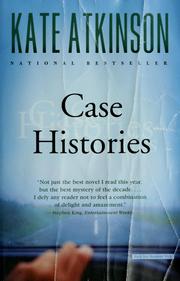
Three unrelated cold cases in Cambridge and a private investigator who cannot leave them alone. The first Brodie book and the start of the series proper — do not enter anywhere else.
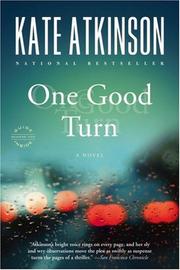
Edinburgh during the Festival, a road-rage incident and four converging strangers. Brodie's circumstances have changed since Case Histories, which the book assumes you know.
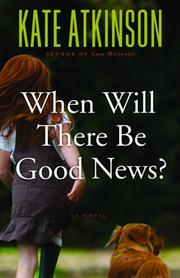
A childhood massacre, a missing doctor and a teenage nanny who is the best character in the series. Third in order, and the one that most reliably makes readers finish the set.

A retired policewoman buys a child in a shopping centre. It closes the original quartet and resolves threads running back to book one.

The series revival nine years later, with Brodie on the Yorkshire coast. Read last of the five: it leans on your accumulated affection for him.
The early standalones
IntermediateGo back to the pre-Brodie novels and see the family comedy and unreliable memory that everything later is built on.
▸ Study plan for this stage
Pace: Six weeks for 1,082 pages: Behind the Scenes at the Museum 381, Human Croquet 349, Emotionally Weird 352. All three are shorter than they feel, because the narrators digress constantly. Thirty pages a sitting is right. Emotionally Weird is the one to schedule generously — its nested structure makes
- Behind the Scenes at the Museum was the debut and won the Whitbread Book of the Year over established competition, which was a genuine surprise at the time. It is narrated by Ruby Lennox from the moment of her conception, above a pet shop in York.
- Its structure alternates Ruby's own life with chapters going back through four generations of the women in her family, so the reader assembles a century of inherited damage that Ruby herself does not know about.
- The novel turns on something Ruby has forgotten and the reader is being slowly told. Unreliable memory as a structural device starts here and never leaves her work.
- Everything Life After Life does at length is present here in miniature: the twentieth century seen through one family, the contingency, the withheld information, the comedy sitting directly on top of grief.
- Human Croquet is the strangest thing she has written: a suburban teenager, a mother who vanished, an ancient wood under the housing estate, and time that will not stay put. Some of it is Elizabethan, some of it is 1960, and the novel does not always tell you which.
- It is best read after Behind the Scenes at the Museum, when the first-person adolescent family voice is familiar and the time slippage is the only new thing to absorb.
- Emotionally Weird is the most formally playful and the least representative. A student in 1970s Dundee tells her mother a story on a Scottish island, with several other novels nested inside it — a crime novel, a fantasy, a comic academic satire — printed in different typefaces.
- It is a deep cut, not an entry point, and it is the book of hers most readers rate lowest. Read here, it is enjoyable as an experiment; read first, it would put anyone off.
- Across all three, note the recurring material: absent or dead mothers, siblings who are not what they seem, a house or town holding a secret, and a narrator whose charm is doing a lot of work to keep you from noticing what she is avoiding.
- In Behind the Scenes at the Museum, what has Ruby forgotten, and when did you work it out?
- What do the ancestral chapters add that Ruby's own narration could not?
- In Human Croquet, is the time slippage supernatural, psychological, or left deliberately undecided? Find the evidence for each.
- What is the wood doing in Human Croquet — as history, as symbol, as plot?
- In Emotionally Weird, do the nested stories comment on the frame story, or are they decoration?
- Which of the three is the best novel, and which tells you most about what she went on to write?
- In Behind the Scenes at the Museum, keep the four generations of women straight on paper. The names repeat across generations, which is the point and also a hazard.
- Mark the passages in the debut that most resemble Life After Life. There are more than you expect, eighteen years earlier.
- In Human Croquet, note each time-shift and what triggers it. A pattern emerges and identifying it makes the novel far more satisfying.
- Read the nested sections of Emotionally Weird as they come rather than skipping to the frame. Skipping is tempting and destroys the joke.
- After all three, write two sentences on what an Atkinson narrator sounds like. It will describe the Brodie novels too.
Next up: Origins accounted for, the last two novels take the historical material of the linked pair and approach the same century from different angles.
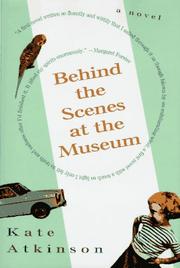
The debut that won the Whitbread Book of the Year: a York shop-girl's family, narrated from conception. It contains in miniature everything Life After Life would later expand.
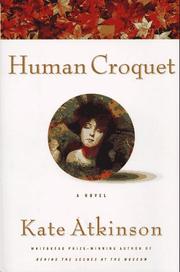
A suburban teenager, a vanished mother and time that will not stay put. The strangest of her novels, and best read once the first-person family voice is familiar.
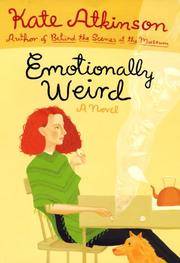
A student in 1970s Dundee tells her mother a story on a Scottish island, with several novels nested inside. The most formally playful and the least representative — a deep cut, not an entry point.
The completist tail: the later standalones
IntermediateFinish with the two recent historical novels and be able to place them against the wartime material in Life After Life and A God in Ruins.
▸ Study plan for this stage
Pace: Four to five weeks for 800 pages: Transcription 352 and Shrines of Gaiety 448. Transcription is tightly plotted and reads quickly, in about ten days. Shrines of Gaiety is crowded and deliberately loose, with a large cast introduced fast; give it three weeks and expect to keep a list.
- Transcription follows a young woman recruited in 1940 to transcribe the recorded meetings of British fascist sympathisers being run by MI5, and then finds in 1950 that the war has not finished with her.
- It draws on a genuine wartime operation in which a Security Service officer posed as a Gestapo agent to collect fifth columnists in one place. The transcripts in the novel imitate the real ones, complete with the inaudible passages and mishearings.
- The comedy of the transcription sections — banal fascists discussing their gardens, mangled by a bored typist — is doing serious work about how history reaches us in damaged form.
- It shares its war with A God in Ruins from an entirely different angle: not the bomber crews but the office, the boredom, and the moral compromise of people who never went anywhere near a front line.
- The novel has a late turn that recontextualises Juliet. It is more conventional than the reversal in A God in Ruins and readers argue about whether it is earned; having read both, you are in a good position to judge.
- Shrines of Gaiety is 1920s Soho: a formidable nightclub proprietor with a family of adult children, a policeman investigating her, a woman from York looking for two missing girls, and the specific economics of London nightlife under licensing law.
- Its proprietor is modelled on a real nightclub queen of the period, and the novel is at its best on how such an enterprise actually worked — bribes, raids, licences, and a supply of young women arriving from the provinces.
- It is loose, crowded and comic, with more plot strands than it resolves. Read after the Brodie novels, the multi-strand structure is completely familiar; the difference is that here she is less interested in making them collide.
- Ending here is deliberate: a path that opened with a woman living the same century over and over closes with two novels that pick single years out of it — 1940 and 1926 — and do them in full period detail.
- In Transcription, what does Juliet believe she is doing in 1940, and what was she actually part of?
- What do the transcript passages achieve that straight narration could not?
- Does the late turn in Transcription hold up on reflection? Identify what it requires you to accept.
- In Shrines of Gaiety, what is Nellie Coker's business actually built on, and how much of it does the novel let you see?
- Several strands in Shrines of Gaiety are left open. Is that carelessness or a decision about how a city works?
- Across fifteen books: what is Atkinson's recurring subject, stated in one sentence?
- Read a short account of the real MI5 fifth-column operation after Transcription, not before. The novel is better as fiction first and more interesting as history second.
- In Shrines of Gaiety, list the Coker children early. There are several and they are hard to tell apart at speed.
- Set the 1940 London of Transcription beside the Blitz chapters of Life After Life. Same city, same months, two entirely different books.
- Go back to the three-group map at the start of this path — the linked pair, the Brodie series, the standalones — and place all fifteen books in it. It is the single most useful thing to be able to do with her bibliography.
- Finally, reread the first page of Life After Life. It is a scene you have now seen a dozen ways, and it reads differently once the whole career is behind it.
Next up: You have the linked pair, the full detective series and both ends of the standalones, so anything she publishes next can be slotted in without a guide.

A young woman transcribes fifth-columnist meetings for MI5 in 1940 and pays for it in 1950. It shares its war with A God in Ruins from an entirely different angle.

1920s Soho nightclubs, a formidable proprietor and a policeman. Loose, crowded and comic — the right ending for a path that began with a woman living the same century over and over.
Discussion
Keep reading
Paths that share books, cover the same subject, or open a related topic.