Motorcycle racing for beginners: best books on track skills and speed
This curriculum takes a beginner from zero track knowledge to advanced racecraft by building in four deliberate stages: first establishing the physics and mental model of motorcycle dynamics, then drilling the core techniques of cornering, braking, and body position, then refining those skills with data-driven and professional-level insights, and finally absorbing the strategic and psychological dimensions of racing. Each book assumes the vocabulary and intuition laid down by the ones before it.
Foundations: Physics & Mental Model
BeginnerUnderstand how a motorcycle actually works — why it steers, balances, and falls — so that every technique learned later has a solid physical and conceptual foundation.
▸ Study plan for this stage
Pace: 4–5 weeks, ~40–50 pages/day (mix of dense technical sections and practical narrative). Allocate 2.5 weeks to "Proficient Motorcycling" and 1.5–2 weeks to "A Twist of the Wrist."
- Countersteering: how pushing the inside handlebar actually initiates a turn by creating lean angle, not by turning the wheel in the direction of the turn
- Tire grip and the friction circle: how available grip is shared between braking, accelerating, and cornering, and why you cannot do all three simultaneously at maximum intensity
- Lean angle and speed relationship: how increasing speed requires proportionally greater lean angle to maintain the same radius turn
- Weight transfer and chassis dynamics: how throttle, braking, and body position shift weight between wheels, affecting grip and stability
- The mental model of 'trail braking': how braking into a corner, then progressively releasing brake pressure while increasing lean, allows smooth entry and mid-corner speed management
- Motorcycle geometry fundamentals: rake, trail, and wheelbase and how they influence steering feel and stability at different speeds
- Vision and line selection: why looking through the corner (not at the apex) and committing to your line early are essential for smooth, confident riding
- Explain countersteering: why does pushing the inside handlebar make the motorcycle lean into a turn, and what is the physical mechanism?
- What is the friction circle, and why can't a motorcycle brake, accelerate, and corner at maximum intensity simultaneously?
- How does lean angle change as you increase speed through the same corner, and what determines the limit of lean angle?
- Describe trail braking: how do you manage brake pressure, throttle, and lean angle as you enter and exit a corner?
- How do weight transfer and chassis dynamics (via throttle and braking inputs) affect which wheel has more grip at different phases of a turn?
- Why is vision and looking through the corner (rather than at the apex) critical to smooth, confident cornering?
- On a quiet, empty parking lot, practice countersteering at low speed (10–15 mph): gently push the inside handlebar and feel the motorcycle lean into the turn without turning the wheel. Repeat in both directions until the motion becomes intuitive.
- Create a simple diagram or sketch of the friction circle and label the zones for braking, accelerating, and cornering. Annotate how grip is 'spent' in each direction and why simultaneous maximum inputs cause a crash.
- Ride a familiar, safe road section and consciously practice trail braking: brake in a straight line, then progressively release brake pressure as you increase lean angle through the corner. Record (mentally or in notes) how the bike feels at each phase.
- Set up a simple cone or marker course in a parking lot and practice smooth line selection: focus on looking through the turn (where you want to go) rather than at the cone itself. Repeat the same line 5–10 times and note how consistency improves.
- Watch video footage of yourself or a skilled rider entering a corner, and annotate the video with observations: when does braking stop? When does lean angle increase? When does throttle application begin? Correlate these to the trail-braking concept.
- Ride a series of corners at progressively higher speeds and consciously feel how much more lean angle is required to maintain the same turn radius. Stop and reflect on the relationship between speed and lean angle.
Next up: This foundation in physics and mental models—countersteering, grip management, weight transfer, and trail braking—provides the conceptual framework that all subsequent technique stages (body positioning, throttle control, brake modulation, and racecraft) depend on; without this understanding, later techniques will feel arbitrary rather than purposeful.
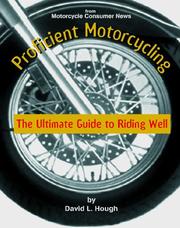
The ideal starting point: it builds essential vocabulary around traction, braking, and cornering in plain language before any track-specific complexity is introduced.
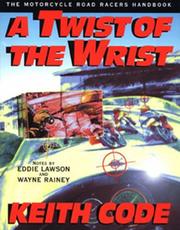
The single most influential book on motorcycle technique; introduces the 'traction budget' concept and the mental framework of conscious control that underpins everything in this curriculum.
Core Technique: Cornering, Braking & Body Position
BeginnerDevelop precise, repeatable technique for the three pillars of fast, safe track riding — corner entry, trail braking, and body positioning — using the vocabulary built in Stage 1.
▸ Study plan for this stage
Pace: 4–5 weeks, ~2–3 hours/week (1 hour for Twist of the Wrist II DVD viewing/notes, 1–2 hours for Total Control reading)
- The relationship between throttle control, body position, and lean angle — how they work together to maintain traction and speed through corners
- Trail braking technique: how to brake deeper into corners while managing weight transfer and maintaining front-tire grip
- Body positioning (inside and outside the bike): how moving your body relative to the motorcycle changes the bike's lean angle and line through a corner
- Reference points and visual markers: using consistent braking points, turn-in points, and apex markers to build repeatable cornering technique
- The friction circle concept: understanding tire grip limits and how braking, accelerating, and cornering forces compete for available traction
- Throttle roll-on and progressive acceleration: how smooth, gradual throttle application maintains stability and traction exiting corners
- The difference between body position for street riding versus track riding, and why track-specific positioning is necessary for speed and safety
- Explain how body position affects the motorcycle's lean angle and the line through a corner, and why moving your body outside the bike allows the bike to lean less for the same corner speed.
- What is trail braking, and how does it differ from traditional braking-then-turning technique? Why is it essential for fast cornering?
- Describe the friction circle and explain how braking, accelerating, and cornering forces interact. What happens when you exceed the tire's grip limit?
- How do you identify and use reference points (braking markers, turn-in points, apexes) to build consistent, repeatable cornering technique?
- What is the proper throttle application technique exiting a corner, and why is smooth, progressive roll-on better than abrupt acceleration?
- How does the technique for body positioning differ between street riding and track riding, and what are the safety and performance implications of each?
- Watch Twist of the Wrist II DVD in segments (20–30 min at a time) and take detailed notes on body position demonstrations, throttle control sequences, and cornering mechanics. Rewatch key sections until the visual concepts are clear.
- Read Total Control chapters on body position and trail braking, then create a visual diagram or flowchart showing the sequence of actions from braking point → turn-in → apex → throttle roll-on → exit.
- On a motorcycle or dirt bike (in a safe, controlled environment like a parking lot or closed course), practice identifying and marking three reference points for a single corner: braking marker, turn-in point, and apex. Repeat the corner 10+ times, aiming for consistency.
- Film yourself (or have a friend film you) riding a familiar corner at moderate speed. Review the footage and compare your body position, throttle application, and line to the techniques shown in Twist of the Wrist II and described in Total Control.
- Practice trail braking drills: on a closed course, progressively brake deeper into a corner while maintaining smooth throttle control and body position. Start conservatively and build confidence over multiple sessions.
- Create a personal technique checklist based on both books (e.g., 'brake to marker,' 'turn-in at reference point,' 'apex at target,' 'smooth throttle roll-on,' 'body outside bike'). Use it to self-assess after each riding session.
Next up: Mastering these three core techniques — cornering, braking, and body position — gives you the mechanical foundation to tackle the next stage: applying these skills under race conditions, managing risk, and developing the mental and strategic aspects of competitive riding.
Code's follow-up goes deeper into the 'Survival Reactions' that slow riders down and provides drill-based solutions for cornering and throttle control — a direct continuation of Book 2.
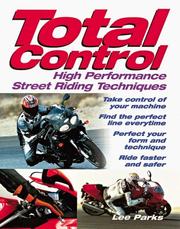
Fills the gap left by Code by giving a thorough, illustrated treatment of body position, vision, and braking technique specifically in a track-day context.
Intermediate Refinement: Lines, Data & Precision
IntermediateMove from 'doing the techniques' to optimizing them — understanding ideal racing lines, using reference points, and beginning to think about lap-time improvement systematically.
▸ Study plan for this stage
Pace: 4–5 weeks, ~40–50 pages/day (approximately 250–300 pages total)
- The racing line as a dynamic tool for minimizing time loss and maximizing exit speed, not just a geometric path
- Reference points and visual markers for consistent, repeatable line execution across multiple laps
- Braking zones, trail-braking technique, and how to adjust brake points based on track conditions and bike setup
- Throttle control and progressive acceleration through corners to maintain traction and balance
- How to use data (telemetry, video, lap times) to identify where seconds are being lost and what adjustments work
- The relationship between smooth inputs, momentum, and lap-time improvement
- Mental techniques and self-coaching strategies to refine technique under pressure
- Adapting your line and technique to different track layouts, weather, and bike characteristics
- Why is the racing line not always the geometric shortest path, and how does exit speed relate to overall lap time?
- What are reference points, and how do you identify and use them consistently to execute the same line lap after lap?
- How does trail-braking differ from traditional braking, and when is it appropriate to use in motorcycle racing?
- What does the data (telemetry, video, lap times) tell you about where you are losing time, and how do you use it to make targeted improvements?
- How do you balance smooth inputs with aggressive throttle application to maintain traction while accelerating out of corners?
- What mental strategies help you refine technique under race conditions, and how do you coach yourself to make consistent improvements?
- Walk or drive the track on foot/in a car and identify 3–5 visual reference points per corner (braking marker, turn-in point, apex, exit point); photograph or mark them mentally and use them as anchors for every lap
- Record video of 5–10 consecutive laps and compare them side-by-side; identify where your line deviates from lap to lap and what caused the variation (brake point, throttle timing, body position)
- Practice trail-braking in a controlled environment (track day or simulation) for 2–3 sessions; focus on one corner at a time, gradually moving the brake release point deeper into the turn while maintaining stability
- Collect and analyze telemetry data (speed, throttle, brake, lean angle) from 3 sessions; plot your data against a faster rider's or your own best lap to pinpoint specific areas (e.g., mid-corner speed, exit acceleration) where you lose time
- Conduct a 'line audit' on 2–3 corners you struggle with: film yourself, sketch your actual line vs. the ideal line from the book, and practice 10 laps focusing only on hitting the reference points, regardless of speed
- Set up a simple self-coaching routine: after each session, review one lap of video and write down one specific, measurable thing to improve next time (e.g., 'brake 2 meters later into Turn 3' or 'roll throttle 5% smoother at mid-corner')
Next up: This stage equips you with the precision tools and data literacy to optimize your technique systematically; the next stage will likely deepen your ability to adapt these refined fundamentals to race strategy, mental resilience under competition, and mastering advanced scenarios like wet conditions or multi-lap consistency.

Though written for car racing, Bentley's framework for reference points, vision, and the mental process of finding the limit translates directly to motorcycle track riding and is widely used by coaches.
Advanced Racecraft: Strategy, Psychology & the Limit
ExpertIntegrate everything into true racecraft — managing risk at the limit, reading competitors, developing a racer's mindset, and continuously self-coaching for improvement.
▸ Study plan for this stage
Pace: 6–8 weeks, ~25–30 pages/day, with 2–3 days per week dedicated to on-track practice and mental drills
- The relationship between throttle control, body position, and tire grip at the limit — and how small inputs compound into lap time
- Reading and predicting competitor behavior: lines, braking points, acceleration patterns, and psychological tells
- The racer's mindset: managing fear, building confidence, and maintaining focus under pressure without overthinking
- Self-coaching and feedback loops: how to extract data from each session, identify limiting factors, and adjust strategy mid-race
- Risk management at the limit: understanding when to push, when to back off, and how to find the edge without crashing
- Flow state and the Zone: achieving optimal performance through relaxation, trust, and present-moment awareness
- Tire dynamics and track conditions: how to adapt your racecraft to changing grip, weather, and track evolution
- How does Keith Code explain the relationship between throttle control and tire grip, and why is smooth application critical at the limit?
- What are the key psychological barriers that prevent riders from reaching their true potential, and how does Ken Condon suggest overcoming them?
- How can you read a competitor's riding style and predict their next move before they make it?
- What is the difference between riding at the limit and riding over the limit, and how do you know which side you're on?
- How do you develop a self-coaching system to extract actionable feedback from each lap or race?
- What does 'riding in the Zone' mean, and what mental conditions must be present to access it consistently?
- Video analysis: Record your own on-track sessions and compare your lines, braking points, and throttle application to footage of faster riders in the same series. Identify 3–5 specific differences and create a practice plan to close the gap.
- Competitor study: Watch race footage of 2–3 competitors you regularly race against. Document their typical braking points, acceleration patterns, and how they respond to pressure. Use this to predict their moves in your next race.
- Throttle control drills: On track, practice smooth, progressive throttle application in 3–4 corners per session. Focus on feeling the tire's grip threshold rather than rolling on aggressively. Log how this affects your exit speed and confidence.
- Mental rehearsal: Before each session, spend 10 minutes visualizing your ideal lap — lines, braking points, throttle inputs, and how you'll handle pressure or mistakes. Repeat this 3–4 times per week.
- Risk assessment: After each session, rate 3–5 moments where you pushed hard. For each, write down: Did I crash or nearly crash? Did I gain time? What was my confidence level? Use this to calibrate your personal limit.
- Zone state tracking: Keep a journal of sessions where you felt 'in the Zone.' Note the conditions: sleep, nutrition, pre-race routine, track temperature, how you felt mentally. Identify patterns and replicate them.
Next up: This stage transforms you from a technically proficient rider into a true racer who can manage risk, read competitors, and access peak performance on demand—preparing you to specialize in a specific racing discipline or pursue competitive advancement with a complete mental and strategic toolkit.
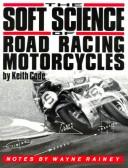
Code's most advanced work addresses the psychological and perceptual barriers that prevent experienced riders from reaching their true limit — essential reading once technique is solid.

Bridges the gap between technical skill and mental performance, covering risk management, focus, and the mindset needed to ride consistently fast and safe in a race environment.
Discussion
Keep reading
Paths that share books, cover the same subject, or open a related topic.