Best Books on Kabbalah, in Reading Order
This curriculum moves from Gershom Scholem's foundational scholarship — the indispensable academic gateway to Kabbalah — through the primary mystical texts themselves, into the dense theosophical system of the Zohar and Lurianic Kabbalah, and finally to the best modern interpreters who synthesize and popularize the tradition. Because the learner starts at an intermediate level, the path skips introductory religion surveys and dives straight into rigorous but accessible scholarly work before ascending to primary sources and advanced theosophy.
Scholem's Scholarship: The Academic Foundation
IntermediateBuild a historically grounded, critically rigorous map of the entire Kabbalistic tradition — its origins, key figures, major movements, and core concepts — so that every subsequent text has context.
▸ Study plan for this stage
Pace: 8–10 weeks, ~25–30 pages/day (with 2–3 days per week for review, synthesis, and exercises)
- Scholem's periodization of Kabbalah: early mysticism, medieval Kabbalah, Lurianic Kabbalah, and Hasidic transformation
- The Sefirot as the central symbolic system: the ten emanations and their relationships in the Tree of Life
- Symbolism in Kabbalah: how letters, numbers, and divine names encode mystical meaning and cosmology
- The role of the Zohar as the foundational Kabbalistic text and its relationship to earlier traditions
- Lurianic Kabbalah as a radical reinterpretation: Tzimtzum (contraction), Shevirat HaKelim (breaking of vessels), and Tikkun (restoration)
- Hasidism as the democratization of Kabbalah: how esoteric mysticism became a popular spiritual movement
- The historical and social contexts that shaped each phase of Kabbalistic development
- Scholem's methodological approach: treating Kabbalah as a living historical tradition, not a static doctrine
- What are the major chronological periods Scholem identifies in Kabbalistic history, and what distinguishes each phase?
- How do the Sefirot function as both a cosmological map and a mystical ladder in Kabbalistic thought?
- What is the significance of Tzimtzum in Lurianic Kabbalah, and how does it address the problem of divine transcendence and creation?
- How did Hasidism transform Kabbalistic ideas, and why did Scholem consider this a 'democratization' of mysticism?
- What role does symbolism—particularly of letters and numbers—play in Kabbalistic interpretation and practice?
- How does Scholem's historical methodology differ from earlier approaches to studying Kabbalah, and why does this matter?
- Create a detailed timeline of Kabbalistic history (12th century to 18th century) marking key figures, texts, and movements; cross-reference with Scholem's periodization
- Diagram the Sefirot tree from memory, then label each Sefira with its traditional attributes, divine names, and archetypal associations as presented in Scholem's texts
- Write a 2–3 page synthesis comparing the cosmology of medieval Kabbalah (pre-Zohar) with Lurianic Kabbalah; identify what problems Lurianic thought solved
- Select one Kabbalistic symbol (e.g., the four-letter divine name, a specific letter combination, or a Sefira) and trace how Scholem explains its symbolic layers and historical evolution
- Create a comparative chart: list 5–6 key concepts (e.g., Tzimtzum, Shevirat HaKelim, Tikkun, the Zohar's authorship, Hasidic prayer) and note how Scholem's scholarship clarifies or reframes them
- Write a 1,500-word essay: 'Why Scholem's Historical Approach Matters—How treating Kabbalah as a living tradition changes our understanding of it'
Next up: This stage establishes the authoritative historical scaffolding and core symbolic vocabulary of Kabbalah, enabling you to engage with primary Kabbalistic texts (Zohar, Lurianic writings, Hasidic teachings) with both contextual depth and critical awareness of how these traditions actually developed.
Scholem's encyclopedic yet readable overview covers the history, doctrines, and key figures of Kabbalah from its origins to the modern period. Reading it first gives you the conceptual vocabulary — sefirot, Ein Sof, Tzimtzum, Shekinah — that every later text assumes.
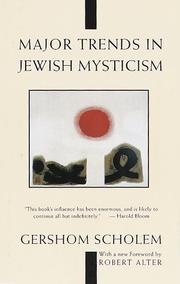
Scholem's masterwork traces the full arc of Jewish mysticism through nine landmark lectures, placing Kabbalah within the broader mystical tradition. It deepens the historical framework from the first book and introduces the Zoharic and Lurianic movements you will study in detail next.
Into the Primary Text: The Zohar
IntermediateEncounter the Zohar — the central canonical text of Kabbalah — in a scholarly translation with apparatus, and understand Scholem's focused analysis of its authorship, symbolism, and mystical language.
▸ Study plan for this stage
Pace: 8–10 weeks total. Weeks 1–6: Daniel Matt's "Zohar, the Book of Enlightenment" — read ~15–20 pages of translated text per day, but slow down to re-read each passage at least twice: once for narrative flow, once for symbolic content. Use Matt's footnotes and introduction as primary commentary. Weeks 7
- The Zohar's literary form: the fictional Midrash frame, the wandering rabbis (Shimon bar Yochai and his circle), and the use of parable and homily as vehicles for mystical disclosure
- The Sefirot as a dynamic symbolic system: the ten divine emanations, their names (e.g., Keter, Hokhmah, Binah, Tiferet, Shekhinah), and their interrelationships as mapped in the Zohar's imagery
- The Shekhinah as the feminine divine presence: her role as the tenth Sefirah, her exile, and her longing for reunification with the upper Sefirot — a central drama of Zoharic theology
- Tselem (the divine image) and the human body as a theosophical map: how the Zohar reads the human form as a reflection of the Sefirotic structure, as analyzed by Scholem
- The concept of Tikkun (repair/restoration): how human ritual, Torah study, and ethical action participate in the mending of divine and cosmic rupture
- Zoharic hermeneutics: the four-level interpretive method (PaRDeS — Peshat, Remez, Derash, Sod) and the Zohar's privileging of the hidden, mystical layer (Sod)
- The question of authorship and pseudepigraphy: Matt's and Scholem's implicit and explicit engagement with the Zohar as a 13th-century Spanish composition attributed to Moses de León, yet voiced as ancient Tannaitic wisdom
- The role of mystical language itself: how the Zohar uses erotic, luminous, and spatial metaphors to gesture toward the ineffable, and why ordinary theological language is deliberately exceeded
- After reading Matt's translation and introduction, how would you describe the Zohar's literary genre — and why does calling it simply 'a book' or 'a commentary' fall short?
- Choose any one Sefirah discussed in the Zohar passages Matt translates. How does the Zohar characterize it symbolically, and how does that symbol connect to a human, cosmic, or scriptural reality?
- How does the Zohar portray the Shekhinah's exile, and what human behaviors or historical events does it link to her separation from the divine masculine? Draw on both Matt's text and Scholem's essay on the Shekhinah.
- According to Scholem's essays in 'On the Mystical Shape of the Godhead,' what is the theological significance of Tselem, and how does it differ from a straightforward reading of 'image of God' in Genesis?
- What does Scholem reveal about the tension between the Zohar's esoteric concealment and its simultaneous desire to communicate? How does this tension shape the text's style as you encountered it in Matt's translation?
- How does the concept of Tikkun, as you find it in the Zohar passages and Scholem's analysis, reframe the purpose of Jewish religious practice — moving it from obedience or reward to something more cosmically participatory?
- Close-reading journal: After each reading session in Matt's Zohar, write 3–5 sentences in your own words summarizing what the passage 'says on the surface' and then 3–5 sentences on what it seems to be 'really saying' mystically. Track how often you can identify a Sefirah, a divine drama, or a symbolic body part.
- Sefirot mapping exercise: Draw the traditional Tree of Life diagram (ten Sefirot with their connecting paths). As you read Matt, annotate the diagram each time a Sefirah is mentioned — note the metaphor used, the color or body-part association, and the scriptural verse invoked. By the end of week 6, your diagram should be richly annotated.
- Comparative passage analysis: Select one biblical verse that the Zohar interprets in Matt's translation. Write out (1) the plain-sense (Peshat) reading, (2) the Zohar's mystical (Sod) reading, and (3) your own assessment of how the Zohar's reading transforms the verse's meaning.
- Scholem essay précis: For each essay in 'On the Mystical Shape of the Godhead,' write a one-page précis answering: What is Scholem's central argument? What Zoharic or Kabbalistic evidence does he use? What would be lost in understanding the Zohar without this essay?
- Shekhinah reflection: Using both Matt's translated passages and Scholem's treatment of the feminine divine, write a 500-word reflection on the Shekhinah's role. Consider: Is she a metaphor, a hypostasis, or something else? What does her exile mean for how Kabbalists understand history and suffering?
- Authorship thought experiment: Write a one-page argument as if you are Moses de León defending the Zohar's ancient authorship — then write a one-page rebuttal using Scholem's scholarly reasoning. This exercise sharpens your grasp of pseudepigraphy and the sociology of mystical canon formation.
Next up: By having wrestled directly with the Zohar's symbolic language and Scholem's analytical framework for its core themes, the reader is now equipped to move into broader historical and comparative studies of Kabbalah's development — tracing how Zoharic ideas were transmitted, transformed, and systematized in later schools such as Lurianic Kabbalah.
Matt's single-volume anthology of the Zohar, with clear translation and notes, is the ideal first encounter with the primary text. It makes the Aramaic original accessible without requiring years of prior study, and the selections cover the Zohar's most essential passages.
Scholem's focused essays on the symbolic figures within Kabbalah — including the Shekinah, the sefirot, and the demonic — serve as a precise analytical companion to the Zohar, teaching you how to read its imagery with scholarly depth.
The Sefirot and Lurianic Kabbalah
ExpertMaster the theosophical architecture of the sefirot and the revolutionary Lurianic system — Tzimtzum, Shevirat HaKelim, and Tikkun — which reshaped all subsequent Jewish mysticism.
▸ Study plan for this stage
Pace: 8–10 weeks, ~40–50 pages/day (with 2–3 days per week for review and reflection)
- Lurianic Kabbalah as the theological framework underlying Sabbatean messianism — Tzimtzum (divine contraction), Shevirat HaKelim (breaking of the vessels), and Tikkun (cosmic restoration)
- Sabbatai Sevi as a historical and mystical figure: his biography, his claims to messiahship, and the psychological/spiritual appeal of his movement to 17th-century Jewish communities
- The doctrine of Avodah be-Kelipot (service through the shells/husks) — the radical Lurianic idea that redemption requires descending into impurity, which Sabbateans reinterpreted to justify transgressive acts
- The Sabbatean antinomian theology: how messianic urgency led to the suspension of Torah law and the embrace of paradox (redemption through transgression)
- Scholem's historical method: how to read mystical movements as both theological systems and social phenomena rooted in concrete historical crises
- The conversion of Sabbatai Sevi to Islam (1666) and its theological aftermath — how followers rationalized apostasy as part of the messianic process
- The legacy of Sabbateanism in Jewish mysticism: Frankism, Hasidic reinterpretation, and the long shadow of failed messianism on modern Jewish thought
- What are Tzimtzum, Shevirat HaKelim, and Tikkun, and how does Scholem show that Lurianic Kabbalah provided the mystical vocabulary for Sabbatean theology?
- Who was Sabbatai Sevi, and what were the major phases of his life and messianic career before and after his conversion to Islam?
- How did Sabbateans reinterpret the Lurianic doctrine of Avodah be-Kelipot to justify antinomian practices (violation of Jewish law), and what was the theological logic behind this reinterpretation?
- What does Scholem mean by calling Sabbateanism a 'paradoxical' messianism, and how did this paradox shape the movement's response to Sabbatai Sevi's apostasy?
- How did the Sabbatean movement spread across the Jewish diaspora, and what social and psychological factors made it so appealing to communities in the Ottoman Empire and Europe?
- What was the relationship between Sabbateanism and later Jewish mystical movements, particularly Frankism and early Hasidism, and why does Scholem consider Sabbateanism a watershed in Jewish history?
- Create a visual diagram mapping the three stages of Lurianic cosmology (Tzimtzum → Shevirat HaKelim → Tikkun) and annotate it with how each stage relates to Sabbatean theology and Sabbatai Sevi's messianic claims.
- Write a 2–3 page biographical timeline of Sabbatai Sevi's life, marking key events (birth, early mystical experiences, messianic proclamation, conversion to Islam, death) and noting how Scholem interprets each phase.
- Analyze a primary source passage from Scholem's book (e.g., a Sabbatean theological text or letter) and explain how it reflects the doctrine of Avodah be-Kelipot and the antinomian logic.
- Construct a comparison chart: list the core theological differences between mainstream Lurianic Kabbalah and Sabbatean reinterpretation of the same concepts (e.g., how each understands Tikkun and the role of the Messiah).
- Write a reflective essay (3–4 pages) on Scholem's historical method: how does he balance mystical theology with social history, and what does this approach reveal about the Sabbatean movement that a purely theological reading might miss?
- Create a genealogical diagram showing the transmission of Sabbatean ideas into Frankism and early Hasidic thought, using evidence from Scholem's text to trace continuities and transformations.
Next up: By mastering Scholem's account of how Lurianic Kabbalah was both preserved and radically reinterpreted within the Sabbatean crisis, you are now equipped to understand how subsequent Jewish mystical movements (Frankism, Hasidism, modern Kabbalah) grappled with the tension between mystical innovation and halakhic tradition — a tension that defines all later developments in Kabbalah.
Scholem's monumental study of the Sabbatean movement shows Lurianic Kabbalah in explosive historical action, demonstrating how the doctrines of Tzimtzum and Tikkun fueled a mass messianic movement. It is the best case study of Lurianic ideas at work in the world.
Modern Interpreters and Living Tradition
IntermediateUnderstand how Kabbalah has been received, reinterpreted, and popularized in the modern era — from Hasidic transmission to contemporary spiritual and psychological readings.
▸ Study plan for this stage
Pace: 8–10 weeks, ~25–30 pages/day (alternating between the two books to allow for reflection and integration)
- The Sefirot as a living map of consciousness and divine emanation—how modern interpreters present them as psychological and spiritual frameworks rather than purely metaphysical systems
- Hasidic reinterpretation of Kabbalah: moving from elite scholarly practice to accessible spiritual transmission through stories, teachings, and lived experience
- God as dynamic process ('verb') rather than static being—the shift from medieval theological Kabbalah to contemporary relational and process-oriented spirituality
- Meditation and contemplative practice as the bridge between theoretical Kabbalah and direct experience—how modern teachers emphasize personal transformation over textual erudition alone
- The democratization of Kabbalah: how 20th-century interpreters made esoteric teachings available to non-Jewish audiences and secular seekers
- Psychological and therapeutic applications of Kabbalistic symbolism—the integration of depth psychology, neuroscience, and contemplative practice in contemporary readings
- The tension between tradition and innovation: how modern interpreters honor classical sources while adapting them to contemporary worldviews and spiritual needs
- The role of language, paradox, and apophatic theology in communicating transcendent experience—why Kabbalah uses poetry, metaphor, and contradiction to point beyond conceptual understanding
- How does Daniel C. Matt present the Sefirot as both a mystical map and a psychological model of consciousness? What are the implications of this dual reading?
- What does David A. Cooper mean by 'God is a verb,' and how does this reframe traditional monotheistic theology? How does this concept relate to Kabbalistic ideas of divine emanation and creation?
- How did Hasidic masters transform Kabbalah from an elite, textual practice into a living spiritual tradition accessible to ordinary Jews? What role did storytelling and personal example play?
- What are the key differences between medieval Kabbalistic thought and the modern interpretations presented in these two books? What has been preserved, and what has been fundamentally reframed?
- How do Matt and Cooper use meditation, contemplative practice, and experiential engagement as pathways to understanding Kabbalah? Why do they emphasize direct experience over intellectual study alone?
- What psychological and therapeutic insights does Kabbalistic symbolism offer to contemporary seekers? How do these authors bridge ancient mysticism and modern psychology?
- Sefirot mapping exercise: After reading Matt's presentation of the Sefirot, create a personal diagram showing how each Sefirah relates to a dimension of your own consciousness (e.g., Chokmah as intuition, Binah as rational mind, Gevurah as will/boundaries). Revisit and refine this over the course of the stage.
- Contemplative practice: Select one meditation or contemplative exercise from either book (e.g., focusing on the divine names, visualizing the Tree of Life, or practicing presence). Commit to 10–15 minutes daily for 2 weeks, keeping a journal of shifts in awareness, insights, or resistance.
- Hasidic story analysis: Read 3–4 Hasidic tales referenced or embedded in the books. For each, identify: (a) the spiritual principle being taught, (b) how it relates to Kabbalistic concepts, and (c) what it reveals about making Kabbalah accessible and lived.
- Verb vs. noun theology: Write a 2–3 page reflection comparing traditional theological language ('God is almighty,' 'God is eternal') with Cooper's process-oriented language ('God is creating,' 'God is becoming'). How does each framing change your understanding of the divine?
- Sefirah dialogue: Choose one Sefirah (e.g., Gevurah, Chesed, Tiferet) and write an imagined dialogue between your everyday self and that Sefirah as an inner voice or archetype. What does it want to teach you? How does it challenge or expand your current way of being?
- Modern application project: Identify a contemporary psychological, ethical, or spiritual challenge (e.g., managing anger, cultivating compassion, finding purpose). Research how Matt or Cooper's teachings address this. Write a brief proposal for how Kabbalistic practice could inform a solution.
Next up: This stage establishes Kabbalah as a living, evolving tradition rooted in both classical sources and contemporary experience, preparing you to explore either advanced classical texts (medieval Zohar or Lurianic Kabbalah) with new interpretive lenses, or specialized applications of Kabbalistic thought (psychology, ethics, interfaith dialogue, or artistic/creative practice).
Matt's elegant anthology of core Kabbalistic texts with brief, luminous commentary is the best modern synthesis for a reader who now has the scholarly grounding to appreciate it fully. It reads as a devotional capstone to the academic path.

Cooper's widely-read modern introduction translates Kabbalistic concepts — especially the sefirot and Ein Sof — into contemporary spiritual language. Having completed the rigorous scholarly stages, you can now read this critically and appreciate both its insights and its departures from the tradition.
Discussion
Keep reading
Paths that share books, cover the same subject, or open a related topic.