Julio Cortazar Reading Order: Where to Start
Almost everyone who bounces off Cortázar started with Hopscotch, and almost everyone who loves him started with the stories. The order here is deliberate: two collections to learn the way he tilts an ordinary afternoon into something impossible, two more to see the range, and only then the novel that comes with instructions for reading it. The remaining novels and the miscellany follow, once the tricks read as method rather than mischief.
Start Here: The Two Essential Collections
BeginnerLearn the Cortázar move — a realist surface that gives way without warning — in stories short enough to reread the same evening.
▸ Study plan for this stage
Pace: 3–4 weeks. Read Blow-Up, and Other Stories one story per sitting — never more than two — and reread anything that ends abruptly, because with Cortázar an abrupt ending usually means you missed the hinge. Cronopios and Famas (catalogued here under its Spanish title, Historias de cronopios y de famas,
- The Cortázar move: a completely realist surface that gives way, usually in a single sentence, without the narrator remarking on it
- 'House Taken Over' as the cleanest demonstration — nothing supernatural is ever described, only conceded
- 'Axolotl' and the mid-sentence transfer of point of view, which is the technique in its purest and most quotable form
- The title story, filmed by Antonioni as Blow-Up, and what the film had to invent because the story refuses to resolve
- Cronopios and famas as temperaments rather than characters — a taxonomy of ways of being in the world
- The instruction-manual form ('how to climb a staircase', 'how to cry') as comic phenomenology: describing the ordinary until it stops being ordinary
- Argentine Buenos Aires and Paris exile as the two settings Cortázar keeps returning to
- In 'House Taken Over', what exactly takes the house? What does the story's refusal to say do to you as a reader?
- Where precisely does the point of view change in 'Axolotl', and could you have predicted it a paragraph earlier?
- The instructions in Cronopios and Famas are funny. Are they only funny?
- Which of these stories would collapse if Cortázar explained the rules of its world, and which would survive?
- After both books, can you state the Cortázar move in one sentence without using the word 'twist'?
- Reread 'Axolotl' the same evening and mark the exact sentence where you are no longer where you started
- Write your own instruction manual for an everyday act in Cortázar's register — 200 words is enough, and it will teach you more than an essay would
- Keep a one-line note per story recording where the realist surface broke; the pattern across the collection is the lesson
- Note the difference in tone between the Buenos Aires stories and the Paris ones — it matters later for the exile books
Next up: You can now recognise the move on sight, which means the later collections can push it into politics, obsession and pure formal play without losing you.

The single best entry point in his whole body of work, containing House Taken Over, Axolotl and the title story Antonioni filmed. If these do not work on you, nothing longer will.
Tiny absurdist instructions and fables — how to climb a staircase, how to cry. Read second because it is the playful, essayistic Cortázar that Hopscotch's stranger chapters are made of, and it takes an afternoon.
The Rest of the Short Fiction
IntermediateSee how far the method stretches — into political horror, erotic obsession and pure formal games — before meeting it at novel length.
▸ Study plan for this stage
Pace: 4–5 weeks. All Fires the Fire is about 150 pages and its stories are longer and more demanding than the early ones — one per sitting, 2 weeks. We Love Glenda So Much runs about 145 pages; give it another fortnight and read it slowly, because the coldness is easy to mistake for flatness.
- Two timelines sharing one page in All Fires the Fire, with the seams left visible on purpose
- 'The Southern Thruway' — a traffic jam that lasts long enough to become a society, and his most famous long story
- The braided or interleaved narrative as the bridge between the stories and the novels: this is Hopscotch's technique at story length
- Late Cortázar written from Paris exile, colder and more explicitly political
- What Latin American dictatorship did to the same technique: the uncanny stops being playful and becomes a way of writing about disappearance
- Obsession and repetition as structural devices rather than character traits
- Reading the two collections in order lets you hear the temperature drop across roughly fifteen years
- In the title story of All Fires the Fire, what is gained by running the two eras simultaneously rather than in sequence?
- 'The Southern Thruway' never leaves the motorway. How does Cortázar get a whole social order out of that constraint?
- What changes in the later stories — the technique, the subject, or the author's relationship to his own cleverness?
- Where in the Glenda collection does the political reading become unavoidable, and where does Cortázar leave it optional?
- Which of these two collections would you now put in front of someone who liked Blow-Up, and why not the other?
- Take one interleaved story and read only the odd sections, then only the even ones; then read it as printed and note what the alternation added
- Mark every point in the late stories where a political fact is stated plainly rather than implied — the count is low and it is deliberate
- Write two sentences on what 'exile' does to a Cortázar sentence, using one example from each collection
- Reread 'House Taken Over' after finishing the Glenda stories; the same eviction now reads differently
Next up: You have now seen the braided structure work at story length, which is precisely the skill Hopscotch will ask you to sustain for 500 pages.

The mid-career collection where two timelines share a page and the seams show on purpose. It contains The Southern Thruway, his most famous long story, and it is the natural bridge to the novels.
Late stories, colder and more political, written from Paris exile. Read after the earlier collections so you can hear how much the Latin American dictatorships changed what he did with the same technique.
Hopscotch, and How to Read It
IntermediateTake on the novel that made his reputation, with a decision made in advance about which of its two reading orders you are following.
▸ Study plan for this stage
Pace: 8–10 weeks. Note that this edition is an omnibus of about 950 pages containing Hopscotch plus Blow-Up and We Love Glenda So Much — you have already read the two collections, so only the novel is new. Hopscotch itself is the long haul: read to chapter 56 at 15–20 pages a day and expect the Paris half
- The Table of Instructions: the book opens by telling you it can be read straight through to chapter 56, or hopped between 155 chapters in a given sequence
- The recommended approach for a first read is straight through to chapter 56; the hopping order is a reread, not an introduction
- The 'expendable chapters' are not filler — they contain Morelli's theory of the novel, which is the book arguing about itself
- Horacio Oliveira, La Maga and the Serpent Club: an expatriate Paris of jazz records, arguments and deliberate aimlessness
- The Paris and Buenos Aires halves as mirror structures, with the same failure repeated in a different key
- Cortázar's demand for a 'complicit reader' rather than a passive one — the two reading orders are the mechanism of that demand
- Gregory Rabassa's English translation, credited in this edition, won the first US National Book Award for translation, which is worth knowing when the wordplay looks impossible
- Chapter 62 is the seed of a later novel and is the clearest place to see Cortázar generating books out of his own margins
- Which reading order did you choose, and at what point did you consider switching?
- What does chapter 56 do as an ending that the hopping sequence's ending does not?
- Morelli argues for a novel that resists consumption. Does Hopscotch obey its own theory, or does it cheat?
- The Buenos Aires section is widely found harder going. Is that a flaw, or is the flatness doing something?
- How much of what makes this novel difficult is structure, and how much is simply the length of the Serpent Club conversations?
- Decide your reading order before page one and write the decision down; changing mid-book is the most common way readers lose the thread
- Keep a bookmark in the expendable chapters and read the Morelli sections as a group after finishing chapter 56 — they cohere as an essay
- After finishing, read ten chapters in the hopping sequence and note how the interpolations change the pacing
- Mark chapter 62 when you reach it; you will meet its expansion in the next stage
- Note three passages where the translation is visibly solving a problem the Spanish set — the wordplay makes the seams findable
Next up: With Hopscotch's structure and its Morelli theory in hand, the other novels stop looking like separate experiments and start looking like the same argument at different scales.

The book itself opens with a table telling you to read it straight through to chapter 56, or to hop between 155 chapters in a given sequence. First time through, read it straight and treat the expendable chapters as a second pass — the hopping version is a reread, not an introduction.
The Other Novels
IntermediateFill in the novels around Hopscotch and see the same experiments attempted at different scales and temperatures.
▸ Study plan for this stage
Pace: 10–12 weeks. The Winners is about 375 pages and the easiest read on the path — 3 weeks. 62: A Model Kit is around 280 pages and is the hardest book Cortázar wrote; budget a month and accept a slow pace. Manual for Manuel runs about 320 pages of collage and clippings; 3 weeks, and read it in longer s
- The Winners as the conventional dry run: a cruise ship, a forbidden stern, a closed cast — recognisable novel machinery Cortázar would later dismantle
- 62: A Model Kit is built out of a single expendable chapter of Hopscotch, so it genuinely requires the earlier novel first
- The 'model kit' premise: characters, cities and images recombined by the reader, with the causal glue deliberately removed
- The zone, the city and the recurring images that do the work plot normally does in 62
- Manual for Manuel splices real newspaper clippings into the fiction, so the page itself becomes documentary
- An Argentine exile kidnapping plot as the point where Cortázar's games stop being play and start doing political work
- The trajectory across the three: convention, pure structure, then structure put to use
- The Winners is the most conventional thing he wrote. Read after Hopscotch, does it look like apprenticeship or like a road not taken?
- In 62, what is holding the book together if not causality — and did you ever stop looking for a plot?
- Manual for Manuel puts real clippings on the page. Does that strengthen the fiction or interrupt it?
- Is 62 difficult because it is complex, or because it withholds the connective tissue you have been trained to expect?
- Which of these three would you defend to someone who says late Cortázar is self-indulgent?
- Find the Hopscotch chapter 62 passage again before starting 62: A Model Kit and read it as the novel's brief
- While reading 62, keep a list of recurring images rather than a list of events; the images are the plot
- In Manual for Manuel, note which clippings are load-bearing and which are texture — the ratio is the argument
- After all three, order them by how much of Hopscotch each one assumes, and check your answer against how hard each was
Next up: With the novels finished, the remaining volumes are for a reader who now wants the man's company rather than another structure to solve.
His first published novel — a cruise ship whose passengers are forbidden the stern — and by far the most conventional. Read it after Hopscotch and it looks like the dry run it was.
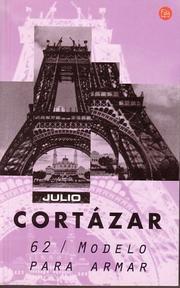
Built out of a single expendable chapter of Hopscotch, so it genuinely requires the earlier novel first. The most difficult book he wrote and the purest version of his structural ambition.

Collage, newspaper clippings and an Argentine exile kidnapping plot; the novel where the politics stop being background. A fitting last novel because it is where the games are put to work.
The Completist Tail
IntermediateRound out the shelf with the posthumous early novel and the miscellany, which only make sense to a reader already committed.
▸ Study plan for this stage
Pace: 4–5 weeks. Final Exam is around 255 pages and reads faster than its date suggests; 2 weeks. Around the Day in Eighty Worlds is a 320-page scrapbook and should be grazed over the following fortnight rather than read cover to cover.
- Final Exam was written in 1950, was unpublishable in Perón's Argentina, and appeared only after Cortázar's death
- A fogbound Buenos Aires with the streets closing in — the earliest version of the encroachment that would become 'House Taken Over'
- Reading an origin document backwards: you can hear the mature voice arriving in real time, which is only interesting once you know the destination
- Around the Day in Eighty Worlds as deliberate miscellany — essays, photographs, jokes, digressions, layout as part of the meaning
- The scrapbook form as Cortázar's most honest genre: no plot to sustain, just the associative mind that produced the novels
- Why both books are pointless as an introduction and rewarding as a conclusion
- What in Final Exam is already unmistakably Cortázar, and what did he still have to learn?
- The novel was suppressed by circumstance rather than by an editor. Does the political climate of 1950 show in it?
- Around the Day has no argument to follow. What are you reading for instead?
- Do these two books change your view of the career, or only fill it in?
- Having finished the whole path, would you still send a new reader to the stories first? What would change your mind?
- Read Final Exam's fog sections beside 'House Taken Over' and mark the shared vocabulary of encroachment
- Open Around the Day at random ten times and read only what you land on; that is the intended use
- Write your own one-paragraph reading order for Cortázar and say where you disagree with this one
- Return to the first collection and reread two stories; with the whole shelf behind you, the tricks should now read as method
Next up: This closes the path — the games now read as a consistent method rather than as mischief, and you have the whole of Cortázar's shelf in the order that makes it legible.

Written in 1950, unpublishable in Perón's Argentina, and released only after his death. Fascinating as an origin document — a fogbound Buenos Aires that already sounds like Comala's opposite number — and pointless as a first book.
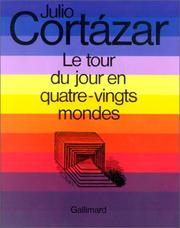
A scrapbook of essays, photographs, jokes and digressions. The closing volume for a reader who now wants the man's company rather than another plot.
Discussion
Keep reading
Paths that share books, cover the same subject, or open a related topic.