Start with Blow-Up, and Other Stories. Cortázar is one of the great short-story writers of the twentieth century and only an interesting novelist, and this collection — the one containing the story Antonioni filmed, along with the axolotl story and the one about the house the siblings are slowly evicted from — shows the whole method in an afternoon. A reader who begins here knows within twenty pages whether they want the rest.
The obvious alternative is Hopscotch, and it is the wrong first move. It is his monument, it is famous for letting you read it in two different orders, and it is also long, discursive and heavily invested in the intellectual atmosphere of 1950s Paris. Readers who start there frequently stop there, and they leave without ever meeting the writer at his best.
The stories, in order of usefulness
Blow-Up, and Other Stories first. Then All Fires the Fire and Other Stories, which is the strongest of the later collections and contains the traffic-jam story that keeps expanding until it becomes a society. Then We love Glenda so much and other tales, later and stranger, where the fantastic device is often thinner and the emotional charge higher.
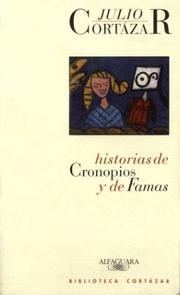
Historias de cronopios y de famas sits apart from these. Published in English as Cronopios and Famas, it is not really a story collection at all — it is a set of instructions, taxonomies and small absurd routines, including the famous instructions for climbing a staircase. It is the most purely delightful thing he wrote and the least representative. Read it whenever you want; nothing depends on its position.
Hopscotch, and its two orders
Hopscotch itself does not appear separately in this catalogue. It is available here only inside Hopscotch, Blow-Up, We Love Glenda So Much, an omnibus that also reprints two collections already listed above — so the path has fewer distinct books than the count suggests, and if you have the standalone collections you are buying duplicates.
The book opens with a table of instructions offering two routes. The first is to read chapters 1 to 56 straight through and stop. The second is to follow a prescribed hopping sequence through all 155 chapters, weaving the so-called expendable chapters — essays, clippings, fragments by an invented writer — into the narrative.
Recommendation, and it is a real disagreement among readers: take the linear route first. Chapters 1 to 56 are a complete novel, and Cortázar says so. The hopping sequence is better experienced as a reread, when you already know the story the interruptions are interrupting; encountered cold, the expendable chapters mostly read as an obstacle. Purists will tell you the hopping order is the book and the linear read is a compromise. They are not wrong about the intention. They are wrong about what works for a first-time reader.
The other novels
The winners was his first novel and the most conventional — passengers on a cruise forbidden to go astern. It is a good book and nobody's favourite Cortázar. Manual for Manuel is his political novel, folding real newspaper clippings about repression in the Southern Cone into a story about a scattered revolutionary group; it is the most dated and the most sincere.
62: a model kit is the difficult one. It grew out of a single chapter of Hopscotch and abandons psychology and place almost entirely. It rewards readers who already love him and defeats everyone else. Final Exam, written early and published only decades later, is a curiosity rather than an entry point.
Around the Day in Eighty Worlds is a collage of essays, images and fragments — the best of the nonfiction, and the closest thing to spending an evening in his company.
Where to stop
Two collections is a complete and honest Cortázar. If you want the monument, add Hopscotch. Leave 62: a model kit and Final Exam for the point where you have decided he is one of your writers.
Translation matters here more than usual. The stories came into English chiefly through Paul Blackburn and the novels through Gregory Rabassa, whose Hopscotch won the first American National Book Award for translation, and the prose rhythm you meet is substantially theirs. Cortázar was also read closely alongside Joyce by his generation, which is audible in the wordplay. Stage notes are on the reading path.