Jorge Amado Reading Order: Where to Start
Amado wrote two distinct kinds of novel: angry proletarian books about the cacao country and the Bahian docks in the 1930s, and warm, sensual, comic novels about Ilhéus and Salvador from the 1950s on. Almost everyone should start with the second kind. This order opens with the two most-loved comedies, adds the Bahia novels around them, then goes back to the hard early social fiction, and closes with the late books. Nothing is a sequel, but characters and streets recur constantly.
Start here
BeginnerMeet the Amado most readers fall in love with — Bahian small-town politics told as comedy, with a cook at the centre of it.
▸ Study plan for this stage
Pace: Three weeks for 425 pages. Gabriela is not difficult but it is populated — a whole town of colonels, exporters, bar regulars and priests arrives in the first fifty pages — so read the opening slowly and then let it run at 40 pages a sitting. The two plots, the bar owner's and the town's, alternate;
- Amado wrote two distinct kinds of novel: angry proletarian books about the cacao plantations and the Bahian docks in the 1930s, and warm, sensual, comic novels about Ilhéus and Salvador from the late 1950s on. Almost everyone should start with the second kind, and this is the best of them.
- The novel runs two stories at once. One is a romance between a Syrian bar owner and a migrant cook from the drought-stricken interior; the other is a municipal power struggle between the old cacao colonels and a new exporting class that wants the harbour dredged. Amado thinks they are the same story
- Gabriela herself is deliberately outside the town's moral system. She cooks, she takes lovers, she will not be made respectable, and the comedy comes from everyone around her trying to fit her into a category she has no interest in.
- The running subplot about a colonel who kills his wife and her lover, and what the town does about it, is not a digression. Amado is arguing about a specific legal and social custom, and the resolution of that thread is the novel's political statement.
- The setting is Ilhéus in the 1920s, a real cacao port in Bahia, and the money in the novel is real cacao money made within living memory by violence. The last stage of this path goes back and shows you how.
- Food, sex and cooking are Amado's primary vocabulary for class and race, not decoration. When he spends a page on a dish, the dish is doing argumentative work.
- Portuguese and Yoruba-derived words are kept in most English editions — foods, Candomblé terms, the coronel as a specific rank of rural power-holder. Do not look each one up as it arrives; they repeat and settle by the third chapter.
- English editions of Amado vary considerably. The mid-century translations are the ones most widely available, some are abridged or soften the sexual content, and newer translations of his best-known novels exist. Check the copyright page of whatever you pick up.
- What does Nacib want from Gabriela, and at what point does the novel show him that wanting it is the problem?
- How does the harbour fight actually get decided — by argument, by money, or by something else entirely?
- What happens to the colonel who kills his wife, and why does Amado put that thread at the centre of a comic novel?
- Gabriela is repeatedly described in terms of smell, taste and colour rather than thought. Is that a limitation of the character or a claim the novel is making?
- Where is the violence in this book, and how has Amado arranged for it to stay just off the page?
- Keep a list of the colonels and what each controls. The political plot is unfollowable without it and it takes five minutes to build.
- Note every meal described in detail. By the end you will have a map of who eats what, and it corresponds exactly to the class structure.
- Mark the passages where the narrator addresses the town as a collective rather than following individuals. Amado uses that chorus voice throughout his career.
- After finishing, write down what you think Ilhéus was like twenty years earlier. The last stage of this path will tell you, and the gap between your guess and the answer is the point.
Next up: You have his method at its most charming; the next three comedies use the same warmth to make much sharper arguments.

Ilhéus in 1925, a bar owner, and a migrant cook who will not be domesticated. It is the book that made him a national institution and the least demanding entry into his world.
The core: the Bahia comedies
IntermediateRead the mature comic novels and see how Amado uses Candomblé, food and sex to argue about race and class without ever sounding like a pamphlet.
▸ Study plan for this stage
Pace: Eight weeks. Dona Flor is around 550 pages, Tent of Miracles 380 and Tereza Batista 551 — roughly 1,480 pages in all. Dona Flor and Tereza Batista are both long and episodic and read best at 35 pages a sitting. Tent of Miracles is the shortest but the densest, because it alternates two time periods
- Dona Flor is the funniest thing he wrote: a widow marries a dull, decent pharmacist, and her dead first husband — a gambler and a womaniser — comes back naked, visible only to her, and refuses to leave.
- Its structure is a straight-faced moral proposition. Respectability and appetite are offered as a choice, the novel declines to choose, and the ending is a joke with a genuine argument inside it.
- The book is also a cookery manual: Dona Flor teaches Bahian cooking and Amado prints the lessons. The recipes are part of the novel's case that pleasure is not frivolous.
- Candomblé, the Afro-Brazilian religion of Bahia, is treated throughout as functional rather than exotic — priests are consulted, rites are performed, and they work. It is the fulcrum of Dona Flor's plot and of half the books on this path.
- Tent of Miracles makes explicit what the comedies carry implicitly. A mixed-race Bahian autodidact — a university porter who wrote books about the city's Black culture — is rediscovered by American academics decades after his death, and the novel cuts between his life and the fuss made over his cent
- Its target is the scientific racism of early-twentieth-century Brazilian intellectuals, and its counter-argument is racial mixture as the country's defining fact and its strength. This is the clearest statement of Amado's position anywhere in his work.
- That position is also contested. Amado's celebration of mixture sits close to Brazil's national myth of racial democracy, and critics have argued that his sensual, festive Bahia flatters rather than confronts the country's racism. Read Tent of Miracles knowing that the argument exists and form your
- Tereza Batista is the darkest of the comedies: a girl sold to a landowner, who becomes a legend of the backlands through a smallpox epidemic, a brothel strike and a long search for one man. It is structured as a folk ballad in sections rather than as a novel.
- The violence done to Tereza in the opening section is severe and explicit, and the ballad framing does not soften it. It needs the lighter two books before it, both for contrast and for stamina.
- What does Dona Flor actually want, and does the novel let her have it or merely let her keep both options?
- Why is Vadinho visible only to her, and what would change if anyone else could see him?
- In Tent of Miracles, what is Pedro Archanjo's argument about race, and how does the novel arrange for the academics to miss it?
- What does the centenary satire say about how a radical is made safe after death?
- In Tereza Batista, what does the ballad structure permit that a conventional novel would not?
- All three books put a woman at the centre and describe her largely through the desire of others. Is Amado writing about women or about how his society looks at them?
- Cook one dish from Dona Flor, or at least read the recipes rather than skipping them. Amado put them there as argument, not as filler.
- Build a short glossary of the orixás as they appear — Iemanjá, Exu, Oxum, Xangô and the rest. They recur across every book on this path and are never re-explained.
- In Tent of Miracles, keep the two timelines separate on paper. The novel cuts between them without signposting and the irony depends on knowing which you are in.
- Read Tereza Batista's sections as discrete ballads with gaps between them, rather than pushing for narrative continuity that is not there.
- After all three, write two sentences on what Amado thinks Brazil is. You will test it against the 1930s novels next, where he thought something rather different.
Next up: The comedies have shown you his Bahia at its warmest; the early novels show what that warmth was built on top of.

A widow remarries a dull pharmacist and her dead first husband turns up naked and unrepentant. The funniest book he wrote and the natural second step after Gabriela.
A mixed-race Bahian autodidact is rediscovered by American academics decades after his death. Read third: it makes explicit the argument about racial mixture that the comedies carry implicitly.
A woman sold as a girl who becomes a legend of the Bahian backlands. The darkest of the comedies, and it needs the lighter two before it.
The deeper cut: the early social novels
IntermediateGo back to the 1930s Communist-period Amado and see what the later warmth is built on — plantation violence, street children and the docks.
▸ Study plan for this stage
Pace: Six to seven weeks for 1,156 pages: Jubiabá 325, Sea of Death 230, Captains of the Sands 265, The Violent Land 336. These are shorter, harder and much bleaker than the comedies. Thirty pages a sitting is enough. Keep the given order and read The Violent Land last — it is the one that reframes the bo
- This is Amado in his twenties and thirties, a committed Communist writing proletarian fiction under and against the Vargas regime. The politics are explicit, the endings are often programmatic, and the comedy is almost entirely absent.
- Jubiabá follows a Black boxer through Salvador and the old Candomblé priest who shapes him, and it ends in collective political action. It is the origin of Amado's lifelong interest in Afro-Brazilian religion, here treated as a source of dignity and resistance rather than as colour.
- Sea of Death is the most lyrical thing on this path: the sailors and dockworkers of the Bahian waterfront, and the sea goddess Iemanjá who eventually takes all of them. It is short, repetitive by design, and closer to a folk song than to a novel.
- It pairs directly with Jubiabá — same city, same years, same conviction that the poor have a culture of their own rather than a deficit of the dominant one.
- Captains of the Sands is the toughest thing here: a gang of homeless children living in a derelict warehouse in Salvador, surviving by theft, and the institutions that fail them one by one. Amado gives each boy a chapter and refuses to sentimentalise any of them.
- The novel was publicly burned in Brazil in 1937 under the Vargas dictatorship, along with other of his books. That fact is part of the record and worth carrying while you read it.
- The Violent Land is the best of the four and the prehistory of the town you met in Gabriela: the cacao wars, the colonels who hired gunmen to take the forest, the lawyers who legalised it afterwards, and the workers who died in it.
- It has no comic relief at all. Read after Gabriela, it retroactively darkens that novel — the money paying for the bar, the newspapers and the harbour campaign was made exactly this way, one generation earlier.
- Across these four, note that Amado's sympathies never change across sixty years. What changes is the tone: the young writer denounces and the older one seduces, and both are making the same case.
- In Jubiabá, what does Balduíno gain from the priest, and what does the novel think Candomblé is for?
- Sea of Death repeats its images — the sea, the goddess, the drowned — deliberately. What does the repetition achieve?
- In Captains of the Sands, which institutions try to help the boys, and why does each one fail?
- Does Captains of the Sands sentimentalise its children anywhere? Find the passage that most tempts you to say yes, and read it again.
- In The Violent Land, who ends up owning the forest, and by what sequence of steps does violence become property?
- Compare the endings of Jubiabá and Captains of the Sands. Both are political. Which one does the novel earn?
- Read Sea of Death in two sittings. It is short and its incantatory effect collapses if spread over a fortnight.
- In Captains of the Sands, make a list of the boys and what happens to each. The novel is built as a set of fates and the list is the argument.
- While reading The Violent Land, keep a note of the legal steps by which land changes hands. Amado is precise about this and it is the book's real subject.
- After The Violent Land, reread the first chapter of Gabriela. Same town, one generation on, and it is a different book now.
- Write down the date of composition of each of the four alongside what was happening in Brazil. The early Amado cannot be read apart from it.
Next up: Having seen both the anger and the charm, the late books show what he did once he had stopped needing to choose between them.
A Black boxer in Salvador and the old Candomblé priest who shapes him. The earliest book here, and the origin of Amado's lifelong interest in Afro-Brazilian religion.

The sailors of the Bahian waterfront and the sea goddess Iemanjá who takes them. Short, lyrical, and it pairs directly with Jubiabá.
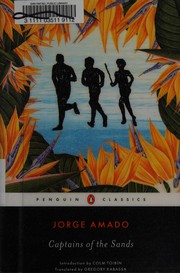
A gang of homeless children living in an abandoned warehouse in Salvador. The book was burned publicly in Brazil in 1937, and it is the toughest thing in this path.
The cacao wars that built the fortunes of Ilhéus, told without any comic relief. Read it last of the four: it is the prehistory of Gabriela's town and reframes the novel you started with.
The completist tail: late Amado
IntermediateFinish with the later novels and be able to describe how Amado's politics and his comedy settled into each other over sixty years.
▸ Study plan for this stage
Pace: Six weeks for 1,077 pages: Home is the Sailor 298, The War of the Saints 357, Showdown 422. All three are relaxed, discursive and easy going after the 1930s novels. Home is the Sailor is genuinely slight and reads in a week. Showdown is the longest and the one to take slowly, because it is a deliber
- Home is the Sailor is a comic novella-length novel about a retired man in a small coastal town who may or may not be the sea captain he claims to be, and the townspeople who investigate.
- Its subject is the social usefulness of a good story, and it is the gentlest thing in Amado's body of work. Read after the early social novels it functions as decompression, and it introduces the late manner: relaxed, digressive, fond of its own gossip.
- The War of the Saints is late Amado at his most playful: a wooden statue of a saint, being shipped to a museum exhibition, steps off the boat in Salvador and spends two days loose in the city.
- The joke rests on Bahian religious syncretism — the same figure is a Catholic saint and a Candomblé orixá, and which one has walked off the boat is precisely the question. You need the earlier Candomblé novels to feel it.
- Its targets are the Church, censorship and respectable morality, and its heroes are the people the previous fifty years of his fiction has always backed. The politics have not moved; the weapons have.
- Showdown covers the founding of a frontier settlement in the cacao interior — the same country and the same period as The Violent Land, written roughly four decades later.
- That is the reason it closes the path. Amado goes back to his own first great subject as an old man and writes it warmer: the settlement is built by prostitutes, mule drivers, ex-gunmen and traders, and it has a community before it has a law.
- Reading Showdown against The Violent Land is the single most instructive exercise available on this path. The same violence is present, but the young writer wrote the violence and the old one writes what people managed to build in spite of it.
- Across the whole path, note what never changes: the poor are competent, pleasure is not a vice, the Church and the landowners are on one side and the street is on the other, and the mixture of peoples in Bahia is the country's best fact.
- Does the town in Home is the Sailor actually want the truth about the captain? What does its behaviour show?
- In The War of the Saints, who is loose in Salvador — the saint or the orixá — and does the novel commit to an answer?
- What is the novel's argument about the museum, and about who owns religious objects?
- In Showdown, what makes the settlement a community before it has any institutions?
- Set Showdown beside The Violent Land: which is the truer book about the cacao country, and which is the better novel? They may not be the same.
- Across sixty years of writing, what changed in Amado's politics, and what only changed in his tone?
- Read The War of the Saints immediately after refreshing your memory of the Candomblé material in Dona Flor. The comedy is much richer with it fresh.
- In Showdown, keep a note of who arrives in the settlement in which order. The sequence of arrivals is the novel's theory of how a town comes into being.
- Reread the final chapter of The Violent Land and the final chapter of Showdown back to back. Forty years and the same ground.
- Build one list, across all eleven books, of characters, streets and neighbourhoods that recur. Amado's Salvador and Ilhéus are one continuous place and the overlaps are deliberate.
- Finally, read a short critical piece on the racial-democracy debate around his work, after the novels rather than before. Deciding for yourself first and then testing it is the honest order.
Next up: You have the young militant, the mature comedian and the old chronicler, which is enough to pick up any remaining translation without a guide.

A retired man in a small town may or may not be the sea captain he claims to be. A slight, charming book about the uses of a good story, and a gentle move into the late period.
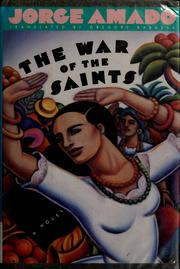
A statue of a saint walks off a boat in Salvador and spends two days loose in the city. Late Amado at his most playful about religion, which the earlier Candomblé novels prepare you for.

The founding of a frontier town in the cacao interior, written half a century after The Violent Land covered the same ground. The right closing book: it is Amado revisiting his own beginnings.
Discussion
Keep reading
Paths that share books, cover the same subject, or open a related topic.